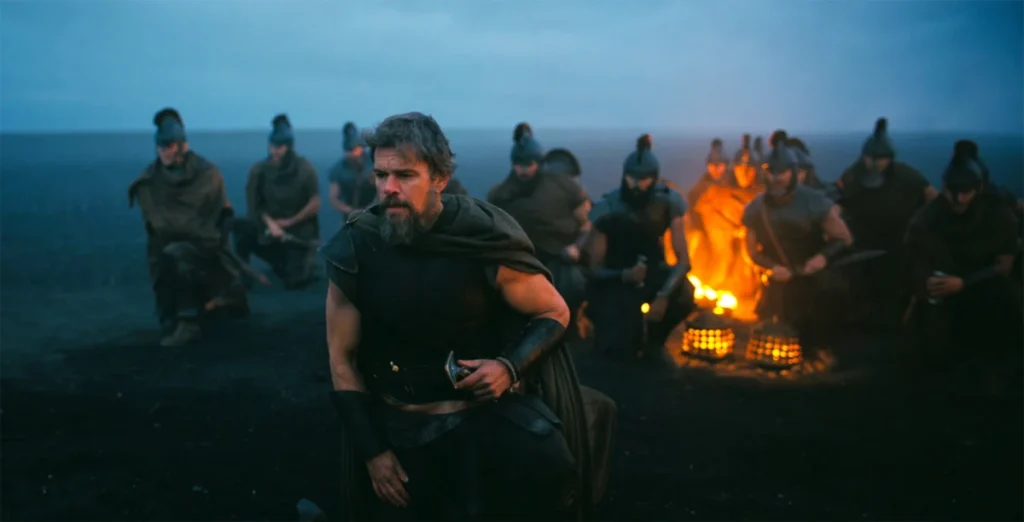

July 17, 2026 – Director Christopher Nolan’s latest cinematic endeavor, "The Odyssey," has landed in theaters worldwide, presenting an ambitious adaptation of Homer’s seminal epic poem. The film, lauded for its monumental scale and Nolan’s signature visual grandeur, endeavors to translate the ancient tale of Odysseus’ perilous ten-year journey home into a modern cinematic spectacle. Nolan’s long-held ambition to film entirely with IMAX cameras, a vision he first pursued with "The Dark Knight" in 2008, has finally reached its zenith with "The Odyssey," utilizing the largest film cameras ever constructed for an immersive viewing experience. The film is being showcased across all available cinematic formats, from traditional 35mm and 70mm prints to state-of-the-art digital projections, underscoring Nolan’s commitment to a comprehensive theatrical presentation.
A Modern Reimagining of an Ancient Journey
At its core, "The Odyssey" is an exploration of homecoming, resilience, and the profound impact of war on the human spirit. Nolan, directing his thirteenth feature film, has chosen to reimagine the narrative with contemporary dialogue and a diverse cast, reflecting a modern sensibility. While the ancient Greek setting is evoked, Nolan incorporates elements such as Viking longship designs, signaling a departure from strict historical accuracy in favor of artistic interpretation. This approach aligns with Nolan’s broader cinematic philosophy, which often prioritizes thematic resonance and visceral experience over literal fidelity to source material.
The film’s narrative framework is deeply intertwined with Nolan’s previous work, particularly "Oppenheimer." Both films, according to critics and early analyses, delve into the profound consequences of a central figure’s actions that have brought about significant destruction and ushered in an era of darkness. "The Odyssey" is presented not merely as a retelling of Odysseus’ arduous voyage but as a thematic continuation of the existential reckoning explored in "Oppenheimer." The journey through mythical landscapes and encounters with supernatural beings is interpreted as a literal descent into the underworld, a metaphorical exploration of guilt, and a process of confronting the devastation wrought by one’s decisions. The recurring motif of "Zeus’s law," presented as a modern interpretation of the Golden Rule, serves as a thematic anchor, contrasting the ancient ideals of order and humanity with the contemporary descent into chaos and self-interest.
Thematic Resonance: Echoes of Oppenheimer and Modern Parallels
The thematic linkage between "The Odyssey" and "Oppenheimer" is a significant aspect of Nolan’s artistic intent. "Oppenheimer" chronicled the moral and personal turmoil of J. Robert Oppenheimer, the theoretical physicist credited as the "father of the atomic bomb." The film meticulously depicted the immense destructive power unleashed by his work and the subsequent psychological and societal ramifications. "The Odyssey," in this context, acts as a metaphorical journey through the consequences of such world-altering events. Odysseus, much like Oppenheimer, is portrayed as a figure who has inadvertently, or through the crucible of war, contributed to a destabilization of the world order. His ten-year odyssey is reframed as a penance, a arduous path toward understanding the human cost of conflict and the fragility of civilization.

The film draws parallels between the societal decay depicted in the story of Ithaca’s suitors, who have usurped Odysseus’ throne and ravaged his kingdom in his absence, and the current global landscape. The narrative suggests that humanity, much like the suitors, has succumbed to base instincts and a disregard for fundamental moral principles – "Zeus’s law." Odysseus’ return is thus framed as a necessary, albeit brutal, restoration of order, a cleaning of the Augean stables, metaphorically and literally. This resonates with contemporary anxieties surrounding global conflicts, political instability, and a perceived erosion of ethical standards. The film’s relevance, therefore, is not confined to its epic scope but extends to its pointed commentary on the human condition in the 21st century.
Cinematic Craftsmanship and Technical Prowess
Christopher Nolan’s commitment to practical filmmaking and large-format cinematography is a defining characteristic of "The Odyssey." The decision to shoot extensively with IMAX cameras underscores a desire to immerse the audience in the grandeur and peril of Odysseus’ journey. Scenes filmed on real seas aboard historically inspired ships, enduring the harsh realities of ocean travel, contribute to a palpable sense of authenticity and visceral impact. Critics have highlighted the breathtaking scope of these sequences, capturing the raw power of the Mediterranean Sea and the vulnerability of the ancient vessels against its might.
The use of IMAX technology is intended to amplify the sense of scale, allowing audiences to feel the immensity of the ocean, the vastness of the landscapes, and the claustrophobia of the ships. This commitment to practical effects and on-location shooting, a hallmark of Nolan’s career, imbues "The Odyssey" with a tangible, lived-in quality, differentiating it from purely digitally generated spectacles. This approach extends to the depiction of action and combat, aiming for a gritty realism that grounds the fantastical elements of the epic.
However, this dedication to a specific filming methodology also presents challenges. The review notes that while the sweeping, wide shots captured with IMAX cameras are undeniably spectacular, the format can sometimes prove cumbersome during intimate close-ups and dialogue-heavy scenes. The sheer scale of the equipment, intended for expansive vistas, can inadvertently detract from the nuances of character interaction when used for more confined moments.
Performance and Character Interpretations
The ensemble cast of "The Odyssey" features notable performances that contribute to the film’s thematic depth. Himesh Patel, as Eurylochus, Odysseus’ second-in-command, is singled out for his portrayal of a wise and humble figure, offering a nuanced interpretation that deviates from the traditional depiction of the character as merely foolish or cowardly. John Leguizamo’s Eumaeus is recognized as the emotional anchor of the film, embodying loyalty and serving as a crucial element of the narrative’s heart. Tom Holland delivers a powerful performance as Telemachus, Odysseus’ son, delving into the complexities of his father’s legacy.

Samantha Morton reprises her role as Circe, a character known for her formidable presence, while Matt Damon takes on the titular role of Odysseus. Anne Hathaway’s portrayal of Penelope, Odysseus’ wife, while noted as competent, is described as lacking the desired nuance, occasionally leaning towards an overly emotional depiction that detracts from her stoic resilience. The review suggests that her quieter moments, rather than her outbursts, are where her performance truly shines.
Elliot Page’s appearance as Sinon, particularly in the underworld sequences, is highlighted as one of the film’s most invigorating and thought-provoking segments. This segment allows Nolan to explore deeper philosophical questions and character motivations, moving beyond the more straightforward mythological encounters. The film’s emphasis on the tragic aspects of Odysseus’ journey, rather than solely focusing on the gods and monsters, allows for a more introspective and emotionally resonant experience.
Critical Reception and Lingering Questions
"The Odyssey" has been met with a largely positive critical reception, acknowledging its status as an extraordinary cinematic achievement. The film’s sheer scale, technical mastery, and Nolan’s distinctive directorial vision are widely praised. However, the review also points to certain reservations, particularly concerning narrative choices in the film’s early and middle acts, as well as issues with the clarity of action sequences.
Nolan’s long-standing criticism regarding his ability to film action clearly, a critique that has persisted since "The Dark Knight," is once again brought to the fore. The climactic showdown within the palace of Ithaca, described as dark and confusing, reportedly detracts from the overall impact of the narrative resolution. While the film is rated R and contains significant violence, the execution of these action sequences is perceived by some as messy and disconnected, hindering the audience’s ability to fully engage with the resolution of Odysseus’ homecoming.
Despite these criticisms, the overarching sentiment is that "The Odyssey" is a compelling and thought-provoking film. Its strengths lie in its ability to translate an ancient, foundational story into a relevant and impactful cinematic experience for a modern audience. The film’s exploration of enduring themes of human nature, the consequences of war, and the power of storytelling positions it as a significant contribution to contemporary cinema. The rating of 8.5 out of 10 suggests a film that, while not without its flaws, achieves a high level of artistic and technical merit.

The Enduring Power of Storytelling
Ultimately, "The Odyssey" serves as a powerful testament to the enduring significance of storytelling. Christopher Nolan’s ambitious undertaking revitalizes a millennia-old fable, demonstrating that these ancient narratives continue to hold profound relevance in the modern world. The film underscores the idea that stories are not merely entertainment but vital conduits for transmitting ideas, values, and reflections on the human condition. By utilizing the immersive power of cinema, Nolan invites audiences to engage with these timeless themes, prompting introspection on their own lives and the societal challenges they face.
The film’s success in adapting a foundational epic for a contemporary audience speaks to the universality of its themes. The struggle for home, the psychological toll of conflict, and the complex journey of self-discovery are experiences that resonate across cultures and generations. Nolan’s masterful direction, combined with a dedication to grand-scale filmmaking, ensures that "The Odyssey" is not just a retelling but a re-experience, a cinematic event that reminds us of the vital role that stories play in shaping our understanding of ourselves and the world around us. As the film continues its theatrical run, its impact is likely to be felt not only for its technical achievements but for its potent reminder of the human need for narrative and the lessons embedded within our most cherished myths.