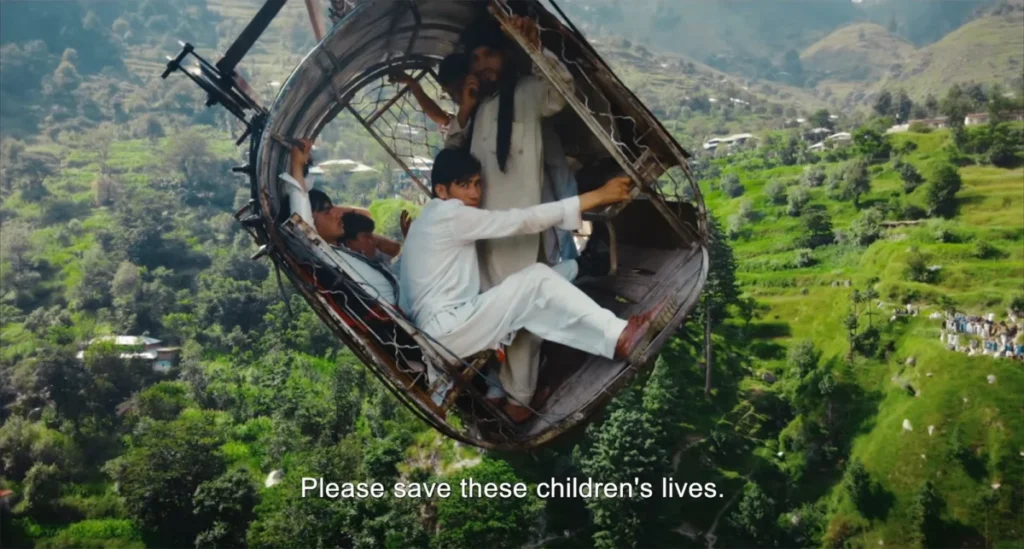

The gripping documentary Hanging by a Wire plunges viewers into a harrowing true story of survival and human resilience, detailing a mid-air rescue operation in the remote Pakistani Himalayas. Abramorama has released the first official trailer for this intensely riveting film, which chronicles a terrifying incident where a makeshift cable car system malfunctioned, trapping eight individuals, including six students, precariously high above a valley. The film, which premiered at the 2026 Sundance Film Festival and has since screened at other prominent festivals such as Seattle, Sydney, and Tribeca, promises to keep audiences on the edge of their seats as it recounts the desperate race against time to save those stranded.
The Genesis of a Crisis: A Routine Commute Turned Nightmare
The narrative of Hanging by a Wire unfolds in the rugged, often inaccessible mountainous regions of Pakistan, where for many communities, a cable car system, however rudimentary, represents a vital lifeline. This particular incident, which forms the core of the documentary, involved a cable car system that likely served as a critical mode of transport for local villagers, connecting isolated settlements and providing access to schools, markets, and essential services. The film meticulously reconstructs the events that led to the catastrophic failure, highlighting the fragility of such infrastructure in areas where resources may be scarce and maintenance challenges are amplified by geography.
The daily commute, often undertaken by schoolchildren, transformed into a scene of unimaginable terror when a crucial cable snapped. This sudden failure left the cable car, with its occupants, suspended precariously hundreds of feet above the unforgiving terrain. The immediate aftermath was marked by a chilling realization of the danger: the remaining cable was not guaranteed to hold indefinitely, and any further strain or structural weakness could lead to a devastating plunge. This ticking clock set the stage for an extraordinary rescue effort, as the lives of eight individuals hung precariously in the balance.

A Race Against Time: The Rescue Operation
Hanging by a Wire offers an unflinching look at the rescue operation that ensued, emphasizing the courage and ingenuity displayed by those involved. The film draws on firsthand testimony and remarkable on-the-ground footage, providing an intimate and visceral account of the challenges faced. This includes the complex logistical hurdles of operating in a remote mountainous environment, the technical difficulties of executing a mid-air rescue, and the immense psychological pressure on both the stranded individuals and the rescue teams.
The documentary explores how both local and national government entities responded to the crisis. It delves into the coordination, or perhaps the lack thereof, between different levels of authority and the effectiveness of the implemented rescue strategies. The film promises to reveal the intricate details of what worked and what did not, offering a critical examination of the decision-making processes under extreme duress. The narrative is not solely about the physical act of rescue; it also probes the social and economic realities that shape life in rural Pakistan, suggesting that the event also brought to light underlying issues of infrastructure development, emergency preparedness, and societal inequalities.
Director Mohammed Ali Naqvi, an award-winning Pakistani documentary filmmaker known for his previous works such as Shame, Among the Believers, Insha’Allah Democracy, and The Accused: Damned or Devoted?, brings his distinctive perspective to this story. His films often explore complex social and political issues within Pakistan, and Hanging by a Wire appears to continue this tradition, using a dramatic event to illuminate broader societal themes. Naqvi has described the film as "a tribute to the ordinary people who became extraordinary when it mattered most," underscoring his focus on the human element within the crisis.
Official Trailer and Distribution Plans
The release of the official trailer offers a tantalizing glimpse into the film’s suspenseful narrative and emotional depth. The trailer, accompanied by promotional posters, showcases the dramatic visuals and hints at the intense ordeal faced by the passengers. Abramorama, a distribution company known for handling impactful documentary films, has taken on the task of bringing Hanging by a Wire to a wider audience.

The director expressed his enthusiasm for this partnership, stating, "To have Abramorama bring Hanging by a Wire to theaters means this story will reach audiences as we intended – together, in the dark, holding their breath as a real-life disaster thriller unfolds through the voices and footage of the people who lived it." This sentiment highlights the filmmaker’s intention to create an immersive cinematic experience that mirrors the tension and emotional weight of the actual events.
Hanging by a Wire is slated for release in select U.S. theaters, with an initial opening in New York City, on August 28, 2026. This release strategy aims to build momentum and allow the film to resonate with audiences before a broader rollout. The anticipation for the film is palpable, particularly among those who witnessed its premiere at Sundance and have spoken highly of its compelling storytelling and emotional impact.
Broader Implications and Societal Reflections
Beyond the immediate thrill of the rescue, Hanging by a Wire is understood to offer a poignant reflection on the socio-economic disparities that exist within Pakistan, particularly in its rural and mountainous regions. The film’s description suggests it delves into the "class divides that complicated the rescue effort," hinting at how access to resources, communication networks, and even the effectiveness of emergency response could be influenced by economic standing and regional development.
The reliance on a "makeshift cable car system" itself speaks volumes about the infrastructure challenges faced by communities in these areas. While such systems might be born out of necessity and ingenuity, their inherent risks can be amplified without proper oversight, maintenance, and investment in more robust alternatives. The film, therefore, serves not only as a testament to human courage but also as a catalyst for dialogue about the importance of equitable development and the provision of safe and reliable infrastructure for all citizens, regardless of their geographical location or economic background.

The success of the rescue, while a cause for relief, does not erase the underlying issues that made such a precarious situation possible. Hanging by a Wire appears poised to explore these complexities, prompting viewers to consider the broader implications of the event for disaster preparedness, rural development policies, and the overall well-being of communities living in challenging environments. The film’s success at major film festivals indicates its potential to resonate with a global audience, offering a window into the realities of life in Pakistan and the universal themes of courage, community, and the enduring human spirit in the face of adversity. The documentary’s release promises to be a significant cinematic event, offering a powerful and unforgettable story of survival.