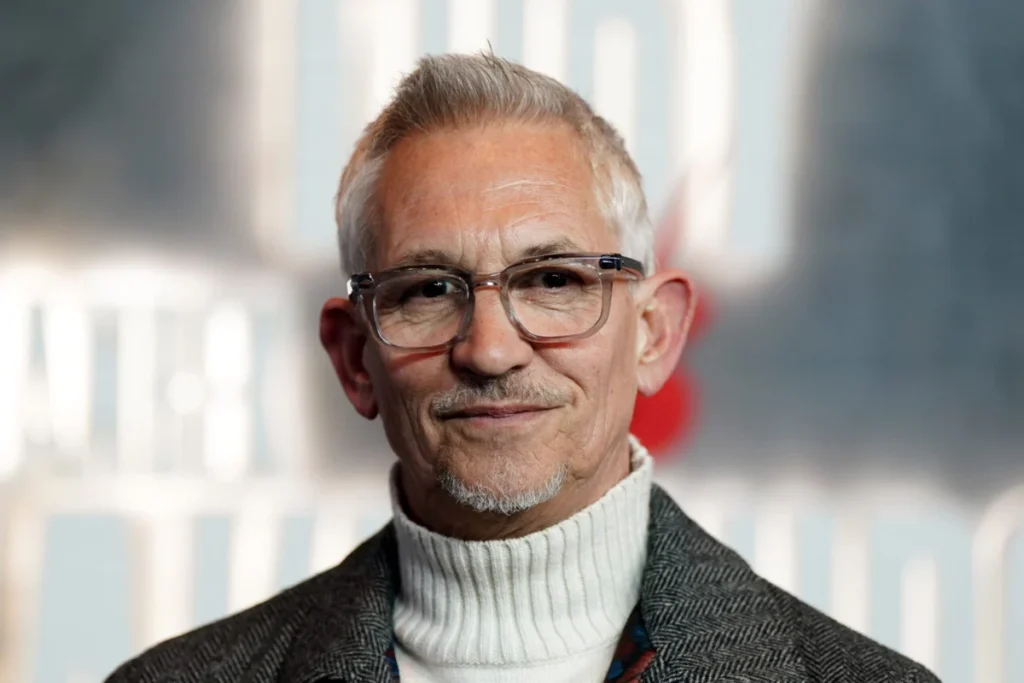

In a surprising turn of events during the ongoing 2026 FIFA World Cup, veteran broadcaster and former England captain Gary Lineker made an unexpected appearance on ITV’s coverage of the Germany versus Ivory Coast match, immediately drawing significant attention for his candid remarks on ticket pricing and a thinly veiled critique of his former employer, the BBC. The unscheduled cameo by Lineker, who famously anchored the BBC’s Match of the Day for decades before his high-profile departure, offered a moment of cross-channel intrigue and sparked renewed debate on issues ranging from fan accessibility to media impartiality in sports broadcasting.
The incident unfolded as ITV’s World Cup coverage began its segment on the Germany-Ivory Coast fixture. Viewers were met not with the expected face of regular presenter Laura Woods, but with Lineker, who momentarily took the reins. He greeted the audience with a familiar cadence, stating, “another day, another game, another channel,” before being promptly, and humorously, interrupted by Woods. “Gary, that’s my job,” she interjected, to which Lineker replied with a sheepish, “Sorry, sorry. Old habits.” This light-hearted exchange immediately set a playful, yet significant, tone for his brief tenure on the rival network.
Lineker’s Scathing Critique of World Cup Ticket Prices
Beyond the initial banter, Lineker quickly shifted to a more serious topic: the escalating cost of World Cup tickets. When prompted about the matter, his response was unequivocal and critical of FIFA’s practices. He acknowledged FIFA’s likely defence, stating, “Well FIFA will argue that the stadiums are all full and they are, and the stadiums are amazing.” However, he swiftly pivoted to the financial burden on supporters. “But I think for fans having to take out a second mortgage or sell their car to be able to afford to watch a football match, to fill the pockets of what is supposedly a not-for-profit organisation I just don’t understand what FIFA are doing and why they are making it so difficult.” He concluded by praising the extraordinary dedication of fans: “It’s incredible that so many fans have come here despite that.”
Lineker’s comments resonate with a long-standing grievance among football supporters globally regarding the affordability of major tournaments. For the 2026 World Cup, hosted across 16 cities in the United States, Canada, and Mexico, ticket prices have been a point of contention even before the tournament began. While exact figures vary based on match stage, seating category, and host city, initial reports indicated group stage tickets could range from approximately $70 to $500 USD, with knockout stage matches escalating significantly, potentially reaching upwards of $1,000 for a final match ticket. Such figures, when combined with travel, accommodation, and other expenses in North America, indeed represent a substantial investment for the average fan.
FIFA, as a global governing body for football, operates under a non-profit status. However, this designation has frequently come under scrutiny, particularly given the immense revenues generated from its flagship event, the World Cup. The 2022 World Cup in Qatar, for instance, generated a record-breaking revenue of $7.5 billion, a $1 billion increase from the previous cycle. A significant portion of this revenue comes from broadcasting rights, marketing rights, hospitality, and, crucially, ticket sales. While FIFA asserts that these profits are reinvested into football development programs worldwide, critics like Lineker argue that the pricing structure for the pinnacle event disproportionately burdens the very fanbase that fuels the sport’s global appeal, prioritising profit margins over accessibility.
A Subtle Jab at the BBC’s World Cup Coverage
Lineker’s appearance also featured what many interpreted as a veiled criticism of his former employer, the BBC. The national broadcaster had drawn some public criticism for its decision not to have a dedicated studio in one of the host countries for the current World Cup, opting instead for a primarily remote setup. Seizing the opportunity, Lineker remarked, “I have been doing a show daily for Netflix, we’re Times Square but I did desperately want to come and see your set. I think it’s absolutely amazing and I can confirm that it is real. What a backdrop.”

This comment, delivered with a wry smile, was widely seen as a pointed observation regarding the BBC’s perceived frugality or strategic choices in its World Cup coverage compared to ITV’s visible on-site presence. For major international tournaments, the BBC and ITV typically engage in a fierce rivalry for viewership, often attempting to outdo each other with their presentation, punditry, and immersive on-location experiences. The BBC’s decision to largely eschew an international studio base this year might be attributed to various factors, including cost-saving measures in a challenging economic climate, sustainability efforts to reduce carbon footprint from international travel, or a belief in the efficacy of advanced remote broadcasting technologies. However, Lineker’s comment underscored a common perception among some viewers that a physical, on-site presence enhances the authenticity and atmosphere of live tournament coverage.
Lineker’s High-Profile Departure from the BBC: A Recap
To fully understand the context of Lineker’s "old habits" comment and his apparent dig at the BBC, it is essential to revisit the circumstances of his departure from Match of the Day in May of the previous year. Gary Lineker, one of British television’s most recognisable and respected sports presenters, had anchored the BBC’s flagship football highlights show for 27 years. His tenure was largely unblemished until a series of incidents brought him into conflict with the BBC’s impartiality guidelines for its presenters.
The controversy that led to his temporary suspension and subsequent decision to step down from Match of the Day stemmed from a social media post he made in March of the previous year. Lineker had tweeted critically about the UK government’s proposed new asylum policy, comparing the language used to that of 1930s Germany. This immediately ignited a firestorm, with critics arguing that as a high-profile BBC presenter, Lineker was breaching the corporation’s guidelines on impartiality, particularly concerning political matters. The BBC, funded by the licence fee, is legally obligated to remain impartial, and its guidelines specifically address how presenters, especially those in news and current affairs, should conduct themselves on social media.
The BBC initially decided to suspend Lineker from Match of the Day, a move that triggered an unprecedented show of solidarity from his colleagues. Fellow pundits, commentators, and presenters, including Alan Shearer and Ian Wright, refused to appear on the programme in support of Lineker, leading to the show being aired without presenters or commentators, relying solely on match footage. The public reaction was mixed but largely in favour of Lineker, with many defending his right to express personal opinions on humanitarian issues.
Following intense negotiations and public pressure, Lineker was reinstated. However, the incident highlighted a fundamental tension between a public figure’s right to free speech and the strict impartiality requirements of a public broadcaster. Although Lineker returned to Match of the Day, the underlying issues remained. His eventual stepping down from the role in May of the previous year was a culmination of these ongoing discussions and his desire to have greater freedom to express his views without compromising the BBC’s perceived impartiality.
It is worth noting that a separate, earlier controversy also involved Lineker’s social media activity. The original article mentions an Instagram post “about Zionism, which featured a depiction of a rat, historically an antisemitic insult.” This incident, which predated the asylum policy row, saw Lineker apologise for sharing a post that included an image of a rat, stating he hadn’t noticed the visual and would never knowingly post something with antisemitic connotations. While distinct from the asylum policy controversy, it contributed to the broader narrative around Lineker’s social media use and the BBC’s impartiality guidelines.
The Evolving Landscape of Sports Broadcasting
Since his departure from the BBC, Lineker has embarked on several new ventures, reflecting the changing landscape of sports media. He co-hosts The Rest Is Football podcast alongside former footballers Micah Richards and Alan Shearer, a popular venture that has now expanded into a daily TV show for Netflix during the 2026 World Cup. This move to Netflix signifies a growing trend where streaming giants are increasingly investing in live sports content and sports-related programming, challenging the traditional dominance of terrestrial broadcasters.

Netflix’s entry into World Cup coverage, even if through a daily analysis show rather than live match broadcasts, represents a significant shift. It allows for a different style of presentation, potentially less constrained by the conventions and regulations of traditional television. Lineker’s comment about his Netflix show being in "Times Square" (referencing a prominent, visible location) further contrasts with the BBC’s remote setup, underscoring the diverse approaches broadcasters are taking to capture audience attention in a fragmented media environment.
The 2026 FIFA World Cup itself is a landmark event, being the first to be hosted across three nations – the United States, Canada, and Mexico – and featuring an expanded format with 48 teams. This unprecedented scale presents unique logistical challenges and opportunities for broadcasters. Covering matches across vast geographical distances and multiple time zones requires innovative production strategies, balancing on-site presence with remote capabilities. ITV’s decision to establish a visible studio in one of the host nations, as lauded by Lineker, demonstrates a commitment to traditional on-location broadcasting, while the BBC’s approach suggests a pivot towards more technologically advanced, cost-effective remote production.
Implications for Broadcasters and Fan Engagement
Lineker’s appearance and comments have several implications. For ITV, it was a publicity coup, generating significant buzz and positioning their coverage as more "on-the-ground" than their rival. For Lineker, it showcased his continued relevance and ability to generate headlines, even when operating outside the established norms of sports broadcasting. It also subtly reaffirmed his independence from the BBC’s impartiality strictures.
More broadly, the incident highlights the ongoing competition for viewers and influence in sports media. As streaming services gain traction, traditional broadcasters like the BBC and ITV are forced to adapt, innovate, and differentiate their offerings. The debate over studio locations, production costs, and the fan experience underscores the commercial and strategic considerations at play.
Lineker’s criticism of FIFA’s ticket prices also serves as a potent reminder of the disconnect between the global spectacle of the World Cup and the financial realities for many loyal supporters. As the tournament expands and becomes ever more lucrative for FIFA, the pressure for greater accessibility and affordability for fans is likely to intensify. The perception of FIFA as a profit-driven entity, despite its non-profit status, continues to be a public relations challenge, and prominent voices like Lineker’s amplify these concerns.
Ultimately, Laura Woods allowed Lineker to take the show into the break, acknowledging his “fabulous job” before returning focus to the action on the pitch. This brief, unexpected interlude offered a fascinating glimpse into the evolving dynamics of sports broadcasting, the enduring power of celebrity influence, and the persistent debates surrounding the commercialisation of the beautiful game. As Lineker prepares to host the ITV game show The Box later this year, and continues his work with Netflix, his presence remains a significant, and often provocative, voice in the world of football. The BBC and FIFA have been contacted for comment regarding the remarks made during the broadcast.