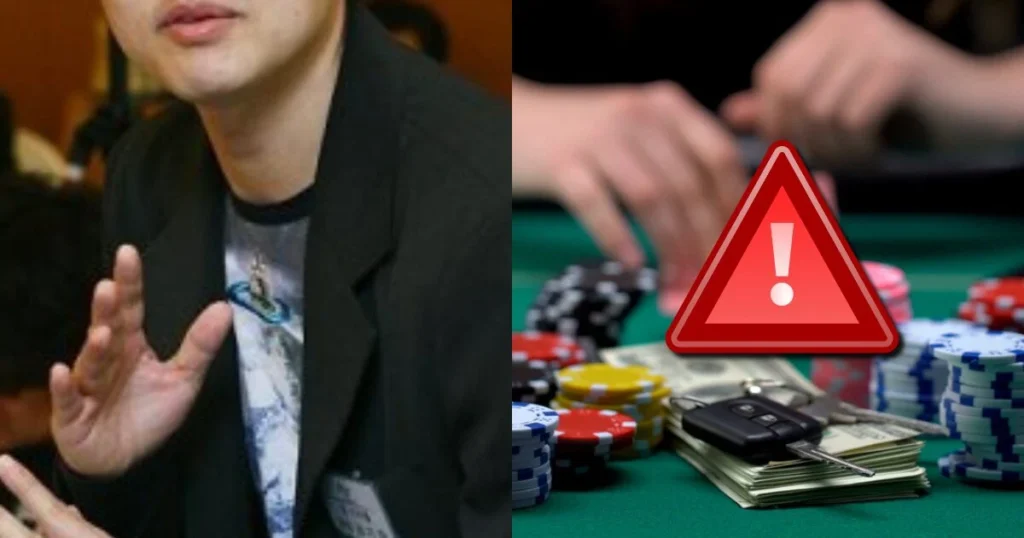

Gong Ki Tak, a veteran comedian who once stood at the pinnacle of South Korean broadcast comedy, has officially broken his thirteen-year hiatus to reveal a surprising second act as a professional poker player. The former television personality, whose career was abruptly terminated by a massive illegal gambling scandal in 2013, recently made a public appearance on a digital platform, signaling a shift from the entertainment industry to the world of international mind sports. This re-emergence has reignited discussions regarding the strict social and professional consequences faced by South Korean celebrities involved in gambling, as well as the evolving perception of poker as a legitimate competitive sport rather than a mere vice.
The Digital Reunion: A New Identity Revealed
The public’s first glimpse of Gong Ki Tak in over a decade occurred on the popular YouTube channel hosted by fellow comedian Kim Sook. The video featured a reunion of KBS’s "open recruitment" comedians, including Kim Sook, Hong Seok Cheon, and Lee Jang Sook. While the atmosphere was largely nostalgic and lighthearted, the conversation took a serious turn when the group addressed Gong’s long absence and current activities.
During the broadcast, Lee Jang Sook initially referred to Gong’s recent activities as "gambling," a term that carries significant legal and social weight in South Korea. Gong immediately moved to clarify his position, drawing a sharp distinction between the illegal betting that ended his comedy career and his current professional endeavors. He asserted that he is no longer a gambler in the pejorative sense but is instead a "professional poker player" specializing in Texas Hold’em. Gong proudly noted that he is among a select group of individuals in the country whose official public profiles have been updated to reflect this professional status, emphasizing that his current work is conducted within the legal frameworks of international competitive play.
From Grand Prize Winner to Industry Pariah: A Chronology of Gong Ki Tak’s Career
To understand the weight of Gong’s re-emergence, one must look back at his rapid rise and even faster fall within the Korean entertainment landscape. Gong Ki Tak’s journey began in 1995 when he entered the KBS College Comedy Festival. His natural wit and stage presence earned him the Grand Prize, a prestigious honor that granted him immediate entry into the 12th class of KBS’s officially recruited comedians.
Throughout the late 1990s and 2000s, Gong was a consistent presence on terrestrial television, participating in various sketch comedy programs and variety shows. However, his trajectory was permanently altered in November 2013, when South Korean prosecutors launched a massive crackdown on illegal online sports betting. This investigation sent shockwaves through the industry, as it targeted several high-profile stars who had been using private, unauthorized websites to place bets on international football matches, including the English Premier League.

While several household names were caught in the dragnet—most notably Lee Soo Geun, Tak Jae Hoon, and Tony Ahn—it was Gong Ki Tak who faced the most severe scrutiny. Investigations revealed that Gong had wagered a staggering 1.79 billion KRW (approximately $1.3 million USD) over several years. This was the largest amount recorded among all the celebrities involved in the 2013 scandal.
Legal Consequences and the Terrestrial Blacklist
The legal repercussions for Gong Ki Tak were swift. In December 2013, the Seoul Central District Court sentenced him to six months in prison, suspended for one year of probation. While the sentence allowed him to avoid immediate incarceration, the professional fallout was absolute. In accordance with the internal regulations of South Korea’s major terrestrial broadcasters—KBS, MBC, and SBS—Gong was placed on a "restrictive appearance list," effectively a permanent blacklist.
In the South Korean entertainment industry, being blacklisted by terrestrial channels often serves as a career death sentence. These broadcasters maintain strict "social morality" clauses, banning individuals convicted of crimes involving drugs, sexual assault, or high-stakes gambling from appearing on their airwaves to protect the public interest and maintain broadcast standards. For thirteen years, Gong remained largely invisible, disappearing from both the small screen and the public eye as he navigated a life outside the limelight.

The Evolution into a Professional Poker Player
During his decade-long absence, Gong reportedly explored various career paths before finding success in the competitive world of Texas Hold’em. He described his transition as one fueled by a desire to master the strategic and psychological elements of the game, which he characterizes as a "mind sport" rather than a game of pure chance.
Gong’s claim to professional status is backed by his performance in the international circuit. He revealed that he has spent years honing his skills and has successfully secured championship trophies at various international poker tournaments. In these settings, poker is treated as a skill-based competition similar to e-sports or chess, involving complex probability calculations, game theory, and psychological maneuvering.
This career shift mirrors a growing trend among former South Korean celebrities and athletes. Other notable figures, such as former professional StarCraft player Lim Yo-hwan (Boxer) and entertainer Hong Jin-ho, have also transitioned into professional poker, finding success and legitimacy on the global stage. By rebranding himself as a professional player, Gong Ki Tak is attempting to distance himself from the "illegal gambler" label that has defined his public persona since 2013.

Supporting Data: The 2013 Gambling Scandal in Context
The scandal that ousted Gong Ki Tak was one of the largest in the history of the Korean entertainment industry. To provide context for the 1.79 billion KRW figure, it is helpful to look at the other celebrities sentenced at the same time:
- Tony Ahn (H.O.T.): Wagered approximately 400 million KRW; received a six-month prison sentence, suspended for one year.
- Lee Soo Geun: Wagered approximately 370 million KRW; received a six-month prison sentence, suspended for one year.
- Tak Jae Hoon: Wagered approximately 290 million KRW; received a six-month prison sentence, suspended for one year.
Gong Ki Tak’s betting total was more than four times that of Tony Ahn and nearly five times that of Lee Soo Geun. This discrepancy explains why, despite many of his peers eventually returning to television after periods of reflection, Gong remained persona non grata for over a decade. The sheer scale of his involvement made his "rehabilitation" in the eyes of broadcast networks significantly more difficult.
Industry Implications and the Role of Digital Platforms
The fact that Gong Ki Tak chose a YouTube channel for his return is a significant indicator of the changing media landscape in South Korea. While terrestrial television remains the gatekeeper of traditional celebrity status and is bound by rigid government-monitored regulations, digital platforms like YouTube and Netflix offer a "gray zone" for blacklisted individuals.

On YouTube, content is not subject to the same broadcast review committees that govern KBS or MBC. This allows stars who have been "ousted" from traditional media to rebuild their brands, speak directly to audiences, and bypass the traditional barriers to entry. For Gong, this platform provided the necessary space to reframe his narrative—moving from a disgraced comedian to a professional mind sports athlete.
Analysis: The Perception of "Mind Sports" vs. Gambling
Gong Ki Tak’s return brings a complex social issue to the forefront: the distinction between illegal gambling and professional poker. Under South Korean law (Article 246 of the Criminal Act), gambling is generally prohibited, though exceptions are made for "momentary play for amusement." However, the legal definition of what constitutes professional skill versus illegal betting remains a point of contention.
In recent years, the "Hold’em" industry has exploded in South Korea, with "Hold’em Pubs" becoming a common sight in urban areas. While these venues are legally required to operate without cash prizes to avoid gambling charges, the popularity of the game is undeniable. By identifying as a "professional," Gong is aligning himself with a global movement that views poker as a legitimate profession. However, in a society that remains deeply conservative regarding gambling-related scandals, his transition may still be met with skepticism by the general public.

Conclusion: A Difficult Road to Redemption
Gong Ki Tak’s re-emergence marks the end of a long period of professional exile, but it does not necessarily guarantee a return to mainstream entertainment. While his peers on Kim Sook’s channel welcomed him with warmth, the shadow of the 2013 scandal remains large. His decision to embrace a career in professional poker is a bold move—one that leans into the very activity that caused his downfall, albeit in a legalized and professionalized format.
As Gong Ki Tak continues to compete in international tournaments, his story serves as a case study in the longevity of celebrity scandals in South Korea and the new avenues for redemption provided by the digital age. Whether the public will fully accept his new identity as a "mind sports professional" or continue to view him through the lens of his past mistakes remains to be seen. For now, Gong appears focused on his new craft, trading the comedy stage for the poker table in a bid to reclaim his reputation on his own terms.