
The landscape of political and social commentary has once again been stirred by the distinctive comedic lens of Larry David, whose latest HBO comedy series, Life, Larry, and the Pursuit of Unhappiness, has taken aim at one of the most polarizing figures in contemporary American discourse: Robert F. Kennedy, Jr. In its fourth episode, titled "Deepthroat," which premiered on July 25, 2026, David delivered a pointed satirical critique of Kennedy’s widely scrutinized anti-vaccine views, underscoring a significant personal and ideological schism that has emerged between the two public figures. The episode’s direct parody confirms the absence of David’s former Curb Your Enthusiasm co-star, Cheryl Hines—Kennedy’s wife—from the new series, solidifying the narrative of a fractured friendship stemming from profound political and public health disagreements.
The Satirical Scene: "Deepthroat" Unpacked
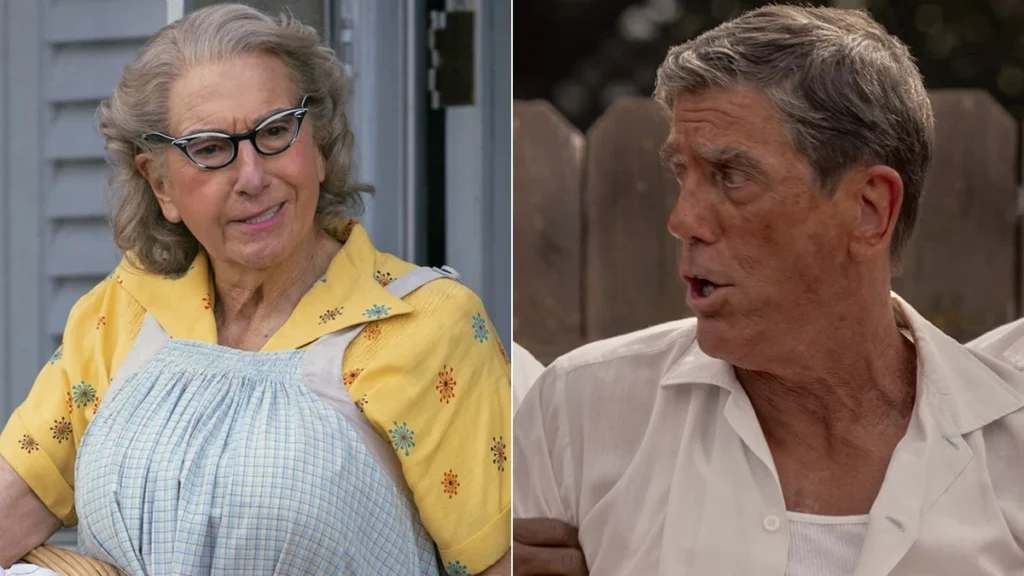
Episode four, "Deepthroat," plunges audiences into a meticulously crafted scenario designed to highlight the perceived absurdity of vaccine skepticism. The central comedic set-piece features Larry David in an unexpected, yet characteristic, role: the mother of Dr. Jonas Salk. Dr. Salk, a monumental figure in medical history, is credited with developing one of the first effective polio vaccines. David, in drag, portrays a proud, almost boastful, maternal figure, reveling in her son’s groundbreaking achievement. Her character engages in a seemingly innocuous conversation with her neighbor, Evelyn, portrayed by veteran comedian Judy Gold, about the triumph of medical science over a devastating disease.
The tranquility of this scene is abruptly shattered by the interjection of a character named Bobby, played by Gregg "Jeep" Perrie. Bobby, a loud and aggressive neighbor, immediately launches into a tirade against the very vaccine being celebrated. His lines are eerily familiar to those acquainted with Robert F. Kennedy, Jr.’s public statements: "that vaccine’s gonna kill people. It’s gonna give them heart attacks!" This direct quotation, or a very close approximation of it, mirrors specific claims made by Kennedy regarding the alleged adverse effects of various vaccines, particularly those developed during the recent global health crises. The comedic tension is derived from the stark contrast between the historical context of polio eradication and Bobby’s anachronistic, scientifically unfounded assertions.
As the sketch progresses, Bobby’s pronouncements escalate in their irrationality and vehemence, creating an increasingly uncomfortable and absurd environment for the characters around him. The mother of Jonas Salk, initially beaming with pride, becomes progressively horrified and exasperated by Bobby’s unyielding misinformation. The climax of the scene arrives with David’s character delivering a passionate, frustrated outburst: "If some idiot, some moron, ever put you in charge, that would be a dark day for humanity." This line serves as a potent, unambiguous condemnation of Kennedy’s potential influence on public policy, particularly in the realm of health. The sketch concludes with Bobby being unceremoniously taken away to a psychiatric ward, a visual metaphor suggesting the irrationality and detachment from reality inherent in his views. This dramatic resolution underscores David’s unequivocal stance on the dangers of vaccine misinformation and the perceived cognitive dissonance of those who propagate it. The choice of the episode title, "Deepthroat," a nod to the anonymous source in the Watergate scandal, could be interpreted as a sardonic commentary on those who claim to reveal hidden "truths" that contradict established scientific consensus.
A Friendship Divided: David, Hines, and Kennedy
The satirical attack on Robert F. Kennedy, Jr. carries a layer of personal poignancy and public intrigue, rooted in the past friendship between Larry David and Kennedy. It is widely known that David played a direct role in introducing his Curb Your Enthusiasm co-star, Cheryl Hines, to Kennedy. The two subsequently married in 2014, making David an unexpected architect of their union. For years, the connection between the comedic icon, the beloved actress, and the scion of one of America’s most prominent political families was a subject of gentle fascination.
However, as Variety and other outlets have extensively reported, this friendship eventually frayed, ultimately collapsing under the weight of profound ideological differences. The specific turning point, as indicated in the original report, was Kennedy’s alignment with "the current presidential administration." While this phrasing is somewhat vague in the original context, it implicitly refers to his increasing association with figures and ideologies that diverge sharply from David’s own well-documented progressive and rationalist leanings. More precisely, Kennedy’s vocal embrace of anti-vaccine conspiracy theories and his subsequent decision to launch a presidential campaign, initially as a Democrat and later as an independent, placed him squarely at odds with the mainstream scientific community and many long-time political allies, including, evidently, Larry David.
Cheryl Hines has found herself in a uniquely challenging position, navigating the complexities of her marriage to Kennedy and her professional and personal history with David. While Hines has publicly stated her support for Kennedy as her husband, she has also, at times, sought to distance herself from his more controversial anti-vaccine rhetoric. In the past, she has released statements clarifying her personal belief in vaccines while acknowledging her husband’s differing views. This delicate balancing act highlights the intense pressure and public scrutiny placed on individuals whose personal relationships intersect with highly contentious public debates. The fact that Hines is not appearing in Life, Larry, and the Pursuit of Unhappiness, despite the show featuring numerous Curb Your Enthusiasm alumni, is a silent but powerful indicator of the depth of the rift. Her absence speaks volumes about the irreconcilable differences that have emerged, making a comedic collaboration, particularly one directly targeting her husband, an impossibility.
RFK Jr.’s Public Health Stance: A Contentious Record
Robert F. Kennedy, Jr.’s transformation from a prominent environmental lawyer to a leading figure in the anti-vaccine movement is a complex and often debated trajectory. His activism against vaccines began to gain significant public traction in the early 2000s, initially focusing on alleged links between thimerosal (a mercury-based preservative formerly used in some vaccines) and autism, a claim that has been thoroughly debunked by extensive scientific research. Over the years, his focus broadened to include a wide array of criticisms against childhood vaccines, pharmaceutical companies, and public health agencies like the Centers for Disease Control and Prevention (CDC) and the World Health Organization (WHO).
Kennedy’s claims often involve allegations of corporate malfeasance, government cover-ups, and the purported dangers of vaccine ingredients. He has repeatedly suggested that vaccines cause a range of debilitating conditions, from autoimmune disorders to neurological damage, often citing anecdotal evidence or studies that have been widely discredited or retracted. His rhetoric intensified significantly during the COVID-19 pandemic, where he became a vocal opponent of COVID-19 vaccines, mask mandates, and other public health measures, frequently appearing at rallies and on podcasts to disseminate his views.
The scientific and medical consensus overwhelmingly refutes Kennedy’s assertions. Major global and national health organizations, including the CDC, WHO, the American Academy of Pediatrics, and the National Institutes of Health (NIH), unequivocally affirm the safety and efficacy of approved vaccines. Polio, the very disease referenced in David’s sketch, serves as a stark historical example of vaccine success. Before the widespread use of the Salk vaccine in the mid-20th century, polio crippled or killed hundreds of thousands globally each year. Mass vaccination campaigns led to its near eradication worldwide, with only a handful of countries still reporting wild poliovirus cases today. The resurgence of other vaccine-preventable diseases, such as measles, in communities with low vaccination rates underscores the critical importance of widespread immunization. Medical professionals and public health experts consistently warn that misinformation, such as that promoted by Kennedy, poses a significant threat to global public health by fostering vaccine hesitancy and eroding public trust in scientific institutions.
The Legacy of Satire: David’s Brand of Provocation
Larry David has long established himself as a master of observational and cringe comedy, a style that often delves into the uncomfortable truths of social interactions and personal foibles. From his co-creation of Seinfeld, a show famously about "nothing," to his highly acclaimed Curb Your Enthusiasm, David has perfected the art of finding humor in the mundane, the awkward, and the politically incorrect. His comedic voice is characterized by a relentless pursuit of authenticity, often at the expense of social graces, and a willingness to challenge established norms.
Life, Larry, and the Pursuit of Unhappiness appears to continue this tradition, but with an even more direct and politically charged edge. The series, much like Curb, features David playing a fictionalized version of himself, navigating the absurdities of modern life. However, the early episodes suggest a heightened focus on societal critiques, particularly concerning political figures and contentious public debates. The "Deepthroat" episode is not an isolated incident in this new series’s approach to political commentary. Previously, Pursuit of Unhappiness featured a sketch in which David and Rob Reiner, portraying George Washington, ruthlessly mocked former President Donald Trump. This earlier parody, which also generated significant buzz, established a clear pattern: David is using his new platform to explicitly target and satirize figures he perceives as embodying problematic ideologies or behaviors.
The role of comedy in political discourse is multifaceted. Satire, in particular, has a long history of serving as a powerful tool for social commentary, holding power to account, and challenging prevailing narratives. By employing humor, satirists can often penetrate societal defenses and provoke thought in ways that direct criticism might not. David’s brand of satire, with its blend of realism and exaggeration, aims to expose hypocrisy, irrationality, and the often-absurd consequences of certain beliefs or actions. In the context of the RFK Jr. parody, David is not merely making a joke; he is making a statement, utilizing his comedic platform to actively participate in the ongoing public health debate and to articulate a clear stance against vaccine misinformation.
Broader Implications: Comedy, Politics, and Public Discourse
The decision by Larry David to directly and unequivocally satirize Robert F. Kennedy, Jr.’s anti-vaccine views carries significant implications for the intersection of entertainment, politics, and public discourse. In an increasingly polarized society, where factual disputes often devolve into ideological battles, comedy can serve as both a mirror and a weapon.
Firstly, the episode highlights the growing trend of high-profile entertainers leveraging their platforms to engage in explicit political commentary. While this is not new, the directness and specificity of David’s attack, especially given the personal history involved, signifies a heightened level of engagement. It signals a willingness by some in the entertainment industry to take clear sides on contentious issues, even at the risk of alienating segments of their audience or straining personal relationships. This approach contributes to the ongoing cultural conversation about the role of celebrities in shaping public opinion and the boundaries of artistic expression.
Secondly, the parody raises questions about the effectiveness of satire in combating misinformation. For those who already share David’s perspective on vaccine science, the sketch serves as a cathartic validation and a reinforcement of their views. However, for those who are sympathetic to Kennedy’s arguments or are entrenched in vaccine skepticism, the parody might be dismissed as biased, unfair, or simply propaganda from a "mainstream" media outlet. This dynamic underscores the challenge of using satire to genuinely shift opinions in an era of deep ideological divides, where facts themselves are often contested. Yet, it undeniably brings the issue to a wider audience, potentially prompting further discussion and critical thinking, especially among those who might be on the fence or less informed.
Finally, the episode’s release and the subsequent discussions it will undoubtedly generate contribute to the broader impact on Kennedy’s public image, particularly as he continues his presidential campaign. While David’s primary intention is comedic and satirical, the political implications are unavoidable. Such a prominent lampooning on a major network like HBO can influence public perception, potentially reinforcing negative stereotypes for some voters or solidifying criticisms from his opponents. It injects a powerful, albeit humorous, critique into the political narrative surrounding his candidacy, forcing his campaign to contend with not just policy debates but also the cultural portrayal of his views.
The "Deepthroat" episode of Life, Larry, and the Pursuit of Unhappiness is more than just a comedic sketch; it is a cultural artifact reflecting the deep ideological fissures of our time. It underscores the personal cost of political divergence, the potent role of satire in public debate, and the ongoing struggle for scientific literacy in a world awash with misinformation. New episodes continue to premiere Fridays on HBO and HBO Max, promising further explorations into the uncomfortable, yet often hilarious, truths of modern existence.