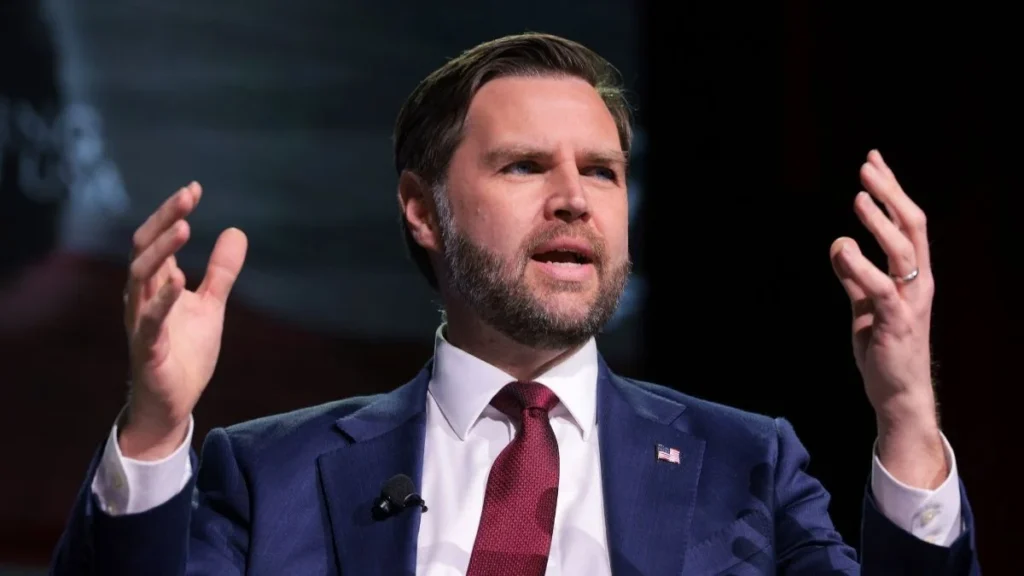

The diplomatic mission to Islamabad, Pakistan, intended to serve as a pivotal summit for peace negotiations between the United States and Iran, has been suspended indefinitely following a series of complex geopolitical developments. Led by JD Vance, the high-level American delegation was scheduled to meet with international mediators and Iranian representatives to formalize a long-term resolution to ongoing regional hostilities. However, reports from the New York Times and verified by local diplomatic sources indicate that the trip was shelved after Tehran signaled its refusal to participate in the upcoming rounds of scheduled talks. This postponement coincides with a late-hour decision by President Donald Trump to extend a temporary ceasefire deal, a move that provides a fragile reprieve from military escalation while simultaneously highlighting the deep-seated gridlock between the two nations.
The breakdown in the diplomatic schedule was catalyzed by a notification from Iran, delivered via Pakistani intermediaries. According to the IRGC-affiliated Tasnim news agency, Tehran officially informed U.S. officials that its delegation would not attend the Wednesday sessions in Islamabad. The refusal is framed by Iranian officials as a response to what they describe as "unacceptable U.S. terms" and a lack of clear guarantees regarding the lifting of economic sanctions. The sudden withdrawal of the Iranian contingent has left the international community questioning the viability of the current peace framework and the future of the Islamabad process.
The Postponement of the Vance Delegation
JD Vance’s role as the head of the delegation was seen as a significant indicator of the administration’s commitment to a negotiated settlement. The trip to Islamabad was designed not only to facilitate direct or indirect communication with Iranian officials but also to solidify ties with Pakistan, which has increasingly positioned itself as a primary neutral ground for Middle Eastern and South Asian security dialogues. The postponement is a logistical and symbolic setback for the administration’s "peace through strength" strategy, which relies on a combination of aggressive rhetoric and high-stakes diplomacy.
Diplomatic observers in Islamabad noted that preparations for the summit had been underway for weeks, with security protocols and venue arrangements already finalized. The indefinite hold placed on the trip suggests that the administration does not expect a breakthrough in the immediate future. Sources within the State Department indicate that while the channel of communication via Pakistan remains open, the lack of a willing partner in Tehran has made the physical presence of a high-level U.S. delegation counterproductive.
President Trump’s Ceasefire Extension and Strategic Ambiguity
In a parallel development that added a layer of complexity to the diplomatic freeze, President Donald Trump announced an extension of the existing ceasefire deal with Iran on Tuesday. The extension came just twenty-four hours before the previous agreement was set to expire, a deadline that many military analysts feared could trigger a resumption of kinetic operations. Unlike previous extensions, this announcement did not include a specific expiration date. Instead, the President stated that the ceasefire would remain in effect "until such time as their leaders and representatives can come up with a unified proposal."
This move represents a departure from the President’s earlier public statements. In an interview with CNBC’s "Squawk Box" conducted only hours before the extension was codified, Trump expressed skepticism about the efficacy of continuing the pause in hostilities. During the interview, he noted the time constraints facing both parties, suggesting that the window for a diplomatic solution was rapidly closing. "We don’t have that much time because by the time both parties get there, you know, they just got the okay to go forward, which I knew they were going to do anyway," Trump remarked, referring to the logistical hurdles of the Islamabad summit.
The President’s rhetoric throughout the day fluctuated between conciliatory and bellicose. On one hand, he offered a vision of a rehabilitated Iran, stating, "Iran can get themselves on a very good footing if they make a deal. They can make themselves into a strong nation again, a wonderful nation again." On the other hand, when questioned about the possibility of resuming military action if a deal remains unsigned, Trump adopted a more aggressive posture. "Well, I expect to be bombing because I think that’s a better attitude to go in with," he said, adding that the U.S. military is "raring to go" and "absolutely incredible."
Chronology of Recent U.S.-Iran Tensions (April 2026)
The current impasse is the result of a rapidly evolving timeline of events that began in early April 2026. Understanding the sequence of these developments is critical to contextualizing the current diplomatic stall:
- April 1, 2026: A temporary 20-day ceasefire is established following a series of maritime skirmishes in the Persian Gulf. Both nations agree to use the period to outline terms for a more permanent "Grand Bargain."
- April 10, 2026: The White House announces that JD Vance will lead a special delegation to Islamabad to meet with Pakistani officials and, potentially, an Iranian contingent.
- April 15, 2026: Reports emerge of internal friction within the Iranian leadership. Hardline elements within the IRGC reportedly express opposition to the Islamabad talks, citing the U.S. refusal to preemptively freeze certain sanctions.
- April 19, 2026: The New York Times reports significant delays in the Vance mission as logistics for the Iranian delegation remain unconfirmed.
- April 21, 2026 (Morning): President Trump appears on CNBC, signaling both a readiness for military action and a desire for a "wonderful" Iranian future.
- April 21, 2026 (Afternoon): Iran officially notifies Pakistani mediators that they will not attend the Wednesday talks.
- April 21, 2026 (Evening): President Trump signs the indefinite ceasefire extension, citing the need for a "unified proposal" from the opposing side.
The Role of Pakistan as a Mediator
Pakistan’s role in this diplomatic endeavor cannot be overstated. As a nation with a long-standing relationship with both Washington and Tehran, Islamabad has emerged as the preferred "backchannel" for communications. The Pakistani Foreign Office has been working extensively to bridge the gap between U.S. demands for nuclear oversight and Iranian demands for economic relief.
The failure of the Wednesday talks to materialize is a blow to Pakistani diplomatic efforts. Islamabad had hoped to use the summit to demonstrate its regional influence and its ability to de-escalate global flashpoints. For the U.S., relying on Pakistan as a mediator provides a layer of separation that allows for "deniable" negotiations, but it also means that the U.S. is dependent on third-party verification of Iranian intentions—a factor that contributed to the confusion surrounding the delegation’s departure.
Analysis of Economic and Military Implications
The indefinite extension of the ceasefire has had an immediate impact on global markets and military readiness.
Market Reaction: Following the announcement of the ceasefire extension, global oil prices saw a modest decline of 2.4%, as the immediate threat of a disruption in the Strait of Hormuz receded. However, market analysts warn that the "indefinite" nature of the extension, coupled with the cancellation of the Vance trip, creates a "risk vacuum." Without a clear path to a permanent deal, the volatility in energy markets is expected to persist.
Military Posture: Despite the ceasefire, the U.S. Department of Defense has maintained a high state of alert in the region. The President’s comments regarding the military being "raring to go" align with reports of continued carrier strike group presence in the Arabian Sea. Defense analysts suggest that the ceasefire is being used by both sides to consolidate positions rather than to truly de-escalate. For the U.S., the pause allows for the rotation of personnel and the refinement of targeting data, while for Iran, it provides a reprieve from the "maximum pressure" economic and military tactics.
Official Responses and International Reactions
The international community has reacted with a mixture of relief and concern.
- The United Nations: A spokesperson for the UN Secretary-General welcomed the ceasefire extension but urged both parties to return to the negotiating table without preconditions. The UN emphasized that the "Islamabad channel" remains the most viable path toward a peaceful resolution.
- European Union: EU diplomats expressed disappointment over the postponement of the Vance mission. A statement from Brussels highlighted the need for "consistent and predictable diplomacy," suggesting that the mixed messages coming from the White House may be complicating the Iranian decision-making process.
- Israel: Sources within the Israeli government have remained cautious, with some officials expressing concern that an indefinite ceasefire allows Iran to continue its regional activities without fear of immediate U.S. reprisal.
- Domestic Reaction: In Washington, the postponement has sparked a partisan debate. Supporters of the administration argue that the President is correctly using "strategic unpredictability" to force Iran into a corner. Critics, however, contend that the lack of a cohesive diplomatic strategy and the cancellation of the Vance trip signal a breakdown in the administration’s foreign policy apparatus.
Broader Impact and Future Outlook
The indefinite hold on JD Vance’s trip to Pakistan marks a critical juncture in U.S.-Iran relations. It suggests that the "easy" phase of de-escalation—the agreement not to shoot—has been achieved, but the "hard" phase of diplomacy—the agreement on how to coexist—is stalled.
The Iranian refusal to attend the talks indicates a strategic calculation by Tehran that they can gain more by waiting. By forcing an indefinite ceasefire without making concessions, Iran may be testing the limits of President Trump’s patience and the consistency of his "bombing" rhetoric. Conversely, the U.S. administration’s decision to keep the ceasefire in place despite the diplomatic snub suggests a desire to avoid a full-scale conflict during a sensitive domestic political cycle.
As the situation stands, the "unified proposal" requested by President Trump remains elusive. The diplomatic infrastructure in Islamabad remains on standby, but the path to a signed agreement is now obscured by mutual distrust and a fundamental disagreement over the terms of engagement. For now, the world remains in a state of "armed peace," where the absence of active combat is maintained not by a shared vision for the future, but by the logistical and political costs of returning to war. The coming weeks will be instrumental in determining whether the Islamabad process can be revived or if the indefinite hold on the Vance delegation is a precursor to a more permanent breakdown in relations.