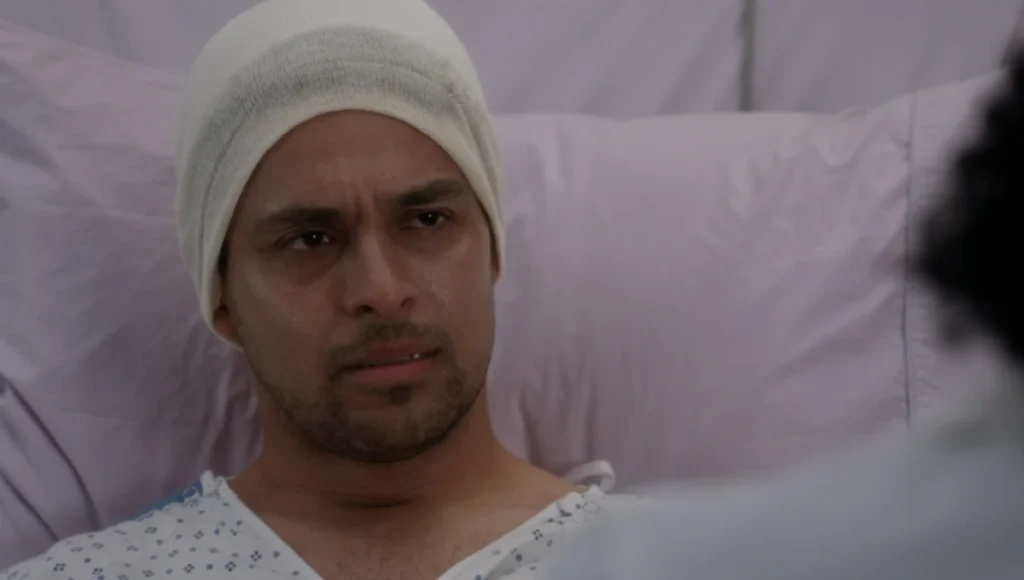

A decade has passed since Grey’s Anatomy delivered one of its most emotionally devastating character deaths, a poignant storyline that continues to resonate with fans. In Season 12, actor Wilmer Valderrama made a memorable guest appearance as Kyle Diaz, a gifted guitarist whose life was tragically cut short by complications from his battle with multiple sclerosis (MS). His arc, though brief, left an indelible mark on the series and its dedicated audience, particularly through his connection with Dr. Stephanie Edwards, portrayed by Jerrika Hinton.
The Tragic Arc of Kyle Diaz
Kyle Diaz was introduced as a vibrant musician whose career was threatened by the onset of MS, specifically manifesting as hand tremors that impacted his ability to play his beloved instrument. His arrival at Grey Sloan Memorial Hospital brought him into the care of Dr. Stephanie Edwards, who developed a significant professional and personal bond with him. The narrative surrounding Kyle’s treatment was particularly gripping, featuring a groundbreaking deep-brain stimulation procedure overseen by Dr. Amelia Shepherd (Caterina Scorsone). A unique and critical aspect of this surgery involved Kyle needing to play his guitar during the procedure itself. This unusual requirement was a diagnostic necessity, allowing the surgical team to monitor for any subtle brain bleeds by observing his motor control and musical performance in real-time.
Despite initial hopes that the procedure would alleviate his tremors and allow him to return to his passion, Kyle’s medical journey took a sharp and tragic turn. He experienced a secondary tremor, necessitating further surgical intervention. This was followed by a severe infection that led to the removal of his tremor-reducing implant. The infection proved relentless, requiring yet another complex surgery. It was on the operating table during this final procedure that Kyle Diaz succumbed to the overwhelming complications, a devastating loss that sent shockwaves through the hospital and the viewing audience.
The relationship between Kyle and Stephanie was a central element of his storyline. Their connection, forged amidst the intense pressures of his illness and treatment, experienced its share of challenges. However, they had managed to reconcile their differences shortly before his fatal surgery. This reconciliation made his death all the more poignant, leaving Dr. Edwards heartbroken and grappling with the profound grief of losing someone she had grown to care for deeply.
Valderrama’s Reflection on a Decade Gone By
In a recent conversation with TV Insider, while discussing the latest season of his ongoing series NCIS, Wilmer Valderrama was prompted to reflect on the ten-year anniversary of Kyle Diaz’s death. The actor expressed a sense of disbelief and amusement at the passage of time. "It’s been 10 years since Shonda Rhimes killed me. Wow," Valderrama quipped, acknowledging the enduring impact of his Grey’s Anatomy role.
Despite a career marked by numerous significant and widely recognized performances, including his iconic role as Fez in That ’70s Show and his current starring turn as Agent Nick Torres in NCIS, Valderrama confirmed that he is still occasionally recognized for his portrayal of Kyle Diaz. He shared an anecdote about encountering fans who express their lingering sadness over the character’s demise. "Occasionally, I’ll be walking around the airport, and it’d be a mom with a kid comes up and goes, ‘I still can’t believe they killed you,’" he revealed. This sentiment highlights the deep emotional connection viewers form with characters on long-running, character-driven dramas like Grey’s Anatomy.
Valderrama also offered insights into how he came to be part of the Grey’s Anatomy universe. He recalled receiving a call from the show’s creator, Shonda Rhimes. "When they called me to do it, it was so funny. Talked to Shonda, and she was like, ‘Hey, I’d love for you to come and do a couple of episodes with us.’ I’m like, ‘Yeah, let’s go. It sounds like a lot of fun.’" At the time, Valderrama was intentionally taking a brief hiatus from television, seeking to maintain his skills and engagement. "And at that time, I was taking a little break from TV, too, so it was just kind of nice to just keep the wheels oiled," he explained. However, Rhimes was upfront about the character’s fate. "And she’s like, ‘But just so you know, I’m going to have to kill you.’ And I said, ‘Let’s go, whatever it is.’" This directness from Rhimes, and Valderrama’s willingness to embrace the challenging storyline, underscore the collaborative nature of such impactful television narratives.
The Passionate Grey’s Anatomy Fanbase and the Show’s Legacy
Valderrama expressed his admiration for the Grey’s Anatomy fanbase, describing them as "passionate." He recognized the show’s significant contribution to the television landscape, noting its role in "altering the genre of what that was for television." He elaborated, "created a lot of beautiful characters that you wanted to just live with." The longevity of Grey’s Anatomy, now in its twentieth season, speaks volumes about its ability to consistently deliver compelling stories and foster deep audience investment. "Obviously, such a long-running show. So yeah, I felt privileged, and it was such a blast to work with the girls, man. It was so cool," Valderrama concluded, referring to his interactions with the female cast members.
Context and Impact of Character Deaths on Grey’s Anatomy
Grey’s Anatomy has built a reputation for its willingness to explore the harsh realities of medicine, which often includes the loss of beloved characters. The death of Kyle Diaz in Season 12 (2016) falls within a long tradition of significant character fatalities that have shaped the series’ narrative and its emotional core. This practice, while often heartbreaking for viewers, serves several narrative functions:
- Realism and Emotional Resonance: Medical dramas, by their nature, deal with life and death. The death of a character, even a recurring guest star, can underscore the high stakes of the hospital environment and create a more realistic and emotionally resonant viewing experience.
- Character Development: The grief and impact of a character’s death often serve as catalysts for the growth and development of the remaining characters. Dr. Stephanie Edwards’ arc, for instance, was profoundly shaped by her relationship with Kyle and his subsequent death, forcing her to confront loss and mature as a physician and an individual.
- Audience Engagement: While controversial, these deaths often generate significant discussion and engagement among the fanbase. Viewers become deeply invested in the characters, and their emotional reactions to these events are a testament to the show’s storytelling power.
Chronology of Kyle Diaz’s Storyline:
- Season 12, Episode 11 ("The Me Nobody Knows"): Kyle Diaz is introduced as a guitarist seeking treatment for MS-related hand tremors at Grey Sloan Memorial. He is treated by Dr. Stephanie Edwards.
- Subsequent Episodes: Kyle undergoes a deep-brain stimulation procedure performed by Dr. Amelia Shepherd, with the unique requirement of playing his guitar during surgery for monitoring purposes.
- Complications Arise: Following the initial surgery, Kyle develops another tremor, necessitating a second operation.
- Infection and Further Procedures: An infection develops, leading to the removal of his tremor-reducing implant. The infection continues to spread, requiring a final, ultimately fatal, surgery.
- Season 12, Episode 20 ("There’s a Fine Line"): Kyle Diaz dies on the operating table. Stephanie Edwards is left devastated.
Broader Implications and the Enduring Appeal of Grey’s Anatomy
The enduring popularity of Grey’s Anatomy, even after two decades on air, can be attributed to its ability to balance intense medical drama with compelling character relationships and emotional storytelling. The death of Kyle Diaz, while a singular event, exemplifies the show’s commitment to exploring the full spectrum of human experience, including profound loss. Wilmer Valderrama’s continued recognition for the role, ten years later, is a testament to the character’s impact and the effectiveness of the writing and performances. It also highlights how guest arcs, when executed with depth and emotional honesty, can leave a lasting impression on both the audience and the actors involved. The show’s ability to weave such poignant narratives, even with transient characters, underscores its sophisticated understanding of dramatic storytelling and its lasting appeal in the competitive television landscape.
Grey’s Anatomy continues to stream on Hulu and Netflix, allowing new and existing audiences to revisit these powerful storylines.
Reporting by Meredith Jacobs