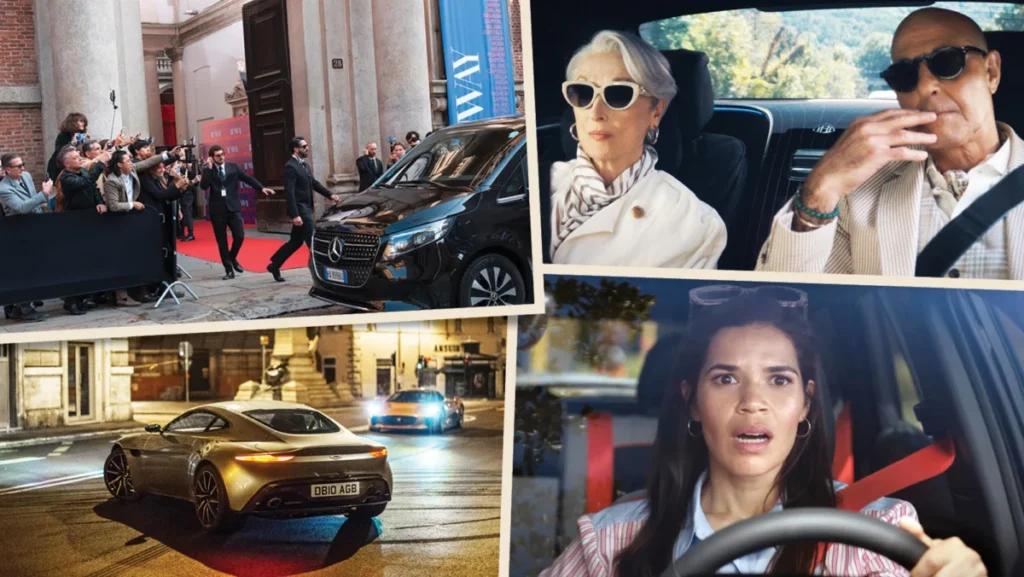

When Miranda Priestly, the fictitious Runway editrix in The Devil Wears Prada 2, needs to navigate the demanding landscape of high fashion – be it a critical editorial meeting, a high-stakes photo shoot, or a glamorous, Met Gala-like ball – she is invariably chauffeured in a vehicle befitting her formidable Wintourian status: a Mercedes-Maybach S-Class. This isn’t merely a stylistic choice by the film’s art department; it is the meticulously orchestrated outcome of an extensive promotional campaign negotiated between Mercedes-Benz and Disney, the studio behind the highly anticipated sequel. Valued at over $300,000, the Mercedes-Maybach S-Class serves not just as transportation but as a powerful, moving billboard, seamlessly integrated into the narrative fabric of the film.
Mercedes’ Chief Marketing Officer, Melody Lee, articulates the strategic precision behind this collaboration, stating, "We knew it was the perfect fit." The timing of the film’s release proved particularly opportune, coinciding with the global launch of the latest iteration of Mercedes’ range-topping luxury limousine. Furthermore, the sequel reunited the original beloved cast, a factor that nearly guaranteed a box office juggernaut, which has since soared above $400 million globally. Beyond these immediate commercial considerations, the demographic alignment was a critical element. Lee observed that the audience who flocked to the original The Devil Wears Prada two decades prior had "grown up and become our target customers," illustrating a long-term, generational marketing strategy at play. This demographic evolution underscores a sophisticated understanding of consumer journeys and brand loyalty, recognizing that today’s young film enthusiasts are tomorrow’s luxury car buyers.
The Evolution of Branded Entertainment in Film
The strategic placement of products within cinematic narratives has evolved significantly from its rudimentary beginnings. What started as often subtle, sometimes accidental, background appearances has transformed into a sophisticated discipline known as branded entertainment or content integration. Today, major automakers and film studios maintain dedicated branded entertainment teams that foster continuous dialogue, actively seeking mutually beneficial opportunities. The ideal scenario dictates that this collaborative process commences well in advance of production. This early engagement is crucial to ensure that the product placement feels authentically woven into the storyline, rather than appearing as a jarring or "laughably tacked on" commercial interlude. Such organic integration enhances viewer experience and significantly boosts brand recall and affinity.
Ty Ervin, VP of Marketing Partnerships, Creative, and Product Placement at Disney, emphasizes the profound role vehicles play in storytelling. "Cars aren’t just background. They tell us just as much about a character as their costume and environment," Ervin explains. This perspective highlights the narrative power of automotive choices, where a character’s vehicle can convey social status, personality, aspirations, or even subtle psychological traits, making it an indispensable element of character development and world-building. For instance, Miranda Priestly’s Maybach S-Class immediately communicates her unparalleled authority, uncompromising taste, and the rarefied atmosphere of her professional and personal life.
Carefully planned collaborations extend their reach far beyond the confines of the silver screen. In the case of The Devil Wears Prada 2, this partnership catalyzed extensive Mercedes advertising campaigns that prominently featured the Maybach S-Class alongside its filmic connection. This multi-platform approach was part of a broader effort to elevate the sequel’s profile and, as Lee envisioned, help both the film and its featured vehicles become "a huge cultural moment." Such synergistic marketing amplifies exposure for both the film and the brand, creating a comprehensive cultural footprint.
Case Studies in Automotive Product Placement Excellence
The practice of strategic product placement is not exclusive to Mercedes-Benz. Other automotive manufacturers have adopted similar sophisticated processes, leveraging the power of cinematic storytelling to introduce new models and reinforce brand identity. Sarah Schrode, who previously headed entertainment marketing for General Motors, provides a compelling example with the 2023 blockbuster Barbie. Chevrolet engaged closely with the film’s production to introduce its 2024 Blazer SS and Hummer EVs, which were driven by America Ferrera’s and Ryan Gosling’s characters, respectively. Beyond showcasing new models, GM also ingeniously revived its Mattel "Dream Car" heritage by providing Margot Robbie’s titular character with a vintage pink Corvette, a nod to the iconic toy that resonated deeply with audiences and generated immense nostalgia. This blend of new and heritage vehicles demonstrated a comprehensive understanding of the film’s multi-generational appeal.
However, in the highly competitive realm of automotive product placement, no franchise can rival the enduring legacy and consistent success of James Bond. According to Alessandro Usielli, head of Ford global brand entertainment, the Bond franchise has served as a premier platform for introducing new models from Aston Martin, Jaguar, Land Rover, and Ford. These brands have consistently provided vehicles not only for the legendary superspy himself but also for his coterie of glamorous conquests and his formidable villainous adversaries. The association with Bond imbues these vehicles with an aura of sophistication, power, and adventurous spirit, cementing their iconic status in popular culture and driving aspiration among consumers. The Aston Martin DB5, for example, is synonymous with Bond, a relationship that has spanned decades and continues to define luxury performance.
Innovative and Non-Traditional Placements
Not every product placement seen onscreen is necessarily available for purchase, nor is every vehicle depicted road-safe. The boundaries of branded entertainment are continually being pushed, extending beyond conventional vehicle appearances. Disney’s Ty Ervin highlights Porsche’s innovative collaboration on the starship design for the 2019 Star Wars spinoff, The Rise of Skywalker. This venture demonstrates a willingness to integrate brand identity into fantastical elements, showcasing design philosophy rather than just a physical product. Similarly, Melody Lee notes Mercedes’ role in the upcoming 2025 film F1, where the brand acts as an in-film sponsor of Brad Pitt’s fictional Apex racing team and provides a fleet of onscreen vehicles. This elevates the placement from a mere appearance to an integral part of the narrative and world-building.
Perhaps most surprisingly, Mercedes-Benz even worked two of its cars into the recent hit animated cartoon GOAT. Lee explains the rationale: "You wouldn’t think Mercedes-Benz would be in an animated movie, but it’s part of our strategy to reach the next generation." This forward-thinking approach underscores a recognition that future consumers are shaped by early media exposure, making animated content a viable and strategic channel for brand seeding. It represents a proactive effort to build brand familiarity and affinity with younger audiences, ensuring long-term market relevance.
The Business Imperative: Driving Sales and Engagement
The fundamental objective behind these elaborate movie partnerships is clear: to create affinity, relevancy, relatability, and ultimately, to drive sales. Melody Lee points to compelling data: "In one study, three-quarters of viewers searched for a brand after seeing a placement, and more than half went on to buy a product from that brand." This empirical evidence underscores the profound impact of product placement on consumer behavior, transforming passive viewership into active engagement and tangible purchasing decisions.
The global product placement market is a testament to this efficacy, estimated to be worth billions of dollars annually and projected to grow significantly in the coming years. Market research firm Statista reported the global product placement market at over $23 billion in 2021, with projections for continued expansion, driven by the increasing integration of brands into diverse media forms. This growth reflects a broader industry trend where traditional advertising channels face saturation and diminishing returns, pushing brands towards more immersive and less interruptive marketing strategies.
Challenges and the Future of Product Placement
Even in an era characterized by diminishing traditional box office returns and fragmented audiences, such partnerships remain a critical component of marketing strategies. Sarah Schrode articulates a key advantage: "Product placement is unskippable, unblockable and lives on in long-tail streaming." In an age where consumers increasingly use ad blockers and subscription services to avoid commercials, integrated product placements offer an unavoidable and enduring presence. However, with audience fragmentation, shorter attention cycles, and decreased cinema attendance, the bar for effective placements has risen considerably. "The bar is higher now. Many times, I’m looking for known IP or very innovative new IP," Schrode adds, emphasizing the need for placements that are iconic, memorable, and strategically aligned with culturally resonant content.
These evolving challenges have compelled automakers and studios to adopt a more holistic perspective on product placement. Instead of viewing it as a standalone transaction, the emphasis has shifted towards building comprehensive "ecosystems" around these integrations. Schrode explains that this approach encompasses a multifaceted strategy, including social media content, behind-the-scenes footage, partnerships with talent, and digital experiences that seamlessly connect onscreen moments to the brand’s broader world. This integrated ecosystem ensures that the initial film placement serves as a launching pad for a sustained, multi-channel marketing effort.
When executed skillfully, the results are profoundly impactful. Schrode highlights the extraordinary success of the Barbie partnership for General Motors: "The Barbie partnership for GM saw 10 times the engagement on social media than any other posts in the history of the company. That’s a pretty powerful stat." Such an amplification of engagement demonstrates the immense power of culturally relevant product placement, transcending mere advertising to become a significant cultural touchpoint. It illustrates how a well-conceived integration can generate unparalleled buzz, fostering deep connections with consumers and solidifying brand presence across the digital and physical landscapes. This strategic evolution positions product placement not just as a marketing tactic, but as an indispensable component of contemporary brand-building and cultural immersion.