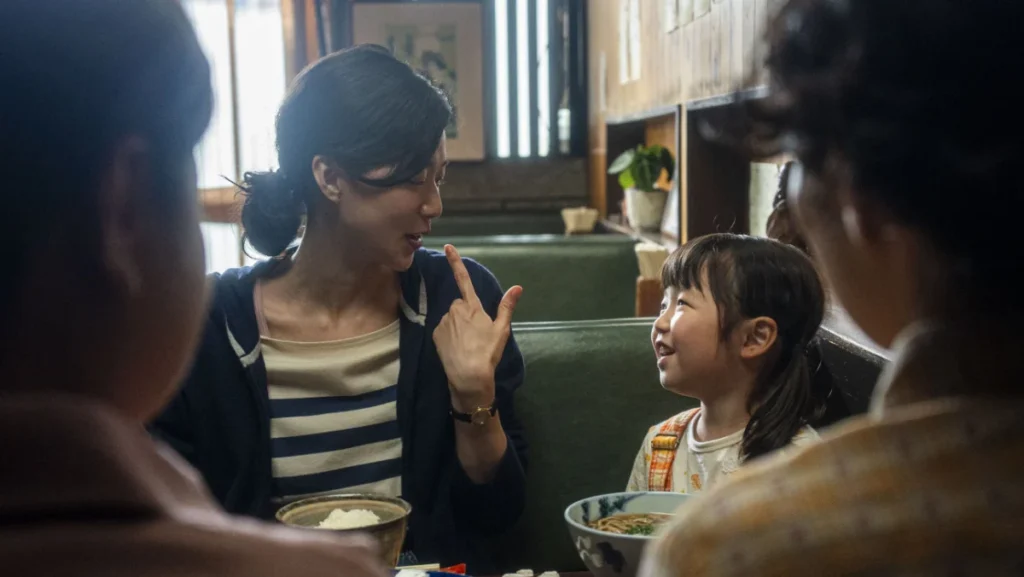

The 28th edition of the Far East Film Festival (FEFF), a cornerstone event for celebrating and promoting East Asian cinema in Europe, concluded on Friday night in the picturesque northern Italian city of Udine, bestowing its top accolades upon a diverse array of cinematic achievements. Emerging as the most beloved by the festival-goers was Kimura Taichi’s tender Japanese drama, Fujiko, which proudly took home the prestigious Golden Mulberry Audience Award. This esteemed prize, determined by the collective votes of the festival’s dedicated attendees, underscores the film’s profound connection with its international audience and highlights the enduring appeal of nuanced, character-driven narratives from Japan.
A Deep Dive into the Award-Winning Narratives
Fujiko, Kimura Taichi’s sophomore feature, is a captivating family dramedy meticulously set against the backdrop of Japan in the 1970s and 1980s. The film masterfully navigates the intricate journey of a middle-aged single mother striving to forge her own path and find her voice within a societal landscape still grappling with the nascent, yet powerful, concept of women’s liberation. This historical context is crucial, as post-war Japan experienced significant social shifts, but traditional gender roles remained deeply ingrained. The film’s exploration of a woman’s struggle for independence against these societal currents offers a poignant reflection on personal resilience and the gradual evolution of cultural norms. The narrative is brought to life by a stellar ensemble cast, featuring the talents of Yuki Katayama, Lily Franky, Tsuyoshi Ujiki, Keiko Takeshita, Kayoko Kishimoto, and Issey Ogata, whose collective performances are instrumental in rendering the period and its challenges with authenticity and emotional depth. The Golden Mulberry win for Fujiko not only recognizes its artistic merit but also its ability to resonate with a global audience through its universal themes of family, struggle, and the pursuit of self-determination.
The festival’s second most coveted audience accolade, the 2026 Silver Mulberry, was awarded to the searing South Korean documentary, The Seoul Guardians. Directed by the collaborative trio of Kim Jong-woo, Kim Shin-wan, and Cho Chul-young, this film captures the surreal and tumultuous events of December 3, 2024. On this pivotal day, the streets of Seoul erupted as citizens mobilized en masse to protest the stunning declaration of martial law by the then-embattled President Yoon Suk Yeol. The documentary serves as a powerful historical record, immersing viewers in the heart of a national crisis and showcasing the resilience and collective spirit of the South Korean populace. Critics have lauded The Seoul Guardians for its immersive retelling of what many describe as one of the most bizarre, yet ultimately uplifting, moments in modern South Korean history. The film’s raw immediacy and its unflinching portrayal of civic action against authoritarian measures struck a deep chord with audiences and critics alike, making it a powerful testament to the role of documentary filmmaking in chronicling social and political upheaval. Its critical acclaim was further cemented by sharing FEFF’s prestigious Black Dragon critics prize with Fujiko, an unusual but significant nod to the exceptional quality of both films across different genres and cinematic approaches. This shared prize underscores the critical appreciation for both films’ compelling storytelling and their profound impact.
The third-place Crystal Mulberry saw an unexpected four-way tie, reflecting the remarkably strong and diverse programming of this year’s festival. The films sharing this honor were Blades of the Guardians: Wind Rises in the Desert by the legendary action choreographer and director Yuen Woo-ping; My Name by Chung Ji-young, a compelling South Korean narrative; Tunnels: Sun in the Dark by Vietnamese filmmaker Bui Thac Chuyen, which also later received the award for best screenplay; and The King’s Warden by Chang Hang-jun, another notable South Korean production. This unprecedented sharing of the Crystal Mulberry speaks volumes about the quality and variety of cinematic voices celebrated at FEFF, where multiple films were deemed equally deserving of audience recognition for their unique contributions to Asian cinema.
Beyond Audience Favorites: Jury-Decided Accolades
While audience awards often dominate the headlines, FEFF also honors emerging talent and exceptional craft through its jury-decided prizes. The White Mulberry prize, specifically designated for the best debut film, was jointly awarded to Unidentified Murder by Kwok Ka-hei and Jack Lee. This recognition highlights the burgeoning talent within the Hong Kong film industry and signals a promising future for its new generation of filmmakers. A special mention in this category was also given to The Seoul Guardians, further attesting to the documentary’s profound impact and exceptional execution, even as a non-fiction work in a category often dominated by narrative features.
The Mulberry for best screenplay award went to Bui Thac Chuyen for his work on Tunnels: Sun in the Dark. This honor acknowledges the intricate narrative construction and compelling storytelling that underpinned the Vietnamese film. The jury also extended a special mention in the screenplay category to Anthony Chen’s We Are All Strangers, recognizing the nuanced and emotionally resonant script of this Singaporean production. These awards underscore the festival’s commitment to celebrating not just the visual spectacle but also the foundational art of screenwriting, which is crucial for any successful film.
Celebrating Cinematic Icons: Lifetime and Outstanding Achievements
The 28th FEFF also served as a platform to honor the titans of Asian cinema whose indelible contributions have shaped the industry for decades. The Golden Mulberry Award for Lifetime Achievement, one of the festival’s most prestigious honors, was presented to two legendary figures: Japanese actor Koji Yakusho and the immensely influential Hong Kong filmmaker and martial arts choreographer Yuen Woo-ping.
Koji Yakusho, renowned for his versatility and captivating performances, has graced the screen in countless iconic Japanese films, earning international acclaim for his roles in works such as Shall We Dance?, Babel, and more recently, Perfect Days, which garnered an Oscar nomination. His career spans over four decades, marked by a consistent dedication to his craft and an ability to embody a vast spectrum of characters, from the everyman to the complex anti-hero. His lifetime achievement award is a testament to his enduring impact on Japanese cinema and his status as a truly global acting talent.
Yuen Woo-ping, a name synonymous with groundbreaking martial arts choreography and directing, has been a pivotal force in Hong Kong cinema and beyond. His innovative action sequences have defined genres, influencing countless films and filmmakers worldwide. From his early work on classics like Drunken Master to his revolutionary choreography for Hollywood blockbusters such as The Matrix and Crouching Tiger, Hidden Dragon, Yuen Woo-ping has consistently pushed the boundaries of cinematic action. His award recognizes not only his directorial prowess but also his unparalleled contribution to the art of cinematic combat, which has left an indelible mark on global film culture.
Further solidifying the festival’s commitment to recognizing excellence across Asia, Chinese actress Fan Bingbing received the Golden Mulberry for outstanding achievement. A globally recognized star, Fan Bingbing has commanded attention both for her powerful performances in films like I Am Not Madame Bovary and her prominent presence in international fashion and media. Her award celebrates her significant artistic contributions, her ability to captivate audiences, and her role as a prominent ambassador for Chinese cinema on the world stage.
FEFF 28: A Festival of Growth and Global Reach
The 28th edition of the Far East Film Festival, held annually in Udine, Italy, continued its tradition of being Europe’s premier showcase for East Asian cinema. This year, the festival solidified its reputation as a crucial bridge between Asian filmmakers and European audiences, fostering cultural exchange and promoting cinematic diversity. According to the FEFF organizers, the 2026 edition was a resounding success, featuring a meticulously curated program of 75 films. This extensive selection included eight highly anticipated world premieres, providing the first glimpse of new cinematic works to a global audience. Additionally, the festival hosted 18 international premieres, 21 European premieres, and 20 Italian premieres, drawing content from a broad spectrum of 12 countries across East Asia. This diverse programming ensures that FEFF remains a vital platform for showcasing the latest and most innovative storytelling from the region.
The festival also reported a significant uptick in visitor numbers compared to the previous year, with approximately 70,000 people attending the various FEFF screenings, industry events, and associated cultural activities. This impressive attendance figure underscores the growing appetite among European audiences for the rich and varied narratives emerging from East Asia, as well as the festival’s increasing prominence on the international film calendar. The bustling atmosphere in Udine, with full houses across its venues, was a clear indicator of the public’s enthusiasm and engagement with the cinematic offerings.
Official Reflections and Future Outlook
Sabrina Baracetti, the President of FEFF, expressed immense satisfaction with the success of the 28th edition, reflecting on the festival’s vibrant energy and the quality of its programming. "We had superstars of Asian cinema and we had blockbusters," Baracetti stated. "We had films that celebrate the diversity of talent the region continues to produce and we had full houses all festival long. Tonight’s winners once again reflect the strength of Asian cinema and our dedication to celebrating and promoting these filmmakers will continue." Her remarks encapsulate the festival’s core mission: to serve as a beacon for Asian cinema, providing a crucial platform for both established legends and burgeoning talents to connect with a wider global audience. The sustained commitment to diversity, quality, and audience engagement remains at the heart of FEFF’s enduring appeal and success.
Looking ahead, the organizers wasted no time in revealing the dates for the 29th edition of FEFF, which is slated to take place from April 23 to May 1, 2027. In a significant announcement that generated considerable excitement, it was also revealed that the country in focus for the upcoming festival will be Hong Kong. This special emphasis promises an in-depth exploration of Hong Kong’s rich cinematic history, its vibrant contemporary scene, and the unique challenges and triumphs faced by its filmmakers. This thematic focus will allow for a deeper dive into one of Asia’s most influential film industries, known for its genre-bending creativity, iconic action films, and profound dramatic narratives. The anticipation for the 29th edition is already building, with the promise of another meticulously curated program that will undoubtedly captivate cinephiles and industry professionals alike.
The conclusion of the 28th Far East Film Festival in Udine marks another successful chapter in its history, reinforcing its pivotal role in the global film landscape. Through its diverse awards, its celebration of cinematic legends, and its unwavering commitment to showcasing the best of Asian cinema, FEFF continues to enrich the cultural dialogue between East and West, fostering a deeper appreciation for the art of filmmaking across continents. The festival’s growth in attendance and its consistently high-quality programming underscore the burgeoning international appeal of Asian narratives, ensuring that Udine remains a crucial destination for film enthusiasts for years to come.