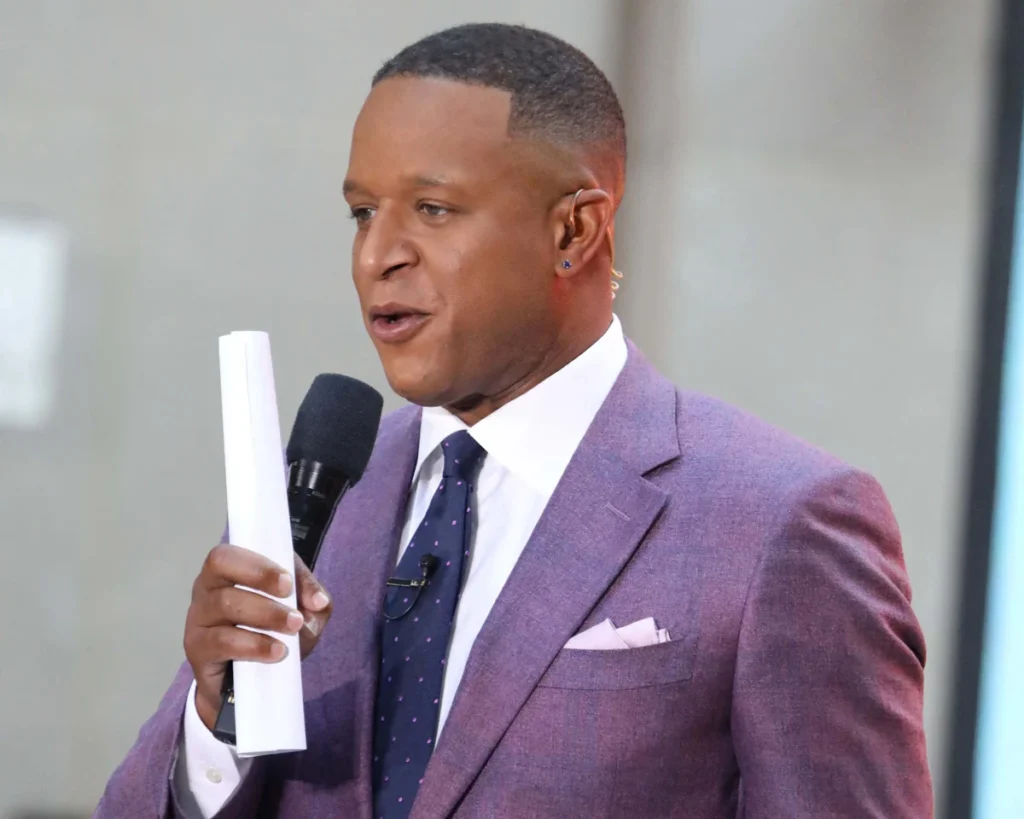

A disturbing incident unfolded at Rockefeller Center’s Studio 1A on Thursday, where an intruder identified as Andrew Truelove allegedly bypassed security to gain unauthorized access, ultimately confronting "Today Show" co-host Craig Melvin and uttering a racial slur. The event, which has led to multiple hate crime charges against Truelove and prompted a security review, has raised significant concerns about the safety of broadcast journalists and the robustness of security measures at high-profile media facilities. Craig Melvin addressed the unsettling occurrence on air, emphasizing the safety of all involved, while investigations by the New York Police Department (NYPD) and NBC News are actively underway.
Detailed Chronology of the Incident
The sequence of events began on Thursday, when Andrew Truelove allegedly entered the premises of Studio 1A, home to NBC’s flagship morning program, "The Today Show," located within the iconic Rockefeller Center in New York City. Initial reports from law enforcement sources, conveyed to TMZ, indicated that Truelove’s primary target was veteran weather anchor Al Roker. However, after successfully navigating past initial security checkpoints, Truelove was reportedly unable to locate Roker. His focus then shifted to Craig Melvin, another prominent "Today Show" co-host.
Sources suggest that Truelove approached Melvin, allegedly lunging at the 47-year-old anchor before shouting a racial epithet. The immediate response from security personnel led to Truelove’s swift apprehension. Thankfully, no physical injuries were reported for any individuals present during the incident. The NYPD quickly took custody of Truelove, initiating an investigation that rapidly escalated into charges indicative of a bias-motivated crime.
Further details emerging from police accounts reveal the alleged disturbing motivations behind Truelove’s actions. During his questioning, Truelove reportedly told officers that he "always wanted to call a Black famous person the N-word." This statement underpinned the gravity of the incident, transforming it from a mere security breach into a targeted act of hate and harassment against a public figure based on their race. The confrontation left Melvin fearing for his safety, a sentiment formally documented in police reports, with "Informant 2" (believed to be Melvin) stating that the defendant’s conduct instilled fear.
Legal Ramifications and Arraignment
Following his arrest, Andrew Truelove faced a comprehensive array of charges reflecting the severity and nature of his alleged actions. The New York Police Department charged him with hate crime-burglary, hate crime-menacing, hate crime-criminal trespass, and harassment. These charges underscore the legal system’s recognition of the bias motive inherent in the alleged crime, carrying significantly enhanced penalties compared to their non-bias counterparts.
Truelove was arraigned in a New York criminal court on Friday, where the formal charges were officially levied. He was charged with burglary in the third degree as a hate crime and menacing in the third degree as a hate crime, both of which are classified as felonies under New York State law. Burglary in the third degree, a Class D felony, involves unlawfully entering a building with intent to commit a crime therein. When compounded by a hate crime enhancement, the potential penalties, including incarceration, are substantially increased. Menacing in the third degree, typically a Class B misdemeanor, becomes a Class E felony when it is considered a hate crime, involving intentionally placing or attempting to place another person in fear of physical injury, serious physical injury, or death.
During the arraignment, the court set Truelove’s bail at $10,000, a sum he reportedly remains unable to meet, according to reports from USA Today, indicating he remains in custody. A critical outcome of the legal proceedings was the granting of full temporary orders of protection for both Craig Melvin and Al Roker. These legal instruments prohibit Truelove from contacting, approaching, or otherwise interacting with the two anchors, providing an immediate layer of legal safety for the targeted individuals. Orders of protection are routinely issued in cases involving threats, harassment, or violence, particularly when public figures are involved, to prevent future incidents.
Security Breach and Internal Repercussions
The incident immediately triggered an internal review of security protocols at NBC’s Rockefeller Center facilities, particularly Studio 1A, which is a highly visible and frequently accessed broadcast location. The ability of an unauthorized individual to slip past security and gain entry to a restricted area, ultimately confronting talent on air, raised serious questions about the effectiveness of existing safeguards.
According to reports from Page Six, the security breach led to direct consequences for at least one security personnel member. Sources indicated that NBC News terminated a security guard responsible for allowing Truelove into the building. Security video footage reportedly showed two guards on duty prior to the incident; however, one guard temporarily stepped away from their post, creating an opportunity for the intruder to bypass the remaining guard and enter the studio undetected. While the identity of the fired guard has not been publicly disclosed, insiders close to "The Today Show" staff expressed disappointment over the dismissal, noting that the individual was reportedly well-liked within the building. This detail highlights the complex human element in security operations, where lapses, even momentary ones, can have significant and unforeseen consequences.
Security at major media complexes like Rockefeller Center typically involves a multi-layered approach, including access control points, surveillance systems, and trained personnel. The incident underscores the perpetual challenge of balancing public accessibility—a necessity for live television production and interaction with audiences—with robust security measures to protect personnel and assets. This balance is particularly delicate for studios that often host live audiences or are situated in high-traffic public areas.
Official Responses and On-Air Reassurance
In the wake of the unsettling event, "The Today Show" hosts took a moment to address their viewers, offering reassurance and confirming their commitment to safety. On Friday morning, at the top of the 7:30 a.m. segment, Craig Melvin directly acknowledged the incident. His statement was measured and professional, reflecting the gravity of the situation while maintaining the show’s composed demeanor.
"You may have heard that unfortunately an intruder made his way into an unauthorized area here at Studio 1A," Melvin began, confirming the breach. He continued, "Thankfully, he was apprehended quickly, he was placed under arrest, we are cooperating fully with NYPD as they investigate the matter and we are just very happy that everyone is safe."
Laura Jarrett, who was co-anchoring in place of Savannah Guthrie, interjected to reinforce the message of safety. "We want to make sure that you’re safe," she stated, to which Melvin affirmed, "Safe and sound." Jarrett reiterated, "Safe and sound at all times," emphasizing the network’s commitment to the well-being of both its staff and its audience. These on-air statements served as a critical message to viewers, demonstrating resilience and a dedication to maintaining a secure environment for broadcast operations.
Beyond the on-air remarks, NBC News as an organization is expected to be cooperating fully with law enforcement and conducting its own internal investigations. Such incidents typically lead to comprehensive reviews of existing security protocols, potential implementation of new technologies, and additional training for security personnel to prevent future occurrences. The network’s public stance, through Melvin’s statement, signifies its commitment to transparency and accountability while prioritizing the safety of its employees.
Broader Implications: Hate Crimes and Media Safety
The incident at Studio 1A transcends a mere security breach; it is a stark reminder of the persistent threat of hate crimes and the unique vulnerabilities faced by public figures, particularly those from marginalized communities. The alleged motive—to use a racial slur against a Black famous person—highlights the insidious nature of racial animosity that continues to manifest in targeted acts of harassment and violence.
Hate crimes, defined as criminal offenses against a person or property motivated in whole or in part by an offender’s bias against a race, religion, disability, sexual orientation, ethnicity, gender, or gender identity, have been a growing concern across the United States. According to FBI data, hate crime incidents increased in recent years, with race/ethnicity/ancestry bias being the most common motivation. New York City, a melting pot of cultures, has also seen its share of such incidents, making the "Today Show" event a grim reflection of broader societal challenges. The targeting of a prominent Black journalist on national television sends a chilling message about the spaces where such bigotry can surface.
For media organizations, this incident underscores the ongoing challenge of protecting their talent and staff. Journalists, especially those covering sensitive topics or who have a high public profile, often face threats, harassment, and even physical danger. The digital age has exacerbated these risks, with online harassment frequently spilling over into real-world confrontations. Media companies invest heavily in security, but the dynamic nature of live broadcasting and the public-facing aspect of television studios mean that absolute impermeability is nearly impossible to achieve.
The incident at Rockefeller Center will undoubtedly prompt further discussions within the media industry about best practices for security, particularly for high-profile talent and public access facilities. It emphasizes the need for constant vigilance, adaptive security strategies, and robust protocols that can deter, detect, and respond effectively to evolving threats. The psychological impact on the "Today Show" cast and crew, who work daily in a space that was momentarily compromised by hate, cannot be understated. It highlights the importance of not only physical security but also creating a supportive and safe working environment where employees feel protected and valued.
Ultimately, the confrontation at Studio 1A serves as a potent symbol of the dual challenges faced by contemporary society: combating persistent hate and ensuring the safety and security of individuals in public and professional spheres. The swift action by law enforcement and the network’s response signal a commitment to addressing these challenges head-on, even as the broader implications continue to resonate.