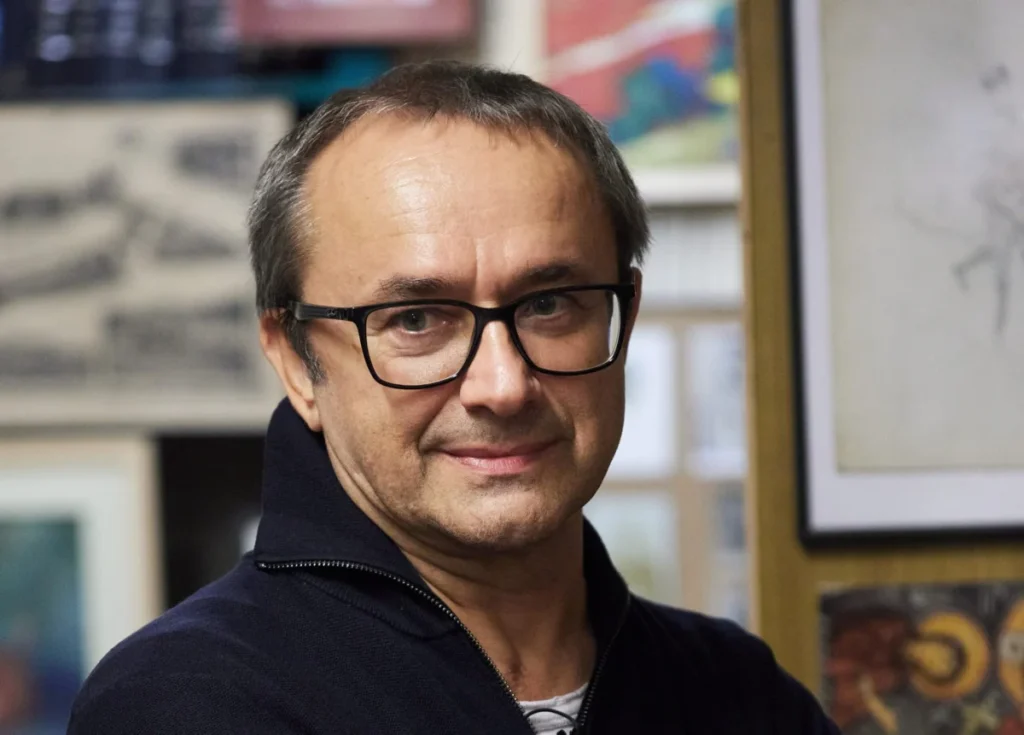

Russian auteur Andrey Zvyagintsev, widely recognized as one of the most significant filmmakers of his generation, is poised to make a highly anticipated return to the global cinematic stage with his latest feature, Minotaur, premiering at the Cannes Film Festival. This comeback is not merely a professional milestone but a testament to profound personal resilience, following a near-fatal battle with COVID-19 and a stark re-evaluation of his artistic mission amidst a dramatically altered geopolitical landscape. The film, an adaptation of Claude Chabrol’s 1969 erotic thriller The Unfaithful Wife, sees Zvyagintsev once again delving into the intricate moral fabric of contemporary Russian society, albeit from a new vantage point.
A Luminary’s Trajectory: From "The Return" to Critical Acclaim
Zvyagintsev’s reputation as a master storyteller was firmly established long before the 2010s. His 2003 debut, The Return, a haunting exploration of family dynamics set against a stark Russian landscape, garnered immediate international attention, winning the Golden Lion at the Venice Film Festival. This early success presaged a career marked by incisive social commentary and a distinctive visual style. However, it was the trio of films released in the 2010s that solidified his place among the cinematic elite: 2011’s Elena, 2014’s Leviathan, and 2017’s Loveless. Each of these works earned accolades at the prestigious Cannes Film Festival, with Leviathan securing the Best Screenplay award and Loveless receiving the Jury Prize. Furthermore, both Leviathan and Loveless went on to be nominated for the Best International Feature Oscar, bringing his unflinching gaze on Russia to a global audience.
These films were not just critically celebrated; they were powerful, often brutal, realist portraits of Russian life, exploring themes of corruption, societal decay, and the profound struggles of individuals caught within oppressive systems. Elena depicted class divides and moral compromises in Moscow. Leviathan offered a scathing critique of state and church power in a desolate coastal town, becoming a controversial sensation both within and outside Russia. Loveless presented a chilling narrative of a disintegrating family mirroring a broader emotional void in society. Zvyagintsev’s signature ability to weave intimate human dramas into narratives of epic social and political scale became his hallmark, making him a compelling, and at times uncomfortable, voice for his homeland.
A Personal Abyss: The Battle with COVID-19
Following the triumph of Loveless, Zvyagintsev’s prodigious momentum encountered an unforeseen and deeply personal obstacle. While some potential projects, including The Opposite of Jupiter, struggled to secure funding due to their ambitious budgets—a challenge for many filmmakers operating outside the mainstream studio system—it was the onset of the global COVID-19 pandemic that brought his career, and nearly his life, to a complete halt.
In a harrowing account, Zvyagintsev revealed the devastating impact of the virus. He contracted a severe form of COVID-19, leading to extensive lung damage that incapacitated him for an agonizing 18 months. For a full year of this period, he was unable to move, confined to a bed, his limbs rendered useless. The severity of his condition led to an induced coma lasting 40 days, an experience he describes as being "almost the same as being dead." This period was not merely a pause in his creative output but a profound brush with mortality. His recovery, which he terms "miraculous" and a "resurrection" that took place in Paris, where he underwent extensive rehabilitation, involved a slow, painstaking process of regaining mobility and strength. He recounted arriving in Paris in a wheelchair in August 2022, gradually learning to move, then walk, and eventually, to be himself again. The physical and psychological toll of such an ordeal is immeasurable, leaving an indelible mark on his perspective.
Artistic Reawakening in a Fractured World
Emerging from this personal abyss, Zvyagintsev found himself in a world profoundly reshaped, most notably by Russia’s full-scale invasion of Ukraine in February 2022. This grim escalation of conflict cast a long shadow, fundamentally altering the context of Russian life and culture—the very subjects his films had always explored with uncompromising honesty.
His near-death experience instilled in him a new sense of urgency. The prolonged illness forced a contemplation of his existing projects, making him question their contemporary relevance. "The main idea, or rather impulse and feeling, that I got from this experience was that one has to live in a fast lane," he articulated, expressing gratitude for the lesson that "you can’t really leave something for tomorrow." This newfound determination meant an end to procrastination and a resolve to pursue significant projects with immediate vigor, free from the delays often imposed by hesitant producers.
It was against this backdrop of personal rebirth and national crisis that Minotaur began to take shape. Zvyagintsev had long held an interest in adapting Claude Chabrol’s The Unfaithful Wife, a 1969 French-Italian thriller, having attempted to secure the rights as early as 2018. While those initial efforts were unsuccessful, he now views that delay as a stroke of fortuitous timing. The confluence of his "resurrection" and Russia’s war provided a powerful new lens through which to re-examine the classic material, infusing it with a dark, contemporary resonance that would have been absent years prior.
"Minotaur": A New Lens on an Old Story

The decision to adapt The Unfaithful Wife and shift its setting to 2022 Russia is a telling artistic choice. Chabrol’s original film is a masterclass in psychological suspense, exploring marital infidelity and its violent consequences within the French bourgeoisie. Zvyagintsev’s Minotaur is set to transplant this narrative into a Russia grappling with the profound moral and social fallout of the war.
He revealed that a specific, wordless 20-minute scene in Chabrol’s original film profoundly "mesmerized" him, embodying the essence of pure cinema—a narrative conveyed entirely through visual storytelling and unspoken emotion. This pursuit of "cinegenesis," where meaning is derived from pure cinematic expression rather than dialogue, is a hallmark of Zvyagintsev’s own filmmaking style. He anticipates that the French and English versions of Minotaur might retain the title Unfaithful Wife, underscoring the film’s core premise of marital collision and the husband’s role as a silent observer.
The adaptation, co-written with Simon Lyashenko, promises to retain the intimate psychological drama of the original while imbuing it with Zvyagintsev’s characteristic critique of Russian society. The shift to 2022 is critical, placing the narrative squarely within a period of immense national trauma and moral reckoning.
The War’s Shadow: Setting and Subtext
The Russia-Ukraine war is not merely a backdrop for Minotaur; it is an intrinsic element shaping its narrative and thematic concerns. Zvyagintsev explicitly stated that the film begins in September 2022, a month marked by Russia’s declaration of partial mobilization, a moment he describes as "probably the most tragic, the hardest, page in the history of the country."
His artistic philosophy has always dictated an honest engagement with his country’s realities. For him, creating "fairy tales about superheroes" or using the language of war without acknowledging the grim reality "behind your window" would be an artistic abdication. This commitment to frankness means Minotaur will inevitably serve as a commentary on the profound social and psychological impact of the war on ordinary Russians, even if its primary narrative focuses on a domestic drama. The choice of setting ensures that the film is not just an adaptation but a timely and urgent artistic response to a national tragedy, reflecting the moral quagmire and existential questions facing the country.
Filming Beyond Borders: The Latvian Production
A significant departure for Zvyagintsev, whose previous films were shot in Russia, is the decision to film Minotaur in Latvia. This move was not arbitrary but a necessity born from the current political climate. "Filming in Russia now would be impossible," he stated unequivocally, highlighting the restrictive environment for independent filmmakers, especially those critical of state policies.
The production in Latvia presented a unique blend of familiarity and new opportunities. While the core creative team comprises individuals from across the globe—Los Angeles, Spain, Vancouver, Cyprus, London—the choice of Latvia offered practical advantages. A significant portion of the Latvian population is Russian-speaking, facilitating communication and collaboration within the production team. Furthermore, as a former Soviet republic, Latvia retains architectural and atmospheric elements that can convincingly double for certain "godforsaken districts" or "run-down suburbs" of Moscow, allowing Zvyagintsev to achieve the desired aesthetic without the logistical and political hurdles of filming within Russia itself. This transnational collaboration underscores the broader trend of Russian artists and intellectuals working in exile, leveraging international partnerships to continue their creative endeavors free from censorship and state pressure.
Zvyagintsev’s Enduring Vision and Broader Implications
Andrey Zvyagintsev’s return with Minotaur is more than just the release of a new film; it is a powerful statement of artistic resilience and unwavering commitment to truth-telling. His personal journey from the brink of death has imbued him with a renewed sense of purpose and urgency, compelling him to create without delay. His decision to adapt a classic French thriller and infuse it with the stark realities of contemporary Russia, filmed in a neighboring former Soviet state, speaks volumes about the challenges and choices facing independent Russian artists today.
The film’s premiere at the Cannes Film Festival will undoubtedly draw global attention, not only for Zvyagintsev’s cinematic prowess but also for its potential to offer a nuanced, critical perspective on Russia at a moment when such voices are increasingly silenced within the country. His work has consistently served as a vital, often uncomfortable, mirror to Russian society, and Minotaur is poised to continue this tradition, reflecting both the intimate dramas of human nature and the broader societal convulsions of a nation in crisis.
The reception of Minotaur at Cannes will be closely watched, not just by film critics and industry professionals, but by those seeking insight into the human cost and moral complexities of Russia’s current trajectory, filtered through the uncompromising vision of one of its most profound cinematic interpreters. His "unlikely return," as he terms it, is a testament to the enduring power of art to confront reality, even when that reality is harrowing, and to the indomitable spirit of an artist who refused to be silenced, either by illness or by political circumstance.