
Irish gangs have historically occupied a peripheral role in the grand narrative of global prestige television, often overshadowed by their Italian-American counterparts. While dramas like Love/Hate and Kin have captivated audiences in Ireland with their gritty, authentic portrayals of local crime, the international stage has predominantly been commanded by iconic sagas of the Italian Mafia, epitomized by cinematic masterpieces such as The Godfather, Goodfellas, and the groundbreaking television series The Sopranos. Even across the Atlantic, Britain’s Peaky Blinders managed to elevate a specific Birmingham gang into a global pop-culture phenomenon, influencing fashion trends from flat caps to Halloween costumes, and creating a distinct brand identity. Yet, amidst this rich tapestry of organized crime narratives, New York’s notoriously violent Irish-American gang, The Westies, has largely remained a shadowy footnote in popular culture, despite their brutal reign over Hell’s Kitchen for decades.
This historical oversight is now set to change with MGM+’s ambitious new eight-part drama, The Westies. Created by Chris Brancato, acclaimed for his work on Narcos, and Michael Panes, the series aims to pull back the curtain on this formidable outfit, transporting viewers to the visceral landscape of Hell’s Kitchen in the early 1980s. Here, the gang finds itself in a precarious struggle to maintain its shrinking territory in Manhattan, navigating a tense and increasingly fragile alliance with New York’s formidable Five Families. The timing is critical, as the colossal construction of the Jacob K. Javits Convention Center looms large, promising an unprecedented influx of millions of dollars through their traditional turf, thereby escalating the stakes to an all-time high.
Historical Context: Hell’s Kitchen and The Real Westies
To fully appreciate the narrative depth of The Westies series, one must first understand the tumultuous backdrop of Hell’s Kitchen and the brutal reality of the gang it portrays. Located on Manhattan’s West Side, Hell’s Kitchen, officially known as Clinton, was historically a working-class Irish-American neighborhood, notorious for its poverty, tenement housing, and pervasive gang violence throughout the 19th and 20th centuries. By the mid-20th century, it had become a crucible of ethnic rivalries and criminal enterprises, a far cry from the gentrified, theatre-district adjacent neighborhood it is today.
The Westies emerged from this harsh environment, evolving from earlier Irish gangs that had dominated the waterfront and docks. Their reign, particularly from the 1960s through the early 1980s, was marked by an unparalleled level of ferocity and a penchant for dismemberment, earning them a fearsome reputation even among the established Italian Mafia families. Key figures like Mickey Spillane initially held sway, acting as a buffer between the Irish gangs and the Cosa Nostra. However, after Spillane’s murder in 1977, a new, more ruthless generation took control, led by James Coonan and his enforcer, Mickey Featherstone.
Coonan, known for his cold calculation, and Featherstone, infamous for his unpredictable and extreme violence, solidified The Westies’ control over gambling, loan-sharking, union rackets, and contract killings in Hell’s Kitchen. Unlike the hierarchical and often ritualistic structure of the Mafia, The Westies operated with a terrifying unpredictability, often resorting to extreme measures to assert dominance or eliminate rivals. They earned particular notoriety for their method of dismembering bodies, making identification nearly impossible, a gruesome tactic that instilled widespread fear. Despite their relatively small size compared to the Mafia families, their sheer brutality commanded a grudging respect and, more often, terror. They formed uneasy alliances with the Italian Mafia, particularly the Genovese and Gambino families, performing contract killings and enforcements in exchange for a share of illicit profits and protection. This complex and often volatile relationship forms a crucial element of the series’ narrative, highlighting the delicate balance of power in New York’s criminal underworld.
The Shifting Sands of Urban Development: The Javits Center’s Impact
The early 1980s marked a pivotal period for New York City, characterized by significant urban renewal efforts and a burgeoning financial boom. Hell’s Kitchen, despite its tough exterior, was strategically located, making it ripe for redevelopment. The construction of the Jacob K. Javits Convention Center, initiated in the late 1970s and completed in 1986, symbolized this transformation. Envisioned as a catalyst for economic growth and a modern landmark, the Javits Center was designed to attract conventions and tourism, fundamentally altering the economic landscape of the West Side.

For The Westies, this development was a double-edged sword. On one hand, it represented an unprecedented opportunity for new rackets—construction contracts, union control, protection schemes, and illicit services catering to the influx of workers and visitors. The millions of dollars flowing into the area promised immense potential for enrichment. On the other hand, the project brought increased scrutiny, law enforcement presence, and the potential for greater interference from the Five Families, who also sought to capitalize on the lucrative new ventures. The Javits Center thus becomes more than just a backdrop; it is a central antagonist, a symbol of modernity threatening to erode the traditional power structures and turf boundaries that The Westies had fought so fiercely to establish and maintain. This clash between old-world criminal traditions and the inexorable march of urban development forms a compelling thematic core for the series.
Crafting the Narrative: From Narcos to Hell’s Kitchen
The decision to bring The Westies’ story to the screen falls to a creative team with a proven track record in gritty, character-driven crime dramas. Chris Brancato, known for his work as co-creator and showrunner of Narcos, brings a wealth of experience in portraying complex criminal empires with historical accuracy and psychological depth. His expertise in navigating intricate power dynamics, moral ambiguities, and the brutal realities of the drug trade in Narcos suggests a similar approach to the narrative of The Westies. The series is expected to delve into the socio-economic factors that bred such violence, the internal conflicts within the gang, and the external pressures from rival factions and law enforcement.
Co-creator Michael Panes, alongside Brancato, has crafted an eight-part drama that promises not just violence, but also a nuanced exploration of loyalty, betrayal, and the desperate fight for survival. Their vision aims to elevate the story of The Westies beyond mere sensationalism, positioning it as a significant contribution to the crime genre by shedding light on a previously underrepresented facet of American criminal history. This choice reflects a broader trend in television to diversify narratives within established genres, seeking out untold stories and challenging conventional portrayals of power and crime.
The Unnerving Authority: J.K. Simmons as Eamon Sweeney
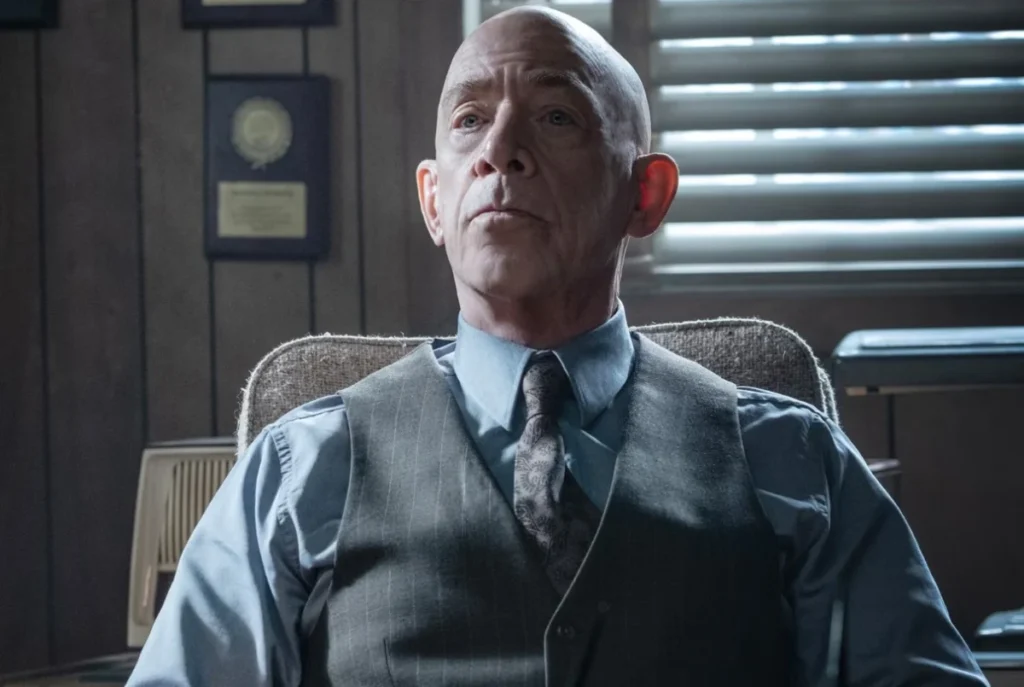
At the dramatic heart of The Westies is Oscar-winner J.K. Simmons, delivering what is already being hailed as one of his most quietly unnerving performances since his iconic, explosive turn as Terence Fletcher in Whiplash. Simmons steps into the shoes of Eamon Sweeney, the formidable leader of The Westies. Audiences accustomed to Simmons’ grandstanding displays of aggression or thunderous outbursts might be surprised. Sweeney operates with a chilling, understated authority, rarely needing to raise his voice to command absolute deference and fear.
Within minutes of the opening episode, viewers are left in no doubt about the nature of the man they are observing. Sweeney exhibits a masterful duality: one moment, he is calm, measured, almost paternalistic in his demeanor, seemingly a voice of reason and stability. The next, the mask slips, revealing a cold, calculating individual capable of extraordinary, unblinking ruthlessness. This subtle yet profound shift in character is a testament to Simmons’ immense talent and his ability to convey menace through quiet intensity rather than overt aggression.
Simmons himself elaborates on his approach to such roles, telling The Standard, “Any bad guy role that comes my way, I’m always looking for complexity and for, you know, subtlety, shades of grey and glimpses of humanity, even in a vile human being.” He praises Brancato and Panes for their writing, stating, “Chris Brancato and Michael Panes really wrote a whole cast full of well-rounded characters and that’s the appeal.” When asked to summarize Eamon Sweeney, Simmons offers a darkly humorous quip, “He’s just such a sweetheart.” This response, delivered with Simmons’ characteristic dry wit, underscores the profound irony and the carefully constructed façade of his character, hinting at the depths of darkness concealed beneath a deceptively benign exterior. His portrayal promises to be a masterclass in psychological tension, grounding the series in a powerful, central performance.
Restless Ambition: Tom Brittney’s Jimmy Roarke

If J.K. Simmons provides the show’s unshakeable, often terrifying authority, Tom Brittney supplies its restless, volatile energy. Brittney’s casting represents a significant departure for the actor, who spent six seasons endearing himself to audiences as the compassionate and morally upright Reverend Will Davenport in the popular ITV drama Grantchester. Swapping the serene, leafy villages of Cambridgeshire for the grimy, dangerous streets of Hell’s Kitchen, Brittney takes on the role of Jimmy Roarke, one of the gang’s younger, ambitious rising stars.
Jimmy’s ambition, however, poses a direct threat to the delicate order that Sweeney has meticulously maintained for years. As the prospect of immense wealth from the Javits Center development looms, Jimmy begins to question the established rules of engagement and the traditional ways of doing business within the gang. This inherent tension elevates The Westies far beyond a straightforward cops-and-gangsters narrative. Instead, it evolves into a compelling story about generational change, where Jimmy, representing a younger, more impulsive, and perhaps more ruthless generation, collides with Sweeney’s calculated, old-school leadership. Their evolving, pseudo father-son relationship quickly becomes the emotional engine of the series, providing a deeply personal conflict amidst the broader struggle for power.
Brittney speaks highly of his collaboration with Simmons, acknowledging the profound impact of working with an actor of his caliber. “You couldn’t ask for a better scene partner,” Brittney states. “It’s J.K. Simmons. We all grew up watching him in something we admired. He makes the set incredibly warm and he’s just the best person to work opposite.” However, this warmth rarely extends to their characters. Every exchange between Jimmy and Eamon is fraught with unspoken obligation, simmering resentment, and a palpable sense of weighted tension. For Brittney, this conflict is a mirror reflecting the evolving identity of the gang itself. “The younger Westies are coming out of the 60s and 70s,” he explains. “There’s more rebellion in them. They’re beginning to question how business has always been done.” It is this potent clash between entrenched tradition and an urgent demand for change that proves just as gripping and often more dangerous than the inevitable bursts of visceral violence.
The Broader Ensemble and Moral Ambiguity
Further enriching the narrative and blurring the moral lines is an impressive supporting cast that includes several notable talents. Titus Welliver, known for his compelling portrayal of Harry Bosch in the Amazon series Bosch, brings his characteristic intensity to the ensemble. Jessica Frances Dukes, recognized for her role in Ozark, adds another layer of gravitas. Allen Leech, celebrated for his work in Downton Abbey, makes a striking transition into the crime drama genre, while Sarah Bolger and Stanley Morgan round out the core cast.
Each actor contributes to a tapestry of characters where few are straightforward heroes or villains. This deliberate eschewal of clear-cut moral binaries is a hallmark of sophisticated crime dramas, forcing viewers to confront the complex motivations and human frailties that drive individuals within such brutal environments. The ensemble’s collective performance is designed to immerse the audience in a world where loyalty is constantly tested, alliances are fragile, and every decision carries profound, often deadly, consequences. The nuanced portrayals ensure that the series offers a deep dive into the psychology of its characters, making the inevitable violent confrontations all the more impactful.
Genre Evolution: Irish Gangs Step into the Spotlight
The arrival of The Westies on MGM+ signifies a notable evolution within the crime drama genre. For decades, the public’s fascination with organized crime has been predominantly shaped by narratives centered around the Italian Mafia. While Irish crime stories have certainly existed, they often lacked the global visibility or the high-production values associated with their Italian counterparts. The Westies challenges this imbalance, offering a long-overdue spotlight on a significant, albeit often overlooked, chapter of American criminal history.
This series joins a growing trend of television productions that seek to diversify the ethnic and cultural scope of crime narratives. By focusing on the unique dynamics, cultural nuances, and historical context of an Irish-American gang, The Westies provides a fresh perspective, moving beyond familiar tropes and offering a more complete picture of the multifaceted criminal underworlds that have existed in major American cities. Its success could pave the way for further exploration of other ethnic gangs and their stories, enriching the genre with new historical insights and cultural specificities. It offers an opportunity for audiences to grapple with themes of identity, belonging, and the American dream through a distinctly Irish-American lens, adding another layer to the complex mosaic of American cultural narratives.

MGM+’s Strategy in the Streaming Landscape
For MGM+, The Westies represents a significant investment in original, prestige content designed to carve out its niche in an increasingly competitive streaming landscape. As a premium streaming service available through Prime Video, MGM+ is strategically positioning itself by offering high-quality, exclusive series that can attract and retain subscribers. The decision to greenlight a historically rich, character-driven crime drama with an acclaimed showrunner and a stellar cast underscores MGM+’s commitment to delivering compelling narratives.
In an era saturated with content, original series with a strong premise and production pedigree are crucial for streaming platforms to stand out. The Westies, with its blend of historical context, intense drama, and top-tier performances, aligns perfectly with this strategy. Its availability through Prime Video also leverages Amazon’s vast subscriber base, maximizing its potential reach and impact. The series is not just entertainment; it’s a strategic move for MGM+ to solidify its brand as a destination for sophisticated, thought-provoking television.
Conclusion
The Westies arrives on the streaming stage as more than just another crime drama; it is a meticulously crafted historical narrative, brought to life by compelling performances and a keen understanding of its brutal subject matter. By shining a long-overdue light on New York’s notoriously violent Irish-American gang and the rapidly transforming landscape of Hell’s Kitchen in the early 1980s, the series offers a fresh and vital contribution to the crime genre.
The nuanced performances of J.K. Simmons as the quietly formidable Eamon Sweeney and Tom Brittney as the ambitious, restless Jimmy Roarke promise a deeply engaging exploration of power, loyalty, and generational conflict. Coupled with the gritty vision of showrunners Chris Brancato and Michael Panes, and supported by a strong ensemble, The Westies is poised to deliver a captivating and historically informed viewing experience. As tradition clashes with change, and the allure of new money threatens to unravel old alliances, The Westies is set to leave an indelible mark on the crime drama landscape, proving that some of the most compelling stories still lie hidden in the shadows of history. The series is available to stream now on MGM+ through Prime Video, inviting audiences to step into a world where survival is a daily struggle and the cost of power is often paid in blood.