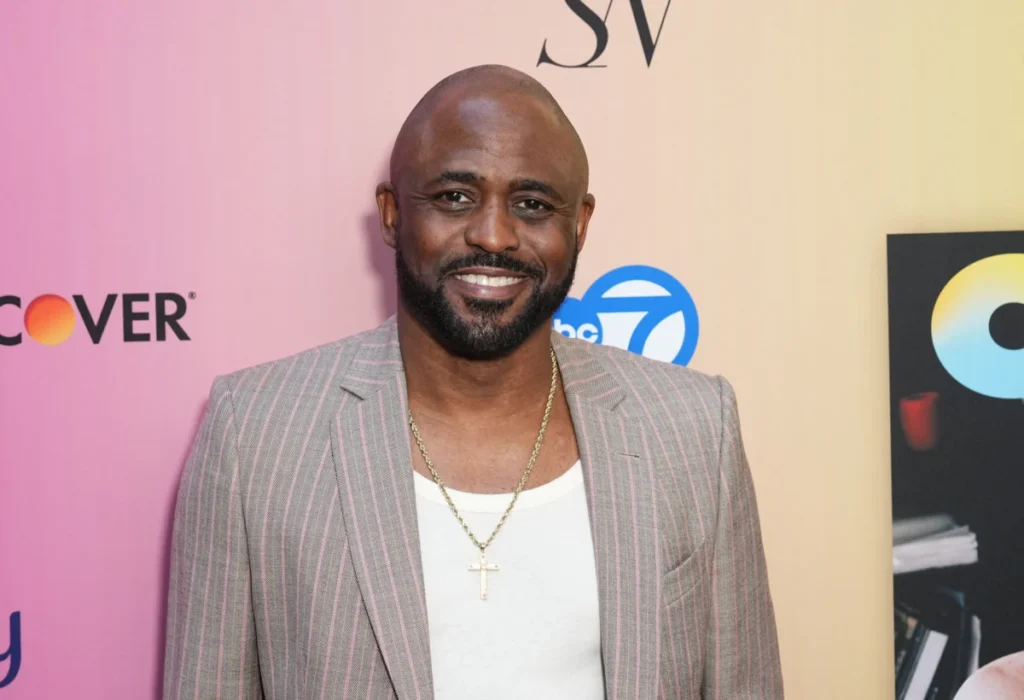

Veteran entertainer Wayne Brady has publicly reignited his long-standing feud with political commentator and talk show host Bill Maher, unequivocally labeling Maher as "racist" during a recent podcast appearance. The renewed criticism, voiced on Sarah Jones’s America, Who Hurt You? podcast, marks the latest chapter in a contentious relationship spanning more than a decade, rooted in Maher’s controversial remarks comparing then-President Barack Obama to Brady. This development underscores persistent tensions within the entertainment industry regarding race, comedy, and public accountability.
The Latest Resurgence: Brady’s Candid Critique
During his conversation with Tony Award-winning artist Sarah Jones on a recent episode of her podcast, Brady did not hesitate when Maher’s name arose. He seized the opportunity to articulate his long-held grievances against the host of HBO’s Real Time with Bill Maher. Brady’s comments were direct and unsparing. "He’s racist and I don’t care Bill Maher can say that I have all these Black friends, dah, dah, dah," Brady stated, referencing a common defense often deployed by individuals accused of racial bias. This assertion suggests Brady views Maher’s personal associations as irrelevant to the impact of his public statements and comedic content.
Brady further indicated that the current wave of scrutiny on Maher has been amplified by other prominent figures. He specifically mentioned comedian Dave Chappelle, who reportedly "called out Maher on his comedy special late last year." While the exact details of Chappelle’s remarks were not provided in the immediate context, Brady implied that Chappelle’s intervention lent further credence to his own long-standing critique. Brady emphasized the problematic nature of Maher’s past comments, particularly the perceived audacity of a white man attempting to define or categorize the identity of a Black public figure. "It took Dave Chapelle recently saying something. Then I told people the day that I said to Bill Maher after he was using that joke of saying, well, ‘I wish that President Obama was less Wayne Brady and more,’ I forget which gangster rapper or whatnot. Even that, how dare you as a white man try to define this thing?" Brady recounted, highlighting the racial undertones he perceived in Maher’s original statement.
The Historical Roots of the Feud: The 2010 Obama Remarks
The genesis of this enduring animosity dates back to a 2010 interview where Bill Maher, known for his incisive and often provocative political commentary, made a comparison between Wayne Brady and then-President Barack Obama. Maher’s comments, delivered during a period of intense scrutiny on the nation’s first Black president, sparked immediate controversy. "I thought when we elected the first Black president, as a comedian, I thought that two years in that I’d be making jokes what a ‘gangsta’ he was. You know. And not that he’s President Wayne Brady, you know. I thought we were getting Suge Knight," Maher stated at the time.
This comparison was widely interpreted as an attempt to diminish Obama’s racial identity and to pigeonhole Black masculinity into narrow, stereotypical categories. By juxtaposing the perceived "wholesome" and non-threatening persona of Wayne Brady—then widely recognized for his improvisational comedy on Whose Line Is It Anyway? and his daytime talk show—with the "gangsta" archetype represented by figures like Suge Knight, a notorious music executive, Maher tapped into deeply problematic racial tropes. The implication was that Obama, by not conforming to a more "street" or "aggressive" Black image, was somehow less authentically Black, or perhaps, less "entertaining" for a comedian’s purposes. This sentiment immediately drew criticism for its reductive nature and for imposing external expectations on Black leadership and identity.
Brady’s Initial Fiery Response: A Challenge to Perceptions
Maher’s 2010 comments did not go unchallenged by Brady. The remarks ignited a swift and fiery response from the entertainer, who publicly pushed back against the reductive characterization. Brady challenged Maher directly, famously stating his willingness to demonstrate "how Black Wayne Brady is" and famously threatening to "gladly slap the shit out of Bill Maher in front of Coco and Ebony and Fox, the three ladies of the night he has hired." This explosive retort, delivered with a confrontational edge, aimed to shatter the "safe," non-threatening image Maher had invoked and to reclaim his identity from external definitions. Brady’s reaction was a clear assertion of agency, a refusal to be confined by stereotypes, and a forceful rejection of Maher’s attempt to use his name as a pejorative.
At the time, the exchange garnered significant media attention, highlighting the ongoing cultural conversation about race, representation, and the boundaries of comedic expression. Brady’s response resonated with many who felt that Maher’s comments were not just offensive but illustrative of a broader societal tendency to police and stereotype Black identities, especially those that defy conventional expectations.
Maher’s Comedic Style and Broader Controversies
Bill Maher has built a career on pushing boundaries and challenging conventional wisdom, often positioning himself as a truth-teller unafraid to tackle sensitive subjects. His HBO show, Real Time with Bill Maher, has been a platform for sharp political satire and often controversial social commentary since 2003. Maher’s style is characterized by a blend of acerbic wit, libertarian leanings, and a self-professed commitment to "common sense" that frequently places him at odds with both the political left and right.
Over the years, Maher has faced numerous accusations of insensitivity, particularly concerning race and religion. Beyond the Brady incident, he drew significant condemnation in 2017 for using a racial slur during an on-air interview with Senator Ben Sasse. Despite issuing an apology, the incident led to calls for his removal from HBO. His critiques of Islam have also frequently been labeled as Islamophobic. These controversies illustrate a pattern of remarks that, while defended by Maher and his supporters as edgy humor or intellectual honesty, are often perceived by critics as prejudiced and harmful. His consistent engagement in such debates has solidified his reputation as a polarizing figure, whose commentary often sparks heated discussions about freedom of speech versus responsible discourse.
The "Wayne Brady" Trope and Racial Stereotypes in Media
The specific use of "Wayne Brady" as an archetype in Maher’s 2010 commentary highlights a pervasive issue in media and cultural representation: the construction of racial stereotypes. For many years, Wayne Brady’s public persona was largely defined by his roles in improvisational comedy, notably Whose Line Is It Anyway?, and his family-friendly daytime talk show. This image, while successful and genuinely part of Brady’s multifaceted talent, was often perceived as "safe," "non-threatening," and "mainstream" by predominantly white audiences. In contrast, "gangsta" imagery, often associated with hip-hop culture and figures like Suge Knight, represents a more "threatening," "edgy," or "rebellious" stereotype often imposed on Black men.
Maher’s comment inadvertently reinforced a problematic dichotomy: that Black identity must fit into one of these two narrow boxes. It suggested that a Black man in a position of power, like the President, should ideally embody a certain "authentic" Blackness (in Maher’s misguided view, a "gangsta" persona) rather than a more palatable, "mainstream" one like Brady’s. This kind of rhetoric is damaging because it denies the vast spectrum of Black experience and reinforces the idea that certain expressions of Blackness are more legitimate or "real" than others. It also places an unfair burden on Black public figures to constantly navigate and sometimes challenge these imposed archetypes, rather than simply being recognized for their individual merits and complexities.
Chappelle’s Intervention and Broader Critiques
Wayne Brady’s mention of Dave Chappelle’s recent critique of Bill Maher provides crucial context for the renewed vigor of this feud. While specific details of Chappelle’s comments are not extensively detailed in the original article, Chappelle himself is no stranger to controversy and has often used his platform to dissect race, identity, and the entertainment industry. His willingness to "call out" Maher suggests a broader sentiment within the Black comedic community regarding Maher’s historical comments and his overall approach to sensitive topics.
Chappelle, known for his incisive social commentary and often provocative style, has himself faced criticism for remarks on transgender issues. However, his long-standing reputation as a fearless commentator on race and power dynamics gives significant weight to his critiques of other public figures. If Chappelle, from his position as a respected and often controversial voice, deemed it necessary to address Maher, it signals that Maher’s past and present rhetoric continues to be a point of contention for many, particularly concerning issues of racial sensitivity and the role of comedians in shaping public discourse. This collective pressure from within the industry can serve as a powerful force for accountability, demonstrating that even established figures like Maher are not immune to scrutiny from their peers.
Brady’s Personal Observations and Current Stance
Beyond the specific comments about Obama, Brady offered further insights into his evolving perception of Maher. He recalled an encounter at the Playboy Mansion, observing Maher with "two sisters on his arm." Brady described his reaction as an internal "yuck," interpreting the scene as indicative of Maher’s underlying belief that "his proximity and things you can use gives you the right to say what you want to say about another, people whose shoes you never walk in." This personal anecdote underscores Brady’s belief that Maher’s commentary stems from a place of privilege and a lack of empathy for experiences outside his own.
Brady clarified that his issue is not a personal hatred but a profound disagreement with Maher’s public persona and rhetoric. "I don’t hate Bill Maher. I don’t know him as a person like that, but what I do know is I know his words," Brady stated, drawing a crucial distinction between the individual and their impact. He articulated a clear stance: "So based on your words, I don’t like you as a human because you’re harmful to other people with the views that you espouse and the things that [you] said and the platform that he has."
Furthermore, Brady declared that Maher is "not funny anymore to me." He characterized Maher’s current comedic output as "vitriolic," arguing that it "just encourages the asinine behaviors and reactions in those whose default setting is to be reductive of people." This suggests Brady views Maher’s humor as having moved beyond mere satire to become a tool that validates and perpetuates harmful stereotypes and divisive narratives, particularly for audiences already predisposed to such views. This assessment reflects a growing sentiment among critics who argue that comedy, especially on a large platform, carries a social responsibility that extends beyond simply making people laugh.
The Platform: Sarah Jones’s "America, Who Hurt You?"
Wayne Brady’s candid remarks were delivered on America, Who Hurt You?, a podcast hosted by Sarah Jones. Jones, a Tony Award-winner known for her theatrical works like Bridge & Tunnel and Sell/Buy/Date, has cultivated a platform for deep, reflective conversations. The podcast, currently in its second season, features a diverse array of guests, including Ben Stiller and Christine Taylor, Monica Lewinsky, Yvette Nicole Brown, Bryan Stevenson, and David Alan Grier, among others. Its premise appears to invite guests to explore personal and societal traumas, offering a space for vulnerability and frank discussion.
The choice of America, Who Hurt You? as the venue for Brady’s renewed critique is significant. Unlike a more adversarial talk show or a brief soundbite, a podcast format allows for more nuanced and extended conversations, enabling guests to elaborate on their perspectives without the constraints of typical media cycles. This environment likely empowered Brady to speak with a level of detail and emotional depth that might be challenging in other formats. Jones’s background as an artist exploring complex social issues through performance makes her an ideal interviewer for such discussions, facilitating a space where guests can openly address personal grievances and broader societal concerns. The podcast’s reach on platforms like Apple Podcasts and YouTube ensures a wide audience for these impactful conversations. Jones is also scheduled to present a live event at Oxford University’s Schwarzman Centre to commemorate America’s 250th anniversary, further cementing her role as a cultural commentator.
Broader Implications for Comedy and Public Discourse
The rekindling of the Brady-Maher feud, amplified by Chappelle’s alleged intervention, carries broader implications for the landscape of comedy, public discourse, and accountability in the entertainment industry. It highlights the ongoing tension between freedom of speech, artistic expression, and the responsibility of public figures, especially those with significant platforms, to consider the impact of their words.
- Evolving Standards of Comedic Discourse: This incident reflects a cultural shift where certain types of humor, once considered acceptable or merely "edgy," are now being critically re-evaluated for their potential to perpetuate stereotypes and cause harm. There’s a growing demand for comedians to be more aware of the social and racial implications of their jokes, particularly when targeting marginalized groups.
- Accountability of Public Figures: The sustained criticism of Maher, spanning over a decade, demonstrates that public figures are increasingly being held accountable for past remarks, even years later. In the age of digital archives and social media, controversial statements have a longer shelf life and can be revisited and critiqued at any time.
- The Power of Peer Critique: When prominent figures like Wayne Brady and Dave Chappelle openly criticize a peer like Bill Maher, it sends a powerful message within the industry. It indicates that even established comedians are not immune to scrutiny from within their own ranks, and that silence can no longer be assumed as endorsement.
- Role of Podcasts in Shaping Narratives: Podcasts like America, Who Hurt You? have become crucial platforms for celebrities and public figures to share unfiltered perspectives, challenge existing narratives, and engage in deeper conversations than traditional media often allows. This format empowers voices that might otherwise be marginalized or simplified in mainstream reporting.
- The Persistence of Racial Stereotypes: The very foundation of this feud—Maher’s use of "Wayne Brady" as a proxy for a certain type of Black man—underscores the enduring presence of racial stereotypes in American culture. The fact that this specific comment continues to resonate and cause offense more than a decade later highlights the deep-seated nature of these issues and the ongoing struggle for authentic and nuanced representation.
In conclusion, Wayne Brady’s recent statements serve as a potent reminder that historical grievances, especially those rooted in issues of race and representation, do not simply fade away. They underscore a continuing societal and industry-wide debate about the role of comedy, the boundaries of free speech, and the imperative for public figures to engage with sensitivity and responsibility, particularly when addressing matters of identity and power. The renewed confrontation ensures that the discussion around Bill Maher’s controversial comedic style, and its impact, will continue to be a significant point of contention in public discourse.