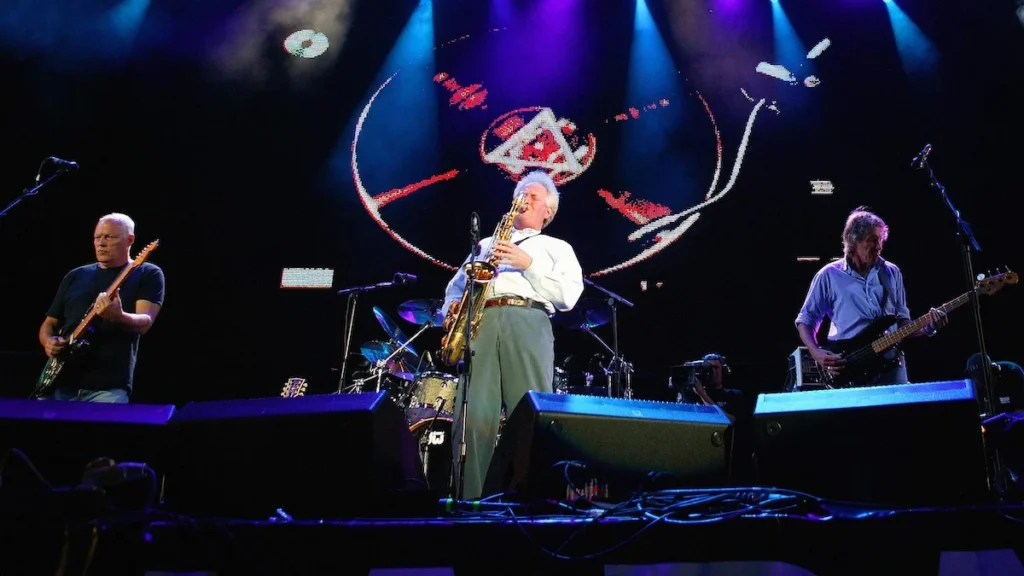

Dick Parry, the celebrated saxophonist whose soulful and instantly recognizable contributions graced some of Pink Floyd’s most iconic albums and electrifying live performances, has passed away at the age of 83. The news of his death was shared by Pink Floyd’s singer-guitarist David Gilmour, who conveyed his profound sorrow in an emotional tribute posted on Instagram on May 24, 2026. Parry’s distinctive saxophone work became an integral part of the band’s sonic landscape, lending a unique melodic depth to tracks that have captivated millions worldwide for decades.
Gilmour’s heartfelt message underscored not only Parry’s immense musical talent but also their deep personal bond, which spanned over half a century. "My dear friend Dick Parry died this morning," Gilmour wrote. "Since I was seventeen, I have played in bands with Dick on saxophone, including Pink Floyd." This long-standing friendship, rooted in their formative years in Cambridge, England, formed the bedrock of a professional collaboration that would leave an indelible mark on rock history. Gilmour further elaborated on Parry’s singular gift: "His feel and tone make his saxophone playing unmistakable, a signature of enormous beauty that is known to millions and is such a big part of songs such as ‘Shine On You Crazy Diamond,’ ‘Wish You Were Here,’ ‘Us and Them’ and ‘Money.’ He played in the last band I had that included Rick Wright for the On An Island Tour and at Live 8 with Pink Floyd."
A Life in Music: Early Years and Formative Friendships
Born on December 22, 1942, in Kent, England, Richard "Dick" Parry’s musical journey began long before his association with the global phenomenon that was Pink Floyd. His early life was steeped in the burgeoning music scene of the 1960s, a vibrant period that saw the explosion of rock and roll and the emergence of progressive sounds. It was during this time that Parry, a gifted multi-instrumentalist who specialized in saxophone, first crossed paths with David Gilmour. Both musicians hailed from Cambridge and were part of the same local circuit, playing in various bands.
Their shared musical sensibilities and nascent ambitions quickly forged a friendship and a professional alliance. Before Gilmour joined Pink Floyd in 1968, he and Parry performed together in several groups, including Joker’s Wild (later renamed Bullitt). This early collaboration allowed them to hone their craft and develop a deep understanding of each other’s musical styles, a rapport that would prove crucial in the decades to come. Parry’s versatility and strong improvisational skills were evident even in these early days, laying the groundwork for his future contributions to some of rock’s most ambitious projects. He developed a distinctive tone on his tenor and alto saxophones, characterized by its warmth, clarity, and emotional resonance, qualities that would soon become his sonic calling card.
The Indispensable Sound of Pink Floyd: Crafting Iconic Moments
While never an official member of Pink Floyd, Dick Parry’s saxophone became as synonymous with their sound as Roger Waters’ lyrics or Gilmour’s guitar solos. His contributions were not merely incidental; they were foundational to the emotional and atmospheric texture of some of the band’s most critically acclaimed and commercially successful works.
The Dark Side of the Moon (1973): A Breakthrough of Sound
Parry’s most famous contributions came on Pink Floyd’s seminal 1973 album, The Dark Side of the Moon, an album that redefined progressive rock and remains one of the best-selling records of all time. His saxophone solos on "Money" and "Us and Them" are universally recognized and have been celebrated for their innovative integration into the album’s conceptual framework.
On "Money," the album’s seventh track, Parry’s tenor saxophone solo is a masterclass in controlled aggression and blues-infused improvisation. Coming after a distinctive 7/4 time signature riff and amidst the cash register sound effects, his solo provides a vibrant, jazzy counterpoint to the song’s cynical commentary on greed. It’s not just a solo; it’s a character in itself, conveying a sense of slickness and underlying tension that perfectly complements the song’s themes. The raw energy and melodic sophistication of his playing helped propel "Money" into a perennial classic rock anthem, proving that a saxophone could be as potent a lead instrument as a guitar in a hard rock context.
"Us and Them," a more ethereal and melancholic track, showcases a different facet of Parry’s artistry. Here, his alto saxophone weaves through the song’s somber melody with a haunting beauty, its sustained notes and gentle phrasing adding layers of pathos and reflection. The solo is less about flash and more about mood, echoing the song’s themes of conflict, empathy, and the divisions within humanity. His performance provides a poignant, almost vocal quality, enriching the track’s introspective nature and contributing significantly to the album’s overarching narrative about the pressures of modern life. These two solos alone cemented Parry’s status as an indispensable collaborator, demonstrating his ability to adapt his playing to serve vastly different emotional landscapes within the same album.
Wish You Were Here (1975): Elegiac Tones for a Fallen Friend
Two years later, Parry once again lent his talents to another Pink Floyd masterpiece, Wish You Were Here, an album largely conceived as a tribute to former band member Syd Barrett and a critique of the music industry’s commercialism. His most notable contribution here is on "Shine On You Crazy Diamond (Parts V-IX)."
The "Shine On You Crazy Diamond" suite is a sprawling, multi-part epic, and Parry’s saxophone in the latter half (Parts V-IX) provides some of its most emotionally resonant moments. Following Richard Wright’s synthesizer introduction, Parry’s saxophone enters with a soaring, melancholic melody that perfectly captures the song’s sense of loss, longing, and remembrance. His tone here is both mournful and majestic, embodying the complex emotions of remembering a brilliant, yet troubled, friend. It’s a testament to his understanding of the band’s vision that his saxophone lines feel less like an addition and more like an inherent part of the song’s genetic code. While the original article mentions "Wish You Were Here" as a song where his sax is a big part, it’s important to note that his saxophone doesn’t appear on the studio version of the title track itself. However, his contributions to "Shine On You Crazy Diamond" and his live performances on the subsequent tour, where the Wish You Were Here material was prominently featured, ensured his association with the album’s iconic status. His live renditions of these tracks, including the title track’s emotional depth, further solidified his reputation.
Later Contributions and Enduring Presence
Parry’s collaboration with Pink Floyd extended beyond their 1970s zenith. He rejoined the band for their 1994 album, The Division Bell, contributing to the track "Wearing the Inside Out." This album marked a return for the band after a period of hiatus and internal strife, and Parry’s presence offered a welcome continuity to their classic sound. His saxophone work on this track demonstrated that his unique ability to infuse emotion into the instrumental narrative remained undiminished, providing a familiar texture for long-time fans.
His involvement wasn’t limited to studio recordings. Parry was a vital component of Pink Floyd’s live shows, known for their elaborate stage productions and immersive sonic experiences. He performed on the band’s 1995 live album, Pulse, which captured the energy and grandeur of their Division Bell tour. His live solos, often extending and improvising upon their studio counterparts, were a highlight for concert-goers, bringing a dynamic and spontaneous element to the meticulously crafted Pink Floyd sound.
Even after Pink Floyd’s touring ceased, Parry continued his musical association with David Gilmour. He was an integral part of Gilmour’s touring band for his 2006 "On An Island" tour, supporting Gilmour’s solo album. More notably, Parry joined Pink Floyd for their historic reunion performance at Live 8 in London in 2005. This event, which saw the classic lineup of Gilmour, Roger Waters, Nick Mason, and Richard Wright perform together for the first time in over two decades, was a global spectacle. Parry’s presence on stage, delivering his iconic solos on tracks like "Money" and "Us and Them," was a poignant reminder of his enduring importance to the band’s legacy and a testament to the trust and camaraderie he shared with its members.
Beyond the Prism: Diverse Collaborations
While his name is most closely associated with Pink Floyd, Dick Parry’s musical journey was far more expansive, showcasing his versatility and willingness to explore different genres. His talent was sought after by other legendary acts, demonstrating his adaptability as a session and touring musician.
In 1979 and 1980, Parry toured with The Who, joining their brass section during a significant period for the band as they navigated the post-Quadrophenia era and the tragic loss of drummer Keith Moon. Performing with a band known for its raw energy and powerful rock anthems required a different approach than the atmospheric soundscapes of Pink Floyd, yet Parry seamlessly integrated his playing into their dynamic live performances, adding depth and texture to their powerful sound. This collaboration highlighted his ability to move between the intricate, often melancholic world of progressive rock and the more direct, explosive energy of classic rock.
His collaborations also extended into the realms of funk and R&B. In 1975, the same year Wish You Were Here was released, Parry appeared on the album Riddle of the Sphinx by Bloodstone, an American funk/R&B group known for their smooth harmonies and soulful sound. This venture further exemplified his broad musical vocabulary, proving he was equally adept at infusing tracks with a soulful, groove-oriented sensibility.
Perhaps one of his most surprising collaborations came in 2009 when he toured with the American alternative rock band Violent Femmes in Europe and South Africa. This partnership, bridging generations and genres, underscored Parry’s continued relevance and his open-minded approach to music. His saxophone brought an unexpected richness to the Violent Femmes’ quirky, folk-punk sound, demonstrating his enduring ability to enhance and elevate diverse musical landscapes.
A Legacy of Unmistakable Tone and Enduring Influence
Dick Parry’s passing marks the end of an era for a musician who, though often in the background, was unequivocally central to the sound of one of the greatest rock bands in history. His contributions to Pink Floyd transcended mere session work; they were integral components that shaped the emotional contours and thematic depth of their most cherished recordings. Gilmour’s description of his "unmistakable feel and tone" perfectly encapsulates Parry’s unique gift. He didn’t just play notes; he imbued them with feeling, making his saxophone a narrative voice that resonated deeply with listeners.
His solos on "Money," "Us and Them," and "Shine On You Crazy Diamond" are not merely instrumental breaks; they are moments of profound musical expression that are instantly recognizable and emotionally powerful. They demonstrated how the saxophone, often relegated to jazz or R&B, could be a compelling and essential voice within the progressive rock idiom, adding layers of sophistication and soul that were unparalleled. Parry’s ability to create soaring, melancholic melodies or sharp, bluesy improvisations, always in service of the song’s larger emotional and conceptual framework, set him apart.
The sheer longevity of his career and the breadth of his collaborations speak volumes about his talent and professional integrity. From the early Cambridge days with David Gilmour to his later tours with disparate acts like The Who and Violent Femmes, Parry maintained a consistent standard of excellence and an unwavering commitment to musical expression. His legacy is not just in the millions of albums sold or the countless concerts performed, but in the indelible mark his sound left on popular culture. His saxophone lines are woven into the fabric of classic rock radio, soundtracking countless lives and continuing to inspire new generations of musicians.
Tributes and Remembrances
The announcement of Dick Parry’s death immediately prompted an outpouring of tributes from the music community and fans worldwide. David Gilmour’s personal Instagram post served as the primary, deeply emotional eulogy, reflecting a bond that went far beyond professional association. The sentiment expressed by Gilmour—a friendship forged in youth and sustained through decades of musical collaboration—resonated with many who understood the profound connections artists form.
Official channels associated with Pink Floyd, as well as numerous music publications and fan communities, quickly shared their condolences and celebrated Parry’s enduring legacy. Social media platforms became a canvas for fans to share their favorite Dick Parry solos, recounting how his saxophone had touched their lives, whether through the hypnotic allure of "Us and Them" or the driving force of "Money." The collective memory highlighted that while he may not have been a household name in the same vein as Pink Floyd’s core members, his sound was undeniably iconic and deeply cherished. Musicians who had worked with him or were influenced by his distinctive style also began to share their remembrances, cementing his place as a respected and beloved figure within the broader musical landscape. The collective message was clear: Dick Parry’s unique voice, carried through the reeds of his saxophone, will continue to echo through the annals of music history, a testament to his profound and beautiful contribution.