
The landscape of modern television horror shifted significantly when Ryan Murphy and Brad Falchuk launched American Horror Story on FX in 2011, establishing an anthology format that would redefine the genre for a generation. Over more than a decade, the franchise has expanded into a massive narrative universe, culminating in its ambitious 13th season. Positioned as an event-driven crossover season designed similarly to cinematic superhero spectacles, the current run has blended various epochs of the series’ sprawling lore. The sixth episode, titled "The Return of Devil’s Night," delivered a massive narrative pivot by resurrecting one of the franchise’s most infamous conceptual traditions and pitting historical and fictional monsters directly against the powerful witches of the Coven season.
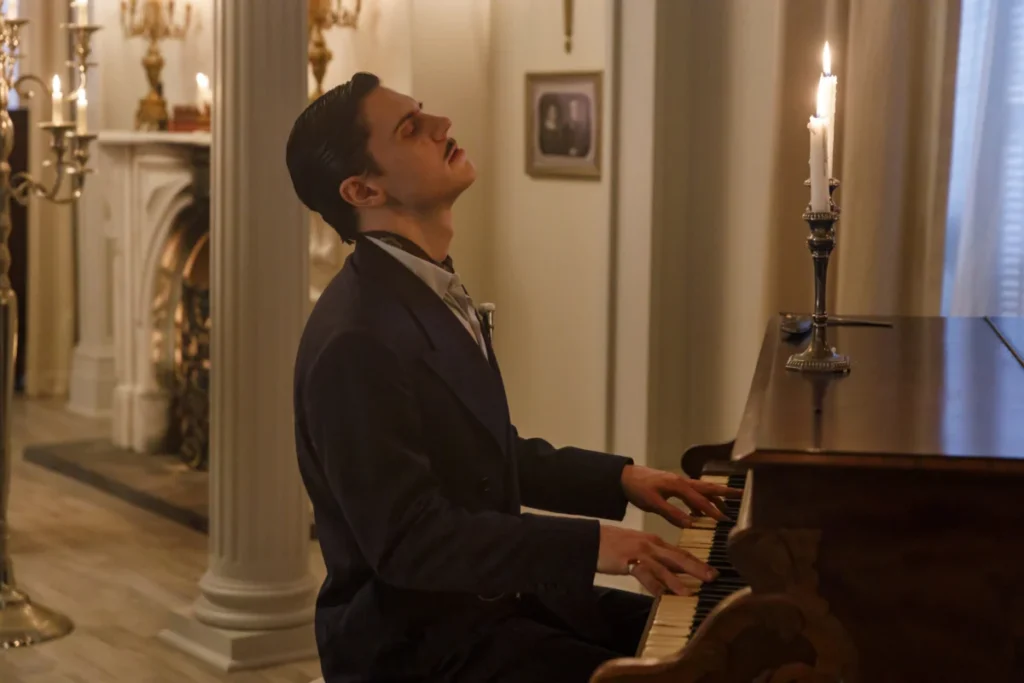
The mechanics of this crossover have drawn immense scrutiny from the fan base, particularly because of how the season weaves together disparate continuity threads. Initially introduced in the fifth season, Hotel, the concept of "Devil’s Night" featured a fictionalized dinner party hosted by James Patrick March, played by Evan Peters. During this infamous gathering, March summoned several real-life serial killers, establishing a chilling precedent for how the show handles historical atrocities through a satirical, hyper-stylized lens. The return of these figures in season 13 elevates the stakes from psychological horror to a full-scale metaphysical war for the control of Earth, dragging the coven led by Supreme witch Cordelia Goode, portrayed by Sarah Paulson, into direct conflict with March and his resurrected cohorts.
The Evolution of Devil’s Night and Meta-Casting Dynamics
The inclusion of Jeffrey Dahmer in the sixth episode introduced a deeply meta-textual layer to the production. Seth Gabel reprised his role as Dahmer, a character he originally played in the 2015 Hotel episode. However, the television landscape had shifted dramatically in the intervening years, most notably due to the massive success of Ryan Murphy and Ian Brennan’s biographical crime drama series Monster: The Jeffrey Dahmer Story on Netflix, where Evan Peters took on the mantle of the serial killer.
Working alongside Peters once again provided a surreal working environment for Gabel, who noted that any initial uncertainty regarding the shared character history dissolved immediately during rehearsals. Peters, firmly anchored in his portrayal of the meticulous serial killer James Patrick March, encouraged Gabel to approach the character with complete creative freedom. According to Gabel, the core of his satirical portrayal was unlocked years prior by a concise two-word direction from series co-creator Ryan Murphy: "Poor Jeffrey." This specific framing allowed the actor to channel the dark absurdity of a man who committed horrific acts while viewing himself as the aggrieved party, navigating his violent actions with a sense of self-indulgent inconvenience.

While Gabel conducted extensive psychological research for his initial appearance in Hotel—exploring how Dahmer internalized societal homophobia and channeled repression into morbid fantasies—returning for the 13th season required relying on muscle memory and the signature Midwestern dialect. The intersection of these two iterations of Dahmer within the same production underscored the unique self-referential nature of the Murphy-verse, where actors frequently cycle through recurring archetypes and overlapping timelines.
Narrative Implications of the Serial Killer Versus Coven Conflict
The narrative trajectory of American Horror Story Season 13 has been structured as a classic binary struggle between cosmic forces of good and evil, often described by creatives involved as an "Avengers-style" mashup. The cliffhanger ending of the sixth episode—which featured March hurling an axe directly into Cordelia Goode’s skull—has left the fate of the Supreme witch in immense jeopardy, while opening the floodgates for a chaotic clash in the seventh installment.
The confrontation between the resurrected serial killers and the coven—which features the return of fan-favorite witches played by Emma Roberts, Gabourey Sidibe, and Billie Lourd—represents a collision of distinct supernatural and mortal elements. Within the internal logic of the season, hell is rising into the physical plane, and March has manipulated the various killers into spearheading a mission for global dominion. The witches, serving as protectors of the natural and supernatural balance, are the primary obstacle to this takeover.
Industry analysts and television critics have noted that this season’s heavy reliance on legacy characters and cross-season continuity is a strategic effort to re-engage long-term viewers who have followed the anthology since its inception. By bridging the gap between historical true-crime pastiche and high-fantasy witchcraft, the writers have created an unpredictable narrative environment where established rules of survival no longer apply. The vulnerability displayed by Cordelia—who appeared visibly disoriented and off her typical defensive equilibrium prior to the attack—signals a deliberate subversion of the supreme power structures established in earlier seasons.
Behind the Scenes and Production Challenges
Filming large-scale ensemble sequences within the American Horror Story ecosystem requires meticulous coordination, particularly given the notoriously tight security surrounding scripts and narrative arcs. Cast members are frequently provided only with isolated script pages rather than comprehensive narrative overviews, fostering an environment where actors must commit entirely to immediate scenes without knowing the broader destination of the season finale.

Despite the logistical hurdles of assembling a sprawling cast whose schedules often conflict, the production maintains a reputation for prioritizing actor collaboration and rehearsal time. Gabel noted that the collaborative atmosphere allows performers to explore instinctive choices that push the material into heightened territories of dark comedy and visceral terror. This methodology has become a hallmark of the franchise, distinguishing it from conventional procedural horror through its embrace of unbridled theatricality.
Furthermore, the stylistic sensibilities developed during Gabel’s tenure on the franchise have directly influenced his work across other prominent television projects, including his recurring role as serial killer Liam Glasser on the ABC police procedural The Rookie, as well as his aspirations for potential subsequent seasons of The Watcher. The ability to treat dark, disturbing subject matter with a liberating lack of rigidity has proven to be a defining characteristic for actors navigating the Murphy-verse, enabling them to transition smoothly between high-concept horror and mainstream network television.
Broader Impact on the Horror Television Landscape
As American Horror Story approaches the conclusion of its milestone 13th season on October 29, the cultural footprint of the franchise remains formidable. By pioneering the modern limited-series anthology format and subsequently pivoting toward interconnected narrative universes, Murphy and Falchuk have fundamentally altered how networks approach long-running horror television.
The convergence of historical true-crime figures and supernatural lore in the current season demonstrates an ongoing willingness to experiment with audience expectations, blending pastiches of real-world tragedies with fantastical combat choreography. As the battle between the serial killers and the coven reaches its explosive climax in the seventh episode, the outcome will likely dictate the thematic direction of any future installments, cementing the franchise’s legacy as a cornerstone of contemporary speculative fiction television.