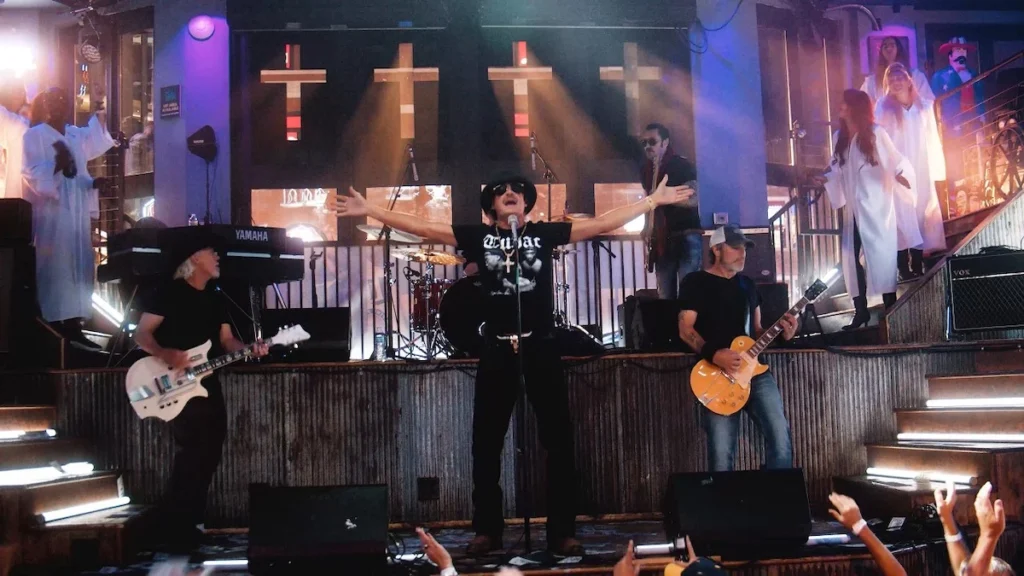

Kid Rock has officially announced the upcoming release of his latest studio project, a 17-track collection titled Halfway to Jesus, scheduled for a worldwide release on October 17th. The announcement marks a significant departure from the artist’s traditional genre-bending discography, signaling a deliberate pivot toward contemporary Christian music. Accompanying the announcement is the release of the lead single, "James 1:17 (Jesus Is King)," which has already begun to generate considerable discourse regarding its sonic resemblance to the classic 1978 Kenny Rogers hit "The Gambler."
The project arrives following a period of intense public focus on the artist’s personal faith journey. According to statements provided during an appearance on Fox & Friends in August, Kid Rock—born Robert James Ritchie—has been reflecting on the lack of musical options he found within traditional liturgical settings during his upbringing. The artist expressed a desire to synthesize the foundational tenets of his faith with the musical textures he is best known for, specifically identifying rock, country, and hip-hop as the primary vessels for this new creative endeavor.
A Departure into New Musical Territory
The announcement of Halfway to Jesus is perhaps most notable for its inclusion of a high-profile collaboration with fellow Detroit-area music icon Eminem. The track "7 Sins" represents a rare cross-genre pairing, as Eminem, typically associated with aggressive, lyrical rap, joins Ritchie on a record explicitly themed around spiritual conflict.
The inclusion of Eminem is a strategic, albeit surprising, move that bridges the gap between Detroit’s rap scene and the burgeoning market for alternative Christian music. Industry analysts suggest that this collaboration could broaden the album’s demographic appeal, potentially introducing a contemporary gospel sound to listeners who might otherwise avoid the genre. Furthermore, the album features appearances by prominent country music figures, including Rascal Flatts frontman Gary LeVox and singer-songwriter Jimmie Allen on the title track, "Halfway 2 Jesus."
The album’s visual aesthetic, as evidenced by the revealed cover art, leans into the thematic duality of the project. The artwork depicts the performer caught in a state of transition—visually positioned "halfway to Jesus" with the symbolic representation of the devil positioned at his back. This imagery aligns with the album’s central lyrical themes, which explore the tension between worldly struggles and spiritual redemption.
Contextualizing the Artistic Shift
The trajectory toward this album began in earnest during the late summer of 2026. In his Fox & Friends interview, Ritchie provided insight into the motivation behind the pivot. "Growing up Catholic and going to Catholic church, I was always like, ‘I have to confess this is boring. This music is terrible,’" Ritchie stated. He described a search for a more resonant expression of faith, noting that while he explored Baptist and non-denominational services, he often felt the prevailing musical styles carried a "dark place" tone that did not align with his personal vision of celebration.
This critique highlights a broader trend in the music industry where established secular artists explore the faith-based market. By infusing his signature style—characterized by gritty, blues-infused rock and rhythmic vocal delivery—into the Christian genre, Ritchie is attempting to establish a new sub-genre that he defines as "faith-rock." Whether this will resonate with traditional contemporary Christian music (CCM) listeners, who are accustomed to more polished production values, remains to be seen.
Chronology of the Production
The development of Halfway to Jesus occurred throughout the early months of 2026, primarily within the Detroit music circuit.
- August 2026: Initial public statements are made during a media appearance, confirming the existence of a faith-based project.
- September 2026: Marketing materials for the lead single, "James 1:17," are released, causing early speculation regarding the album’s tone.
- October 2026: The full tracklist and official release date of October 17th are confirmed.
- October 17, 2026: Global launch of the album across all major streaming platforms.
The tracklist includes a mix of original compositions and thematic interpretations, culminating in a rendition of Lee Greenwood’s "God Bless the USA," a song that has long been a staple of Ritchie’s live performances. Other notable tracks, such as "I Don’t Drink the Whiskey Anymore" and "Water into Wine," suggest a narrative arc centered on personal transformation and abstinence.

Market Implications and Industry Reception
The Christian music market, currently valued in the multi-billion dollar range globally, has seen a resurgence in popularity due to the rise of social media-driven worship music and a growing interest in faith-based content across all media platforms. Kid Rock’s entry into this market brings with it a massive, pre-established fan base.
Industry experts note that while the crossover potential is high, there is a risk of alienation. Secular fans may be hesitant to engage with overtly religious material, while the traditional Christian music industry has historically been selective about the artists it promotes. However, the involvement of Eminem provides a "prestige" factor that could insulate the album from typical genre-based pigeonholing.
From a technical standpoint, the production of the album seeks to maintain the "garage rock" aesthetic that defined Ritchie’s earlier success. By avoiding the highly compressed, pop-oriented production typical of modern radio hits, Halfway to Jesus aims to capture a raw, organic sound that emphasizes the lyrical content.
Supporting Data and Tracklist Overview
The album’s composition is weighted heavily toward traditional themes of redemption, sacrifice, and divine guidance. The tracklist is as follows:
- Freedom
- James 1:17 (Jesus Is King)
- 7 Sins (feat. Eminem)
- Why Don’t You Look into Jesus
- Water into Wine
- Halfway 2 Jesus (feat. Gary LeVox & Jimmie Allen)
- I Don’t Drink the Whiskey Anymore
- Me and Jesus
- God Is Good (Prelude)
- God Is Good
- Into the Setting Sun
- Broken Hearted People
- ‘Til You Can’t
- Why Don’t You Look into Jesus (Riri Mix)
- High Road
- Procession
- God Bless the USA
The inclusion of the "Riri Mix" of "Why Don’t You Look into Jesus" suggests that the artist is also exploring different sonic textures, possibly incorporating modern electronic elements to contrast with the more traditional instrumentation found elsewhere on the record.
Cultural Analysis: The "Faith-Rock" Phenomenon
The phenomenon of prominent musicians shifting to Christian music is not new—historical figures such as Bob Dylan, Alice Cooper, and Brian Welch of Korn have all undergone public spiritual transformations that influenced their work. However, the case of Kid Rock is unique due to the artist’s existing persona, which has been deeply tied to a rebellious, "working-class" brand.
By shifting his focus to the thematic concerns of the church, Ritchie is attempting to recontextualize his brand. The reception of "James 1:17" suggests that the audience is paying close attention to the musicality of the work, specifically the aforementioned similarities to "The Gambler." While it remains unclear if the melodic similarity is a conscious homage to Kenny Rogers—a country icon who also navigated the crossover between secular and gospel music—it serves as a bridge for the listener, grounding the new, religious subject matter in a familiar, classic country-rock soundscape.
Final Outlook
As the October 17th release date approaches, anticipation is high among both religious and secular music circles. The success of Halfway to Jesus will likely be measured not just in streaming figures, but in the artist’s ability to sustain this narrative shift in the long term. If the collaboration with Eminem and the country music community yields positive commercial results, it may signal a broader trend of major artists seeking to integrate their private faith with their public artistic output in more direct, unapologetic ways.
Ultimately, Halfway to Jesus stands as a pivotal moment in the career of one of the 21st century’s most polarizing and enduring figures. Whether the public accepts this transition as a genuine artistic evolution or a calculated pivot remains a subject of ongoing debate. However, the sheer scale of the production and the high-profile nature of the guest features ensure that the album will be a significant focal point in the current music landscape throughout the final quarter of 2026.