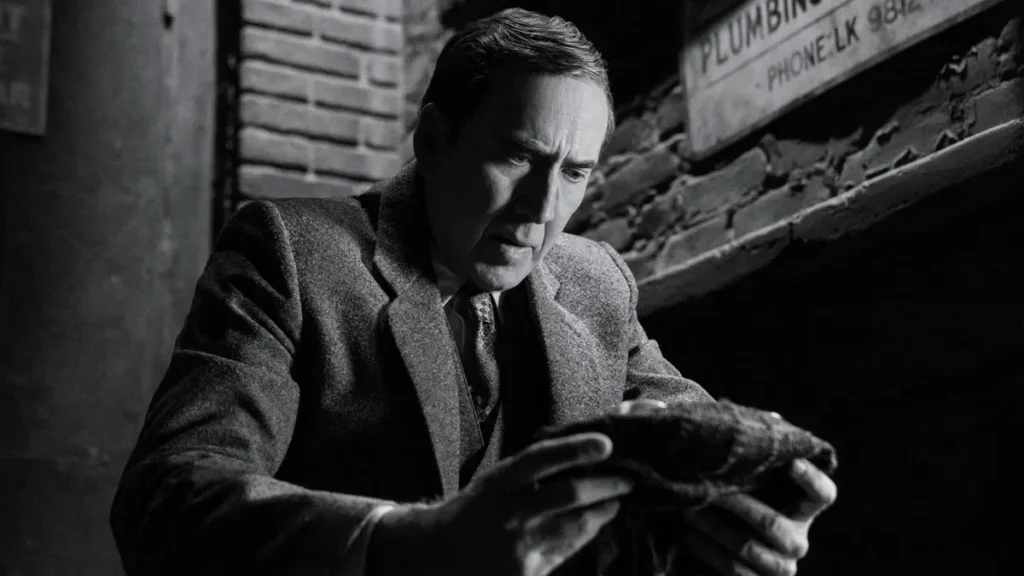

The landscape of modern entertainment is currently grappling with a profound tension between technological advancement and the preservation of human artistry. This conflict was brought into sharp focus during a recent panel at New York Comic Con, where Academy Award-winning actor Nicolas Cage disclosed that his refusal to sign an artificial intelligence waiver served as a critical inflection point in his relationship with Amazon MGM Studios. The decision, Cage indicated, effectively ended his tenure as the lead in the critically acclaimed series Spider-Noir, a project that had garnered significant viewership and industry recognition before its abrupt cancellation in September 2026.
The discourse surrounding the use of generative AI in Hollywood has intensified since the dual strikes of 2023, which saw the Screen Actors Guild-American Federation of Television and Radio Artists (SAG-AFTRA) secure landmark protections against the unauthorized digital replication of performers. Cage’s public statement highlights that while legal frameworks now exist, the practical application of these protections—and the pressure placed upon actors to circumvent them—remains a contentious issue between talent and major streamers.
A Chronology of the Spider-Noir Partnership
The journey of Spider-Noir from a cult-favorite comic book concept to a high-budget television production was characterized by high expectations and logistical complexity. Developed by Oren Uziel and produced through a collaborative agreement between Amazon MGM Studios and Sony Pictures Television, the series sought to adapt the 2009 Marvel character for a gritty, 1930s-set noir drama.
- May 2026: The series premieres on Prime Video to positive critical reception. Nicolas Cage, who previously voiced the character in the animated Spider-Verse franchise, marks his first leading role in a television series.
- Summer 2026: Throughout the season, Spider-Noir sustains high engagement metrics, eventually accumulating 2.6 billion minutes of viewership according to Nielsen reporting.
- September 2026: Despite its performance, Amazon MGM Studios announces the cancellation of the series, citing internal strategic shifts.
- October 2026: During New York Comic Con, Nicolas Cage provides the first public explanation regarding the friction between his creative principles and the studio’s technological mandates, citing a refusal to sign an AI waiver.
The Intersection of Amazon and Generative AI
Nicolas Cage’s critique of Amazon was rooted in the company’s substantial financial and strategic alignment with the artificial intelligence sector. During the panel on the Empire Stage, Cage noted, “Amazon is a very AI-friendly company, to the tune of $50 billion invested in OpenAI.” This financial commitment is a cornerstone of Amazon’s broader cloud computing and consumer technology strategy, yet it creates a friction point when applied to creative production.
For actors, the fear of AI is not merely hypothetical. It involves the digital scanning of an actor’s likeness, voice, and performance patterns to create synthetic versions of the performer that can be manipulated or reused without the actor’s active participation or additional compensation. By refusing to sign a waiver that would have granted the studio broader rights to utilize AI in the production of his likeness or performance, Cage positioned himself outside the studio’s preferred operational framework. As he stated during the event, “I am not an AI-friendly actor, so it’s like, connect those dots! I’m not a member of their club.”
Performance Data and Critical Reception
The cancellation of Spider-Noir was widely viewed as a surprise by industry analysts, given the series’ quantitative and qualitative success. The production’s performance metrics suggest that it was not a failure of audience capture or critical approval, but rather an outlier in a portfolio managed by a studio with evolving priorities.
The show secured 11 Emmy nominations in 2026, the highest count for any Amazon original series in that calendar year, and ultimately converted five of those nominations into wins. The critical consensus, including a B+ review from Consequence, highlighted the show’s unique tone and Cage’s dedicated, hard-boiled portrayal of the protagonist. The contrast between the show’s high prestige and its cancellation provides a compelling case study on the changing metrics of "success" in the streaming era, where project longevity is increasingly dictated by corporate synergies rather than traditional viewership alone.
Broader Industry Implications: The AI Standoff
The conflict between Nicolas Cage and Amazon reflects a growing trend of "digital agency" among high-profile talent. In the wake of the 2023 labor actions, performers are increasingly utilizing their leverage to demand specific clauses that protect their digital identity. This move is significant because it shifts the burden of proof; instead of relying solely on broad guild protections, individual stars are opting out of projects that require them to sign away these rights.
Industry experts suggest that this could lead to a bifurcation in the talent pool. Studios that heavily rely on generative AI for cost-cutting or efficiency may find themselves unable to recruit top-tier actors who are wary of the long-term impact of AI on their professional longevity. Conversely, actors who are willing to embrace AI-adjacent workflows may become the preferred partners for tech-forward streamers.
This phenomenon also raises questions about the future of intellectual property. As studios look to maximize the value of their libraries, the use of AI to generate spin-offs or synthetic performances of established characters becomes a lucrative, albeit controversial, pathway. By refusing to facilitate this, Cage has signaled that for some performers, the preservation of human performance is non-negotiable, even at the cost of high-profile, successful projects.
The Shift Toward Traditional Prestige Television
Despite the acrimonious end to his collaboration with Amazon, Cage appears to be pivoting toward projects that align with his creative trajectory. Following the conclusion of his tenure with Spider-Noir, the actor confirmed his next major television commitment: an upcoming installment of the HBO anthology series, True Detective.
The move to a prestige-focused network known for its traditional approach to high-quality drama suggests that Cage remains in high demand among creators who prioritize character-driven storytelling. For HBO, acquiring an actor of Cage’s stature for a series as well-regarded as True Detective is a strategic move that reinforces their brand identity as a home for high-caliber, human-centric performances.
Looking Ahead: The Future of the Creative Workforce
The cancellation of Spider-Noir and the subsequent revelations by Cage will likely serve as a focal point in upcoming contract negotiations and union discussions. The incident underscores a reality that the industry has been slow to address: the disconnect between the technical potential of AI and the creative ethics of those who bring stories to life.
As Amazon and other studios continue to integrate AI across their business models, they must contend with the reality that human performers are not merely assets to be digitized, but collaborative partners whose creative agency is a key component of a show’s success. Whether this incident serves as an isolated conflict or the beginning of a broader movement of "AI-refusal" among A-list actors remains to be seen. However, it is clear that for many in the industry, the cost of innovation is being measured against the value of the human element, and for performers like Nicolas Cage, the two are increasingly difficult to reconcile.
The industry now stands at a crossroads. As studios prioritize efficiency and technological integration, they face the risk of alienating the very talent that sustains their content pipelines. The Spider-Noir case provides a clear, documented example of this tension, proving that even a show with massive viewership, critical acclaim, and significant awards recognition can be sacrificed at the altar of corporate policy—a development that will undoubtedly influence the landscape of Hollywood for years to come.