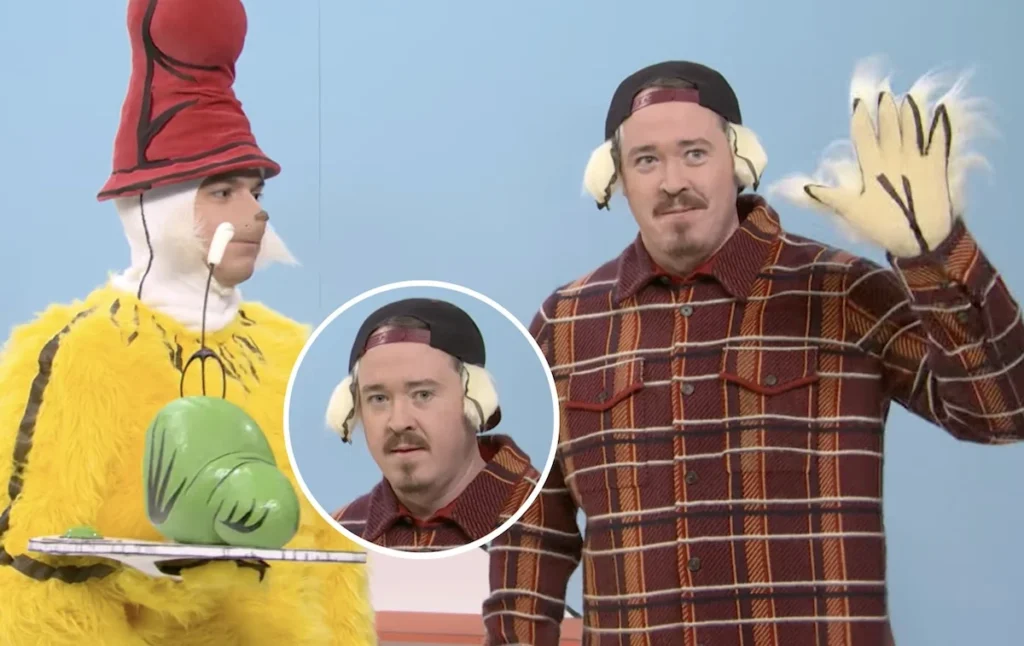

During his third appearance as host on Saturday Night Live, comedian Shane Gillis experienced a moment of unscripted live television when he inadvertently uttered an expletive during a sketch parodying Dr. Seuss’s classic children’s book, Green Eggs and Ham. The incident, which occurred during the October 2026 broadcast, has sparked widespread discussion regarding the pressures of live comedy performance and the technical challenges inherent in long-form sketch television. While live broadcasts often carry the risk of human error, the viral nature of the clip highlights the audience’s continued fascination with the spontaneity of late-night television.
Contextualizing the Performance
Shane Gillis, a comedian who has seen a meteoric rise in his professional trajectory following his initial departure from and eventual return to the SNL orbit, was tasked with anchoring the show for the third time. The episode featured a high volume of sketches, with Gillis participating in the vast majority of the segments. His performance was largely characterized by his signature deadpan delivery and willingness to lean into absurdist humor.
The sketch in question served as a satirical take on the moral and structural simplicity of the Dr. Seuss canon. Gillis portrayed an overbearing son attempting to shield his father—cast as the Lorax—from the persistent advances of a character modeled after Sam-I-Am. As the sketch progressed, the comedic tension relied on the absurdity of a high-stakes, aggressive confrontation occurring within the whimsical, rhyming framework of a children’s book.
The Sequence of Events
The incident occurred during a mid-sketch interaction. In the original script, the dialogue was intended to be a firm, yet television-appropriate refusal of the green eggs and ham. Gillis delivered the first line, "Hey! What the hell is wrong with you? My dad says he doesn’t like green eggs and ham. Drop it. Walk away," without error.
However, when the Sam-I-Am character countered with the classic line, "But he may like green eggs and ham," Gillis deviated from the planned dialogue. Visibly caught in the momentum of the performance, he responded, "Bro, it’s a non-starter. He said he doesn’t like the—f**king—jeez, like them. Whoa, no!"
The realization of the error was immediate. Gillis broke character for a split second, clearly acknowledging the slip-up before attempting to regain his composure and finish the scene. The live audience reacted with a mix of genuine surprise and amusement, a response that often accompanies "breaking" on SNL, where the barrier between the scripted performance and the reality of the live studio environment becomes blurred.
Technical and Professional Implications
For productions such as Saturday Night Live, which have aired continuously since 1975, the "live" element is both a selling point and a logistical liability. Federal Communications Commission (FCC) guidelines regarding broadcast decency generally distinguish between "fleeting" profanity and systematic, intended indecency. Under standard broadcast policies, accidental slips during live performances are rarely subject to punitive action, as they do not constitute a deliberate attempt to violate public broadcast standards.
From a production standpoint, these moments are often viewed as part of the "legend" of the show. Historically, SNL has seen numerous instances where actors have broken character or encountered technical difficulties. The fact that Gillis continued the sketch after the blunder demonstrates the professionalism required to navigate high-pressure broadcast environments.
Career Trajectory and Public Perception
The inclusion of Shane Gillis as a three-time host represents a significant shift in his public standing. His professional history, which includes a brief, controversial hiring and subsequent firing from the show in 2019, has been transformed by his success in the independent podcasting and stand-up circuit. His return to the SNL stage is frequently cited by industry analysts as a case study in modern comedy, where performers can build massive, loyal audiences outside of the traditional studio system, effectively forcing major networks to acknowledge their cultural relevance.
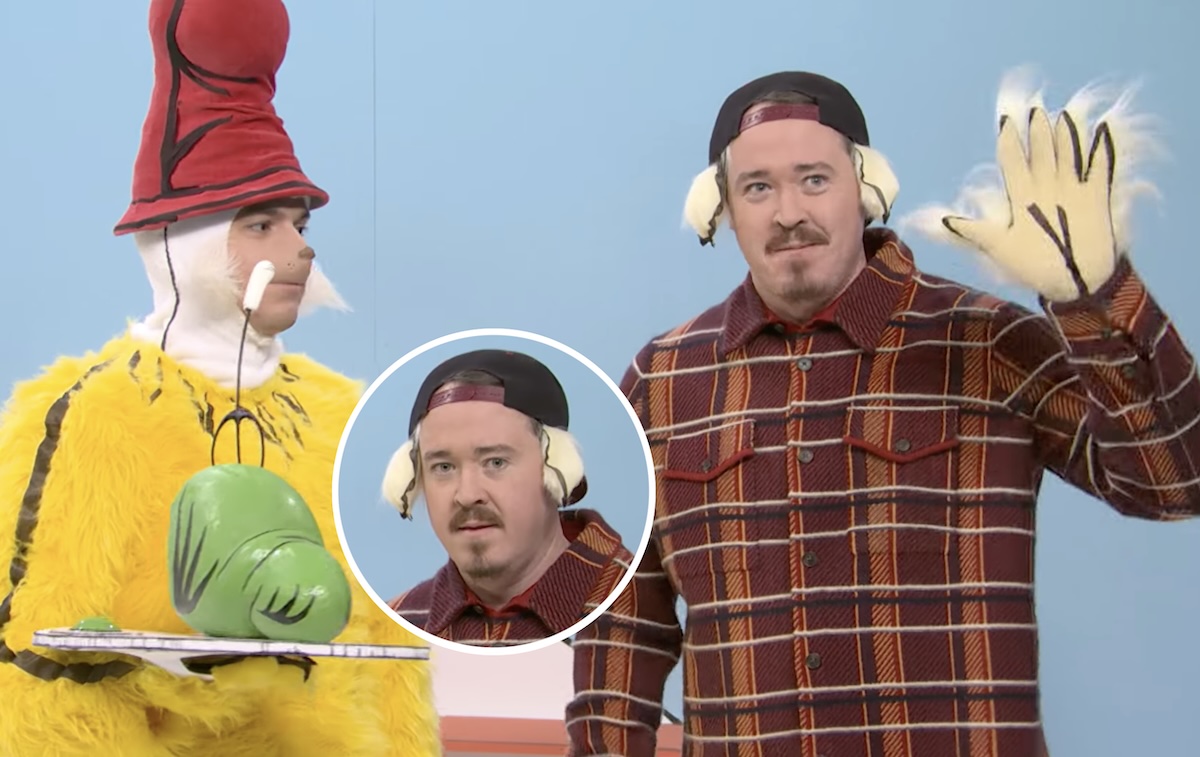
This latest appearance was not without its other notable moments. Throughout the episode, Gillis engaged in high-concept satire, including a monologue that addressed his own public profile and a series of sketches that touched on contemporary political and cultural issues. The "Green Eggs and Ham" sketch, however, became the most widely circulated segment of the night due to the viral potential of the accidental profanity.
Supporting Data and Broadcast Trends
Saturday Night Live remains a primary bellwether for cultural discourse. According to recent Nielsen ratings, live sketch comedy maintains a resilient viewership, particularly among the 18–49 demographic. The ability of such shows to generate "water cooler moments"—short, shareable clips that circulate on platforms like YouTube, TikTok, and X (formerly Twitter)—is essential for maintaining their relevance in the streaming era.
The clip of the "Green Eggs and Ham" sketch saw a rapid increase in engagement across social media platforms within hours of the broadcast. Data from social media sentiment analysis suggests that the majority of viewers perceived the error as a humanizing moment rather than a professional failing. In the context of 2026’s media landscape, where much of what audiences consume is heavily produced and polished, there is a measurable demand for the "unfiltered" experience of live, unedited performance.
Comparative Analysis of Live Television Errors
History is replete with "F-bomb" incidents on live television. From the early days of television to modern late-night iterations, the accidental profanity has become a rite of passage for many hosts and guests. Notable examples include incidents involving actors during sketches or guests during the Weekend Update segment, where the line between scripted humor and spontaneous reaction is thinnest.
The significance of these errors is usually mitigated by the reaction of the performer. In the case of Gillis, his immediate pivot and return to the character demonstrated a level of comfort that suggests he is well-versed in the demands of live performance. Rather than stalling or apologizing on air—which would have further disrupted the flow of the sketch—he moved forward, allowing the audience’s laughter to serve as the acknowledgment of the mistake.
Broader Impact on the Show
The broader implications for Saturday Night Live are minimal. The show has long established a brand that balances professional production with the raw, unpredictable energy of a live theater troupe. Minor deviations from the script are often seen as additive to the show’s legacy rather than detrimental to its reputation.
Moreover, the engagement generated by such clips provides a significant boost to the show’s digital footprint. In an era where linear television ratings are often supplemented by digital views, the "viral moment" is a valuable commodity. The producers of SNL are well aware of this dynamic, often leaning into the spontaneity that defines the show’s late-night slot.
Conclusion
The incident involving Shane Gillis on the October 2026 broadcast of Saturday Night Live serves as a reminder of the volatility inherent in live broadcast entertainment. While the utterance of an expletive on national television is technically a breach of standard script adherence, it is an occurrence that has become synonymous with the spirit of the program.
As Gillis continues to solidify his role in the comedy landscape, the "Green Eggs and Ham" sketch will likely be remembered not as a failure of discipline, but as a notable, lighthearted moment that captured the attention of a wide, digital-native audience. The event underscores the enduring appeal of live television, where even in a highly controlled, scripted environment, the potential for the unexpected remains the primary draw for millions of viewers. By maintaining his composure and finishing the sketch, Gillis demonstrated the resilience required of a modern comedic performer, effectively turning a potential disruption into a hallmark moment of his third hosting tenure.