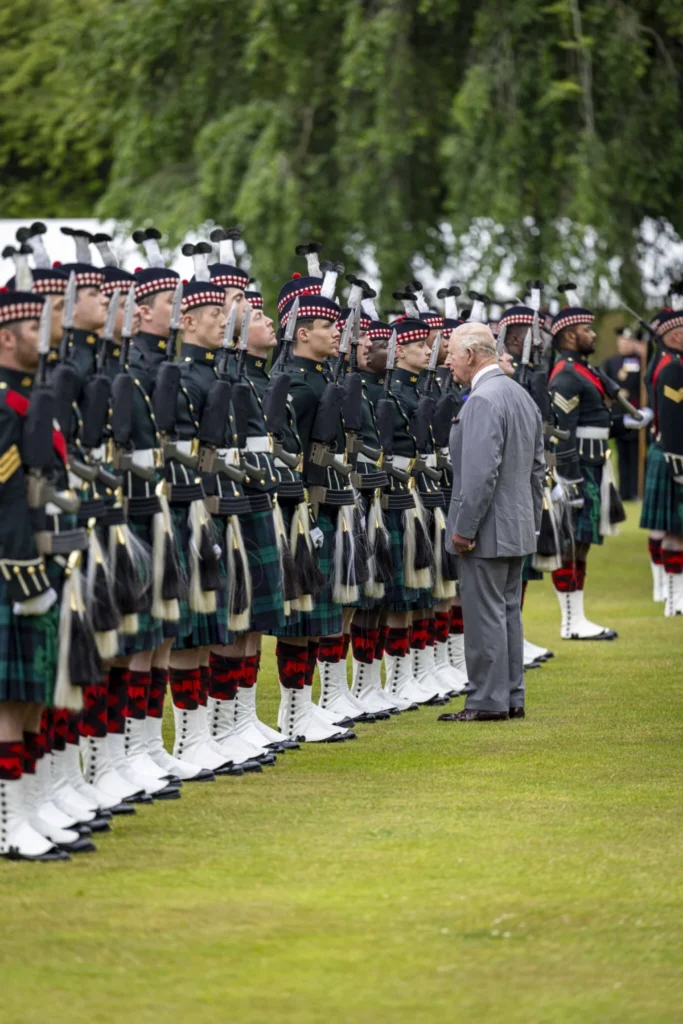

King Charles III has commenced a significant week of engagements in Scotland by participating in one of the nation’s most venerable and symbolic royal traditions: the Ceremony of the Keys. This time-honoured ritual, which marks the monarch’s formal arrival and acceptance of custodianship over a key royal residence, took place at the Palace of Holyroodhouse, the King’s official residence in Scotland, located in the heart of Edinburgh. The event heralds the beginning of Scotland Week, an annual period of intensive royal activity in the country, during which the King and Queen, often joined by other members of the Royal Family, undertake a series of public duties.
A Time-Honoured Tradition Unfolds
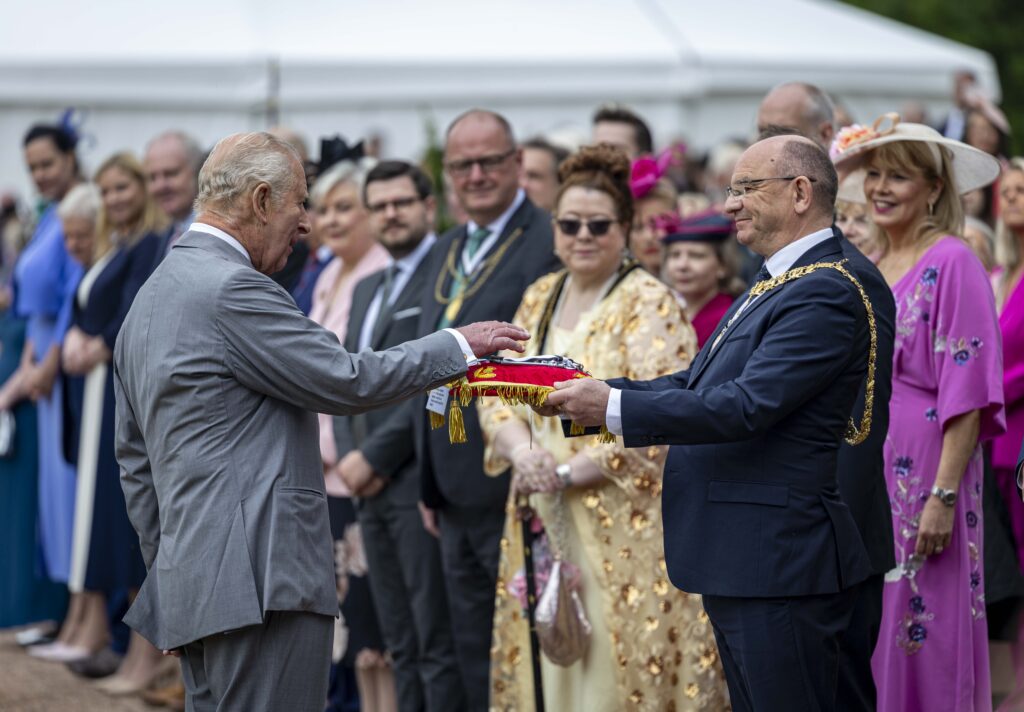
The Ceremony of the Keys, steeped in centuries of history, is a poignant symbol of the sovereign’s connection to the City of Edinburgh and its ancient institutions. As King Charles arrived at the Palace of Holyroodhouse, he was formally presented with the Keys of the City. This tradition, which dates back to at least the 14th century, signifies the monarch’s authority and welcome into the city, while also underscoring the city’s commitment to its sovereign.
The Lord Provost of Edinburgh, Councillor Robert Aldridge, presented the keys to His Majesty. The keys, typically borne on a velvet cushion, represent the granting of free entry and passage within the city’s walls, a symbolic gesture acknowledging the King’s ultimate sovereignty. Tradition dictates that the monarch must physically receive the keys. King Charles III placed his hand upon them, acknowledging the symbolic transfer of trust and responsibility. Following this act of acceptance, as is customary, the King ceremonially returned the keys to the Lord Provost for safekeeping, reinforcing the reciprocal nature of the relationship between the Crown and the city.
Military Honour and Royal Presence
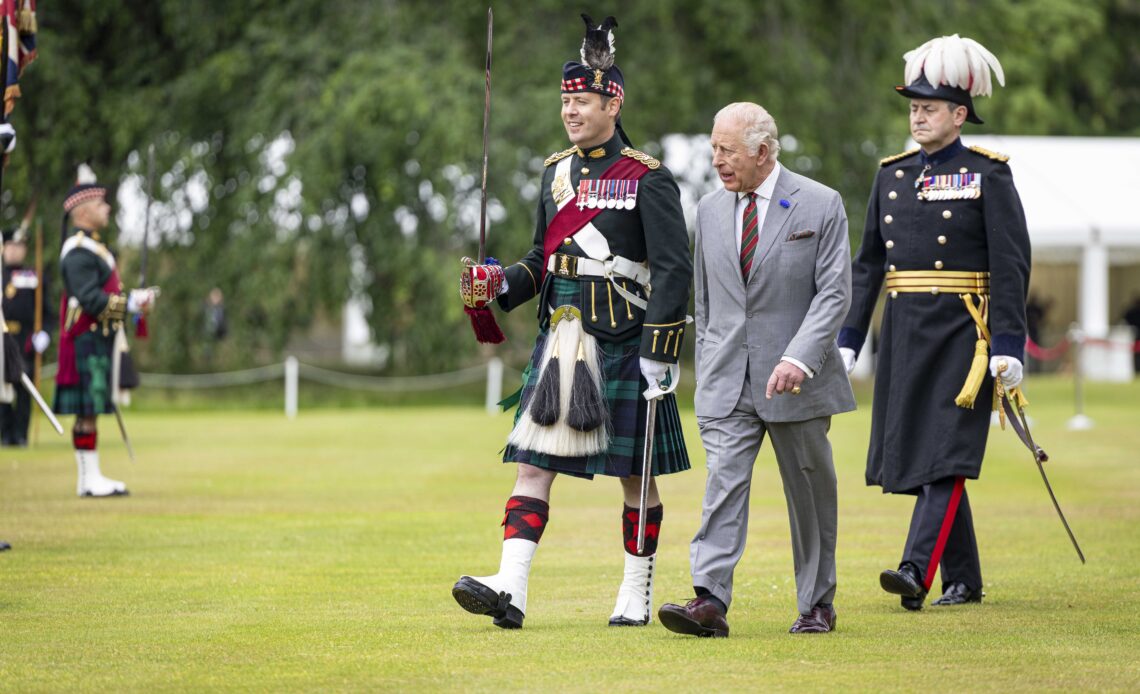
The formal welcome for the King at Holyroodhouse was enhanced by the presence of a military detachment. The Balaklava Company, from the 5th Battalion of The Royal Regiment of Scotland, was on parade to formally greet His Majesty. This display of military precision and tradition underscored the solemnity and importance of the occasion. During the ceremony, King Charles took the opportunity to inspect the company, a gesture that demonstrates his recognition and appreciation for the service and dedication of the armed forces.
While the Palace of Holyroodhouse serves as the King’s official Scottish residence, it is important to note that His Majesty possesses other private residences in Scotland, the most famous being Balmoral Castle in Aberdeenshire. The distinction between official and private residences highlights the multifaceted nature of the monarch’s relationship with Scotland, encompassing both public duty and personal connection.
Setting the Stage for Scotland Week
The Ceremony of the Keys not only marked the King’s arrival at Holyroodhouse but also officially inaugurated Scotland Week. This annual programme of events is a cornerstone of the Royal Family’s calendar, showcasing their commitment to Scotland and its people. The week typically involves a broad spectrum of engagements, from official receptions and ceremonies to visits to cultural institutions and community projects. This year’s Scotland Week is anticipated to be particularly significant, with further events planned throughout the coming days.
King Charles’s attire for the Ceremony of the Keys was a smart trouser suit, a choice that contrasted with his more traditional attire worn just days earlier. During a preceding visit to Edinburgh for the opening of the 7th session of the Scottish Parliament, His Majesty was seen wearing a kilt, a sartorial nod to Scottish heritage that resonated with many. The deliberate choice of different dress codes for distinct occasions reflects a nuanced approach to royal representation, balancing formality with cultural sensitivity.
A Multifaceted Royal Agenda
As Scotland Week unfolds, the King and Queen are scheduled to participate in a diverse array of activities across the country. While the King was engaged in the traditional Ceremony of the Keys, Queen Camilla was undertaking her own significant engagements. Her Majesty met with J.K. Rowling, the internationally acclaimed author, a meeting that underscored the importance of Scotland’s rich literary heritage and its global impact.
Later in the day, King Charles and Queen Camilla were joined by their daughter, Anne, the Princess Royal, for a garden party held at Holyroodhouse. Garden parties are a quintessential element of royal summer programmes, offering a more relaxed yet formal setting for the monarch to engage with a wide cross-section of society, including representatives from various fields of public service, charity, and the arts.
Queen Camilla opted for an elegant dark navy ensemble, complemented by a wide-brimmed hat, exuding regal grace. Princess Anne, known for her practical and often re-worn wardrobe choices, made a striking appearance in a dark red patterned coat, paired with a matching scarf and an impressively large hat. Her sartorial choices have recently garnered attention, with fashion observers noting her ability to create stylish and memorable looks from her existing collection, demonstrating a commitment to sustainability and personal style.
Broader Implications and Royal Dedication
The annual Royal Week in Scotland serves multiple purposes. It allows the Royal Family to maintain a visible presence and connect with the Scottish populace, reinforcing the bonds between the monarchy and the nation. It also provides a platform to highlight various aspects of Scottish life, culture, and industry. The diverse range of engagements planned for this year, from official ceremonies to more personal interactions, demonstrates the monarchy’s enduring relevance and its commitment to serving all parts of the United Kingdom.
The successful commencement of Scotland Week, marked by the significant Ceremony of the Keys and the subsequent engagements of the King and Queen, sets a positive tone for the remainder of the royal visit. The period of engagements is scheduled to continue until July 3rd, promising further opportunities for the public to witness the Royal Family’s dedication to their constitutional roles and their ongoing relationship with Scotland. The event underscores the continuity of tradition in a modern era, showcasing how ancient rituals can coexist with contemporary public service, thereby reinforcing the monarchy’s historical significance and its active role in contemporary society. The coordinated efforts of the King, Queen, and other senior royals throughout Scotland Week signal a unified approach to their public duties, reinforcing their collective commitment to the nation.