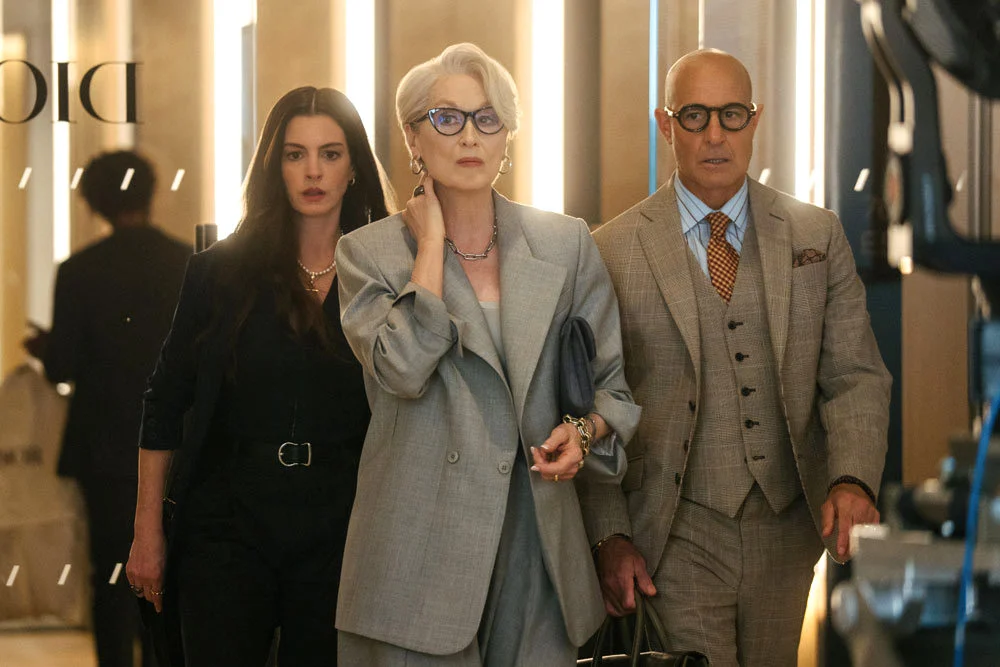

The annual Metropolitan Museum of Art Costume Institute Gala, widely regarded as the most significant event in the global fashion calendar, has entered a new era of corporate partnership and public scrutiny following the formal involvement of Amazon founder Jeff Bezos and the tech conglomerate’s subsequent sponsorship. This shift in the event’s financial and social architecture has sparked a multifaceted debate within the fashion industry and among cultural commentators, coinciding with the highly anticipated theatrical release of The Devil Wears Prada 2. As the 2026 gala concludes and the sequel to the 2006 cinematic staple reaches audiences, the intersection of corporate influence, digital media evolution, and the endurance of legacy fashion narratives has become a focal point for critical analysis.
The 2026 Met Gala and the Rise of Corporate Sponsorship
The 2026 Met Gala marked a departure from traditional luxury house sponsorships, as Amazon emerged as a primary benefactor. The involvement of Jeff Bezos, who has increasingly integrated into the high-fashion social circuit alongside partner Lauren Sánchez, has led to a polarized response from the public and industry insiders. The event, historically chaired by Vogue editor-in-chief Anna Wintour, has long relied on a blend of celebrity attendance and corporate underwriting to fund the Metropolitan Museum of Art’s Costume Institute. However, the "Bezos factor" has introduced a level of political and labor-related discourse that previously remained on the periphery of the red carpet.
Calls for a boycott of the 2026 gala gained momentum on social media platforms in the weeks leading up to the first Monday in May. Activists and certain fashion critics argued that the association with Amazon—a company frequently criticized for its labor practices and its impact on small-scale retail—contradicted the artistic and artisanal values of the Costume Institute. Despite these calls, the event saw record attendance and coverage. Analysts suggest that the boycott remained largely symbolic, as the gala’s status as a critical platform for designers and a primary revenue source for the museum makes total withdrawal a complex proposition for those within the industry.
Proponents of the partnership argue that the evolving landscape of global wealth necessitates new sources of funding for cultural institutions. The Costume Institute is the only department of the Metropolitan Museum of Art that must self-fund its operations. With the 2026 gala raising an estimated $25 million, the financial reality of maintaining one of the world’s most significant fashion archives often outweighs the ideological concerns regarding specific sponsors.
The Devil Wears Prada 2: A Twenty-Year Cultural Milestone
Parallel to the discourse surrounding the Met Gala is the release of The Devil Wears Prada 2, a sequel produced by 20th Century Studios and Disney. Arriving exactly two decades after the original film, which was based on Lauren Weisberger’s 2003 novel, the sequel navigates a drastically different media landscape. The original film served as a satire of the mid-2000s print magazine industry, centered on the formidable Miranda Priestly, a character widely believed to be inspired by Anna Wintour.
The sequel’s narrative shifts the focus to the decline of traditional prestige media and the rise of digital conglomerates. The plot follows Miranda Priestly as she attempts to maintain her relevance and power at Runway Magazine, which is facing terminal financial struggles. In a reversal of roles, her former assistant Emily Charlton, now a high-powered executive at a global luxury brand group, holds the key to the advertising revenue Miranda desperately needs. This dynamic mirrors the real-world shift in power from editorial gatekeepers to the corporate entities that control the luxury market.
Production for the sequel began in late 2024, following years of speculation and the eventual alignment of the original cast members’ schedules. Meryl Streep, Anne Hathaway, and Emily Blunt reprised their roles, with Aline Brosh McKenna returning to draft the screenplay. The film’s release has been met with significant commercial interest, buoyed by nostalgia for the original and a renewed public fascination with the inner workings of the fashion industry.
Chronology of Development and Key Milestones
The trajectory of both the 2026 Met Gala controversy and the production of The Devil Wears Prada 2 can be traced through several key industry shifts:
- 2006: The original The Devil Wears Prada premieres, grossing over $326 million worldwide and cementing its place in the cultural zeitgeist.
- 2013: Lauren Weisberger releases the literary sequel, Revenge Wears Prada: The Devil Returns, though the 2026 film chooses a different narrative path.
- 2023-2024: Amazon Fashion significantly increases its presence in the luxury market, launching "Luxury Stores" and seeking high-profile endorsements to compete with established retailers like Net-a-Porter.
- Early 2025: Official confirmation of The Devil Wears Prada 2 is announced by Disney, with the original cast attached.
- January 2026: The Metropolitan Museum of Art announces Jeff Bezos and Amazon as major sponsors for the spring exhibition and gala, titled "The Architecture of Influence."
- May 2026: The Met Gala takes place amidst protests and boycott calls, followed immediately by the global premiere of the sequel film.
Industry Impact and Data Analysis
The intersection of these two events highlights the shifting economic foundations of the fashion world. Data from market analysts indicates that while print circulation for luxury fashion magazines has declined by over 40% since 2016, the "red carpet economy"—the value generated by celebrity appearances and viral fashion moments—has increased by 150%. This explains why the Met Gala remains indispensable to brands despite the controversy surrounding its sponsors.
The Devil Wears Prada 2 addresses this data-driven reality within its script. The film depicts a world where "likes" and "engagement metrics" have replaced the artistic intuition that Miranda Priestly once championed. Industry observers note that the film acts as a meta-commentary on the very environment that produced the Bezos-sponsored Met Gala. The film’s critical reception has been largely positive, with reviewers praising its ability to adapt the original’s themes to a modern context without sacrificing the character-driven drama that defined its predecessor.
Reactions from the Fashion and Media Communities
The response from the fashion community has been nuanced. High-profile designers, many of whom rely on both the Met Gala for exposure and Amazon for distribution, have largely remained neutral. However, some independent designers have expressed concern that the "commercialization" of the gala under tech-giant sponsorship may dilute the event’s focus on avant-garde artistry.
Regarding the film, fashion journalists have noted the accuracy with which it portrays the "death of the editor." In various roundtable discussions, former editors have stated that the power struggle between Miranda and Emily in the sequel is a faithful representation of the tension between creative editorial vision and the bottom-line demands of luxury conglomerates.
In a statement addressing the gala’s sponsorship, a spokesperson for the Metropolitan Museum of Art emphasized that the museum’s mission is to "preserve and celebrate the history of fashion," and that corporate partnerships are essential to ensuring the Costume Institute remains accessible to the public and future generations of scholars.
Broader Implications and Future Outlook
The events of May 2026 suggest a permanent shift in how high fashion is funded and consumed. The "Bezos Met Gala" represents the final integration of Big Tech into the luxury sphere, a move that is likely to be replicated by other cultural institutions seeking financial stability. While the calls for a boycott demonstrate a growing public demand for corporate accountability, the sheer scale of the event’s influence suggests that total separation from controversial wealth is increasingly difficult in the modern economy.
Furthermore, the success of The Devil Wears Prada 2 underscores the enduring power of the "fashion mythos." Despite the industry’s internal crises and the decline of traditional magazines, the public remains deeply invested in the narrative of fashion as a site of power, ambition, and transformation. The film provides a sense of closure for a generation that grew up with the original, while also serving as a cautionary tale about the future of creative industries in a data-dominated world.
As the dust settles on the 2026 gala and the film continues its theatrical run, the fashion industry faces a period of introspection. The central question remains: can the artistry and prestige of the fashion world survive its increasing dependence on the very tech giants that have disrupted its traditional structures? For now, the answer appears to lie in a tenuous balance between the legacy of the past and the economic realities of the digital age.