
Pattie Boyd, an iconic figure intrinsically linked to the legendary history of The Beatles, has voiced her profound frustration regarding the upcoming four-part biopic series directed by Sam Mendes. Boyd, famously the former wife of George Harrison and later Eric Clapton, expressed her dismay during a recent podcast appearance, revealing that she has not been contacted by the production team, despite an actress already being cast to portray her. Her comments ignite a broader discussion on the balance between artistic interpretation and historical authenticity in high-profile biographical productions, particularly concerning one of the most documented bands in history.
Pattie Boyd: A Pivotal Figure in the Beatles’ Narrative
Pattie Boyd’s connection to The Beatles is not merely tangential; it is deeply interwoven with the band’s narrative, especially during their most transformative years. A successful model in the 1960s, Boyd met George Harrison on the set of "A Hard Day’s Night" in 1964, and they married in 1966. Her presence became a muse for some of Harrison’s most celebrated compositions, most notably the timeless "Something" from the Abbey Road album, widely considered one of the greatest love songs ever written. Beyond Harrison, her later relationship with Eric Clapton inspired his anthemic "Layla" and "Wonderful Tonight," cementing her status as one of rock and roll’s most significant muses.
Given her intimate proximity to Harrison during the band’s psychedelic era, their spiritual explorations, the formation of Apple Corps, and the eventual dissolution of the group, Boyd’s personal recollections offer a unique and invaluable perspective. Her memoir, Wonderful Tonight: George Harrison, Eric Clapton, and Me, published in 2007, provides a detailed, first-hand account of her life with two rock legends, shedding light on the private dynamics, creative processes, and emotional complexities within their inner circles. It is precisely this wealth of personal experience and documented history that makes her exclusion from the biopic’s consultative process particularly striking to many observers and, evidently, to Boyd herself.
The Unsolicited Portrayal: Boyd’s Disappointment
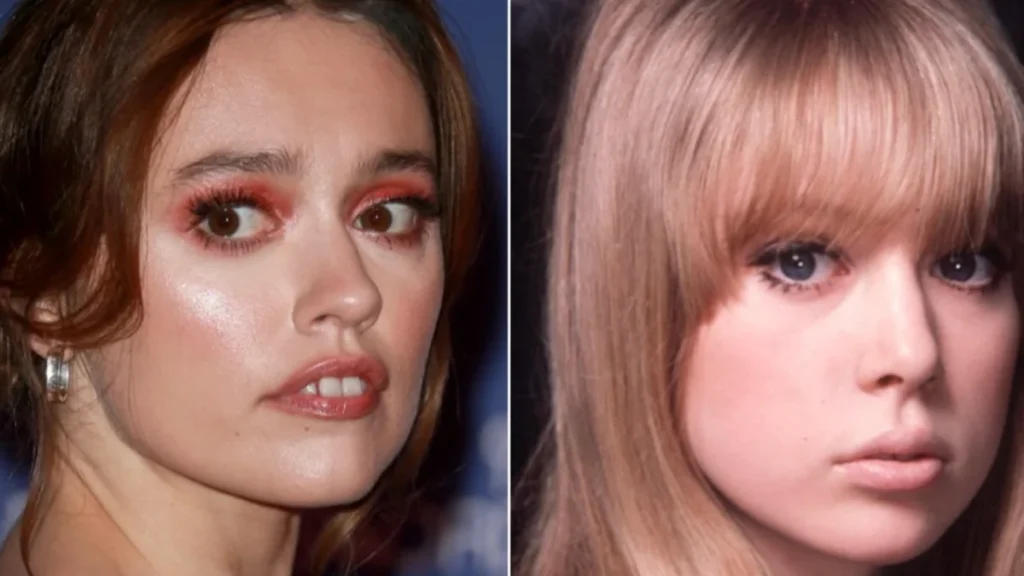
Boyd’s revelation came during her appearance as the premiere guest on a new podcast hosted by Chris O’Dell, the famed tour manager for The Beatles and many other prominent English acts of the 1960s, ’70s, and ’80s. The conversation naturally steered towards the highly anticipated biopics, particularly the news that White Lotus actress Aimee Lou Wood is reportedly eyed to play Boyd. It was at this juncture that Boyd candidly shared her dismay. "I thought it would be polite to mention it to me, or let me know if they’ve got someone who is going to be playing me," Boyd stated, adding, "Wouldn’t they let me know?"
O’Dell, who also confirmed his own lack of contact despite his extensive professional relationship with The Beatles, echoed Boyd’s sentiment, remarking, "I thought you’d be a consultant." Boyd’s response underscored her readiness to contribute, but also her perception of the production’s disinterest: "I could’ve told them really great stories. But I don’t think they wanted to know." This exchange highlights a critical tension: the perceived ethical obligation to consult living subjects of a biographical work versus a production’s decision to pursue its own narrative vision without direct input.
Boyd further speculated on the filmmakers’ intentions, suggesting they "want to create something that’s completely different… a different story." O’Dell concurred, proposing that audiences "might be seeing the filmmaker’s version of what happened." Boyd’s subsequent assertion—that such a film would have "nothing to do with the truth of what happened. Because they didn’t want to talk to anyone who was there"—underscores a fundamental concern regarding the fidelity of the upcoming films to historical reality. Despite the underlying frustration, Boyd clarified that these developments do not "drive her crazy," opting instead for a dignified stance. "I’m going to be a very good girl and not get grumpy and growly," she remarked, before concluding with a broader observation: "People don’t have manners anymore. People don’t care, and if somebody doesn’t care, you can’t do anything about it."
The Sam Mendes Beatles Biopics: A Unique Cinematic Endeavor
The four-part Beatles biopic project, first announced in early 2024, represents an ambitious and unprecedented cinematic undertaking. Directed by Oscar-winner Sam Mendes, known for his critically acclaimed works such as American Beauty, 1917, and Skyfall, the series aims to tell the story of the Fab Four from four distinct perspectives. Each film will focus on an individual member – John Lennon, Paul McCartney, George Harrison, and Ringo Starr – while weaving together their interconnected journeys and the band’s collective history. This innovative structure promises a multi-faceted exploration of one of the most influential cultural phenomena of the 20th century.
Sony Pictures Entertainment and Apple Corps Ltd., the Beatles’ multimedia corporation, are behind the project, with all surviving Beatles members – Paul McCartney and Ringo Starr – alongside the widows of John Lennon (Yoko Ono Lennon) and George Harrison (Olivia Harrison), serving as producers. This official backing by Apple Corps provides the filmmakers with unprecedented access to the band’s music rights, a crucial element for any comprehensive Beatles narrative. The films are slated for a theatrical release in April 2028, a date that gives the production ample time for filming and post-production.
The casting for such iconic roles is, naturally, under intense scrutiny. The confirmed principal cast includes Paul Mescal as Paul McCartney, Barry Keoghan as Ringo Starr, Harris Dickinson as John Lennon, and Joseph Quinn as George Harrison. Supporting roles feature Saoirse Ronan as Linda McCartney, Anna Sawai as Yoko Ono, Mia McKenna-Bruce as Maureen Starkey, and Aimee Lou Wood in the role of Pattie Boyd. The caliber of talent involved suggests a serious artistic ambition, yet it simultaneously intensifies the debate around how such a well-known story will be presented, especially when key living witnesses are not involved in the consultation process.
Artistic License Versus Historical Fidelity: A Recurring Debate
The tension between creative freedom and factual accuracy is a perennial challenge in biographical filmmaking. For a subject as extensively documented and globally revered as The Beatles, this tension is particularly acute. Filmmakers often grapple with the need to craft a compelling narrative arc, which may sometimes necessitate condensing events, inventing dialogue, or taking liberties with minor details for dramatic effect. However, when central figures or their close associates, still living, express a willingness to contribute their personal accounts, the decision to forego such input can raise questions about the production’s commitment to historical veracity.
Paul Mescal, slated to play Paul McCartney, offered a perspective that contrasts sharply with Boyd’s desire for authenticity. In an earlier interview, Mescal stated, "I don’t want to get into the Beatles thing, not coyly, but actually because I think the world hopefully will benefit from knowing as little as possible going into it." While this sentiment could be interpreted as a desire for audiences to experience the films fresh, without preconceived notions, it also inadvertently underscores the potential for a narrative that prioritizes dramatic impact over strict adherence to widely known historical details or the nuanced perspectives of those who lived through it.
The involvement of Apple Corps Ltd. as producers introduces another layer of complexity. With McCartney, Starr, Ono Lennon, and Olivia Harrison directly involved, the biopics inherently carry an "official" stamp. This official endorsement could be seen as guaranteeing a certain level of authenticity from the surviving members’ perspectives, or it could be viewed as a means of controlling the narrative, potentially sidelining alternative or less flattering viewpoints. The challenge for Mendes and his team will be to navigate these various interests and deliver a compelling, coherent story that satisfies both artistic imperatives and the immense expectations of a global fanbase deeply invested in the band’s legacy.
The Precedent of Beatles Documentaries and Media
The Beatles’ story has been told and retold across countless mediums, creating a vast canon of documentaries, films, books, and journalistic accounts. From the official Beatles Anthology series in the mid-1990s, which featured extensive interviews with the surviving members and archival footage, to Peter Jackson’s immersive Get Back documentary series (2021), which offered an unvarnished look at the band’s creative process during the Let It Be sessions, the public has been given unparalleled access to the band’s history. Other notable projects include Michael Lindsay-Hogg’s original Let It Be film (1970), Martin Scorsese’s productions, and documentaries like If These Walls Could Sing, all of which drew heavily on primary sources, including direct testimony from those present.
This rich tapestry of existing media sets a high bar for any new interpretation. Audiences are exceptionally well-versed in the band’s timeline, key events, and the personalities involved. The existence of so much meticulously curated and often officially sanctioned content means that any significant deviation from established facts, or the exclusion of pivotal perspectives like Boyd’s, will likely be scrutinized with intense rigor. Fans and critics alike will be looking to see what "new" stories these biopics can tell, or what fresh insights they can offer, particularly without consulting figures who hold unique, personal keys to certain chapters of the band’s life. The challenge is to justify the existence of four new films on a subject already so thoroughly explored, especially if they risk being perceived as less authentic than previous endeavors that prioritized direct engagement with living history.
Implications for Authenticity and Audience Reception
The decision not to consult Pattie Boyd, and seemingly Chris O’Dell, carries several implications. Firstly, it raises questions about the definition of "authenticity" in biopics, particularly when dealing with living subjects. Is it sufficient for the primary producers (the surviving Beatles and their representatives) to sanction the narrative, or does a truly authentic portrayal necessitate engagement with all significant living witnesses, especially when their roles were as impactful as Boyd’s?
Secondly, it risks alienating a segment of the audience that values historical accuracy and the nuanced perspectives of those who were truly "there." While Boyd maintains her composure, her public comments could fuel skepticism among fans who expect a faithful retelling of events. In an era where audiences are increasingly discerning about biographical fidelity, particularly with figures as beloved as The Beatles, such perceived omissions could impact the films’ critical reception and, potentially, their commercial success.
Finally, the situation highlights the complex ethical landscape of biographical storytelling. While filmmakers ultimately have the right to their artistic vision, there is an ongoing debate about the moral obligations to the real individuals whose lives are being depicted, especially when those individuals are still alive and willing to contribute. The commercial imperative to create an engaging and marketable product often clashes with the desire for absolute historical precision. Sam Mendes’s ambitious quadrilogy will undoubtedly be a cinematic event, but its ultimate legacy may well hinge on how effectively it navigates these challenging waters and whether its narrative choices resonate with an audience that deeply cares about the "truth" of The Beatles’ story.
As the April 2028 release date approaches, the anticipation will only grow, as will the scrutiny. The films will not only be judged on their artistic merit but also on their perceived faithfulness to the extraordinary lives they portray, and the extent to which they honor the multifaceted realities experienced by those who were closest to the eye of the Beatles’ hurricane.