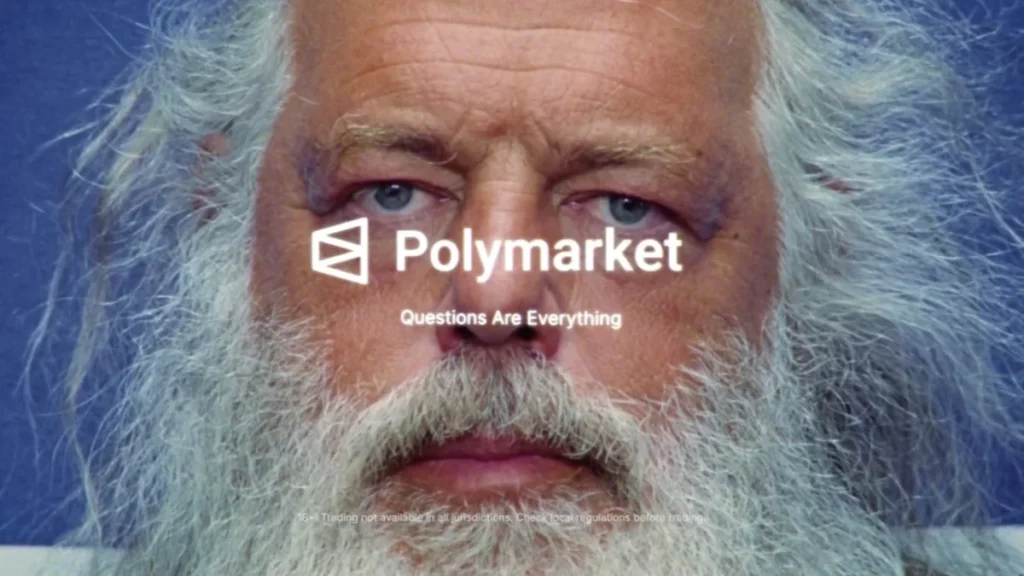

The unmistakable figure of Rick Rubin, renowned music producer and cultural icon, has made an unexpected foray into mainstream advertising, appearing in a commercial for Polymarket, a prominent prediction betting platform, during the highly anticipated FIFA World Cup matches. This appearance has sparked considerable discussion among both avid soccer enthusiasts and dedicated music fans, many of whom initially questioned whether their eyes were deceiving them. Indeed, it is the eight-time Grammy winner, instantly recognizable by his distinctive wild, white mane and serene, meditative pose, lending his unique gravitas to the commercial narrative.
The Commercial Unpacked: A Philosophical Gamble
The commercial itself features Rubin in a setting that aligns with his established persona: contemplative and slightly enigmatic. He is depicted in his signature cross-legged, meditative stance, an image that has become synonymous with his artistic process and his philosophical approach to creativity. As the camera focuses on him, Rubin begins the narration with a profound, almost rhetorical question: "If you could ask one question, what would you ask?" This introspective query serves as the central hook, subtly attempting to elevate the act of predicting future events—the core function of Polymarket—beyond mere gambling into a more intellectual or even spiritual exercise.
Adding another layer of intrigue and controversy, the commercial’s soundtrack prominently features the intro from Kanye West’s seminal 2010 track, "Runaway," from his critically acclaimed album My Beautiful Dark Twisted Fantasy. The choice of music is particularly noteworthy given West’s well-documented history of antisemitic remarks, public admiration for Adolf Hitler, and the subsequent widespread condemnation that led to numerous organizations and brands severing ties with the artist. While West did publish a letter in the Wall Street Journal in January 2026 (as per the implied timeline of the source article) apologizing for his antisemitism and discussing his experience with bipolar disorder, Polymarket’s decision to feature his music indicates a calculated risk, suggesting they believe the artistic merit of the song transcends the artist’s recent controversies, or perhaps that West’s apology was sufficient for their brand alignment.
The Maestro’s Midas Touch: Rick Rubin’s Enduring Legacy
Rick Rubin’s involvement in a commercial for a betting platform represents a significant departure from his carefully cultivated image as a reclusive artistic savant. For decades, Rubin has been revered as one of the most influential and innovative music producers in history, often credited with shaping the sound of multiple genres. As a co-founder of Def Jam Records, he played a pivotal role in launching the careers of iconic hip-hop acts like the Beastie Boys and Run-DMC. His genre-bending approach saw him bridge the gap between hip-hop and rock, famously producing Aerosmith and Run-DMC’s collaboration on "Walk This Way."
Beyond hip-hop, Rubin’s Midas touch extended to metal, punk, rock, and country. He produced legendary albums for bands like Slayer (Reign in Blood), The Red Hot Chili Peppers (Blood Sugar Sex Magik, Californication), and Tom Petty (Wildflowers). Perhaps most famously, he revitalized Johnny Cash’s career with the American Recordings series, showcasing Cash’s raw talent and earning critical acclaim. Rubin’s production style is often characterized by its minimalism, focusing on extracting the raw essence of an artist’s performance, creating a timeless quality that transcends trends. His public persona, often depicted in interviews and documentaries as a zen-like guru residing in his Malibu studio, Shangri-La, has only amplified his mystique. This carefully constructed image makes his appearance in a commercial for a prediction market particularly striking, leading many to speculate about the motivations behind such a decision.
Despite his commercial foray, Rubin remains deeply embedded in the artistic world. The original report indicates a robust production schedule, with over a dozen albums produced in the 2020s for a diverse roster of artists including Imagine Dragons, Lil Uzi Vert, Neil Young, and Tyler Childers. Most recently, he has been involved with The Strokes on their eagerly anticipated forthcoming album, Reality Awaits. Additionally, Rubin has ventured into documentary filmmaking, directing an eight-part series on the legendary rapper JAY-Z, slated for release on HBO in the fall of 2026. These projects underscore his continued commitment to artistic endeavors, presenting a stark contrast to his commercial endorsement of a betting platform. His previous endorsement of "AI vibe coding" further illustrates his willingness to engage with contemporary digital tools, blurring the lines between traditional artistic expression and modern technological advancements.
Polymarket’s Play: The Rise of Prediction Markets
Polymarket is a decentralized information platform that allows users to bet on the outcomes of future events. Unlike traditional sports betting, prediction markets often cover a broader spectrum of topics, from political elections and economic indicators to scientific breakthroughs and pop culture events. Users buy shares in the outcome they believe will occur, with the price of shares fluctuating based on market sentiment and information. The platform aims to aggregate collective intelligence, theoretically providing a more accurate probability assessment of future events than traditional polling or expert opinions.
The appeal of prediction markets lies in their gamified approach to information gathering and their potential for financial gain. However, they also operate in a complex regulatory landscape, often straddling the line between financial instruments and gambling. The legal status of such platforms varies significantly across jurisdictions, leading to ongoing debates about consumer protection, market integrity, and the potential for manipulation.
Polymarket’s decision to advertise during the FIFA World Cup is a strategic move to tap into a massive global audience. The World Cup, with its unparalleled viewership and intense emotional engagement, provides an ideal platform for brand visibility. The crossover demographic of sports fans, many of whom are already familiar with various forms of betting, makes this a fertile ground for attracting new users. By aligning with a figure like Rick Rubin, Polymarket attempts to imbue its platform with an aura of intellectualism and philosophical inquiry, moving beyond the typical imagery associated with sports gambling. This approach seeks to appeal to a more sophisticated audience, suggesting that participation in prediction markets is an exercise in foresight and informed decision-making rather than pure chance.
The Soundtrack of Controversy: Kanye West’s "Runaway"
The inclusion of Kanye West’s "Runaway" in the commercial has been one of its most contentious aspects. West’s descent into antisemitic rhetoric and conspiracy theories began to escalate significantly in late 2022, leading to widespread condemnation and the termination of lucrative partnerships with brands like Adidas, Balenciaga, and Gap. His public statements, which included praising Adolf Hitler and denying the Holocaust, caused immense damage to his public image and financial standing. The timeline of these events is crucial:
- October 2022: West makes a series of antisemitic remarks on social media and in interviews, leading to his accounts being restricted.
- December 2022: West appears on Alex Jones’s InfoWars, openly professing admiration for Hitler and denying the Holocaust.
- Early 2023: Major brands, including Adidas, announce the termination of their partnerships with West, resulting in significant financial losses for the artist.
- Throughout 2023-2025: West continues to face backlash, with various organizations and events distancing themselves from him.
- January 2026 (as per source’s implied timeline): West publishes an apology letter in the Wall Street Journal, addressing his antisemitism and discussing his bipolar disorder.
Despite this turbulent history, Polymarket chose to feature a track from West’s My Beautiful Dark Twisted Fantasy, an album widely regarded as a modern masterpiece. This decision suggests a deliberate strategy: either Polymarket believes that West’s January 2026 apology sufficiently rehabilitates his image for commercial purposes, or they are drawing a clear distinction between the artist’s personal actions and the enduring artistic merit of his work. Alternatively, the controversial choice itself might be a calculated move to generate buzz and media attention, leveraging the notoriety surrounding West. For some, the use of "Runaway" might be seen as a problematic endorsement, even indirect, of an artist whose views have caused significant harm. For others, it might represent the separation of art from the artist, allowing a powerful piece of music to stand on its own.
Navigating the Ethical Landscape: Art, Commerce, and Celebrity Endorsement
Rick Rubin’s decision to participate in the Polymarket commercial raises several intriguing questions about the intersection of art, commerce, and celebrity endorsement. While the original report correctly infers a "hefty financial incentive" for Rubin, the philosophical underpinnings of his persona add complexity to this commercial venture. Rubin has long been seen as an artist’s artist, prioritizing creative integrity over commercial gain. His entire career has been built on fostering authentic artistic expression. Appearing in an ad that, as the original article puts it, "tries to philosophize gambling while giving it an illusion of an artful act," could be perceived as a potential compromise of that integrity.
Public reactions are likely to be varied. Long-time fans might express surprise or disappointment, viewing it as a sell-out. Others might interpret it as Rubin’s continued exploration of different forms of expression and influence, or simply a pragmatic business decision. From Polymarket’s perspective, securing a figure like Rubin offers significant benefits. His intellectual credibility and serene image lend an air of legitimacy and sophistication to a platform that deals with speculative betting. It attempts to reposition prediction markets as a tool for informed decision-making rather than mere gambling, aligning with Rubin’s image as a seeker of truth and essence.
The broader implications for celebrity endorsements are also worth noting. In an increasingly fragmented media landscape, celebrities are constantly weighing the benefits of commercial opportunities against potential damage to their brand. For a figure as iconic and respected as Rubin, such a move is rarely taken lightly and almost certainly involves substantial compensation. The controversy surrounding the Kanye West track further complicates Polymarket’s marketing strategy, showcasing the risks involved in leveraging potentially divisive cultural elements to gain attention.
Broader Implications and Future Outlook
The Rick Rubin-Polymarket collaboration during the FIFA World Cup signifies several broader trends. Firstly, it highlights the increasing mainstreaming of prediction markets. Once niche online platforms, they are now aggressively pursuing global visibility through high-profile advertising campaigns, seeking to normalize the concept of betting on a wide array of future events. This push suggests a growing confidence in their business model and a desire to expand their user base beyond early adopters.
Secondly, it underscores the evolving role of celebrity endorsements. As traditional advertising channels become saturated, brands are increasingly looking for unique voices and unexpected pairings to cut through the noise. Using a figure like Rick Rubin, known more for his behind-the-scenes genius than front-facing commercial work, creates an immediate talking point and generates considerable media attention. This strategy, while potentially risky for the celebrity’s image, can be highly effective for the brand in terms of awareness and differentiation.
Finally, the incident reflects the ongoing debate about the separation of art and artist, particularly in the context of commercial use. The willingness of Polymarket to use Kanye West’s music, despite his past controversies and recent apology, indicates a complex calculation about brand perception, artistic legacy, and the potential for a "bad boy" image to generate buzz. As digital platforms continue to proliferate and global events offer unparalleled advertising opportunities, the strategies employed by companies and the choices made by celebrities will continue to shape the cultural landscape, prompting ongoing discussions about ethics, authenticity, and the pursuit of commercial success. The convergence of a legendary producer, a speculative financial platform, and a controversial musical backdrop during one of the world’s largest sporting events creates a fascinating case study in modern marketing and celebrity culture.