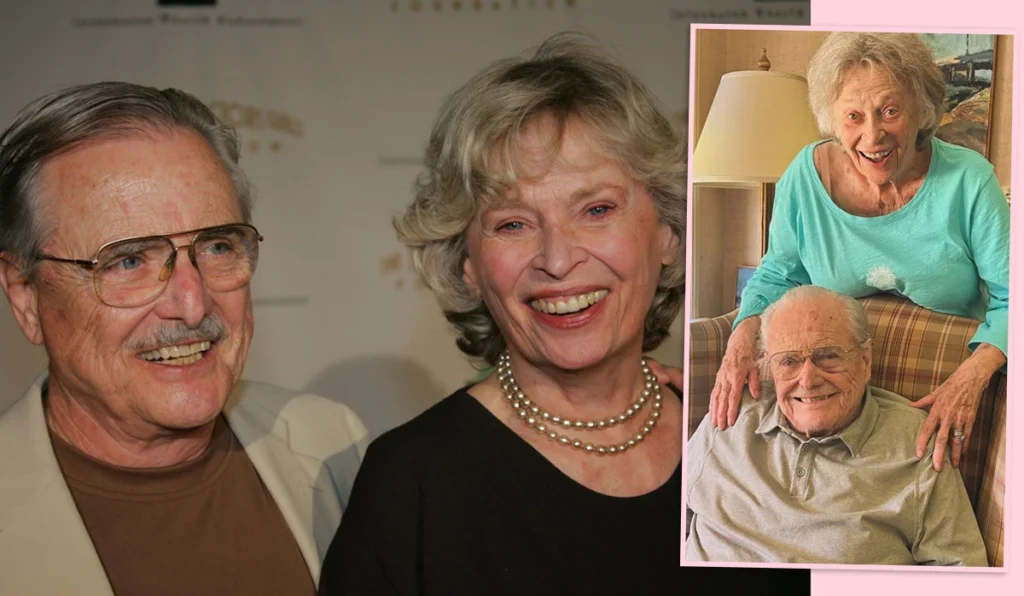

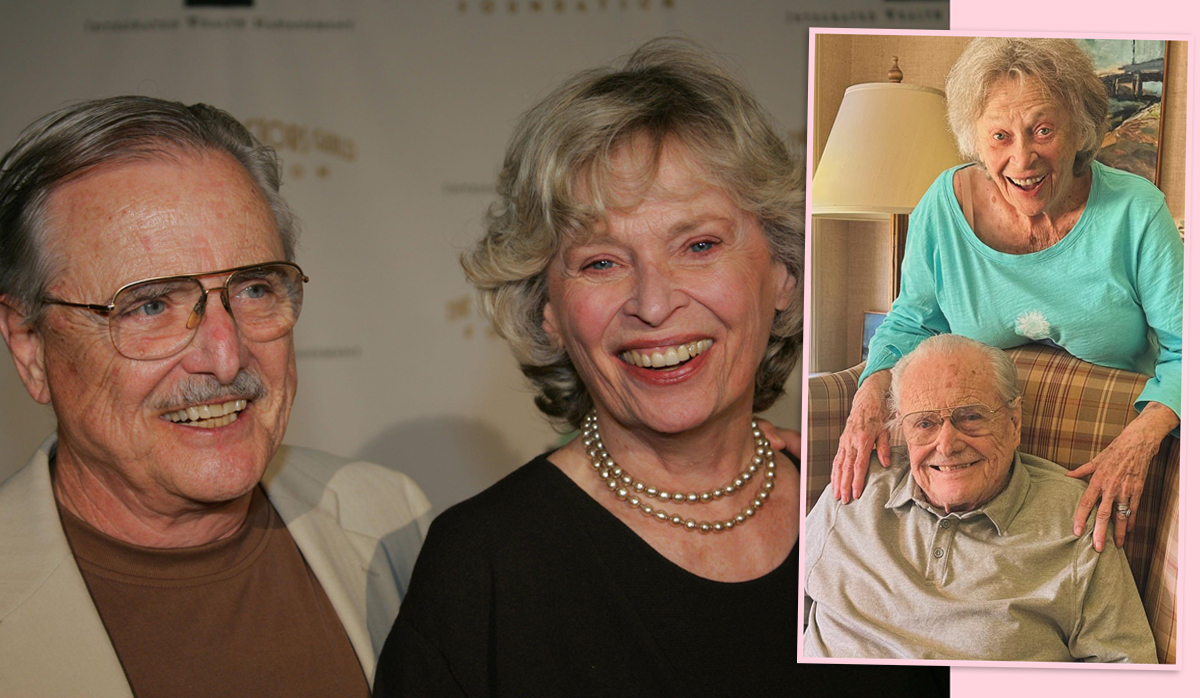
The esteemed actor William Daniels, widely recognized for his iconic portrayal of George Feeny in Boy Meets World, is preparing to celebrate an extraordinary milestone: 75 years of marriage with his wife, Bonnie Bartlett, on June 30. At 99 years old, Daniels, alongside Bartlett, has shared insights into their remarkably enduring union, including an unexpected period early in their marriage when they experimented with an open relationship. This candid revelation offers a nuanced perspective on the complexities and adaptations inherent in a partnership spanning nearly eight decades, challenging conventional notions of marital longevity and revealing the profound resilience required to navigate a lifetime together.
A Foundation Forged at Northwestern: The Genesis of a Lifelong Bond
William Daniels and Bonnie Bartlett’s journey began not on a Hollywood soundstage, but within the hallowed halls of academia. They first met as students at Northwestern University, a period Daniels estimates added three foundational years to their total time together, bringing their shared history to an impressive 78 years. Their connection blossomed during these formative years, leading to their marriage in June 1951. This early period was crucial in establishing a deep understanding and affection that would serve as the bedrock for their future. The 1950s, a decade often characterized by traditional societal norms and expectations regarding marriage and family, provided the initial backdrop for their burgeoning relationship. Yet, even within this era, their bond demonstrated a unique resilience and a perhaps nascent willingness to navigate unconventional paths, laying the groundwork for the candid experimentation that would follow.
Both Daniels and Bartlett embarked on acting careers, a profession notorious for its demands, travel, and potential strain on personal relationships. Balancing burgeoning careers with the responsibilities of marriage and family life presented significant challenges, requiring constant negotiation and mutual support. Their shared experiences in the entertainment industry, from the early days of live television to their respective successes in film and long-running series, undoubtedly shaped their understanding of each other and the compromises necessary for a dual-career couple. The competitive nature of acting, the periods of unemployment, and the constant need for adaptation to new roles and locations are all factors that can exert immense pressure on a marriage, making their enduring partnership even more remarkable.
The Experiment with Openness: Navigating Uncharted Waters in the Mid-20th Century
A few years into their marriage, Daniels and Bartlett made the surprising decision to explore an open relationship. This choice, made in the mid-1950s, was particularly unconventional for the time, largely preceding the broader societal shifts and counter-cultural movements of the 1960s and 70s that would bring such relationship structures into more public discourse. Bartlett, in a previous admission, recounted having an affair with a "slightly boring" actor around 1959, which she described as lasting "a few months." This initial foray into non-monogamy highlights a period of experimentation and perhaps a search for individual freedom or a means to address unfulfilled desires within the confines of their committed partnership.
The concept of an open marriage, while gaining more visibility and academic study in contemporary discussions, was largely taboo and shrouded in secrecy in the mid-20th century. For Daniels and Bartlett to openly discuss this chapter speaks to their profound honesty and the evolution of their understanding of commitment. Their willingness to explore different relationship models underscores a certain adventurousness and perhaps a pragmatic, if emotionally perilous, approach to addressing individual needs within their union. This period, while brief, was a significant part of their relational development, offering insights into their individual desires and the boundaries of their collective comfort. It suggests a marriage that, from early on, was willing to confront difficult truths and explore unconventional solutions, even if those solutions ultimately proved unsustainable for their specific dynamic. The societal context of the 1950s, where traditional gender roles and strict monogamy were largely unquestioned, makes their experimentation even more striking, hinting at a progressive mindset that defied the norms of their era.
The Turning Point: Emotional Impact and the Decision to Close the Marriage
The true test of their experimental approach came later, in the 1970s, when William Daniels had an affair with a producer. The emotional fallout from this experience was profound, particularly for Bonnie Bartlett. She described feeling "devastated" by the affair, an emotional response that led her to a crucial realization: she "could no longer tolerate any kind of open marriage." This pivotal moment marked a definitive turning point in their relationship, prompting a mutual decision to "close" their marriage and recommit to a strictly monogamous structure.
The impact of such events on any relationship can be immense, often leading to irreparable damage and divorce. However, for Daniels and Bartlett, it became a catalyst for deeper introspection and a redefinition of their marital boundaries. Bartlett’s devastation and subsequent resolve illustrate the often complex and painful journey of self-discovery within a relationship. Her emotional experience clearly delineated a fundamental boundary for her, one that, once crossed, threatened the very foundation of their partnership. For Daniels, confronting the pain he caused and understanding his wife’s unequivocal needs was essential for their partnership to survive. This period underscores that while openness can be an exploration, it also comes with significant emotional risks and requires clear, often evolving, communication and agreement on limits, which, in their case, were ultimately found to be non-negotiable for the long-term health and emotional security of their bond. Their ability to navigate this crisis, acknowledge the pain, and collectively decide on a new, more traditional path speaks volumes about their commitment to each other, even when facing profound challenges that could have easily ended their marriage. It highlights the often-unspoken truth that long-term relationships are not static but are continually negotiated and redefined, often in response to significant emotional experiences.
The Wisdom of "Adjustment" and "Wiggle Room": Cornerstones of Longevity
Reflecting on their nearly 75 years of marriage, both William Daniels and Bonnie Bartlett emphasized the paramount importance of "adjustment" as the key to their enduring success. As Bartlett eloquently stated to Page Six, "Life is all adjustment. You’re constantly adjusting… And that’s what life’s all about — is adjusting to whatever your circumstances are and however you move along. And certainly a marriage is full of adjustments." This philosophy extends beyond mere compromise; it encompasses a dynamic and continuous process of adapting to personal growth, evolving circumstances, and external pressures that inevitably arise over a lifetime.
Over such a vast span of time, couples inevitably face myriad changes: career shifts, financial fluctuations, the joys and challenges of raising children, personal health issues, the loss of loved ones, and significant societal transformations. For Daniels and Bartlett, "adjustment" meant navigating the demands of parallel acting careers, the public scrutiny that often accompanies celebrity, and the private struggles of a long-term relationship. It implies a willingness to re-evaluate expectations, redefine roles, and consistently recalibrate their partnership to maintain harmony and mutual fulfillment. This continuous process of adaptation is a hallmark of resilient relationships, allowing them to bend without breaking under the weight of life’s unpredictable nature.
Bartlett, describing herself as an "introspective" person, further highlighted the necessity of "wiggle room" within a marriage. This concept suggests that while boundaries and commitment are essential, an overly rigid structure can stifle individual growth and expression. "Wiggle room" allows for individual space, personal development, and the flexibility to accommodate each other’s evolving needs and desires without fracturing the core commitment. It acknowledges that individuals within a partnership are not static entities but are constantly growing and changing, and the relationship must have the capacity to grow with them. This philosophy stands in contrast to rigid, unyielding expectations, suggesting that resilience in marriage often comes from its elasticity rather than its inflexibility. It’s about creating an environment where both partners can thrive individually while remaining deeply connected, a delicate balance that has clearly served them well for decades.
The Unifying Power of Laughter and Family Support
Beyond philosophical approaches to adjustment, the couple consistently points to humor as a vital ingredient in their marital recipe. When asked for relationship advice, William Daniels playfully responded, "Don’t," a quick quip that Bonnie Bartlett immediately clarified as her husband "being funny" and attempting to make everyone "laugh." This exchange perfectly encapsulates the role of levity in their daily lives. Bartlett affirmed that William makes her laugh "all the time, every day," underscoring how shared humor can diffuse tension, foster joy, and strengthen emotional bonds. Laughter serves as a powerful antidote to the inevitable stresses and minor disagreements of life, and can bridge gaps, reminding partners of the joy and lightness they find in each other’s company. This shared sense of humor undoubtedly contributed to their ability to weather storms and maintain a positive outlook, even during challenging periods.
The couple also expressed profound gratitude for their family, particularly their two sons. Bartlett spoke warmly of their son Michael, who lives nearby and provides significant assistance, allowing them to remain connected with their grandchildren. "We’re so lucky we have two wonderful, wonderful sons," she shared. "And one of them — Michael — lives right near us, and he helps us a lot. A lot. And he has a family, and we see them. We see him and his wife, and we see all the kids, and it’s wonderful. It’s wonderful." The support of a close-knit family network offers practical aid and emotional sustenance, especially in later life, reinforcing the couple’s sense of security and well-being. This familial bond illustrates another layer of their "adjustment" strategy – recognizing when to lean on external support and cherishing the connections that enrich their lives and provide a sense of continuity and legacy. The presence of a supportive family unit clearly acts as an anchor, providing comfort and stability as they navigate the later stages of their long life together.
A Look at Their Respective Careers and Public Personas
William Daniels’ career has spanned over seven decades, leaving an indelible mark on American television and theater. While he boasts an extensive resume, including iconic roles in St. Elsewhere (for which he won two Emmy Awards), the voice of KITT in Knight Rider, and John Adams in 1776 (both on Broadway and in the acclaimed film adaptation), he is perhaps most affectionately known as George Feeny, the wise and often enigmatic teacher in the beloved 1990s sitcom Boy Meets World. His portrayal of Mr. Feeny, a mentor figure who dispensed life lessons with a dry wit and unwavering wisdom, resonated deeply with a generation of viewers. This role cemented his image as a figure of guidance and integrity, a public persona that, while distinct from his private life, reflects a certain gravitas and enduring quality that has endeared him to millions.
Bonnie Bartlett, too, has had a distinguished acting career, earning critical acclaim and an Emmy Award for her work on St. Elsewhere alongside her husband, portraying Ellen Craig, the wife of Daniels’ character, Dr. Mark Craig. She is also recognized for her roles in Little House on the Prairie, Once and Again, and General Hospital, among many others. Her career trajectory, often running parallel to Daniels’, speaks to her own professional dedication and talent. Their shared profession likely provided a unique understanding of the industry’s demands and afforded them a common ground for navigating the challenges of celebrity life, including periods of intense work and periods of relative quiet. Their ability to maintain successful individual careers while nurturing such a long-lasting marriage is a testament to their mutual respect and shared commitment to both their professional and personal lives, understanding the ebb and flow that comes with a career in the arts.
Contextualizing Longevity in Hollywood and Beyond
The longevity of William Daniels and Bonnie Bartlett’s marriage is particularly striking in the context of Hollywood, where relationships are frequently subjected to intense public scrutiny and the pressures of demanding careers, often leading to shorter unions. While celebrity marriages statistically average significantly less than the national average, there are notable exceptions. Couples like Kirk Douglas and Anne Buydens (66 years), Bob and Dolores Hope (69 years), and James and Gloria Stewart (45 years) stand as powerful testaments to enduring love in the spotlight. Daniels and Bartlett’s impending 75-year milestone places them among the elite few, offering a rare glimpse into a partnership that has defied the odds and the unique challenges presented by a life in the public eye.
Beyond Hollywood, the general trend of marriage longevity in the United States shows varying statistics. While first marriages have a roughly 50% chance of ending in divorce, couples who stay together for over 50 years represent a smaller, but significant, demographic, often referred to as "diamond anniversaries." These couples frequently cite communication, commitment, shared values, and adaptability as crucial factors in their enduring success. The Daniels-Bartlett story, with its candid admission of past struggles and unconventional choices, adds a layer of realism to these idealized notions of long-term commitment. It suggests that enduring love isn’t necessarily about perfection, or adherence to a single, prescribed path, but about perseverance, profound honesty, a willingness to forgive, and a continuous willingness to work through challenges, adapting to each other and to life’s many curves.
Evolving Societal Views on Non-Monogamy
The revelation of Daniels and Bartlett’s brief foray into an open marriage also provides a fascinating historical footnote to the evolving societal conversation around non-monogamous relationships. While uncommon and largely unacknowledged in mainstream culture in the 1950s, the concept of open relationships, polyamory, and other forms of consensual non-monogamy has gained increasing visibility, research, and acceptance in the 21st century. Modern discussions often frame these structures as intentional, ethically negotiated forms of relating, emphasizing explicit communication, mutual consent, and clear boundaries as foundational elements for success. This contrasts sharply with the often clandestine and less discussed nature of such arrangements in earlier decades.
Their experience, while predating much of this contemporary discourse, highlights the deeply personal and often experimental nature of relationship dynamics. The fact that they ultimately chose to revert to monogamy after experiencing significant emotional distress underscores that while diverse relationship models exist, the suitability of any particular structure is intensely individual. Their story serves as a reminder that what works for one couple may not work for another, and that the path to marital fulfillment often involves trial, error, and a profound understanding of one’s own emotional needs and limits. It’s not about judging the choice they made, but acknowledging the journey and the lessons learned about their own particular needs for security and commitment within their unique bond.
Implications for Understanding Modern Relationships
William Daniels and Bonnie Bartlett’s candid sharing of their marital journey offers valuable insights for contemporary couples and for our broader understanding of what sustains a relationship over a lifetime. Their story challenges the often-romanticized and unrealistic portrayals of long-term relationships, presenting a more honest and complex picture. By revealing their past struggles, including the attempt at an open marriage and the subsequent emotional pain, they demystify the notion of a "perfect" union, instead highlighting resilience, forgiveness, and the capacity for growth through adversity. This transparency can be incredibly valuable, offering a more attainable model of long-term partnership that acknowledges human fallibility and the dynamic nature of love.
Their emphasis on "adjustment" and "wiggle room" resonates strongly in an era where personal autonomy and individual fulfillment are highly valued. It suggests that successful partnerships require not just unwavering commitment, but also a dynamic flexibility that allows for personal evolution while maintaining a shared foundation. Furthermore, their unwavering commitment to humor and the profound support of their family underscores the foundational human needs for joy, connection, and external support within a relationship. As they approach their 75th wedding anniversary, William Daniels and Bonnie Bartlett stand as a remarkable example of enduring love. Their willingness to share the unconventional aspects of their journey, alongside the more traditional elements of humor and family, provides a richer, more authentic narrative of what it truly means to build and sustain a partnership over a lifetime. Their story is not just a testament to their individual strength, but a powerful commentary on the evolving nature of love, commitment, and the continuous process of adjustment in the grand theater of life.