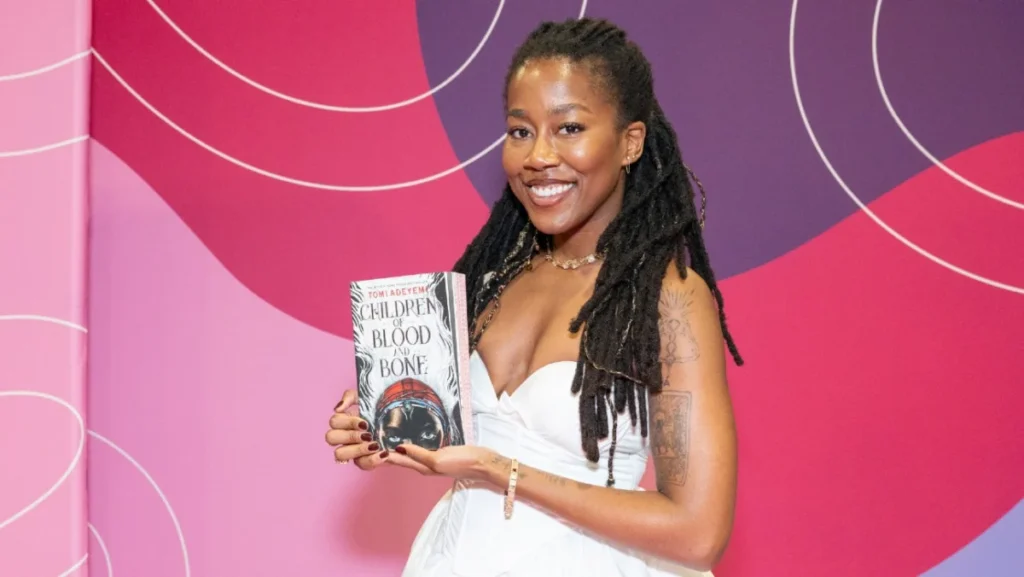

Author Tomi Adeyemi has publicly announced her profound disassociation from Paramount Pictures’ forthcoming feature adaptation of her critically acclaimed young adult novel, Children of Blood and Bone. In a series of social media posts, Adeyemi conveyed a deep sense of personal hurt and behind-the-scenes conflict, stating she would not promote, watch, or associate her name with the film, despite her credit as an executive producer and co-screenwriter. This revelation sends ripples through Hollywood, raising significant questions about authorial control, creative differences, and the often-fraught journey of adapting beloved literary works, especially those with profound cultural significance.
A Chronology of Disconnect: From Bestseller to Public Disavowal
The journey of Children of Blood and Bone from print to screen has been long and, as now revealed, fraught with tension. Adeyemi’s debut novel, the first in her Legacy of Orïsha trilogy, burst onto the literary scene in 2018, quickly becoming a New York Times bestseller and receiving widespread critical acclaim for its innovative blend of West African mythology, magic, and a powerful narrative of oppression and rebellion. Its immediate success led to a highly coveted seven-figure book deal, signaling Hollywood’s keen interest in bringing its rich, diverse world to a global audience.
Paramount Pictures secured the film rights, and initial announcements were met with immense excitement from fans and the industry alike. Adeyemi’s involvement as an executive producer and co-screenwriter alongside esteemed director Gina Prince-Bythewood (The Woman King, The Old Guard) was initially seen as a positive sign, suggesting a commitment to maintaining the integrity of her vision. The film boasts an impressive, predominantly Black cast, including Thuso Mbedu, Tosin Cole, Amandla Stenberg, Damson Idris, Cynthia Erivo, Lashana Lynch, Regina King, Idris Elba, Chiwetel Ejiofor, and Viola Davis – a lineup that promised a powerful cinematic experience. The film is currently slated for a theatrical release on January 15, 2027.
However, beneath the surface of these high-profile announcements, tensions evidently simmered. A crucial point in the escalating conflict appears to have been around February 2025, when actress Amandla Stenberg, cast as Princess Amari, posted a video to TikTok. This video, which has since been deleted, reportedly addressed the "colorism backlash" surrounding her casting and claimed Adeyemi had supported her being in the role. Colorism, a form of discrimination where individuals with lighter skin tones are favored over those with darker skin tones, particularly within the same racial group, has been a recurring and sensitive topic in discussions surrounding representation in media.
Adeyemi’s recent social media activity, specifically a TikTok video posted on a Saturday in late 2026, laid bare the extent of her grievances. The video featured screenshots of private messages, one of which directly addressed Stenberg: “Do not ever use my name in an interview or video again. Do not text me. Do not call me.” The image further implied Adeyemi had blocked the actress, known for her roles in The Hunger Games and The Hate U Give. Another screenshot in Adeyemi’s post stated, “There is a reason I will not post anything about the adaptation of my work. That’s all.” She further clarified, “Since someone asked, I have not seen the film, and I will not watch it.” Adeyemi’s emotional toll was palpable in her subsequent words: “It’s been painful holding this back from you all,” and “I’m sorry if any of you thought I didn’t care. I will always care about US. More than any glitter.” Responding to a fan’s comment about feeling sad, Adeyemi elaborated, “I do not mind anyone going to watch the film. I wrote this for us. I fought for us. I’m just laying down my sword and officially separating my name because I can’t keep being hurt and attacked behind the scenes.”
This public disavowal, coming nearly a year after the apparent message to Stenberg and well after the film’s footage debut at CinemaCon earlier this year, highlights a protracted and deeply personal struggle behind the scenes of a major Hollywood production.
The Legacy of Orïsha: A Cultural Phenomenon and Its Weight
Children of Blood and Bone is more than just a fantasy novel; it is a cultural touchstone that resonated deeply with readers worldwide, particularly those longing for diverse representation in the fantasy genre. Set in the fictional West African-inspired kingdom of Orïsha, the story follows Zélie Adebola, a young maji who embarks on a quest to restore magic to her people, which was violently suppressed by a tyrannical monarchy. The novel explores themes of systemic oppression, racial injustice, power, and hope through a captivating magic system and complex characters.
Adeyemi’s work has been lauded for its bold narrative, intricate world-building, and its powerful allegories to real-world issues of race and discrimination. Its success paved the way for more diverse voices in publishing and demonstrated the immense commercial viability of stories centered on Black characters and cultures. For many, the prospect of a high-budget film adaptation was a momentous occasion, a chance to see themselves and their stories reflected on a grand cinematic scale. This inherent weight of cultural expectation places an extraordinary burden on any adaptation, demanding not just fidelity to the plot but also a profound understanding and respect for its underlying messages and cultural context.
Navigating Hollywood: The Complexities of Adaptation and Authorial Control
The journey of adapting a beloved novel into a film is notoriously complex, often fraught with creative differences, budgetary constraints, and the inherent tension between an author’s singular vision and a studio’s commercial imperatives. While many authors dream of seeing their work on the big screen, the reality can be a grueling process of compromise and relinquishment of control.
In Adeyemi’s case, her role as an executive producer and co-screenwriter initially suggested a higher degree of involvement and influence than many authors typically receive. Executive producers often oversee the creative direction of a project, and a screenwriting credit implies direct input into how the story is translated. However, these roles, especially for a debut author, can sometimes be more honorary or consultative than fully controlling, particularly within the hierarchical structure of a major studio production. The studio, director, and other key producers ultimately hold significant power over final creative decisions, from script changes to casting choices and editing.
Adeyemi’s statement, "I fought for us," hints at significant battles waged behind the scenes over the film’s direction, potentially encompassing aspects of character portrayal, narrative emphasis, or even the broader message. Her eventual decision to "lay down [her] sword" and separate her name suggests a point of no return where her efforts to influence the production ultimately proved futile or too costly to her personal well-being. This scenario underscores a recurring challenge in Hollywood: how to honor the original creator’s vision while also crafting a commercially viable product for a mass audience.
Casting Controversies and the Shadow of Colorism
The issue of colorism in casting has become a particularly sensitive and frequently debated topic in recent years, especially within adaptations of diverse literary works. For Children of Blood and Bone, which features characters whose appearances are integral to their identity and place within the fictional society, casting decisions carried immense weight. The novel’s portrayal of dark-skinned maji being persecuted by a lighter-skinned monarchy makes the visual representation of its characters crucial to its thematic core.
Amandla Stenberg, a talented actress with a mixed racial background, found herself at the center of this debate regarding her casting as Princess Amari. While Stenberg has been a vocal advocate for racial justice and representation, the specific concerns raised by some fans revolved around whether her lighter complexion accurately reflected the intended portrayal of a character from the fictional royal family in Orïsha, particularly in a narrative that critiques colorism and internal divisions within the Black community.
Stenberg’s deleted TikTok post from February 2025, where she reportedly addressed the backlash and claimed Adeyemi’s support for her casting, now appears to be a pivotal moment. Adeyemi’s unequivocal message to Stenberg – "Do not ever use my name in an interview or video again" – directly refutes any public assertion of her endorsement, highlighting a profound breach of trust and a deep personal offense. This specific interaction underscores the highly charged nature of identity politics in casting and the potential for public statements, even well-intentioned ones, to inadvertently exacerbate private tensions.
Industry Reactions and Broader Implications
Adeyemi’s public disavowal is a rare and significant event in Hollywood. Major studios like Paramount Pictures typically maintain a strategic silence on such matters, preferring to let the film speak for itself and avoid validating any controversy. As of now, neither Paramount nor director Gina Prince-Bythewood, nor any of the stellar cast members, have issued public statements regarding Adeyemi’s comments. This silence, while standard industry practice, can also be interpreted as a lack of direct engagement with the author’s stated pain.
The implications of this situation are far-reaching. For Paramount, it presents a challenge in marketing a major tentpole release when its celebrated author has publicly distanced herself. While the film boasts an impressive cast and director, the absence of the author’s endorsement, particularly for a highly anticipated adaptation, could dampen enthusiasm among some segments of its dedicated fanbase.
For other authors whose works are being adapted, Adeyemi’s experience serves as a cautionary tale about the complexities of creative control and the emotional toll of the adaptation process. It may empower future authors to demand more explicit contractual terms regarding their creative input and the final say on elements critical to their work’s integrity. It could also encourage a more transparent dialogue within the industry about managing author expectations and respecting original visions, especially for stories rooted in specific cultural experiences.
Moreover, this incident reignites the broader conversation within Hollywood about how it handles diverse narratives. The industry has made strides in recent years towards greater representation both in front of and behind the camera. However, Adeyemi’s situation suggests that simply hiring diverse talent or acquiring diverse stories is not enough if fundamental disagreements over creative vision, cultural authenticity, or personal respect arise. It emphasizes the need for studios to not only champion diverse voices but also to genuinely empower and protect them throughout the production process.
Fan Engagement and the Future of the Legacy of Orïsha
The reactions from Adeyemi’s immense fanbase have been a mix of sadness, confusion, and overwhelming support. Many fans expressed empathy for her pain, while others grappled with the dilemma of wanting to support both the author and the film. Adeyemi’s nuanced response—encouraging fans to still watch the film because she "wrote this for us" and "fought for us," despite her personal withdrawal—highlights her unwavering commitment to her community and the original spirit of her work. It places the onus on the audience to make their own choices, free from her personal endorsement, but with the full understanding of her struggle.
The future of the Legacy of Orïsha trilogy’s cinematic journey now hangs in a delicate balance. While Children of Blood and Bone is the first book, two more novels, Children of Virtue and Vengeance and Children of Anguish and Anarchy, complete the series. Whether Paramount will proceed with adapting the sequels, and what Adeyemi’s involvement, or lack thereof, would be, remains an open question. This public rupture may complicate future collaborations and force a re-evaluation of how such culturally significant properties are handled.
In conclusion, Tomi Adeyemi’s public disavowal of the Children of Blood and Bone film adaptation transcends a mere author-studio dispute. It encapsulates a multifaceted conflict involving creative control, personal integrity, the sensitive issue of colorism in casting, and the profound emotional investment an author has in their creation. As the film approaches its 2027 release, the shadow of this public separation will undoubtedly loom large, prompting crucial reflections on how Hollywood can better navigate the delicate dance between artistic vision, commercial ambition, and the deep cultural resonance of the stories it chooses to tell.