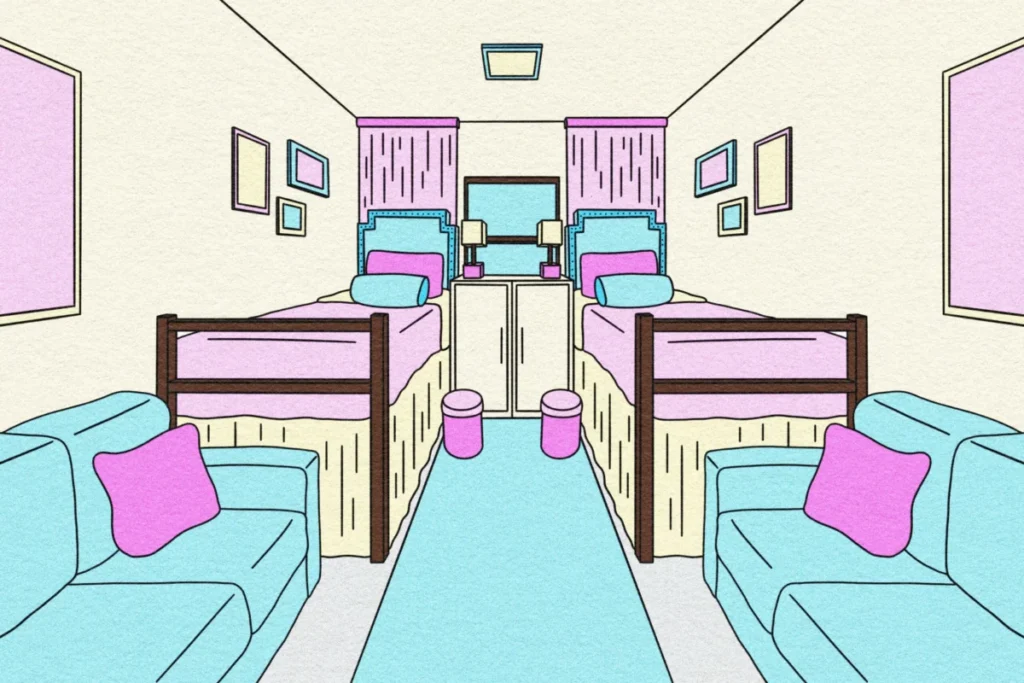

The modern college dormitory, once defined by utilitarian cinderblock walls, twin XL mattresses, and a sense of shared, modest beginnings, is undergoing a profound aesthetic and economic transformation. Across campuses in the Southern and Midwestern United States, the traditional dorm room is being rebranded as a high-end, curated interior design project. This shift—driven by the convergence of social media culture, the professionalization of dorm styling, and the increasing influence of Greek life—has turned temporary nine-month living quarters into carefully staged backdrops for personal branding.
The Evolution of Dorm Culture: From Necessity to Aesthetic
For decades, the ritual of moving into a dorm room was a rite of passage centered on comfort and basic utility. However, the current trend toward "maximalist" dorms represents a departure from this historical norm. The aesthetic, often characterized by coordinated color schemes, monogrammed textiles, bespoke furniture, and elaborate lighting, draws heavy inspiration from the visual language of Southern sorority life.
This movement has gained significant momentum through digital platforms. The phenomenon known as "RushTok"—a collection of viral social media content documenting the sorority recruitment process—has spotlighted the importance of image, presentation, and personal branding for young women. Within this ecosystem, the dormitory room serves as a physical extension of a student’s public-facing identity. It is no longer just a place to sleep; it is a studio for content creation.
The Professionalization of Dorm Design
As the pressure to present a curated living space has intensified, a new niche market has emerged: the professional dorm designer. These consultants bridge the gap between amateur home decor and professional interior design, offering services that range from virtual mood boards to full-service, white-glove installations.
The economic scale of this industry is substantial. Designers like Shelly Gates of Mary Margaret Designs have gained national notoriety for projects that reportedly command fees reaching $20,000, though such figures vary based on the scope of customization. The service offerings are comprehensive, often including the sourcing of custom headboards, high-thread-count monogrammed bedding, coordinated rugs, and specialized wall treatments that comply with strict university fire safety and housing regulations.
MK Decker, an artist and entrepreneur who has been a central figure in this space since her time as a student at the University of Mississippi in 2015, represents the first generation of designers to monetize this trend directly. Her business model includes the sale of proprietary product lines, such as duvet covers retailing for $360 and custom artwork pieces, alongside hourly design consulting.
Similarly, designers like Olivia Erwin Rosenthal have pivoted from high-end residential interiors to the dorm market, launching "Dormie," a service that provides curated design kits. These kits standardize the process of high-end design, offering students a cohesive aesthetic—covering everything from lighting to floor coverings—without the need for an individual designer to source items from dozens of disparate retailers.
A Timeline of the Dorm Aesthetic
The shift toward the "aesthetic dorm" did not happen overnight. Its trajectory can be mapped alongside the rise of visual-first social media platforms:
- 2010–2014: The era of Pinterest influence. Students began using mood boards to organize inspiration, but designs remained largely DIY and budget-focused.
- 2015–2018: The emergence of the "influencer" dorm. Platforms like Instagram popularized the "perfectly coordinated" room, and early adopters began hiring consultants for custom bedding and wall art.
- 2019–2022: The rise of TikTok and the professionalization of the niche. Dorm design firms began scaling, and the expectations for a "viral-ready" room solidified among incoming freshman classes.
- 2023–Present: The "Dorm Industrial Complex." Dorm design is now a multi-million-dollar industry, with formal partnerships between retailers, designers, and students, and a heavy emphasis on "content-ready" spaces.
Socioeconomic Implications and the "Comparison Culture"
While the trend toward luxury dorms is popular, it has also sparked a debate regarding socioeconomic equity on college campuses. The divide between students who can afford $20,000 makeovers and those who rely on basic essentials is increasingly visible.
The pressure to compete in this aesthetic arms race is not merely cosmetic. As Sydney Riepe, a student at Auburn University, noted, the design and color scheme of a student’s room have become topics of conversation during formal sorority recruitment interviews. This suggests that the dorm room is now a metric for social integration, forcing students to "defend" their aesthetic choices as part of their broader social evaluation.
Critics and designers alike are beginning to voice concerns about the psychological toll of this environment. Michele Gratch, an Atlanta-based designer, notes that the "comparison culture" fostered by social media has caused a shift where students no longer measure their rooms against their roommates, but against a global standard of influencer-perfect interiors. This constant exposure to stylized, edited living spaces can create feelings of inadequacy for students whose budgets or living situations do not allow for such expenditures.
Philanthropic Initiatives and Counter-Movements
In response to the growing financial disparity, some professionals have sought to democratize access to thoughtful design. Ebony Staten, an interior stylist and first-generation college graduate, founded The Vogue Foundation to provide professional design services to first-generation students at no cost. Her mission is to alleviate the financial burden while acknowledging that the psychological impact of a "thoughtfully designed" space can foster a sense of belonging and institutional support.
"There’s something powerful about a student walking into that space and realizing, ‘Someone thought about me. Someone invested in me,’" Staten said. Her work highlights a shift in perspective: while luxury dorms are often viewed through the lens of vanity or status, the underlying human desire for a comfortable, dignified, and personalized environment is a fundamental part of the transition to adulthood.
Industry Outlook: Sustainability and Future Trends
As the dorm design market continues to mature, industry leaders are looking toward more sustainable and scalable solutions. Jen Segall, a Chicago-based designer who offers more accessible dorm design services, notes that while she appreciates the creativity involved in these projects, she remains cautious about the trend toward excess.
"For me, that level of expense and excess doesn’t align with who I am as a designer," Segall remarked, emphasizing that the focus should remain on the student’s personal comfort rather than the "flex" factor of the room.
The industry is also grappling with the logistical reality of university housing. Because dorm rooms are temporary and subject to strict move-out policies, there is a growing demand for products that are modular, reusable, and easy to transport. Startups are increasingly focusing on "circular" models, where design kits can be rented or easily resold to future students, potentially reducing the waste associated with single-use, high-cost decor.
Conclusion
The transformation of the dorm room from a functional living space into an aesthetic brand-building exercise reflects the broader influence of social media on contemporary life. While the "dorm room industrial complex" offers lucrative opportunities for designers and retailers, it also forces a difficult conversation about the role of wealth and social status in the American higher education experience.
As institutions and students navigate these new expectations, the focus may eventually shift from the cost of the decor to the intent behind it. Whether the goal is to create a peaceful sanctuary for a student athlete or a photogenic backdrop for a budding influencer, the dorm room has undeniably become a primary site of personal identity construction in the digital age. The challenge for the future will be balancing the creative expression that these rooms afford with the need to maintain an inclusive, supportive, and grounded campus environment.