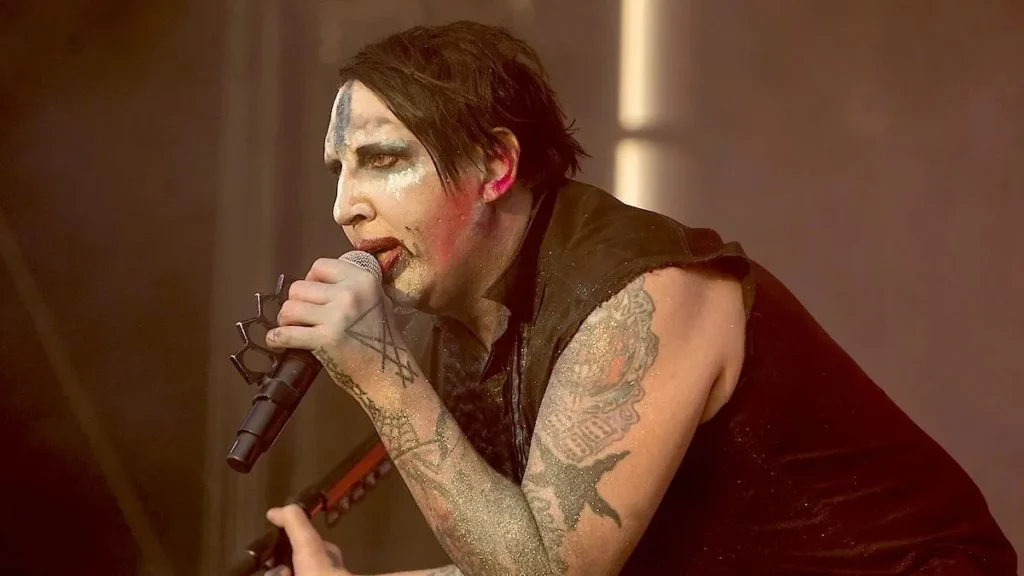

The Brazilian music festival The Town, a prominent cultural event organized by Rock World, has officially confirmed that industrial metal icon Marilyn Manson will perform at its 2027 edition in São Paulo. The announcement, which places Manson on the festival’s opening day bill alongside the metal powerhouse Slipknot, has reignited a complex public discourse regarding the intersection of artistic booking, legal accountability, and corporate responsibility in the live music industry. As the festival prepares for its September 4th kickoff, the decision to host the musician—who faces a series of ongoing and historical allegations of severe misconduct—has drawn both logistical justification from organizers and renewed scrutiny from critics.
The Context of the 2027 Booking
The inclusion of Marilyn Manson in The Town’s lineup is tied to his broader return to the international stage as part of Slipknot’s “(Sic)est Stadium Tour.” This tour, which also encompasses high-profile dates in Argentina and Chile, marks a significant moment in the musician’s career trajectory following several years of relative isolation from the touring circuit. For The Town, an event known for its massive production value and its association with the Rock in Rio brand, the booking represents a strategic alignment with a major global touring package.
However, the industry standard for vetting artists has become increasingly rigorous in the post-#MeToo era. Festivals, promoters, and ticket vendors are frequently pressured to weigh the commercial viability of legacy acts against the ethical considerations of the controversies surrounding them. In this instance, Rock World—the organization behind The Town—has found itself at the center of this debate, forced to articulate a policy that distinguishes between legal culpability and public perception.
A Chronology of Allegations and Legal Developments
The controversies surrounding Marilyn Manson, born Brian Warner, date back several years, culminating in a wave of public disclosures in early 2021. Since that time, more than a dozen women have leveled accusations against the singer, alleging patterns of sexual, physical, and psychological abuse. Among the most prominent figures to speak out are actress Evan Rachel Wood and former collaborator Esmé Bianco, both of whom have provided detailed testimonies regarding their experiences.
The legal timeline of these allegations has been protracted and complex:
- Early 2021: Following public statements from Evan Rachel Wood and others, the Los Angeles County Sheriff’s Department launched a formal investigation into the abuse allegations.
- January 2025: After a four-year investigation involving extensive document reviews and interviews, the Los Angeles District Attorney’s office announced it would not pursue criminal charges. Prosecutors cited the expiration of the statute of limitations for domestic violence claims and determined there was insufficient evidence to meet the high burden of proof required for sexual assault charges.
- Ongoing Litigation: While criminal charges were dismissed, the civil court system remains an active venue. A sexual assault lawsuit filed by Manson’s former personal assistant, Ashley Walters, was previously dismissed but was successfully revived on appeal. That case is currently scheduled to proceed to trial in November 2027, occurring shortly after the festival dates.
- August 2025: Manson performed at the Feria Nacional Potosina in Mexico, an event that drew significant local protest. Despite the pushback, the Governor of San Luis Potosí, Ricardo Gallardo, defended the performance, framing the booking as a matter of "cultural justice"—an assertion that ignited its own secondary debate regarding the role of government officials in endorsing controversial artists.
Official Responses and the Stance of Rock World
In an interview with the Brazilian newspaper Folha de S.Paulo, Zé Ricardo, the artistic vice president of Rock World, addressed the controversy directly. His defense of the booking rested primarily on the principle of the presumption of innocence. "He is someone who hasn’t been convicted; there’s nothing that has been proven," Ricardo stated. He further emphasized that the booking was a pragmatic result of the tour logistics, noting, "At this moment, he is an artist who will be touring around the world."
Ricardo sought to clarify the company’s vetting process, asserting that Rock World does not operate in a vacuum of ethical indifference. He stated that the organization has, in the past, declined to book artists when presented with "concrete cases" of misconduct. By distinguishing between "stories" and "proven convictions," Ricardo underscored the company’s reliance on the judicial system as the final arbiter of an artist’s eligibility for the stage. This position highlights the tension between the legal system’s outcomes and the court of public opinion, which often operates on different standards of evidence and accountability.
Broader Industry Implications
The decision by The Town to proceed with the booking reflects a wider trend in the music industry where international tours continue to act as a buffer for artists who have faced public scandal but avoided criminal conviction. When major festivals include such artists, they effectively validate their return to the mainstream, regardless of the gravity of the allegations that persist outside the courtroom.
For global event organizers, the dilemma is multi-faceted:
- Contractual Obligations: Often, artists are packaged in ways that make it difficult for festival promoters to "cherry-pick" performers without forfeiting the entire act.
- Reputational Risk: Promoters must weigh the potential for protests, social media boycotts, and negative press against the box-office draw of a legacy act.
- Audience Sentiment: The modern festival attendee is increasingly vocal. Organizers must determine if the presence of a controversial figure detracts from the festival experience or creates an unsafe or exclusionary environment for certain segments of their audience.
Economic and Cultural Factors
The Town’s return to the Brazilian market is a high-stakes endeavor. As the festival aims to solidify its reputation as a premier global event, the inclusion of an artist with Manson’s history serves as a litmus test for the local market’s tolerance and the festival’s own brand identity.
In Brazil, the discourse around gender-based violence has become increasingly central to public policy and social movements. Consequently, the backlash against the booking is not merely a reflection of international pop-culture trends but is deeply rooted in the local socio-political climate. Supporters of the decision argue that the festival is a platform for art, not a moral tribunal. Opponents, however, argue that by providing a high-profile platform, The Town is actively participating in the rehabilitation of a public figure whose behavior remains a subject of intense moral and civil dispute.
Looking Ahead: The November 2027 Trial
As the 2027 festival cycle approaches, all eyes will be on the intersection of the performance and the impending civil trial. The proximity of the festival to the court proceedings in the United States adds an additional layer of complexity to the narrative. If the trial yields a verdict that contradicts the "not proven" sentiment expressed by festival organizers, it could force a significant reassessment of how major music entities manage the careers of artists facing civil liability.
For now, The Town has signaled its intent to remain committed to the contract. The festival’s stance—that they cannot condemn an artist without a legal conviction—is a position of legalistic safety that nonetheless faces immense pressure from those who believe that corporate and cultural entities hold a higher responsibility to their audiences than the judicial system alone.
As the international music community continues to navigate these waters, the case of Marilyn Manson at The Town will likely be cited as a key study in how the live music industry manages the balance between contractual commitments and the shifting expectations of social accountability. The festival’s upcoming performance in São Paulo will be a significant moment, marking not only his first return to Brazil in ten years but also a flashpoint in the ongoing global dialogue regarding the standard of evidence required to keep an artist from the stage.