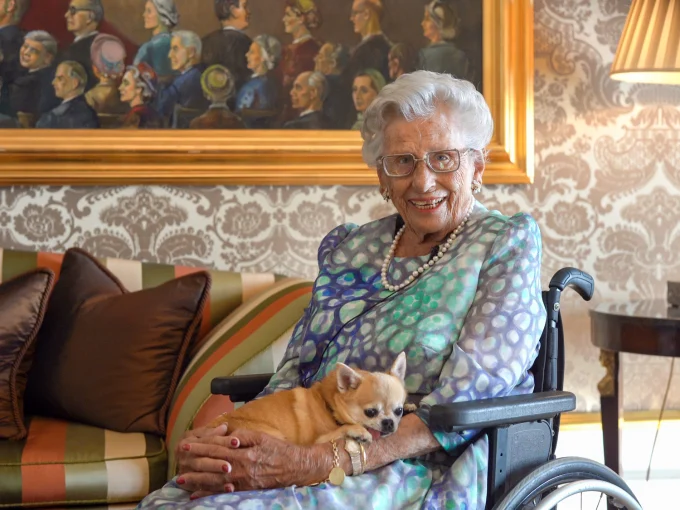

The Norwegian Royal House is in deep mourning following the death of Princess Astrid, Mrs. Ferner, who passed away at the age of 94. Her death occurred precisely fortnight after the passing of her younger brother, King Harald V, and a mere two days after she bade him a final farewell at his state funeral in Oslo Cathedral. The formal announcement of her death was delivered by King Haakon VIII, marking the close of an extraordinary chapter in modern Scandinavian history.
Princess Astrid was the last surviving child of King Olav V and Crown Princess Märtha, and her life spanned nearly a century of monumental transformation for both Norway and its constitutional monarchy. Having navigated the perils of the Second World War in exile, stepped forward as the nation’s first lady during her youth, and maintained a tireless schedule of public service well into her later years, her passing truly signifies the end of an era for the House of Glücksburg.
Early Life, Royal Lineage, and Wartime Exile
Born Astrid Maud Ingeborg on February 12, 1932, at the Royal Palace in Oslo, she was the second child and second daughter of the then-Crown Prince Olav and Crown Princess Märtha. Her birth was a matter of immense national celebration; as a great-granddaughter of Britain’s King Edward VII and Queen Alexandra, she represented the vibrant continuation of a newly established royal dynasty. Norway had gained independence and chosen a monarchy only decades earlier in 1905, making the young princess and her siblings symbols of national identity.
However, Princess Astrid’s formative years were violently disrupted by the geopolitical upheavals of the twentieth century. Following the Nazi German invasion of neutral Norway in April 1940, the royal family was forced into a harrowing escape. While King Haakon VII and Crown Prince Olav remained behind to lead the resistance from London, Crown Princess Märtha fled with young Astrid, her older sister Princess Ragnhild, and her younger brother Prince Harald to neutral Sweden before eventually finding sanctuary in the United States.
Residing in Washington, D.C., under the protection of President Franklin D. Roosevelt and First Lady Eleanor Roosevelt, the young Norwegian royals experienced an upbringing defined by displacement and resilience. Princess Astrid completed a portion of her education in the United States before the family’s triumphant return to a liberated Norway in 1945, when she was 13 years old. Following the war, she resumed her formal studies, eventually attending Oxford University, where she dedicated her academic pursuits to economics and political history, an intellectual foundation that would inform her public duties in later decades.
Stepping into the Role of First Lady
The tragic and untimely death of Crown Princess Märtha in 1954 sent shockwaves through the royal family and the nation. Just three years later, in 1957, King Haakon VII passed away, and Crown Prince Olav ascended the throne as King Olav V. With her older sister Princess Ragnhild having married and relocated abroad, twenty-five-year-old Princess Astrid was called upon to step into the role of first lady of Norway.
For more than a decade, Princess Astrid stood dutifully by her father’s side, hosting foreign dignitaries, managing state functions, and representing the monarchy across the globe. Her grace, intelligence, and poise made her immensely popular with the Norwegian public. During an era when female representation in high-profile state roles was exceedingly rare, Astrid performed her duties with a quiet determination that earned the deep respect of successive governments and the citizenry alike.
Despite her immense popularity, her personal life generated significant public debate when she chose to marry outside the aristocracy. In January 1961, Princess Astrid wed Johan Martin Ferner, a prominent Oslo businessman, sailor, and commoner who had previously been divorced. The match broke with centuries of royal tradition and ignited intense constitutional and social discussions regarding the nature of royal marriages. Undeterred by the controversy, Princess Astrid forged ahead with the union, demonstrating a fierce independence that would characterize her entire life. The couple went on to share a devoted marriage and raised five children: Cathrine, Benedikte, Alexander, Christina, and Elizabeth.
A Lifetime of Dedicated Public Service
The accession of her brother, Harald, to the throne in 1991, following the death of King Olav V, brought a new era to the Norwegian monarchy. When Prince Harald married Sonja Haraldsen in 1968, Queen Sonja naturally assumed the role of first lady, allowing Princess Astrid to carve out a distinct and highly active portfolio of philanthropic and civic engagements.
Princess Astrid never officially possessed a place in the line of succession due to the male-preferential primogeniture laws in effect during her youth—laws that were only reformed decades later to grant equal succession rights, paving the way for future queens like Princess Ingrid Alexandra. Nevertheless, her institutional value to the Norwegian monarchy was immeasurable.
Throughout her long life, she championed numerous causes close to her heart, with a particular focus on supporting children with disabilities, dyslexia, and various health charities—a commitment deeply influenced by personal family experiences. She remained a steadfast pillar of support for her brother, King Harald, particularly through the various controversies and modern challenges that occasionally impacted the royal family in recent years. Her loyalty, discretion, and unwavering work ethic made her an indispensable asset to the institution.
Chronology of Key Events in the Life of Princess Astrid
- February 12, 1932: Born at the Royal Palace in Oslo to Crown Prince Olav and Crown Princess Märtha.
- April 1940: Flees Nazi occupation with her mother and siblings, eventually settling in the United States for the duration of World War Two.
- June 1945: Returns to a liberated Norway alongside her family.
- 1954: Suffers the profound loss of her mother, Crown Princess Märtha.
- 1957: Assumes the role of first lady of Norway following her father’s accession as King Olav V.
- January 1961: Marries businessman Johan Martin Ferner at Asker Church, sparking widespread public discussion regarding royal marriages to commoners.
- 1968: Steps down as first lady following the marriage of Crown Prince Harald to Sonja Haraldsen.
- September 9, 2026: Makes her final public appearance, visibly mourning at the coffin of her late brother, King Harald V, during his state funeral at Oslo Cathedral.
- September 11, 2026: Passes away peacefully at the age of 94, exactly two weeks after the death of King Harald V.
Final Days and National Mourning
The bond between Princess Astrid and King Harald V was exceptionally close, forged through shared childhood exile, the responsibilities of royal life, and the shared grief of losing their parents at relatively young ages. When King Harald passed away earlier this month, the loss visibly devastated the aging princess.
Just days before his funeral, a deeply poignant image of Princess Astrid mourning quietly over her brother’s coffin circulated globally, capturing the raw grief of a sibling parting ways after a lifetime together. Despite her frail health and a history of hospitalizations in recent years that had forced her to scale back her diary of engagements, Astrid made the deeply emotional journey to Oslo Cathedral on September 9 to attend the state funeral.
Having fulfilled this final familial duty, she retired to her private residence, where her health swiftly declined. Her passing, announced by the Royal Court, plunged the nation into a secondary wave of grief so soon after bidding farewell to the sovereign.
Broader Implications and Legacy
The passing of Princess Astrid closes a living bridge to Norway’s twentieth-century history. As one of the last remaining European royals who personally remembered the Second World War and the dramatic restoration of her nation’s independence, her death marks the definitive transition of the Norwegian monarchy into its modern, contemporary iteration.
While the House of Glücksburg navigates a period of profound generational transition—following the loss of both King Harald and Princess Astrid, and looking toward the future reign of Crown Prince Haakon—the legacy left by Princess Astrid remains secure. She is remembered not merely as a princess by birth, but as a woman who combined profound duty with personal conviction, gracefully serving her country through war, peace, modernization, and private sorrow.
Princess Astrid is survived by her five children, several grandchildren, and great-grandchildren, who will privately mourn a devoted mother and matriarch alongside a nation bidding farewell to a historical icon.