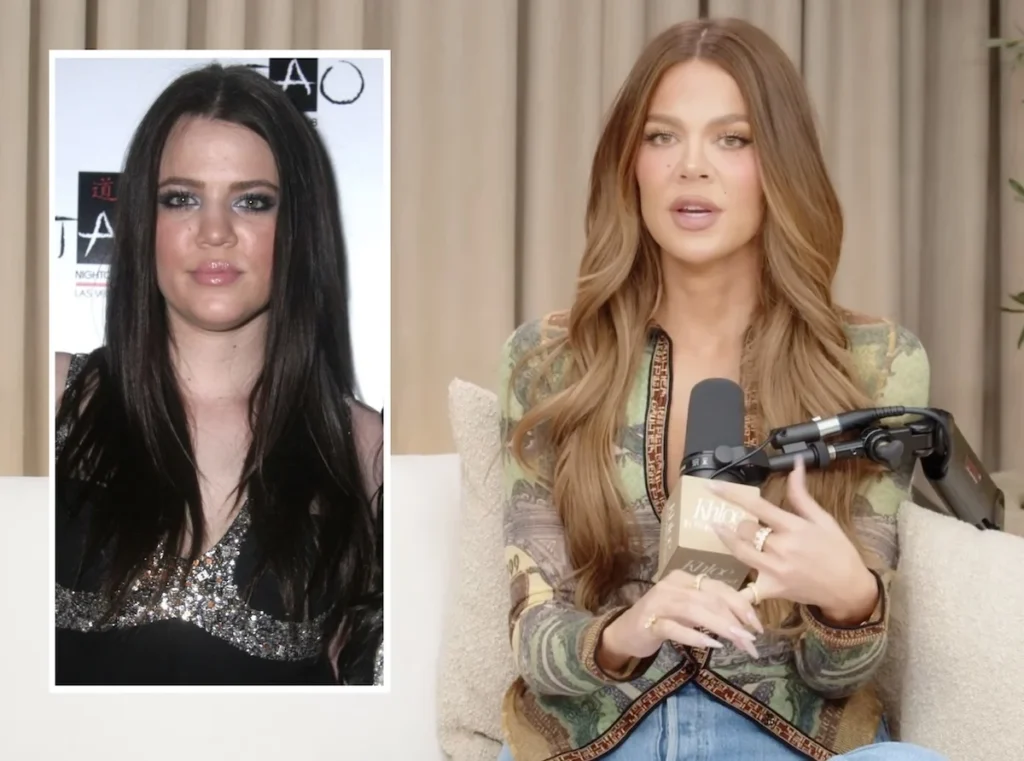

Khloé Kardashian recently shared a candid and sobering account of how drastically her treatment by others changed following her significant weight loss, shedding light on the deeply entrenched and often heartbreaking superficiality of Hollywood’s beauty standards. Speaking on the latest episode of her podcast, "Khloé in Wonder Land," which aired on Wednesday, the reality television star openly discussed the undeniable shift in behavior she experienced, a revelation that has resonated widely across social media and media platforms.
Background: A Decade Under the Lens
For over a decade, Khloé Kardashian, alongside her famous sisters Kim and Kourtney, has lived under the intense glare of public scrutiny, with every aspect of her life, particularly her physical appearance, meticulously dissected and commented upon. In the early years of "Keeping Up with the Kardashians," Khloé was frequently, and often cruelly, labeled the "chubbier" or "bigger" sister, a narrative that permeated media coverage and public perception. These comparisons were not only constant but often framed her as an outlier within her own family, despite her consistent presence and undeniable charisma. This early period of her career established a pattern of external validation tied to aesthetic conformity, setting the stage for the profound observations she would later make. The relentless focus on her body image created a public persona that, while resilient, was undeniably shaped by these external judgments.
The Genesis of Transformation: A Public Journey
Kardashian’s personal fitness and wellness journey began years ago, notably accelerating in the wake of her very public split from former NBA player Lamar Odom. This period marked a pivotal shift for her, transforming not just her physical appearance but also her public identity. She embarked on a dedicated regimen of exercise and dietary changes, meticulously documenting her progress across various social media platforms. Her commitment to fitness evolved into a significant brand identity, culminating in the launch of her reality series, "Revenge Body with Khloé Kardashian," in 2017. The show’s premise centered on individuals transforming their bodies and lives as a form of empowerment, a theme that mirrored Khloé’s own narrative. Through intense workouts, lifestyle overhauls, and candid discussions about personal struggles, she cultivated an image as one of the most fitness-focused members of the KarJenner empire, becoming an inspiration for many seeking similar transformations. Her journey was not merely about weight loss but about reclaiming control and fostering self-improvement, yet, as her recent revelations suggest, the external world’s response was predominantly focused on the aesthetic outcome.
The Unveiling: Discrepancies in Treatment
The conversation on her podcast initially touched upon whether she had ever leveraged her famous last name for advantage. While acknowledging that fame had indeed opened doors, the discussion quickly pivoted to a far more profound and unsettling topic: the differential treatment she received before and after her physical transformation.
Kardashian explicitly detailed the stark contrast: "When I was chubbier, I used to get very different treatment than [her sisters] Kourtney and Kim got. When I lost a lot of weight and started looking different, the treatment I started getting was so much better." This statement cuts to the core of appearance-based discrimination, revealing a transactional nature in social interactions predicated solely on physical aesthetics. The implication is clear: her inherent worth or personality remained unchanged, yet the respect, opportunities, and general demeanor of those around her were subject to her outward appearance. This observation is particularly poignant given the years she spent enduring harsh criticism about her looks, often being unfavorably compared to her siblings who more closely conformed to traditional beauty ideals. Her testimony confirms what many sadly suspect about the superficiality embedded within society, especially in image-driven industries like entertainment.
"A Gross Feeling": The Emotional Toll of Realization
The experience, Kardashian confessed, left an indelible mark, imbuing her with a profound sense of disgust and disillusionment. She described the realization as "gross," articulating the emotional weight of witnessing people’s attitudes shift dramatically once she began to fit a more conventionally glamorous image. "I remember how gross that made me feel, but I also was like, I see all of you. This is a little game and I’ve never forgotten the ones that were mean or rude to me but great to Kourtney and Kim. and I’ve never f**ked with them. I’m the same person, but aesthetically I look different. Your treatment of me is so vastly different, and it makes me [feel] gross. That’s the world that this is, and I don’t like that."
Her words convey a powerful message about authenticity and the hypocrisy she observed. The fact that she remained the same individual, with the same personality and values, yet elicited such disparate responses, underscored the shallow nature of these interactions. This realization fostered a keen discernment in her, allowing her to identify and subsequently distance herself from those whose regard was conditional on her appearance. It highlights a painful truth: while personal transformation can be empowering, the societal rewards often come with the bitter taste of knowing those rewards are rooted in superficiality rather than genuine appreciation for one’s character.
Societal Mirror: Appearance-Based Discrimination (Lookism)
Khloé Kardashian’s experience is a high-profile illustration of a pervasive societal phenomenon known as "lookism" or appearance discrimination. This refers to the prejudice or discrimination against people based on their physical attractiveness, often leading to preferential treatment for those deemed more attractive. Numerous sociological and psychological studies have consistently demonstrated that individuals perceived as more attractive tend to receive advantages in various aspects of life, including employment, legal judgments, social interactions, and even political elections. This phenomenon is often linked to the "halo effect," a cognitive bias where the perception of one positive trait (like attractiveness) spills over to influence the perception of other unrelated positive traits (like intelligence, competence, or trustworthiness).
In a culture heavily influenced by media portrayals of idealized beauty, the pressure to conform is immense. For women, these pressures are often amplified, with body image and physical appearance frequently linked to self-worth and societal acceptance. Khloé’s account serves as a stark reminder that these biases are not abstract concepts but tangible realities that impact individuals’ daily lives and interactions, regardless of their celebrity status. The "better" treatment she received was not a testament to her newfound health or discipline, but rather a reflection of society’s ingrained preference for certain physical archetypes.
Hollywood’s Enduring Pressure Cooker
The entertainment industry, by its very nature, is a crucible of aesthetic standards. Hollywood has historically played a significant role in defining and perpetuating narrow beauty ideals, often dictating what is considered "attractive" and "acceptable." Actresses, models, and public figures face intense and relentless pressure to maintain specific body types, youthful appearances, and flawless complexions. Deviations from these norms can lead to career stagnation, public criticism, and a perceived devaluation of their professional and personal worth.
Kardashian’s narrative underscores the inherent hypocrisy within this system. While individual transformations are often celebrated, the underlying mechanism of that celebration is problematic. It suggests that one’s value or access to opportunities is contingent upon fitting a predetermined mold, rather than on talent, work ethic, or character. This creates a vicious cycle where celebrities feel compelled to conform, further entrenching the very standards that cause distress. The industry’s superficiality, as highlighted by Khloé, not only impacts the individuals within it but also sends powerful, often damaging, messages to the wider public about what is considered desirable and worthy of respect.
The "Reverse" Side of the Coin
What makes Khloé’s revelation even more unsettling is the understanding that this dynamic operates in reverse with equal, if not greater, cruelty. Individuals who gain weight, particularly in the public eye, often face intense judgment, ridicule, and professional setbacks. They can be ignored, mocked, or treated as less valuable, even though their fundamental identity, intelligence, and capabilities remain unchanged. This double standard exposes the profound shallowness of a society that prioritizes superficial aesthetics over human dignity and substance. The societal implication is that worth is fluid, tied not to inherent qualities but to the ever-shifting sands of physical appearance. This reality is far more common than many are willing to acknowledge, affecting countless individuals in their personal and professional lives.
The Significance of Khloé’s Platform
Khloé Kardashian’s decision to speak so openly and candidly about her experiences carries significant weight. As a highly visible public figure with an immense platform, her voice has the power to elevate conversations around body image, self-acceptance, and appearance discrimination beyond niche communities. Her personal narrative makes the abstract concept of lookism tangible and relatable for millions of listeners and readers.
Her honesty offers validation to countless individuals who have experienced similar shifts in treatment based on their physical appearance. It fosters a sense of shared experience and encourages a broader dialogue about challenging the societal norms that perpetuate such biases. By articulating her "gross" feeling, she doesn’t just describe the problem; she communicates its emotional toll, inviting empathy and critical reflection from her audience. Her ability to navigate the complexities of fame while remaining grounded enough to identify and critique these superficial dynamics provides a powerful example for both public figures and everyday individuals.
Moving Forward: Challenging the Status Quo
Khloé Kardashian’s experience serves as a compelling call to action, urging a reevaluation of how society values individuals. It reinforces the ongoing need for greater awareness and sustained efforts to dismantle appearance-based biases. While movements like body positivity and self-acceptance have gained traction, the ingrained nature of lookism, particularly within influential sectors like the entertainment industry, remains a formidable challenge.
The conversation sparked by Khloé’s podcast highlights the importance of fostering environments where individuals are judged by their character, contributions, and capabilities, rather than superficial attributes. It underscores the critical role of media literacy in dissecting and challenging the narrow beauty standards often presented as aspirational. Ultimately, for genuine societal progress, there must be a collective shift towards valuing diversity in all forms and recognizing that human worth is intrinsic and immutable, regardless of outward appearance. Khloé Kardashian’s courage in sharing her truth contributes significantly to this essential and ongoing dialogue.