
The digital media landscape has undergone a seismic shift over the past two decades, transitioning from a decentralized collection of personal weblogs to a highly regulated and legally complex industry. At the forefront of this evolution is the independent fashion and entertainment commentary site Tom & Lorenzo, a platform that has navigated the transition from the early "blogosphere" of 2006 to the multi-platform digital publishing environment of 2025. The site’s operational framework, as evidenced by its comprehensive legal disclaimers and copyright protections, serves as a primary case study for the challenges faced by independent publishers in maintaining editorial autonomy while navigating the intellectual property requirements of global media conglomerates.
The Foundations of Independent Digital Publishing
The emergence of Tom & Lorenzo—originally founded as "Project Rungay"—coincided with the mid-2000s boom in "citizen journalism." During this period, the traditional gatekeepers of fashion and television criticism, primarily legacy print magazines and newspapers, began to lose their monopoly on cultural discourse. Founded by Tom Fitzgerald and Lorenzo Marquez, the site initially focused on the burgeoning reality television sector, specifically the design competition Project Runway. However, as the brand expanded, it necessitated a more rigorous legal and professional structure to handle the complexities of intellectual property in the digital age.
By 2006, the legal environment for bloggers was largely undefined. However, as independent sites began to command audiences rivaling traditional outlets, the need for formal disclaimers became paramount. The current regulatory posture of the site, which explicitly disavows affiliation with major networks such as ABC, Amazon Prime, AMC, Apple TV+, BBC, Bravo, CBS, CW, Fox, FX, HBO, HBO Max, Hulu, Lifetime, Logo, Max, NBC, Paramount Plus, PBS, Showtime, Starz, Sundance, TNT, and VH1, reflects the necessity of distinguishing independent commentary from corporate-sponsored content. This distinction is critical in an era where "native advertising" and "influencer marketing" often blur the lines between objective critique and promotional material.
Intellectual Property and the Fair Use Doctrine
One of the most significant hurdles for digital publishers in the fashion and entertainment space is the management of visual content. The disclaimer stating that the site "claims no credit for any images featured on this site unless otherwise noted" highlights a perennial tension in digital media: the use of copyrighted imagery for the purposes of criticism and commentary. Under the "Fair Use" doctrine of U.S. copyright law, creators are permitted to use copyrighted material without permission under specific circumstances, such as for news reporting, teaching, or critique.
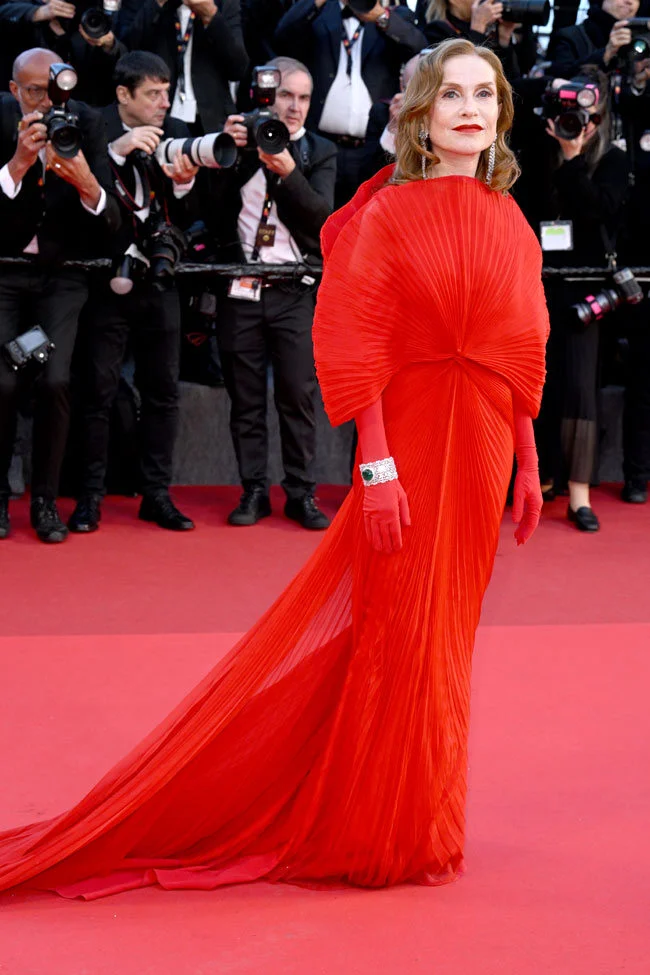
However, the enforcement of these rights has become increasingly aggressive. In the late 2010s and early 2020s, several high-profile lawsuits were filed by paparazzi agencies and stock photo conglomerates against celebrities and media outlets for the unauthorized use of images on social media and websites. For an independent entity like Tom & Lorenzo, which relies heavily on red carpet photography to facilitate fashion analysis, the legal risks are substantial. The site’s insistence that "all visual content is copyrighted to its respective owners" is a strategic legal safeguard designed to mitigate liability while asserting the platform’s role as a transformative commentator rather than a content pirate.
Chronology of the Tom & Lorenzo Brand Evolution
The trajectory of the brand provides a timeline for the broader digital media industry:
- 2006: Launch of the original blog, focusing on reality television. This era was defined by the "Wild West" of the internet, with minimal monetization and few legal guardrails.
- 2010: Rebranding to Tom & Lorenzo (TLo). This move signaled a shift toward a broader cultural critique, encompassing red carpet fashion, film, and prestige television.
- 2014: Publication of Everyone Wants to Be Me or Do Me: Tom and Lorenzo on Fashion, Celebrity and Society. This period marked the transition of digital critics into the mainstream literary and media establishment.
- 2020: The launch of Legendary Children: The First Decade of Drag Race and the Last Century of Queer History. This demonstrated the evolution of the platform from daily commentary to long-form historical and cultural analysis.
- 2021-2025: Adaptation to the "Streaming Wars." As platforms like Apple TV+, Max, and Disney+ fragmented the media landscape, the site’s focus shifted to navigating the vast output of content while maintaining a rigorous legal separation from the studios.
The Economic Reality of Independent Media
The sustainability of independent media in 2025 relies on a precarious balance of advertising revenue, affiliate marketing, and audience loyalty. Unlike corporate-owned entities, independent publishers do not have the safety net of venture capital or conglomerate subsidies. The "Terms and Conditions of Use" and "Privacy Policy" links found in the site’s footer are not merely administrative requirements; they are essential components of a business model that must comply with international regulations such as the General Data Protection Regulation (GDPR) in the European Union and the California Consumer Privacy Act (CCPA).
Data indicates that the digital advertising market has become increasingly consolidated, with a significant portion of revenue flowing toward "walled gardens" like Google and Meta. For independent sites to survive, they must optimize for search engines (SEO) while ensuring that their legal disclosures are transparent to avoid being de-indexed or penalized by algorithm updates. The inclusion of a "Cookie Policy" is a direct response to the global shift toward user privacy and data transparency.
Strategic Implications of Network Non-Affiliation
The extensive list of networks from which Tom & Lorenzo disassociates itself is a testament to the sheer volume of content currently being produced. In the current "Peak TV" era, an independent critic must cover shows from dozens of different providers. By explicitly stating that they are not affiliated with entities like HBO, Netflix (implied through various streaming mentions), or NBC, the publishers protect themselves from "trade dress" infringement and "false endorsement" claims.
This non-affiliation is also vital for editorial integrity. In a media environment where many "reviews" are actually paid placements, the clarity of independence serves as a value proposition for the audience. Statements from industry analysts suggest that "trust" has become the most valuable currency in digital journalism. As AI-generated content and corporate-driven "content farms" proliferate, the human-led, independent voice becomes a premium product.
Analysis of External Links and Embedded Content
Another critical aspect of the modern digital publisher’s legal framework is the responsibility—or lack thereof—for external content. The site’s disclaimer regarding "external website links or embedded streaming videos" addresses a complex area of internet law known as "intermediary liability." Under Section 230 of the Communications Decency Act in the United States, platform owners are generally not held liable for content posted by third parties. However, for a site that embeds trailers or links to external galleries, the disclaimer serves as a secondary layer of protection, informing the user that the editorial team does not control the data-gathering or content-hosting practices of external domains.
Broader Impact on the Fashion Industry
The influence of independent critics like Fitzgerald and Marquez extends beyond the screen. Their analysis of red carpet "branding" has influenced how celebrity stylists and publicists approach major events like the Oscars and the Met Gala. By breaking down the "narrative" of an outfit, they have educated a generation of consumers on the semiotics of fashion.
This educational aspect is supported by the site’s "About," "Press," and "Contact" infrastructure, which allows for a two-way dialogue between the publishers and the industry. The fact-based analysis of "inaccuracies" or "errors" mentioned in the disclaimer also points to a commitment to journalistic standards, offering a mechanism for corrections that mirrors the "Letters to the Editor" section of traditional newspapers.
Conclusion: The Future of Digital Commentary
As the digital media landscape moves further into the mid-2020s, the role of the independent publisher will continue to be defined by the tension between creative freedom and legal constraint. The Tom & Lorenzo model—rooted in the early days of the blogosphere but matured into a legally savvy, professionally managed entity—provides a blueprint for survival.
The rigorous attention to copyright, the clear demarcation of corporate independence, and the adherence to privacy regulations are no longer optional "fine print"; they are the infrastructure upon which the future of independent cultural criticism is built. In an era of unprecedented media consolidation, the survival of independent voices remains a critical check on the power of global entertainment conglomerates, ensuring that fashion and television continue to be viewed through an objective, and often sharply critical, lens.