
The Cultural Shift Toward Ambient Illumination
The recent surge in demand for table lamps is more than a fleeting decor trend; it represents a fundamental change in how inhabitants interact with their living spaces. For decades, standard residential construction prioritized "Big Light"—bright, overhead LED or fluorescent panels designed for maximum visibility but often criticized for creating a cold, uninviting atmosphere. Current consumer behavior suggests a preference for "lighting layers," a technique used by professional interior designers to create depth and mood through a combination of task, accent, and ambient sources.
According to market analysis, the global decorative lighting market is expected to grow steadily, driven by an increasing focus on home wellness and the "sanctuary" concept of the bedroom. Smaller lamps, particularly those with dimming capabilities or warm-toned shades, are seen as essential tools for regulating circadian rhythms, as they minimize exposure to blue light during evening hours.
A Chronology of Lighting Design Influence
The lamps highlighted in recent design evaluations represent a timeline of 20th and 21st-century aesthetics. The evolution begins with the Art Deco movements of the 1920s, characterized by the Louis Poulsen PH 2/2 Luna LED Table Lamp. Originally designed by Poul Henningsen, this piece utilizes a multi-shade system to direct light downward while minimizing glare—a revolutionary concept at the time of its inception.
Moving into the mid-century period, the influence of Japanese paper lanterns and Scandinavian minimalism becomes evident in pieces like the West Elm Ribbed Glass Table Lamp. This aesthetic evolved further in the 1970s with the "Space Age" silhouettes, such as the Louis Poulsen Panthella, designed by Verner Panton. Today, the chronology concludes with the contemporary focus on sustainability and digital manufacturing, exemplified by brands like Gantri, which utilizes 3D-printing technology and plant-based polymers to create modern task lighting.
Evaluating the Top Tiers of Residential Lighting
To provide consumers with reliable recommendations, editors at Architectural Digest conducted hands-on testing of several leading models. Each lamp was evaluated based on its light quality, material durability, assembly requirements, and versatility across different room types.
Small and Petite Solutions for Compact Spaces
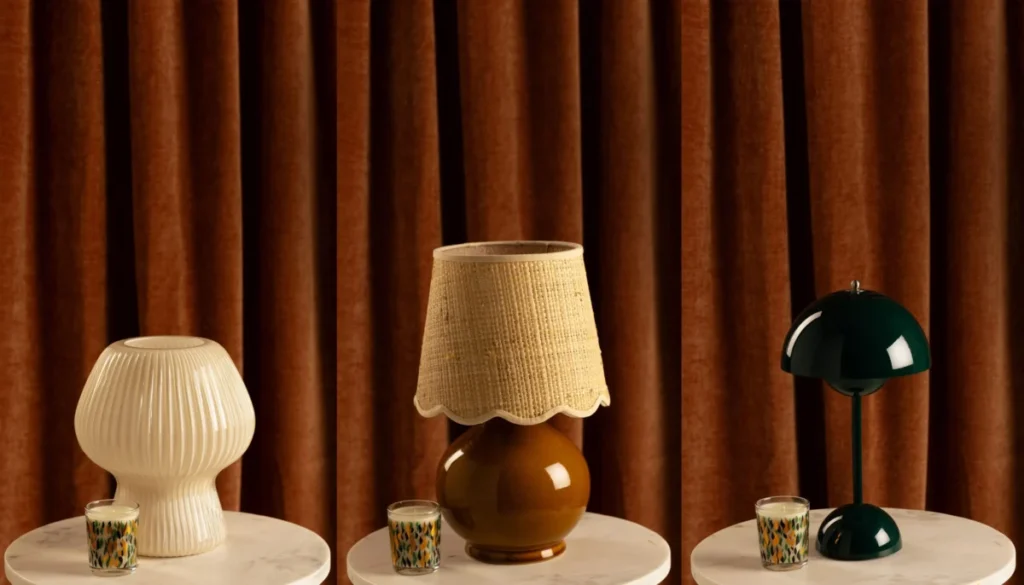
For areas such as kitchen countertops or crowded nightstands, the Serena & Lily Como Petite Table Lamp emerged as a top contender. Its design features a ceramic base paired with a raffia wave shade, blending "coastal" aesthetics with modern proportions. Visuals editor Shani Kravetz noted that the lamp’s petite size allows it to fill empty nooks without overwhelming the space.

Similarly, the Flos Bilboquet Table Lamp, designed by Philippe Malouin, offers a highly functional swivel point. The head is magnetized, allowing users to direct light 360 degrees. Beyond its utility, the Bilboquet is noted for its eco-friendly construction, utilizing a byproduct of paper production and avoiding the use of glues to ensure the components remain recyclable.
Designer Aesthetics and Sculptural Forms
In the category of designer lighting, the McGee & Co. Vedruna Table Lamp stands out for its organic, sculptural base. Interior designer Shea McGee’s influence is visible in the contrast between the heavy, avocado-shaped ceramic base and the crisp white linen shade. Editors cautioned that while the lamp is a design statement, its weight requires careful placement to prevent tipping.
For those seeking a postmodern or "mushroom" silhouette, the Rejuvenation Roland Table Lamp offers an Italian Modernism-inspired glass frame. Standing at only 10 inches, it provides a soft, diffused glow that editors found ideal for creating a calming bedside environment, despite the lack of a built-in dimmer.
Task Lighting and Modern Functionality
The Gantri Analog Task Light, designed by Chris Granneberg, represents the pinnacle of modern task lighting. It features a 230-degree rotating head and a dimmable switch. Its construction from Gantri’s proprietary sugarcane polymer blend highlights a growing industry trend toward sustainable manufacturing. Visuals editor Lizzie Soufleris described it as a "highly functional" piece that disguises its technical capabilities behind a playful, geometric exterior.
Technical Analysis: The Risks of Overlamping
A critical component of the recent lighting study involves electrical safety, specifically the dangers of "overlamping." Many consumers mistakenly believe that installing a higher-wattage bulb in a fixture will simply provide more light. However, wattage is a measure of power consumption and heat generation.
Industry safety data from the National Fire Protection Association (NFPA) indicates that electrical failures or malfunctions are a leading cause of home fires. Overlamping causes the fixture to run at temperatures exceeding its design limits, which can melt bulb sockets and degrade wire insulation. Experts recommend strictly adhering to the manufacturer’s suggested wattage. For those seeking brighter output without increased heat, LED bulbs are the recommended alternative, as they provide higher lumen output (brightness) while drawing significantly less wattage than traditional incandescent bulbs.
Sustainability and Material Innovation
The lighting industry is increasingly scrutinized for its environmental impact. The shift toward LEDs has already reduced energy consumption significantly, but material waste remains a concern. The evaluation of modern lamps now includes "end-of-life" considerations.
Brands like Flos and Gantri are leading this initiative. Flos has redesigned several of its iconic pieces to be "glue-free," allowing for easier disassembly and recycling of metal and glass components. Gantri’s use of 3D printing eliminates the waste associated with traditional injection molding, and their plant-based materials offer a lower carbon footprint than petroleum-based plastics. These innovations suggest that the future of the "best" lamps will be defined as much by their manufacturing process as by their aesthetic appeal.
Supporting Data: The Impact of Lighting on Productivity
Supporting the shift toward specialized task lighting is a body of research regarding light’s impact on human performance. Data suggests that adjustable task lighting can reduce eye strain and headaches in home office environments. In a survey of remote workers, 68% reported that "layered lighting"—having a dedicated desk lamp in addition to ambient room light—improved their focus during late-afternoon tasks.
The "dimmability" factor also plays a role in psychological comfort. The Flos Bellhop Rechargeable LED Table Lamp was praised by testers for its four-step dimmer, allowing it to transition from a bright reading light to a low-level "candlelight" glow for evening relaxation. Its cordless nature further emphasizes the trend toward "nomadic" lighting—fixtures that can move from an indoor desk to an outdoor patio as needed.
Conclusion and Broader Implications
The selection of a table lamp has evolved from a simple purchase of a utility item into a deliberate act of interior curation. Whether it is the vintage-inspired elegance of the Louis Poulsen PH 2/2 Luna or the sustainable innovation of the Gantri Analog, the modern lamp serves as a bridge between art and technology.
As the "anti-Big Light" movement continues to influence residential design, the market will likely see further diversification in portable, dimmable, and eco-friendly options. The primary takeaway for consumers is the importance of "ambient layers." By replacing a single, harsh overhead source with multiple, well-placed table and bedside lamps, homeowners can transform their living environments into versatile spaces that support both productivity and rest. The ongoing research into sustainability and safety, particularly regarding LED integration and proper wattage usage, ensures that these "bright ideas" will remain functional and safe for years to come.