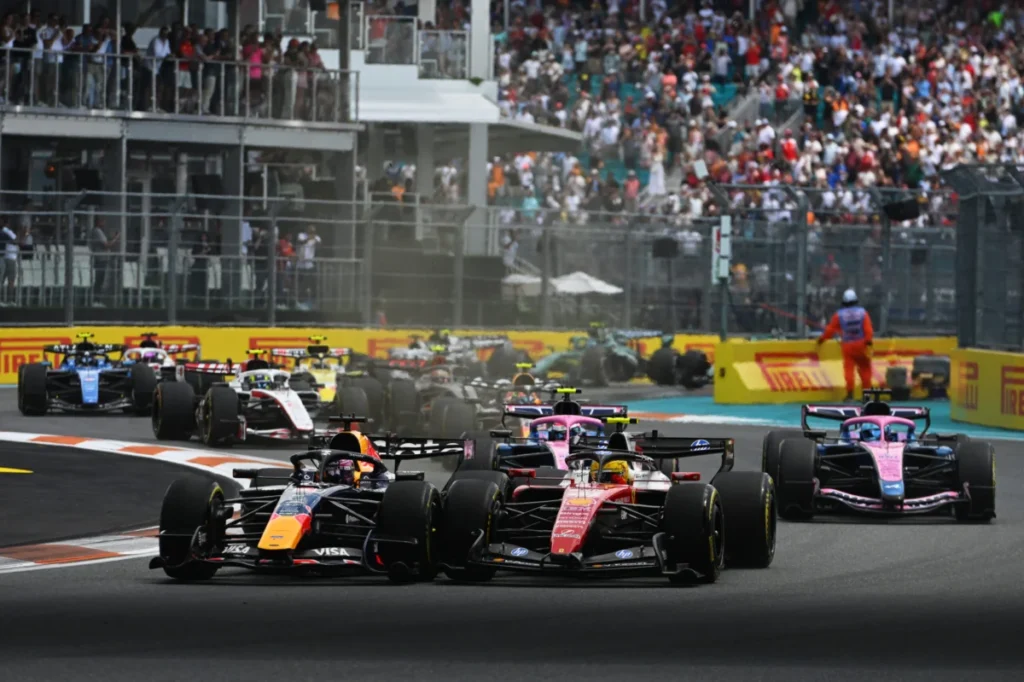

Formula 1, the pinnacle of motorsport, has returned from an unprecedented five-week hiatus, reigniting the global racing calendar with the highly anticipated Miami Grand Prix. The event, held in the vibrant setting of Miami, Florida, has once again captured international attention, not only for its on-track drama but also for significant shifts in its broadcast future. This particular race weekend saw McLaren’s Lando Norris clinch a memorable sprint victory, setting the stage for the main event. However, the weather forecast played a crucial role, prompting the FIA to confirm an earlier start time for Sunday’s Grand Prix, moving it from the initially scheduled 4 p.m. ET/1 p.m. PT to 1 p.m. ET/10 a.m. PT to ensure driver safety and event continuity amidst anticipated severe weather conditions.
Beyond the immediate excitement of the current race weekend, the Miami Grand Prix serves as a poignant backdrop for a monumental announcement impacting the future of Formula 1 viewership in the United States. From the 2026 season onwards, Apple TV is poised to become the exclusive U.S. home for every practice session, qualifying round, sprint race, and the Grand Prix itself, a development stemming from a landmark five-year streaming deal between F1 and the tech giant. This strategic partnership signals a significant pivot in how American fans will engage with the sport, ushering in a new era of direct-to-consumer streaming for one of the world’s fastest-growing sports properties.
The Thrill of Miami and Operational Adaptations
The Miami Grand Prix, established in 2022, has rapidly become a jewel in the Formula 1 calendar, renowned for its unique atmosphere that blends high-octane racing with the city’s opulent lifestyle. The Miami International Autodrome, a temporary street circuit built around Hard Rock Stadium, offers a challenging layout that tests both driver skill and engineering prowess. The current race weekend, featuring Lando Norris’s impressive sprint race triumph, underscored the competitive intensity that defines modern F1. Norris’s victory, a testament to McLaren’s recent resurgence and his growing stature in the sport, thrilled fans and showcased the unpredictable nature of the sprint format, which adds an extra layer of strategic complexity to the race weekend.
The decision by the Fédération Internationale de l’Automobile (FIA) to adjust the main race start time due to severe weather forecasts highlights the sport’s commitment to safety and operational agility. Such changes are not uncommon in motorsport, where adverse weather can significantly impact track conditions, visibility, and ultimately, driver safety. The earlier start was a proactive measure to avoid the worst of the anticipated conditions, ensuring that the race could proceed safely and deliver a fair competition for teams and drivers, while also managing the logistical complexities for personnel and spectators. This adaptability is a hallmark of Formula 1, which consistently navigates various challenges to deliver its global spectacle.
A Pivotal Shift: Apple TV Secures Exclusive U.S. F1 Rights from 2026
While the immediate focus remains on the current Miami Grand Prix, the long-term implications of the Apple TV deal cannot be overstated. Starting with the 2026 season, this five-year streaming agreement marks a transformative moment for Formula 1’s presence in the lucrative U.S. market. Historically, F1 broadcasts in the U.S. have been fragmented across various traditional cable and satellite channels, and more recently, hybrid streaming services. The move to an exclusive platform like Apple TV consolidates access and offers a centralized hub for all F1 content.
The deal encompasses comprehensive coverage, meaning Apple TV subscribers will have exclusive access to every critical moment of an F1 weekend: the crucial practice sessions where teams fine-tune their cars, the high-stakes qualifying rounds that determine grid positions, the exhilarating sprint races, and of course, the grand finale of each Grand Prix. This exclusivity extends beyond live events, promising a rich on-demand library and supplementary programming designed to deepen fan engagement.
Background and Strategic Implications of the Apple TV Deal
The partnership between Formula 1 and Apple TV is a culmination of F1’s aggressive expansion strategy in the United States, which has seen a remarkable surge in popularity over the past few years. This growth is largely attributed to the success of Netflix’s docuseries "Formula 1: Drive to Survive," which introduced the sport to a new generation of fans and demystified its personalities and intricate politics. Recognizing this burgeoning market, F1 owners Liberty Media have actively sought to enhance the sport’s visibility and accessibility in the U.S., adding races in Miami and Las Vegas to the traditional Circuit of the Americas in Austin.
For Apple, this deal represents a significant step in its broader strategy to become a major player in live sports streaming. Following its ventures into Major League Soccer (MLS) and Major League Baseball (MLB) with exclusive streaming packages, acquiring Formula 1’s U.S. rights underscores Apple’s commitment to premium, high-demand content. This move positions Apple TV as a direct competitor to traditional sports broadcasters and other streaming services vying for exclusive sports properties. The technological infrastructure and global reach of Apple are expected to provide a seamless, high-definition streaming experience, potentially integrating interactive features and personalized content that could redefine how fans consume motorsport.
Accessing Formula 1 on Apple TV (from 2026)
Once the 2026 season commences, Apple TV will serve as the primary gateway for U.S. Formula 1 enthusiasts. New subscribers will typically be offered a seven-day free trial period, allowing them to experience the platform’s offerings before committing to a subscription. Following the trial, the standard monthly subscription for Apple TV is $12.99.
Apple is also leveraging bundling strategies to attract a wider audience and provide greater value. For those looking to expand their digital entertainment library, attractive bundle deals will be available. For instance, combining Apple TV with Peacock Premium will be offered at $14.99 per month, representing a saving of over 30 percent compared to subscribing to both services separately. An even more comprehensive package, including Apple TV and Peacock Premium Plus, will be available for $19.99 per month. These bundles highlight a growing trend in the streaming industry to offer curated content packages that appeal to diverse consumer interests.
Alternative Viewing Strategies: The Role of VPNs
For Formula 1 fans in the U.S. seeking more cost-effective viewing options or access to international broadcasts, Virtual Private Networks (VPNs) offer a viable solution. By using a reputable VPN service, such as ExpressVPN (with subscriptions starting from $2.79 per month), users can connect to servers in countries where F1 broadcasting rights are held by free-to-air public broadcasters. For example, Belgium’s RTBF streaming platform is known for offering live coverage of every practice, qualifying session, sprint, and Grand Prix at no cost. This method allows fans to bypass geographical restrictions and access content that would otherwise be unavailable in their region, effectively providing a free avenue to watch the races. While this option requires a VPN subscription, it often proves to be the most economical choice for comprehensive F1 coverage in the U.S. It’s important for users to be aware of the terms of service of both the VPN provider and the streaming service they are accessing.
Beyond Live Races: Enriching the F1 Fan Experience
The Apple TV Formula 1 hub is envisioned as more than just a platform for live race broadcasts. It aims to be a comprehensive destination for all things F1, offering a wealth of curated programming. This includes in-depth analysis of rule changes, sneak peeks at new car designs, exclusive team updates, and highlights from previous seasons, such as the 2025 season. This holistic approach is designed to cater to both seasoned aficionados and new fans, providing context, behind-the-scenes access, and strategic insights into the sport.
A significant draw for many fans is the integration of popular F1-related content. The eighth season of the critically acclaimed docuseries, Formula 1: Drive to Survive, is already streaming on Apple TV in the U.S. This series, widely credited with boosting F1’s global appeal, particularly in North America, offers an intimate look at the drivers, team principals, and the intense rivalries that define the sport. Its presence on Apple TV’s F1 channel will ensure that fans have continuous access to the narrative storylines that complement the on-track action. Fans can also find the full 2026 Formula 1 racing schedule on platforms like ESPN, which will continue to provide news and updates, while Apple TV will be the exclusive broadcast home for the races themselves. The free trial period offered by Apple TV’s Formula 1 channel provides an excellent opportunity for fans to explore this new dedicated ecosystem.
The Broader Impact and Future Outlook
The exclusive Apple TV deal represents a significant evolution in sports broadcasting and fan engagement. For Formula 1, it solidifies its strategic investment in the U.S. market, aligning with a tech giant known for its global reach and innovative user experience. This move could potentially drive further growth for the sport by reaching a digitally native audience accustomed to on-demand and high-quality streaming content. It also allows F1 to exert greater control over its brand and content delivery, potentially offering bespoke features and interactive elements not feasible with traditional broadcast models.
For the streaming industry, Apple’s acquisition of F1 rights signals an intensification of the "streaming wars" for premium live sports. As traditional cable subscriptions decline, streaming platforms are increasingly seen as the future of sports consumption, driving fierce competition for exclusive rights. This trend benefits consumers by offering more choice and potentially higher quality, but it also creates a more fragmented landscape, requiring fans to subscribe to multiple services to follow all their favorite sports.
Ultimately, the 2026 Formula 1 Miami Grand Prix, while still two years away, looms large as a symbol of this new era. It will be the first Miami GP to be exclusively broadcast on Apple TV in the U.S., marking a milestone in F1’s global journey. The blend of high-stakes racing, dynamic operational adjustments due to unforeseen circumstances, and pioneering media partnerships underscores Formula 1’s unwavering commitment to innovation, excitement, and a continuously evolving fan experience. As the sport accelerates into its next chapter, the confluence of on-track performance and cutting-edge digital delivery promises an exhilarating future for motorsport enthusiasts worldwide.