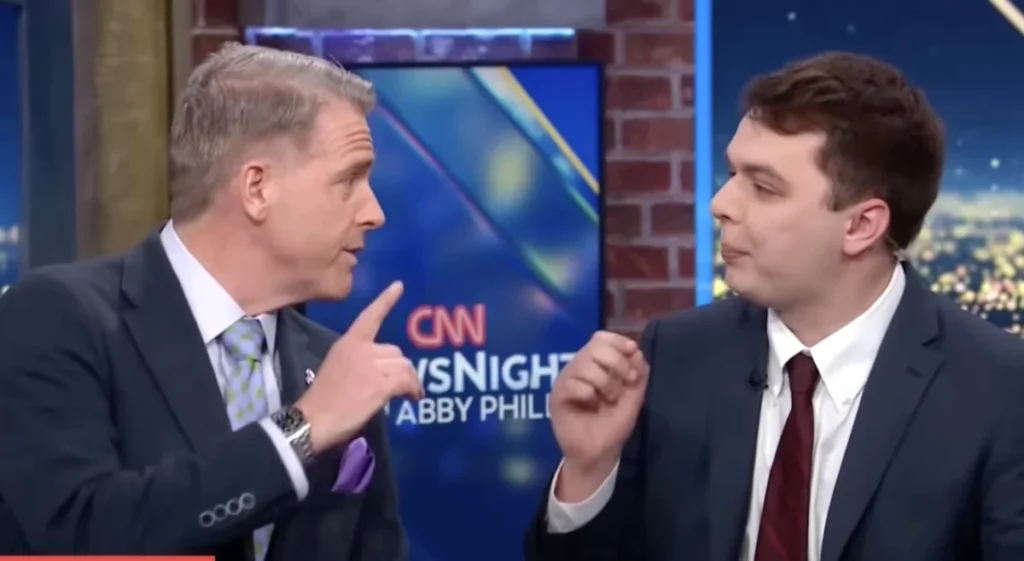

A heated exchange on CNN’s "NewsNight" program on Thursday, April 29th, saw conservative commentator Scott Jennings become visibly agitated while debating MeidasTouch contributor Adam Mockler regarding the ongoing conflict involving Iran and its implications for U.S. foreign policy under the Trump administration. The segment, which focused on the efficacy and justifications for military actions initiated on February 28th, escalated into a personal confrontation when Jennings appeared unable to provide specific concessions gained from Iran.
The core of the disagreement stemmed from Mockler’s persistent questioning of Jennings about tangible outcomes from the U.S. military actions against Iran, which were reportedly undertaken in conjunction with Israel. Mockler challenged Jennings to "name one concession" the United States had secured from Iran since the commencement of these operations. Instead of directly addressing the question, Jennings opted to engage in what appeared to be personal attacks, suggesting Mockler’s youth and "getting up past his bedtime" contributed to his assertiveness.
Mockler, a progressive commentator, countered Jennings’s remarks by highlighting his own youth in contrast to Jennings’s tenure as a former George W. Bush administration staffer. He criticized Jennings for defending a military engagement that he characterized as failing, costly in terms of financial debt, and reminiscent of previous "endless wars" defended during the Bush era. Mockler pointed out that the conflict, which had been ongoing for approximately eight weeks at the time of the broadcast, was being framed by Jennings as a short-term engagement.
Jennings retorted by questioning Mockler’s perception of time, asking, "Eight weeks is endless to you?" He further criticized Mockler’s focus by stating, "You have the attention span of a gnat?" This exchange suggested a divergence in perspectives on the perceived duration and significance of the military actions.
The debate continued with Mockler referencing a prior television appearance where Jennings allegedly predicted imminent resolution within weeks. Mockler asserted that Jennings’s current "condescending remarks" were a defensive reaction to his inability to validate the war’s progress. He reiterated his demand for a specific political concession from Iran.
The tension reached a boiling point when, following Mockler’s repeated request for a concession and a gesture that Jennings perceived as intrusive, the former Bush aide erupted, exclaiming, "Get your f** hand out of my face, first of all!" Host Abby Phillip immediately intervened, attempting to de-escalate the situation by urging both participants to calm down and reminding them of the nature of a debate. Jennings, visibly upset, reiterated his objection to Mockler’s perceived proximity and gesturing.
Despite Phillip’s efforts to restore order, Mockler continued to press for an answer. Jennings, in his response, shifted the focus from immediate concessions to the broader strategic objective of preventing Iran from acquiring nuclear weapons, stating, "We have a very simple goal: to keep terrorists and a terrorist regime from having a nuclear weapon that can threaten the United States, our interests in the region, our allies in Europe, anybody else in the world." Mockler interpreted this as an admission that Jennings could not provide the requested specific concession, concluding, "So you can’t answer the question."
Background and Context of the Conflict
The events discussed on "NewsNight" unfolded against a backdrop of heightened geopolitical tensions in the Middle East. The U.S. and Iran have engaged in a prolonged period of animosity, marked by proxy conflicts, sanctions, and direct confrontations. The specific military actions initiated on February 28th, reportedly alongside Israel, likely represent a response to a series of provocations or perceived threats emanating from Iran and its affiliated groups. These could include missile attacks on U.S. interests or allies, disruptions of maritime trade, or advancements in Iran’s nuclear program.
Historically, U.S. policy towards Iran has oscillated between engagement and confrontation. The Trump administration, in particular, adopted a more confrontational stance, withdrawing from the Joint Comprehensive Plan of Action (JCPOA) nuclear deal in 2018 and reimposing stringent sanctions. The objective was often stated as forcing Iran to negotiate a new, more comprehensive agreement that would address its ballistic missile program and regional activities, in addition to its nuclear ambitions.
The debate on CNN reflects a broader public and political discourse within the United States concerning the effectiveness and justification of military interventions in the Middle East. Critics often point to the significant financial and human costs of such conflicts, alongside the perceived lack of clear objectives or achievable outcomes. Proponents, conversely, emphasize the necessity of projecting strength and deterring adversaries, particularly in the face of perceived existential threats.
Chronology of the Exchange
- February 28th: U.S. and Israel reportedly launch military actions against Iran. (Specific nature and targets of these actions are not detailed in the provided text but are implied to be significant enough to warrant debate.)
- Weeks Following February 28th: Debates begin regarding the efficacy and outcomes of these actions. Adam Mockler reportedly engages Scott Jennings in prior television appearances, with Jennings allegedly predicting swift resolution.
- April 29th: The CNN "NewsNight" segment takes place.
- Mockler challenges Jennings to name one U.S. concession from Iran since the February 28th actions.
- Jennings deflects with personal remarks targeting Mockler’s age and perceived hyperactivity.
- Mockler criticizes Jennings’s defense of the conflict and draws parallels to past "endless wars."
- Jennings questions Mockler’s perception of the conflict’s duration and attention span.
- Mockler reiterates his demand for a specific concession, referencing prior discussions.
- Jennings becomes visibly agitated, reacting strongly to Mockler’s gestures and demanding he cease.
- Host Abby Phillip intervenes to mediate the escalating tensions.
- Jennings outlines the overarching U.S. goal of preventing a nuclear Iran.
- Mockler interprets this as an inability to answer the question about concessions.
- Post-Broadcast: Adam Mockler shares a clip of the segment on X (formerly Twitter), accusing Jennings of claiming he was "in his face" and of folding under pressure, asserting that Jennings "loves to dish it but can’t take it." Mockler also posts another message implying Jennings was "on the verge of tears" for failing to answer the question. Mockler also comments on an Instagram post about the segment, stating his hand was not in Jennings’s face.
Supporting Data and Broader Implications
The effectiveness of military actions in achieving specific political concessions from a nation like Iran is a complex issue often evaluated through various lenses, including diplomatic overtures, sanctions relief, and changes in behavior. Without specific details of the February 28th actions, it is difficult to assess their direct impact on U.S.-Iran relations. However, historical patterns suggest that military pressure alone rarely yields immediate or comprehensive concessions without accompanying diplomatic efforts or significant shifts in the regional power balance.
The U.S. has consistently sought to curb Iran’s nuclear program, viewed as a destabilizing factor in the Middle East. The Trump administration’s "maximum pressure" campaign, which included sanctions and military posturing, aimed to force Iran back to the negotiating table from a position of weakness. However, critics argued that this approach often pushed Iran towards greater defiance and accelerated its nuclear activities.
The debate highlights the partisan divisions in U.S. foreign policy discourse. While figures like Jennings, associated with conservative viewpoints, may emphasize a robust military posture as a deterrent, critics like Mockler, representing progressive perspectives, often prioritize diplomatic solutions and question the long-term viability and ethical implications of military interventions.
The implication of the CNN exchange extends beyond the immediate disagreement. It underscores the challenges faced by political commentators and media figures in navigating complex foreign policy issues. The tendency to resort to personal attacks or emotional outbursts, as seen with Jennings, can detract from substantive debate and hinder productive discussion. Mockler’s strategy of repeatedly pressing for specific evidence of success is a common journalistic tactic to hold commentators accountable for their claims.
The broader impact of such televised debates can influence public perception of U.S. foreign policy and the figures involved. When debates devolve into personal animosity, it can erode trust in the media and the political process, making it harder for citizens to form informed opinions on critical national security matters. The fact that Mockler felt compelled to share clips and defend his conduct on social media indicates the high stakes and the desire to control the narrative surrounding the incident.
Official Responses and Related Parties
Beyond the immediate participants and host, official responses from governmental bodies regarding the specific military actions and their outcomes would typically be a key component of such a news report. However, the provided text does not include statements from the U.S. Department of Defense, the State Department, or White House officials concerning the February 28th operations or any concessions obtained from Iran. Similarly, there are no direct statements from Israeli officials or Iranian representatives quoted in the article.
The silence from official channels on the specific gains from the military actions, as highlighted by Mockler’s persistent questioning, could be interpreted in several ways:
- Information Security: Governments often withhold details about military operations and their immediate results for security reasons.
- Lack of Clear Success: It is possible that no easily demonstrable "concessions" were achieved, leading to a reluctance to publicize the outcomes.
- Ongoing Diplomatic Efforts: Any gains might be part of a larger, ongoing diplomatic process where immediate public disclosure could be counterproductive.
The absence of official comment on the specifics of the military actions and their perceived success or failure leaves the public discourse reliant on the interpretations and claims of commentators and analysts, as exemplified by the CNN debate.
Analysis of Implications
The volatile exchange on "NewsNight" serves as a microcosm of the broader challenges in discussing foreign policy, particularly concerning prolonged conflicts and adversarial relationships. Scott Jennings’s apparent inability to articulate concrete U.S. gains from military actions against Iran, coupled with his defensive and aggressive reaction, suggests a potential vulnerability in the arguments supporting such policies. The focus on the overarching goal of preventing nuclear proliferation, while a valid strategic objective, does not negate the need to demonstrate tangible progress or positive outcomes from specific military engagements.
Adam Mockler’s persistent questioning, though provocative, is a valid journalistic approach to hold public figures accountable for their statements. His framing of the situation as a failing war and his post-broadcast commentary on social media highlight the increasing role of social media in shaping public narratives and challenging established media figures. The engagement on platforms like X allows for direct communication with a wider audience and offers a space for immediate reactions and counter-narratives.
The incident raises questions about the quality of political discourse on television. The tendency for debates to become personal rather than policy-focused can alienate viewers and hinder a deeper understanding of complex geopolitical issues. The role of the moderator, Abby Phillip, in attempting to maintain a professional atmosphere is crucial in such instances, though ultimately, the participants’ self-control dictates the trajectory of the discussion.
Ultimately, the CNN debate underscores the ongoing debate surrounding the efficacy of military intervention as a tool of foreign policy, particularly in the context of U.S.-Iran relations. The demand for verifiable concessions, rather than broad strategic goals, reflects a desire for clear accountability and measurable results in costly and often controversial military engagements. The fallout from this particular exchange, as amplified by social media, will likely continue to be a point of discussion regarding the transparency and effectiveness of U.S. foreign policy in the region.