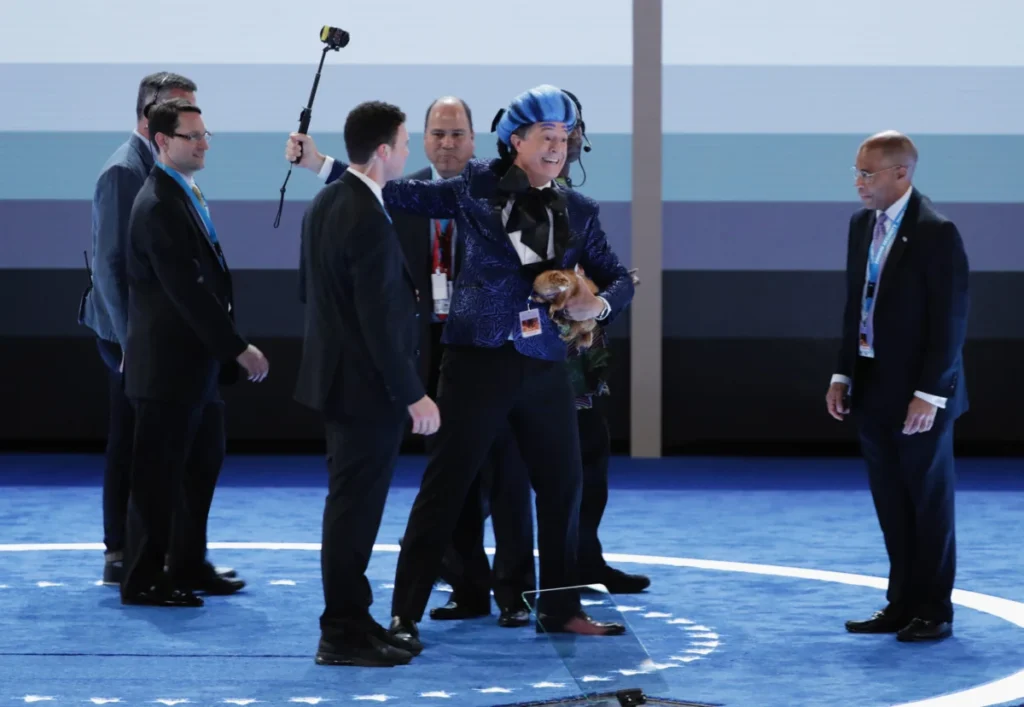

Stephen Colbert’s final episode as host of The Late Show, broadcast after an impactful 11-year run, brought to a close a significant chapter in CBS’s storied late-night franchise. His departure marks the end of an era characterized by sharp comedic takes on current events, profound political commentary, and an earnest connection with a loyal audience. Colbert, who took the reins from the legendary David Letterman in September 2015, navigated initial struggles to transform the program into a cultural touchstone, particularly during a tumultuous political landscape, ultimately cementing its position as the most-watched show in late-night television for a substantial period.
A Challenging Start and the Path to Dominance

Colbert’s journey to late-night supremacy was not without its initial hurdles. Following David Letterman’s monumental 33-year tenure across Late Night with David Letterman and The Late Show, the expectations for his successor were astronomically high. Letterman, a titan of television, had cultivated a unique brand of ironic, often subversive humor that defined the late-night landscape for decades. His retirement in May 2015 left a void that many wondered if anyone could truly fill. Stephen Colbert, known predominantly for his highly successful, satirical conservative pundit persona on Comedy Central’s The Colbert Report, faced the unenviable task of transitioning from a beloved character to himself, the genuine host of a mainstream network institution.
His early months were indeed challenging. Viewership numbers initially lagged behind competitors, particularly NBC’s The Tonight Show Starring Jimmy Fallon, which had capitalized on viral sketches and celebrity games. Critics questioned whether Colbert’s intellectual, often politically charged humor, honed on cable, could translate effectively to a broader, more diverse network audience. The pressure was immense, with many speculating on the future direction of the show and Colbert’s capacity to evolve beyond his established satirical identity.
The turning point for The Late Show with Stephen Colbert arrived emphatically around the time of the 2016 political conventions. As the presidential election cycle intensified, Colbert found his authentic voice, shedding the last vestiges of his Colbert Report character and leaning into his genuine passion for political commentary, albeit delivered with his characteristic wit and intelligence. This shift resonated deeply with a segment of the audience hungry for substantive, yet humorous, analysis of the rapidly unfolding political drama. His earnest, often exasperated, reactions to the news, particularly concerning the nascent Trump administration, struck a chord that few other late-night hosts could match.

The Trump Years and Unprecedented Ratings Success
From 2017 onwards, The Late Show soared to become the undisputed leader in late-night viewership. Colbert’s incisive commentary on the first Trump administration provided a nightly catharsis for millions, transforming the program into a vital source of both laughter and critical perspective. His monologues, often delivered with a blend of outrage, bewilderment, and sharp humor, became essential viewing for those seeking to process the day’s headlines.
Despite this unprecedented success, Colbert consistently expressed a nuanced perspective on his show’s popularity during this period. In a revealing interview with The Hollywood Reporter in 2017, he famously stated, "I would trade good ratings for a better president." This quote encapsulated his philosophy, underscoring that while the political climate fueled his show’s comedic material and audience engagement, it was not a situation he celebrated. His success, he implied, was a byproduct of a challenging era, rather than an end in itself. He further elaborated on this, giving credit to his dedicated staff: "The thank-you note is to my staff for being ready — that’s the thank-you note. Because if it’s not Donald Trump, it’s something else. There will be something else that we care about, hopefully happy, possibly tragic. But we’re ready to talk about what just happened, whenever it happens now. And that’s what we’ve learned.” This statement highlighted the show’s adaptability and its commitment to reflecting the zeitgeist, regardless of the specific events unfolding.

During his peak years, The Late Show frequently surpassed The Tonight Show and Jimmy Kimmel Live! in average nightly viewership, sometimes by significant margins. For instance, in 2017, The Late Show averaged around 3.2 million viewers, consistently outperforming its direct competitors, a remarkable turnaround from its early struggles. This wasn’t merely a fleeting victory; Colbert maintained this dominant position for several years, demonstrating the sustained appeal of his approach. The show also excelled in the coveted 18-49 demographic, proving its relevance across various audience segments.
Navigating National Crises: From COVID-19 to January 6th
Colbert’s tenure was not solely defined by political satire; he also guided viewers through some of the most significant national and global crises of the modern era. When the COVID-19 pandemic forced a global shutdown in early 2020, The Late Show, like many other programs, had to innovate rapidly. Colbert swiftly transitioned to broadcasting from his home, initially from his bathroom, then his living room, under the makeshift title "A Late Show with Stephen Colbert." This period showcased his remarkable ability to maintain intimacy and humor even under extraordinary circumstances, connecting with an audience also grappling with isolation and uncertainty. His raw, unvarnished monologues from home provided a sense of shared experience, blending personal anecdotes with commentary on the unfolding crisis.

Later, as the 2020 presidential election results were challenged and the nation grappled with profound political division, Colbert offered a voice of reason and emotion. His reactions to President Trump’s efforts to overturn the election and, most notably, to the January 6th Capitol riot in 2021, were particularly poignant. Going live at the end of that historic and traumatic day, Colbert delivered a monologue filled with palpable anger, grief, and disbelief, articulating the sentiments of millions of Americans. These moments underscored his role not just as a comedian, but as a public figure capable of translating complex national emotions into relatable, powerful television.
Memorable Interviews and Cultural Impact
Beyond his monologues, Colbert’s Late Show was a platform for engaging and often revealing interviews with a diverse array of guests. His background as an improv performer and his genuine intellectual curiosity allowed him to connect with figures from politics, Hollywood, music, and literature on a deeper level. He hosted a veritable who’s who of cultural and political icons, often eliciting insights rarely seen elsewhere.

Notable interviews included:
- Then-Vice President Joe Biden in 2015: An early and impactful interview shortly after Colbert’s debut, where Biden opened up about his personal grief following the loss of his son, Beau, a moment that showcased Colbert’s capacity for empathy.
- Barack and Michelle Obama: Multiple appearances by the former President and First Lady, often marked by thoughtful conversation, humor, and a genuine rapport.
- Christopher Nolan: The acclaimed director, known for his guarded nature, engaged in insightful discussions about filmmaking and his creative process.
- Keanu Reeves: The beloved actor, known for his enigmatic persona, frequently delivered charming and philosophical exchanges.
- Paul McCartney: The legendary Beatle, who performed and shared anecdotes, bridging generations of music fans.
- Senator Bernie Sanders: A frequent guest, often engaging in lively and substantive political debates.
These interviews, among countless others, demonstrated Colbert’s versatility as a host—his ability to be both an incisive interrogator and a warm conversationalist. The show also became known for its elaborate musical performances, often featuring Jon Batiste and Stay Human, whose vibrant presence and Batiste’s unique musical direction earned him an Academy Award and multiple Grammy Awards during his tenure as bandleader.
Colbert’s Philosophy: Laughter Over Political Impact

Despite his undeniable influence on political discourse, Colbert consistently sought to downplay his role as a political agent, emphasizing his core identity as a comedian. In an exit interview cover story with THR looking back at his Late Show legacy, he stated, “I want to be remembered as a comedy show. We harvest laughter for a living, and ultimately that’s the thing I want more than anything else. I just want to make the audience laugh.” This sentiment reflects a profound understanding of the primary function of late-night television: to entertain and provide levity, even when tackling serious subjects.
He further elaborated on this perspective, minimizing the direct political impact he believed he had across his decades in late night, starting with The Daily Show, then The Colbert Report, and finally The Late Show. “We’re not changing the damn world,” he asserted. “Have you seen the world? I promise you, if you think that I’m on some kind of agenda, then I’m really shitty at it because nothing has gone in the direction that I had hoped. I mean, nothing for 25 years.” This statement, delivered with his characteristic blend of self-deprecation and honesty, serves as a powerful commentary on the limitations of comedic commentary in shaping real-world outcomes, while simultaneously highlighting the enduring human need for humor in the face of adversity.
The Broader Impact and Implications for Late Night

Stephen Colbert’s 11-year run on The Late Show leaves a significant legacy, not only for CBS but for the entire late-night television landscape. He demonstrated that intelligent, politically engaged comedy could thrive on network television, even in an increasingly fragmented media environment. His success proved that audiences were not solely interested in viral stunts but also in thoughtful, albeit humorous, engagement with the day’s events.
His tenure coincided with a period of intense transformation for late-night. The rise of digital platforms and social media meant that monologues and key segments were often consumed online the morning after, shaping daily conversations. Colbert’s team masterfully adapted to this, ensuring that his most impactful moments reached a broader audience beyond traditional broadcast viewing.
The departure of a host as prominent as Colbert inevitably raises questions about the future of the 11:35 PM slot and late-night television in general. As viewing habits continue to shift, with younger audiences increasingly turning to streaming and short-form content, the traditional late-night format faces ongoing challenges. Colbert’s ability to maintain high viewership despite these trends speaks to his unique connection with his audience. His exit marks a moment of reflection for CBS and the industry, as they consider how to continue evolving the genre to remain relevant and engaging.

In honor of Colbert’s final bow, the television community and his vast audience reflect on a period defined by his wit, his empathy, and his unwavering commitment to making people laugh, even when the world offered little to smile about. His legacy will be one of a host who found his stride in the crucible of current events, delivering a program that was both a comedic balm and a sharp mirror to the times.