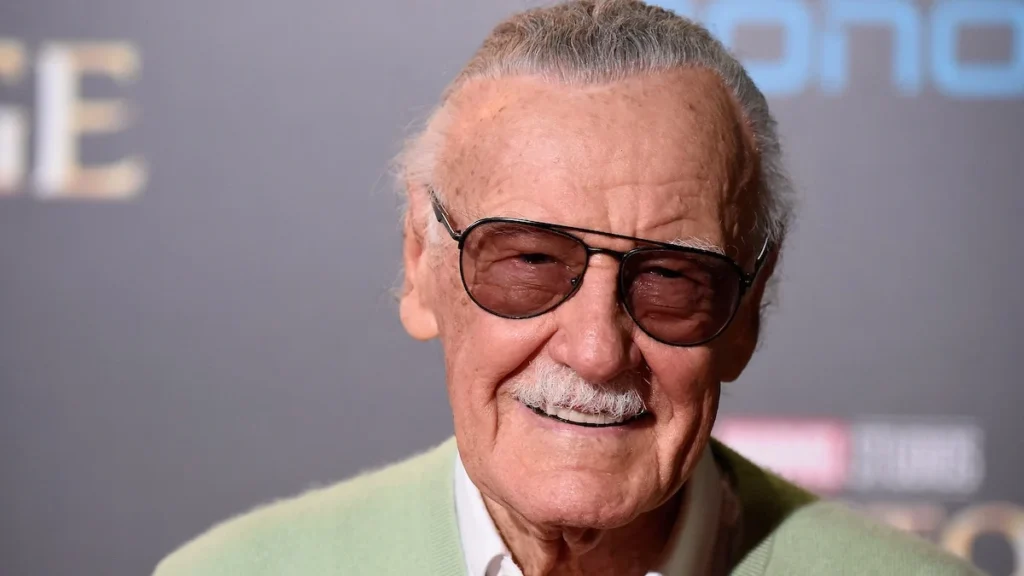

In a move that signals a significant step forward in the intersection of artificial intelligence and celebrity estates, Stan Lee Universe, the entity managing the legacy of the late comic book titan, has forged a groundbreaking partnership with ElevenLabs, a leading AI voice synthesis company. This collaboration grants ElevenLabs the rights to license Stan Lee’s iconic voice and distinctive likeness for a diverse array of applications, encompassing both commercial ventures and an innovative public domain audiobook club. The announcement itself was delivered via an AI-generated rendition of Lee’s voice, stating, "You know what they never tell you about legends? They outlive the page," a profound if somewhat unsettling declaration from a digital facsimile of the man himself.
A New Frontier for Posthumous Legacy
The agreement represents a pivotal moment in how the legacies of cultural icons are managed and extended in the digital age. For commercial purposes, Stan Lee’s AI voice is now available for use in advertisements, narrations for various media, and potentially other brand integrations. This opens up a vast new avenue for monetizing his enduring appeal, allowing his voice to resonate in contexts far removed from his original comic creations. Beyond direct commercial applications, a key component of the deal is the establishment of a public domain audiobook club. This initiative aims to leverage Lee’s familiar voice to narrate classic literary works, with the first title slated to be Robert Louis Stevenson’s Treasure Island. The club is designed to be updated monthly, with future narrations potentially including celebrated novels like Herman Melville’s Moby Dick, offering a unique auditory experience where Lee’s distinctive delivery lends itself to stories he never penned. Crucially, the licensing explicitly allows for the use of his voice and likeness in "non-Stan Lee stories," underscoring the expansive nature of this digital appropriation.
Stan Lee: The Architect of Modern Mythology
To fully grasp the magnitude of this development, it is essential to understand the unparalleled cultural footprint left by Stan Lee. Born Stanley Martin Lieber in 1922, he was a pivotal figure in the creation of the Marvel Comics universe, co-creating an astonishing pantheon of characters including Spider-Man, the Fantastic Four, the Avengers, the X-Men, Iron Man, Thor, Hulk, and Daredevil, among many others. His innovative approach to storytelling, characterized by complex characters with relatable human flaws, revolutionized the comic book industry in the 1960s. Lee’s charismatic personality, distinctive voice, and famous catchphrases like "Excelsior!" and "Nuff Said!" made him a beloved public figure, transcending the pages of comics to become a pop culture icon. His signature cameos in nearly every Marvel film were eagerly anticipated by fans worldwide.
Lee passed away in November 2018 at the age of 95, leaving behind a legacy that continues to influence global entertainment. His estate, Stan Lee Universe, has since been tasked with preserving and expanding his impact, a mission that now includes navigating the complex ethical and commercial landscape of artificial intelligence. The decision to license his voice to AI reflects a strategic effort to keep his presence alive and introduce his persona to new generations through innovative mediums, even in the absence of his physical being.
ElevenLabs: At the Forefront of AI Voice Synthesis
The technological bedrock for this ambitious project is provided by ElevenLabs, a company that has rapidly established itself as a leader in the field of AI voice synthesis. Utilizing advanced deep learning models and neural networks, ElevenLabs can generate highly realistic and emotionally nuanced speech from text, or even clone existing voices with remarkable accuracy from limited audio samples. Their technology allows for fine-tuning of voice characteristics, including intonation, rhythm, and emotional expression, making the AI-generated output virtually indistinguishable from human speech to the untrained ear.
ElevenLabs has been involved in several high-profile projects that underscore its capabilities and the evolving role of AI in creative industries. Prior collaborations include an AI-human project that "featured" versions of musical legends Liza Minnelli and Art Garfunkel, demonstrating the potential for AI to re-interpret and create new content using the voices of famous artists. Furthermore, the company was central to the Jerry Garcia remonetization project, which saw the Grateful Dead guitarist’s voice lent to narrate books and articles, expanding his posthumous presence into literary realms. Interestingly, ElevenLabs also plays a dual role in the AI landscape, having been involved in Spotify’s efforts to crack down on AI-generated tracks, serving as an AI detection provider. This dual capacity as both an enabler and a gatekeeper of AI content highlights the company’s comprehensive expertise in the rapidly developing field.
Chronology of AI and Posthumous Celebrity Likeness
The journey towards this Stan Lee deal is part of a broader, accelerating trend:
- 1990s-2000s: Early digital effects allowed for rudimentary "resurrections" of deceased actors, primarily through CGI manipulation of existing footage or body doubles (e.g., Gladiator for Oliver Reed).
- 2010s: Advancements in CGI and motion capture enabled more sophisticated posthumous appearances. Peter Cushing’s Grand Moff Tarkin and Carrie Fisher’s young Leia in Rogue One: A Star Wars Story (2016) ignited widespread debate about ethical boundaries and the "uncanny valley."
- Late 2010s – Early 2020s: AI voice synthesis begins to achieve remarkable realism. This period sees initial forays into licensing deceased celebrities’ voices for new content. Examples like the Jerry Garcia project (2024, as per original article’s implied timeline) emerge, testing public and legal waters.
- 2025-2026 (Implied): ElevenLabs solidifies its position, undertaking projects like the Liza Minnelli/Art Garfunkel collaboration. The technology matures, making the Stan Lee deal a natural progression, leveraging years of development and increasing societal acceptance (or at least familiarity) with AI-generated content.
- Current Deal (Implied 2026): The Stan Lee Universe-ElevenLabs partnership is announced, marking a significant commercial and cultural milestone for the widespread application of AI in extending celebrity legacies beyond their original creative outputs.
The Ethical and Legal Landscape: Navigating Uncharted Territory
The decision to license Stan Lee’s voice to AI inevitably ignites a complex debate surrounding ethics, intellectual property, and the very nature of legacy. The original article’s sardonic remark, "This won’t defile the dead at all," captures the inherent tension.
Ethical Considerations:
- Authenticity vs. Fabrication: Can an AI-generated voice truly represent Stan Lee, especially when narrating content he never created or endorsed? The distinction between genuine artistic expression and algorithmic mimicry becomes blurred.
- Consent and Dignity: While the estate grants permission, the deceased cannot provide explicit consent for future uses of their likeness. This raises questions about the dignity of the individual and whether their persona is being exploited.
- Artistic Integrity: For many, the unique charm of Stan Lee was his personality, his improvisational flair, and his genuine enthusiasm. An AI, however sophisticated, cannot replicate the lived experience and creative spark that defined him.
- The "Uncanny Valley" of Voice: While visual AI has its "uncanny valley," voice AI can also evoke discomfort when it’s almost perfect but lacks the subtle nuances of human performance.
Legal Implications:
- Right of Publicity/Posthumous Rights: The legal right of publicity, which protects an individual’s commercial value in their name, likeness, and voice, typically extends beyond death. Estates are responsible for managing these rights. This deal clarifies that such rights can now encompass AI-generated versions.
- Intellectual Property and Ownership: Who "owns" the AI-generated voice? While the estate owns the rights to the original voice, the AI model itself and its outputs exist in a complex legal grey area, particularly regarding derivative works.
- Precedent Setting: This agreement could set a significant precedent for other celebrity estates, particularly those of deceased actors, musicians, and public figures. It may accelerate the trend of digital resurrection and the monetization of posthumous personas.
- Evolving Legislation: Current intellectual property laws were not designed for generative AI. This deal highlights the urgent need for updated legislation to address issues of authorship, copyright, and ethical usage in the AI era.
Inferred Reactions and Broader Implications
While direct statements from all parties are not available, we can infer likely reactions and analyze broader implications:
Stan Lee Universe (Estate’s Perspective):
The estate likely views this partnership as a forward-thinking initiative to honor Stan Lee’s innovative spirit and ensure his legacy endures for future generations. By embracing cutting-edge technology, they can keep his voice and persona relevant in a rapidly changing media landscape, potentially introducing him to new audiences through diverse content formats like audiobooks and commercials. The focus on public domain audiobooks could be framed as a philanthropic endeavor, making classic literature more accessible with a beloved voice.
ElevenLabs’ Perspective:
ElevenLabs would undoubtedly highlight this deal as a testament to their technological prowess and a landmark achievement in AI voice synthesis. They would emphasize the quality and realism of their AI, showcasing its ability to faithfully reproduce an iconic voice. From their viewpoint, such partnerships demonstrate the immense potential of AI to enhance and expand creative possibilities, working in collaboration with rights holders to bring beloved figures back in new ways. They might also stress the controlled and licensed nature of the usage, attempting to assuage ethical concerns.
The Voice Acting Community:
The broader voice acting community is likely to view this development with significant concern. The licensing of a deceased celebrity’s voice to AI for commercial and narrative purposes could be seen as a direct threat to the livelihoods of living voice actors. It raises fears of job displacement, the devaluing of human performance, and the erosion of artistic integrity. Organizations representing voice actors are increasingly advocating for stronger protections against unauthorized AI replication and for fair compensation when AI is used in licensed capacities.
Fans and the Public:
Reactions from the general public and Stan Lee’s vast fanbase are expected to be mixed. Some fans may embrace the idea, seeing it as a way to "hear" Stan Lee again, particularly in new contexts like narrating classic literature. Others may find it unsettling, viewing it as a form of digital necromancy that diminishes the authenticity of his legacy. The "uncanny valley" effect, where the AI voice is almost but not quite human, could lead to discomfort or a sense of detachment.
Industry Experts and Ethicists:
Experts in AI ethics, intellectual property law, and media studies would likely analyze this deal as a critical case study. They would discuss its ramifications for the future of celebrity rights, the potential for misuse, and the ongoing debate about the definition of "creation" in an AI-driven world. The deal underscores the urgent need for clear guidelines and regulations to govern the use of AI in cultural heritage and personal likeness.
The Future of Celebrity, AI, and Intellectual Property
The Stan Lee Universe-ElevenLabs partnership is more than just a commercial agreement; it is a cultural bellwether. It signifies a future where the distinction between original human creation and AI-generated content becomes increasingly blurred.
- Proliferation of AI-Enabled Legacies: This deal is likely to inspire other celebrity estates to explore similar avenues, potentially leading to a proliferation of AI-generated voices and likenesses of deceased icons across various media.
- New Revenue Streams: For estates, AI offers unprecedented opportunities for monetizing posthumous fame, creating new revenue streams from voices and images that might otherwise remain dormant.
- Impact on Creative Industries: The entertainment industry will need to grapple with the implications for writers, actors, and other creatives. While AI can open new doors, it also poses existential questions about human artistry and value.
- The Authenticity Imperative: As AI becomes more sophisticated, the demand for authentic, human-created content may ironically increase, creating a premium for genuine artistic expression.
- Public Domain Reimagined: The public domain audiobook club presents an intriguing model for re-engaging with classic literature through the lens of modern technology and beloved cultural figures. It makes foundational texts accessible and engaging in new ways.
In conclusion, the licensing of Stan Lee’s voice to AI for commercial uses and non-Stan Lee stories is a monumental development, pushing the boundaries of technology, intellectual property, and ethical considerations. It solidifies AI’s role not just as a tool for efficiency, but as a potent force in shaping how we remember, interact with, and even "hear" the legends who have shaped our world. The questions it raises are profound, setting the stage for an ongoing dialogue about the true meaning of legacy in an increasingly digital and AI-driven future.