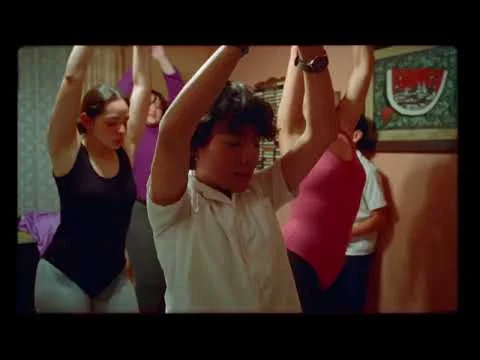

Bruno Santamaría Razo’s highly anticipated first fiction feature, Six Months in a Pink and Blue Building (original Seis Meses en el Edificio Rosa con Azul), is set to make its world premiere at the prestigious Cannes Critics’ Week on Tuesday, May 19. The film, whose intriguing title alone has garnered significant attention, delves into the complex journey of an 11-year-old boy navigating the tumultuous landscape of a father’s life-altering illness and the blossoming of nascent feelings for his best friend, all set against the vibrant backdrop of 1990s Mexico City. This debut marks a significant transition for Santamaría Razo, a filmmaker previously acclaimed for his documentary work, and establishes him as a compelling new voice in international cinema exploring themes of memory, family, and the indelible marks of childhood experiences.
A Deep Dive into Childhood, Memory, and the 1990s
The narrative centers on Bruno, a precocious and observant 11-year-old, whose innocent childhood is irrevocably altered by the devastating news of his father’s HIV diagnosis. Set in Mexico City during the 1990s, a period marked by both cultural effervescence and societal anxieties, the film plunges viewers into Bruno’s internal world as he grapples with adult responsibilities far beyond his years. The diagnosis not only impacts his immediate family dynamics but also forces Bruno to confront a maelstrom of emotions, compounded by his burgeoning feelings for his best friend, Vladimir. This dual exploration of personal and familial crisis alongside the delicate emergence of adolescent affection promises a poignant and multi-layered coming-of-age story.
The 1990s in Mexico City represent a crucial temporal and cultural context for the film. While the city was a hub of artistic and economic activity, it also contended with the global health crisis of HIV/AIDS. Public understanding and social stigma surrounding the virus were still prevalent, often leading to isolation and fear for those affected and their families. For a child like Bruno, witnessing such a profound illness within his household, coupled with the societal implications, would have created a uniquely challenging environment. The film, therefore, is not just a personal narrative but also a subtle historical commentary on a specific era and its impact on intimate lives.
Mirroring the soulful and often melancholic rhythms of salsa music, the family in the film attempts to find solace and express their pain through song and dance. This cultural coping mechanism highlights the resilience and emotional depth embedded within the family unit. However, the film’s narrative extends beyond this immediate coping, bridging a thirty-year gap. The adult Bruno, now a filmmaker, feels a profound urge to revisit and reconstruct these memories. He uses the cinematic lens to reimagine what he, as a child, could not fully grasp or articulate. This meta-narrative layer, where the act of filmmaking becomes a tool for processing historical pain and achieving understanding, adds a compelling intellectual dimension to the emotional core of the story. The film’s description concludes by stating that "Through a lens of familial love and joyful celebration, the filmmaker processes the pain, and ultimately understanding, of this turbulent time in his childhood." This suggests a journey towards acceptance and reconciliation, transforming personal trauma into a testament of love and resilience.
Bruno Santamaría Razo: From Acclaimed Documentarian to Fiction Maestro
The premiere of Six Months in a Pink and Blue Building at Cannes Critics’ Week is particularly significant as it marks Bruno Santamaría Razo’s foray into fiction feature filmmaking. Prior to this, Razo had established himself as a distinguished documentary director and cinematographer, earning critical acclaim for his ability to craft intimate and deeply human stories. His 2020 documentary, Cosas que no hacemos (Things We Don’t Do), serves as a testament to his talent, having won the prestigious Gold Hugo Award at the Chicago International Film Festival and the Grand Prize at BAFICI (Buenos Aires International Festival of Independent Cinema).
Cosas que no hacemos explored themes of identity, community, and the search for belonging within a specific social context, showcasing Razo’s empathetic approach and keen observational skills. His transition to fiction is not a departure from these core interests but rather an evolution, allowing him to explore memory, secrets, and childhood through a new narrative prism. The film’s premise—an adult Bruno reimagining his past—strongly suggests that Razo is drawing upon his documentary sensibilities, blending the raw authenticity of real experience with the creative freedom of fictional storytelling. This fusion promises a unique cinematic style, where the line between lived experience and imaginative reconstruction becomes fluid, enriching the narrative with layers of emotional truth.
Razo’s previous work as a cinematographer also underscores his visual prowess, suggesting that Six Months in a Pink and Blue Building will not only be narratively compelling but also visually rich. His background indicates a filmmaker deeply committed to exploring the nuances of human experience, and his move to fiction is poised to bring a fresh perspective to the landscape of contemporary Latin American cinema.
The Prestige of Cannes Critics’ Week: A Launchpad for Visionary Talent
The selection of Six Months in a Pink and Blue Building for the Cannes Critics’ Week (Semaine de la Critique) is a powerful endorsement of its artistic merit and potential impact. Established in 1962 by the French Syndicate of Cinema Critics, the Critics’ Week runs parallel to the main Cannes Film Festival and is dedicated to discovering and highlighting first and second feature films by emerging directors from around the world. It operates as an independent section, maintaining a sharp focus on innovative and challenging cinematic voices.

Over its storied history, Critics’ Week has served as a crucial launchpad for many filmmakers who later became celebrated auteurs. Directors such as Wong Kar-wai, Ken Loach, Guillermo del Toro, Jacques Audiard, Leos Carax, and Alejandro González Iñárritu all had early works premiered at this prestigious sidebar. Its reputation as a discerning platform for groundbreaking cinema means that films selected often gain significant international exposure, critical attention, and distribution opportunities. For a debut fiction feature like Razo’s, premiering here not only validates his artistic vision but also positions him firmly on the global cinematic stage. The Critics’ Week program is meticulously curated, selecting only a handful of films each year from thousands of submissions, making its inclusion a testament to the film’s exceptional quality and unique perspective. This platform offers a vital opportunity for new voices to connect with international critics, industry professionals, and a global audience eager for fresh and compelling storytelling.
An International Co-Production and Collaborative Effort
The production of Six Months in a Pink and Blue Building is a testament to the collaborative spirit of international filmmaking. The film was primarily produced by Mexico’s Ojo de Vaca Productora, in co-production with Brazil’s Desvia Films and Denmark’s Snowglobe. This tri-national collaboration is indicative of a growing trend in independent cinema, where filmmakers leverage international partnerships to secure funding, broaden creative perspectives, and expand their potential audience reach. Such co-productions often foster a rich exchange of ideas and resources, contributing to a more diverse and globally resonant cinematic output.
Bruno Santamaría Razo not only directed the film but also penned the screenplay, ensuring a singular vision for the narrative. He also contributed to the editing process alongside Andrea Rabasa Jofre, highlighting his comprehensive involvement in shaping the final product. The cinematography was expertly handled by Fernando Hernández García, whose lens transports viewers to 1990s Mexico City, capturing its essence and the emotional landscape of the characters. Carlos Quinonez and Bruna Haddad served as producers, guiding the complex logistical and creative aspects of bringing such an ambitious project to fruition. International sales for the film are being managed by Luxbox, a prominent sales agent known for representing critically acclaimed independent films, further enhancing its global distribution prospects.
The cast features a talented ensemble, including Jade Reyes, Sofía Espinosa, Lázaro Gabino, Eduardo Ayala, Valeria Vanegas, Anuar Vera, Teresa Sánchez, Valentina Cohen, Nara Carreira, and Demick Lopes. While specific roles beyond Bruno and Vladimir are not detailed, the diverse cast promises a rich tapestry of characters supporting Bruno’s journey, bringing the family and community dynamics to life with authenticity and depth.
The Power of Fiction to Uncover Deeper Truths
In press notes released about the film, Bruno Santamaría Razo shared a profound insight into his creative process and the impact of his work: "During filming, something very powerful happened. For example, there was a moment when an actor said a very ordinary line, something simple, and someone in my family heard it and immediately recognized themselves in it. Even if they didn’t remember ever saying it, they recognized themselves. They saw themselves there. And that was very important to me. Because I felt fiction was managing to connect with something deeply true."
This statement encapsulates the core philosophy behind Razo’s transition to fiction. It speaks to the unique capacity of fictional narratives, even those rooted in personal memory, to resonate with universal truths and evoke recognition on a deeply personal level. For Razo, the act of reimagining his childhood through fiction allowed for a powerful form of connection, not just for himself but for his family and, by extension, for the audience. This notion suggests that while the film draws from a specific personal history, its themes of navigating illness, identity, friendship, and the complexities of familial love are universally relatable. It underscores the idea that fiction, rather than distorting reality, can sometimes illuminate its essence more effectively, allowing for emotional processing and understanding that direct recollection might obscure. This pursuit of "deeply true" connections through fictionalized memory is a hallmark of compelling storytelling and positions Six Months in a Pink and Blue Building as more than just a personal memoir but a shared human experience.
Anticipation and Broader Implications
The world premiere of Six Months in a Pink and Blue Building at Cannes Critics’ Week is highly anticipated within the international film community. Its themes resonate with contemporary discussions around mental health, the enduring impact of childhood experiences, the evolving understanding of LGBTQ+ identities (implied by Bruno’s feelings for Vladimir), and the historical narrative of the HIV/AIDS epidemic. The film’s sensitive portrayal of a child coping with a parent’s serious illness, combined with the exploration of nascent sexuality, offers a nuanced perspective on growth and resilience.
Beyond its artistic merit, the film’s success could further elevate the profile of Mexican cinema on the global stage, showcasing the depth and diversity of storytelling emerging from the region. Santamaría Razo’s unique blend of documentary sensibility with fictional narrative promises a refreshing and thought-provoking cinematic experience. As viewers prepare to witness Bruno’s journey, both past and present, the film encourages reflection on how formative experiences shape identity and how the act of remembering, even through creative reimagination, can lead to profound healing and understanding. The initial exclusive clip, released by The Hollywood Reporter, provides a tantalizing glimpse into the film’s cinematic tone and the vibrant, yet challenging, atmosphere of 1990s Mexico City, inviting audiences to immerse themselves in Bruno’s world. As the director advises, "Inhale! Exhale!" – a simple yet powerful reminder to brace for an emotionally resonant and deeply affecting cinematic journey.