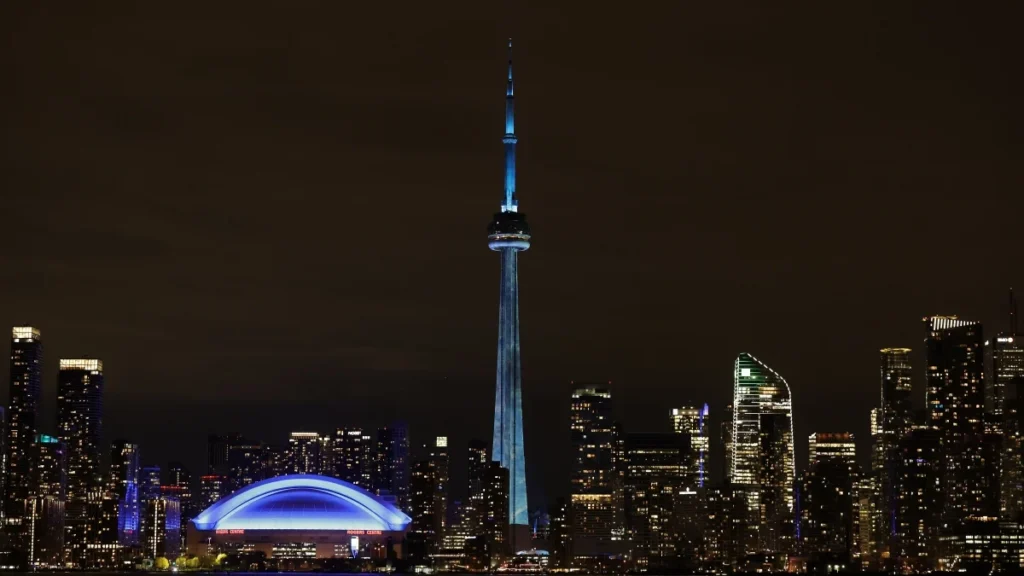

In an unprecedented display of marketing spectacle and technological prowess, Canadian superstar Drake illuminated Toronto’s iconic CN Tower with a dazzling blue, ice-like glow on the night of Thursday, May 14th, utilizing projection equipment valued at tens of millions of dollars. The monumental stunt served as the climactic promotional event for the simultaneous release of his highly anticipated album, Iceman, and its surprise companion records, Habibti and Maid of Honour. The ambitious project, which saw the nation’s most recognizable landmark transformed into a frozen spire, underscored Drake’s unparalleled commitment to innovative album promotion and his deep connection to his hometown.
The elaborate "icing out" of the CN Tower was a meticulously planned operation, designed to captivate a global audience and generate immense buzz for the artist’s new musical offerings. It coincided with a livestreaming event that culminated in the midnight release of the three albums, strategically maximizing the impact of the visual spectacle.
The Vision Behind the Ice: Technical Mastery and Creative Collaboration
The extraordinary projection was commissioned by Drake’s creative team, DreamCrew, and brought to life by Anil Mohabir and his Toronto-based digital and visual design firm, Studio AM. CBC News reported extensively on the event, detailing the intricate planning and execution required for such a large-scale public display. Mohabir, the architect of the visual feat, explained the complexity involved in transforming the tower into an icy monument. "We took into account the 3D geometry of the tower, and we showed it freezing [in] real-time, with computer animation all the way to the top," Mohabir told CBC. "Once it reached the top, we [had] a really fun lighting animation that kind of moves around ambient light, like lights were hitting the ice from different angles."
This wasn’t merely a simple light show; it was a sophisticated exercise in 3D projection mapping, requiring precise calibration and custom animation to conform to the unique contours of the 553-meter (1,815-foot) structure. The azure, ice-like lighting effect appeared to crawl dynamically up the tower, creating a convincing illusion of the concrete and steel structure succumbing to a fantastical freeze. The sheer scale and realism of the projection left onlookers "in a bit of shock," as Mohabir humorously recounted.
The logistical undertaking was immense. Studio AM and DreamCrew were given a tight deadline of just three weeks to conceptualize, design, and implement the entire project. This compressed timeline necessitated a global effort to source the necessary equipment and expertise. A dedicated team of 300 individuals worked tirelessly on the project, supported by 75 high-powered projectors shipped in from various locations worldwide. Mohabir revealed the staggering financial investment in the hardware alone, stating that the projectors were worth an estimated $15 million, with their specialized lenses adding millions more to the overall cost. The total equipment value easily soared into the tens of millions of dollars, highlighting the unprecedented budget allocated to this marketing initiative.
Beyond the technological demands, the project required extensive coordination and approvals from various governmental and municipal entities, including the City of Toronto and the Canadian transportation agency, given the CN Tower’s status as a critical piece of infrastructure and a major tourist attraction within a bustling urban environment. This cooperation ensured that safety protocols were met and that the spectacle could proceed without disrupting city operations or air traffic.
A Chronology of Anticipation: Building the Hype
The CN Tower spectacle was not an isolated event but the grand finale of a meticulously orchestrated series of publicity stunts designed to build fervent anticipation for Drake’s triple album drop. The marketing campaign, characterized by its "ice" theme, began weeks prior to the album release, steadily escalating in extravagance and public visibility.
- Early May: The initial hints of Drake’s "Iceman" theme began to surface. Reports emerged of an enigmatic, large-scale ice sculpture appearing in a Toronto parking lot, subtly linking the artist to the concept.
- Mid-May: Drake was observed driving around the city in a nondescript box truck, emblazoned with the single word "Iceman," sparking curiosity and speculation among fans and local media. This grassroots approach contrasted sharply with the eventual grandiosity of the CN Tower event.
- Days leading up to May 14th: The stunts intensified. Drake reportedly orchestrated a controlled explosion in a city park, further solidifying the "ice" and "cold" thematic elements, albeit in a more dramatic fashion.
- May 14th: In a playful yet attention-grabbing move, Drake "froze" his courtside seats at the Toronto Raptors’ home, Scotiabank Arena. This stunt, visible to sports fans and broadcast audiences, cemented the "Iceman" persona across different public spheres.
- Night of May 14th: The promotional efforts reached their zenith. The CN Tower was illuminated in its icy blue glow, accompanied by a synchronized fireworks display over Toronto’s waterfront. This visual feast was broadcast globally via a livestreaming event, capturing the attention of millions and setting the stage for the midnight album releases.
- May 15th: As the clock struck midnight, Iceman was officially released, alongside the surprise companion albums, Habibti and Maid of Honour, culminating weeks of carefully crafted hype.
This phased rollout demonstrated a sophisticated understanding of modern media consumption and fan engagement, leveraging both physical stunts and digital platforms to create a pervasive narrative leading up to the main event.
Toronto at the Forefront: Local Talent and Global Impact
Anil Mohabir emphasized the significance of Drake’s choice to work with local talent for such a high-profile project. "Drake and his team put ‘Canadian creatives at the forefront’ and helped ‘elevate the entire city’," Mohabir proudly told CBC. He added, "We’re just a bunch of kids from Toronto that kind of have crazy ideas and crazy dreams… Through the conduit of Drake, we’re given the opportunity to execute [them] at a really high level." This sentiment highlights not only the creative prowess available within Toronto but also Drake’s consistent efforts to champion his city and its burgeoning artistic community. The collaboration served as a powerful testament to Toronto’s growing influence as a cultural hub and a source of innovative talent in the entertainment industry.
The CN Tower, a symbol of Canadian engineering and Toronto’s skyline since its completion in 1976, has often been used for celebratory lighting displays. However, the sheer technical complexity and thematic integration of Drake’s "icing out" surpassed previous endeavors, marking a new benchmark for promotional activations involving national landmarks. Its status as the tallest free-standing structure in the Western Hemisphere makes it an undeniable focal point, and its transformation garnered significant international media attention, effectively placing Toronto prominently on the global stage for that night.
The Albums: A Triple Threat and Renewed Rivalries
The culmination of this elaborate marketing blitz was the release of three distinct albums, a strategic move that offered fans a multifaceted musical experience. Iceman, the titular album around which the entire campaign revolved, lived up to its aggressive promotional tone. As expected, it featured Drake’s signature lyrical prowess, including pointed diss tracks aimed at his rivals, most notably Kendrick Lamar. The long-running and intensely public feud between Drake and Lamar had reached a fever pitch in the preceding weeks, making Iceman a highly anticipated entry in the ongoing lyrical battle. The album’s content was widely analyzed for its direct references and veiled jabs, solidifying its place within one of hip-hop’s most significant contemporary rivalries.
In a surprise move, Drake simultaneously dropped two additional albums: Habibti and Maid of Honour. Habibti ventured into R&B territory, showcasing Drake’s softer, more melodic side and appealing to fans of his soulful offerings. Maid of Honour, on the other hand, leaned into dance music, demonstrating his versatility and willingness to explore different genres. This triple release strategy ensured broad appeal and provided a comprehensive "Drake experience" for listeners, spanning various moods and musical styles.
Initial critical reception for the trio of albums was mixed but largely positive, with critics acknowledging the ambitious scope. Consequence magazine, in its review, noted that Drake appeared "focused on getting listeners to hark back to his glory days" and concluded that "the trio of albums amount to a complete Drake experience, for better and for worse." This assessment suggests that while the albums delivered on the promise of diverse sounds, they also encapsulated the full spectrum of Drake’s artistic strengths and occasional indulgences.
Broader Implications: The Future of Music Marketing
Drake’s CN Tower stunt and the preceding campaign represent a significant moment in the evolution of music marketing. In an increasingly fragmented media landscape, artists are constantly seeking novel ways to cut through the noise and capture public imagination. The scale and financial investment in this project underscore the high stakes involved in major album releases in the streaming era. While traditional advertising still plays a role, experiential marketing—creating unforgettable, shareable moments—has become paramount.
The success of the "Iceman" campaign will undoubtedly influence future strategies for other artists and record labels. It demonstrated that with sufficient creative vision, technical expertise, and financial backing, a single event can generate global buzz equivalent to, if not exceeding, months of conventional promotional efforts. The integration of a landmark, a livestream, social media engagement, and a series of smaller, impactful stunts created a cohesive narrative that resonated deeply with fans and the wider public.
Furthermore, the project reinforced Drake’s status not just as a global music icon but also as a powerful cultural ambassador for Toronto. By consistently referencing his city and empowering local talent, he strengthens the bond with his roots while elevating the profile of Canadian creativity on an international stage. The CN Tower, a symbol of Toronto’s ambition and distinct identity, served as the perfect canvas for an artist who has become synonymous with the city itself, further blurring the lines between artist, art, and urban landscape. The spectacle was not just an album promotion; it was a testament to the power of artistic vision, technological innovation, and strategic marketing in the digital age.