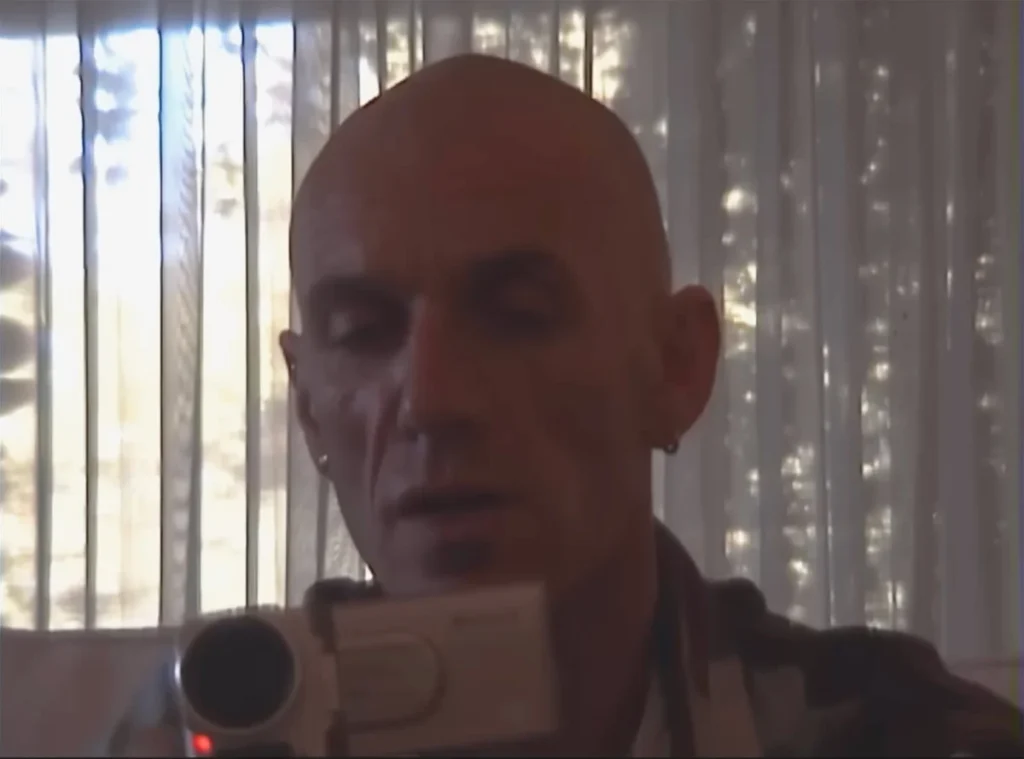

Tribeca Film Festival is set to host the premiere of "Humpty Dumpty X," a highly anticipated documentary that delves into the tumultuous and legendary production of Tony Kaye’s seminal 1998 film, "American History X." The first official trailer, released by Tribeca, offers a provocative glimpse into the creative maelstrom that defined the making of one of cinema’s most impactful films, spanning 23 years of accumulated footage and personal reflection.
The documentary, directed by Kaye himself, promises an unfiltered autobiographical account of his experiences navigating the complex and often combative landscape of Hollywood studio filmmaking. "Humpty Dumpty X" draws its title from Kaye’s infamous attempt to remove his name from the "American History X" credits, opting instead for the moniker "Humpty Dumpty" as a protest against perceived studio interference and compromises to his artistic vision. This act of defiance has since become a cornerstone of Hollywood lore, symbolizing a director’s unwavering commitment to his art against the pressures of the commercial industry.
A Deep Dive into a Hollywood Legend
"Humpty Dumpty X" is not merely a behind-the-scenes look at a controversial film; it is presented as a profound self-portrait of an artist grappling with the realities of his craft within the studio system. According to promotional material from Tribeca, the film is constructed from a wealth of raw, personal footage captured by Kaye throughout the production of "American History X." This includes phone calls with studio executives, candid conversations with collaborators and friends, and a visual and textual record of his creative process—rants, sketches, paintings, photographs, and notebook entries that chronicle his state of mind during this pivotal period.
The narrative of "American History X" has long been intertwined with stories of directorial struggle. Released in 1998, the film, starring Edward Norton, tackled the complex themes of neo-Nazism, racism, and redemption in America. It garnered critical acclaim, particularly for Norton’s performance, and has since cemented its place as a significant film in American cinema. However, the production was reportedly fraught with creative differences between Kaye and New Line Cinema, the studio behind the film. These disagreements culminated in Kaye’s highly publicized attempt to disown the film, a move that underscored the intense battle for creative control that often defines major studio productions.

The Genesis of "Humpty Dumpty X"
The origins of "Humpty Dumpty X" can be traced back to the very period of turmoil during the making of "American History X." Kaye, sensing the gravity of the situation and his own intense emotional and creative investment, reportedly maintained a constant filming presence. This extensive archival material, amassed over two decades, now forms the bedrock of the documentary. The film’s 23-year gestation period highlights Kaye’s meticulous approach to curation and his long-held desire to present his unvarnished perspective on the events.
The documentary’s premise offers a rare opportunity for audiences to witness the raw, unmediated process of a major director navigating the challenges of bringing a significant cinematic vision to fruition. Tribeca describes the film as "a fascinating self-portrait of one of cinema’s true originals, a filmmaker who has always insisted on doing things his own way and has the scars to prove it." This framing suggests that "Humpty Dumpty X" will explore not only the making of "American History X" but also the broader implications of artistic integrity versus commercial demands in the film industry.
Chronology of a Creative Battle
The saga of "American History X" and its subsequent documentary, "Humpty Dumpty X," can be charted through several key phases:
- 1995-1997: Production of "American History X." Tony Kaye directs the film, marking his feature directorial debut. Reports and subsequent accounts suggest that significant creative conflicts arise between Kaye and New Line Cinema regarding editing, pacing, and the overall tone of the film.
- Late 1997 – Early 1998: Post-production Disputes. The battle over final cut intensifies. Kaye famously attempts to remove his name from the film, requesting it be credited to "Humpty Dumpty." He also reportedly submits his own cut of the film, distinct from the studio’s version. Edward Norton is said to have played a role in the final editing process, a point of contention for Kaye.
- October 1998: Release of "American History X." The film is released by New Line Cinema, receiving critical acclaim and achieving significant cultural impact. Tony Kaye’s name is credited as director, though the circumstances surrounding the credit remain a subject of discussion.
- 1998-2021: The Archive and Reflection. Throughout these years, Kaye reportedly compiles and preserves the extensive footage and personal documentation from the "American History X" production. This period allows for a significant passage of time, fostering a reflective perspective on the events.
- 2021-2026: Development of "Humpty Dumpty X." Kaye begins the intensive process of editing and assembling the archival material into the documentary film "Humpty Dumpty X." The project is developed over several years, culminating in its selection for the Tribeca Film Festival.
- May 29, 2026: Trailer Release. The first official trailer for "Humpty Dumpty X" is released, accompanied by news of its premiere at the 2026 Tribeca Film Festival.
- June 2026: Premiere at Tribeca Film Festival. "Humpty Dumpty X" is slated to premiere at the festival in New York City, offering audiences their first opportunity to experience Kaye’s retrospective on his landmark film.
Supporting Data and Context
The narrative of creative battles in Hollywood is not unique to Tony Kaye. The film industry has a long history of directors clashing with studios over artistic vision. For example, the production of Terry Gilliam’s "Brazil" (1985) was marked by a prolonged and public dispute with Universal Pictures over the film’s ending, leading to the famous "tinker-toy" trailer and a battle for the director’s cut. Similarly, the making of Ridley Scott’s "Blade Runner" (1982) saw multiple cuts and differing interpretations of the film’s narrative, with the director’s cut eventually becoming the preferred version for many.
"American History X" itself, despite its critical success and enduring legacy, was a relatively modest commercial performer upon its initial release, grossing approximately $23 million worldwide against a budget of around $20 million. This financial performance can sometimes influence studio decisions regarding creative control, as studios may become more risk-averse or insistent on specific elements they believe will ensure a wider audience appeal. Kaye’s insistence on his artistic vision, therefore, can be seen as a commitment to thematic integrity that may have been perceived as a financial risk by the studio.

The documentary’s title, "Humpty Dumpty," carries symbolic weight. The nursery rhyme character famously suffers a great fall and cannot be put back together again. This metaphor can be interpreted as Kaye’s feeling of the creative process being irrevocably broken or his own sense of disillusionment with the studio system’s impact on his vision.
Official Responses and Industry Reactions (Inferred)
While specific direct statements from New Line Cinema or individuals involved in the "American History X" production regarding "Humpty Dumpty X" are not yet available, the film’s premiere at Tribeca and the release of its trailer are likely to elicit responses from those within the film industry who were privy to the original events.
The film’s description by Tribeca, emphasizing its "unmediated access to a major director in the middle of making a major film," suggests a strong advocacy for the director’s perspective. This framing implicitly positions "Humpty Dumpty X" as a crucial document for anyone interested in the "realities of creative life inside the studio system."
The inclusion of "Humpty Dumpty X" in a prestigious festival like Tribeca, known for its championing of independent and documentary cinema, signals industry validation of the film’s artistic merit and its importance as a cultural artifact. It is anticipated that film critics and historians will engage with the documentary as a vital case study in directorial autonomy and the evolution of filmmaking practices.
Broader Impact and Implications
"Humpty Dumpty X" has the potential to spark renewed conversations about several critical aspects of the film industry:

- Director’s Cut vs. Studio Cut: The documentary will undoubtedly reignite debates surrounding the concept of the "director’s cut" and the extent to which filmmakers should have ultimate control over their creations. In an era where studios heavily invest in tentpole franchises and often exert significant influence over creative decisions, Kaye’s story serves as a potent reminder of the historical struggles for artistic integrity.
- The Role of Archival Footage in Documentary: The film’s reliance on extensive personal archives underscores the power of raw, unedited material in constructing a deeply personal and authentic narrative. It highlights how filmmakers can leverage their own past documentation to create a unique form of self-examination and historical record.
- Artistic Integrity in the Age of Blockbusters: As the film industry increasingly leans towards large-scale, commercially driven projects, "Humpty Dumpty X" offers a counter-narrative. It emphasizes the value of singular artistic vision and the potential for groundbreaking work to emerge from challenging creative environments.
- The Legacy of "American History X": The documentary provides an opportunity to re-examine "American History X" not just as a finished product, but as a film born out of intense creative struggle. This could lead to a deeper appreciation of its themes and its enduring impact, viewed through the lens of its arduous creation.
The film is also positioned as a companion piece to other documentaries that explore the filmmaking process, such as the recently released "Megadoc," which chronicled the making of Francis Ford Coppola’s "Megalopolis." This trend suggests a growing audience interest in the mechanics and human drama behind cinematic creation.
As "Humpty Dumpty X" prepares for its premiere, it promises to be more than just a film about filmmaking; it is a testament to the enduring spirit of an artist and a compelling exploration of the often-unseen battles fought in the pursuit of cinematic excellence. The documentary’s success at Tribeca will likely pave the way for broader distribution, allowing a wider audience to witness Tony Kaye’s unflinching look at a pivotal moment in his career and in Hollywood history. No further release dates beyond its Tribeca debut have been announced, but industry watchers will be keenly awaiting news on its wider availability.