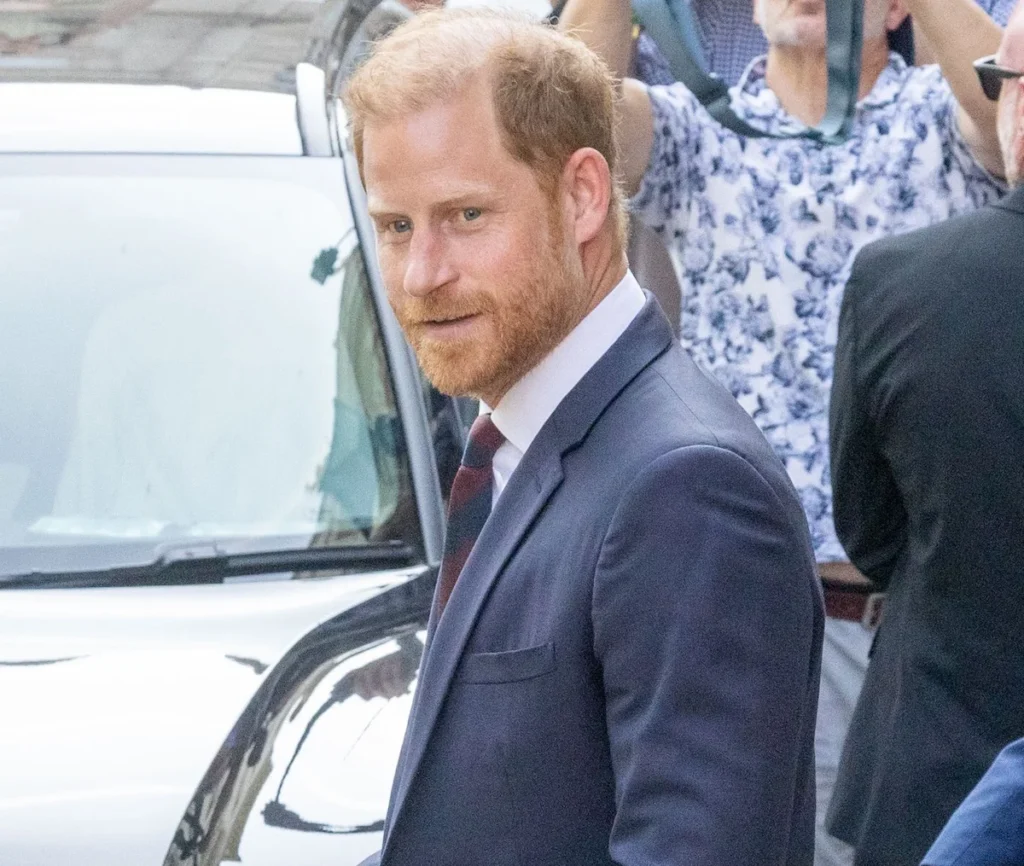

Prince Harry has been dealt a substantial legal blow in one of the most prominent courtroom battles of his sustained campaign against the British tabloid press. On Tuesday, the Duke of Sussex’s years-long lawsuit against Associated Newspapers Limited (ANL), publisher of the Daily Mail and Mail on Sunday, was dismissed in its entirety by the High Court in London, marking a significant setback in his pursuit of media accountability.
The ruling, delivered by Mr. Justice Matthew Nicklin, found that Prince Harry and six other high-profile claimants failed to provide sufficient evidence to substantiate their allegations. The group had accused ANL of unlawfully gathering private information for its stories between the 1990s and 2011, employing methods such as phone hacking, deception, the use of private investigators, and corrupt payments. Justice Nicklin concluded after a lengthy 46-day trial that mere suspicion was inadequate to support the claims, leading to the wholesale dismissal of the case. This decision underscores the formidable challenges faced by individuals seeking to prove historical allegations of illicit journalistic practices, particularly when direct evidence is elusive.
The Core Allegations and the Coalition of Claimants
The lawsuit was a joint endeavor, with Prince Harry joined by a notable cohort of public figures. Among the claimants were pop icon Sir Elton John, his husband David Furnish, actresses Elizabeth Hurley and Sadie Frost, and civil rights campaigner Baroness Doreen Lawrence. Each alleged that stories published by the Daily Mail and Mail on Sunday during the specified period were derived from information obtained through illegal means, violating their privacy and causing significant distress.
The specific unlawful methods detailed in their claims painted a picture of pervasive and systematic intrusion. These included:
- Phone hacking: Accessing voicemails without permission.
- "Blagging": Obtaining private information by deception, often by impersonating individuals or officials.
- Use of private investigators (PIs): Employing PIs who allegedly engaged in illicit information gathering.
- Corrupt payments: Bribing officials or sources for sensitive data.
These allegations resonated with a broader public discourse in the UK surrounding press ethics, which intensified dramatically following the 2011 News International phone hacking scandal that led to the closure of the News of the World. Prince Harry’s involvement in this lawsuit was consistent with his public stance on holding the media accountable for what he perceives as pervasive and damaging intrusions into private lives.
Associated Newspapers Limited Hails "Overwhelming Victory"
Following the High Court’s decision, Associated Newspapers Limited wasted no time in issuing a triumphant statement, framing the outcome as a resounding vindication of its journalistic integrity. Published on DailyMail.com, the company declared the ruling an "overwhelming victory for the Daily Mail and its journalists, and for a free press generally."
ANL expressed gratitude to Mr. Justice Nicklin for his "patience and wisdom" throughout what they characterized as "misguided legal action," which they asserted had "wasted so much valuable court time and more than £50m in legal costs." The publisher further indicated its intention to "resolve outstanding issues, including the recovery of the costs we have incurred while defending ourselves against this egregious litigation." This suggests a potential counter-claim for legal expenses, adding another layer of financial implication to the already costly legal battle. The statement underscored ANL’s view that the lawsuit was an unwarranted attack on legitimate journalism and an attempt to stifle press freedom.
Prince Harry’s Enduring Crusade for Media Accountability: A Broader Context
This latest legal defeat, while significant, is but one chapter in Prince Harry’s extensive and often contentious campaign against the British tabloid media. His pursuit of media reform and accountability has become a defining aspect of his public life since stepping back from royal duties and relocating to the United States with his wife, Meghan Markle.
The Duke’s efforts are rooted in a deeply personal history, shaped by his mother Princess Diana’s tumultuous relationship with the press and his own experiences with intense media scrutiny. He has consistently argued that the unchecked power of certain media outlets has led to unethical practices, invasions of privacy, and ultimately, harm to individuals.
Historical Precedents and Other Legal Engagements:
The landscape of media litigation in the UK has been profoundly influenced by the phone hacking scandal that erupted in the early 2010s. The Leveson Inquiry, a public inquiry into the culture, practices, and ethics of the British press, brought to light widespread illegal information gathering by various newspapers. This led to numerous successful lawsuits and settlements against publishers such as News Group Newspapers (NGN), publisher of The Sun and the now-defunct News of the World, and Mirror Group Newspapers (MGN), publisher of the Daily Mirror and Sunday Mirror.
Prince Harry himself has achieved notable victories in this ongoing struggle:
- Settlement with News Group Newspapers: In January of the previous year, Harry reached a major settlement with NGN, reportedly involving an eight-figure payment and a public apology acknowledging unlawful conduct.
- Victory against Mirror Group Newspapers: In December 2023, he was awarded £140,600 in damages after the High Court found he had been a victim of phone hacking and other unlawful information gathering by MGN from 1996 to 2010.
- Meghan Markle’s Privacy Case: His wife, Meghan Markle, also famously won her privacy case against the Mail on Sunday over the publication of a private letter to her father, receiving symbolic damages of £1 and a public apology.
These past successes highlight Harry’s resolve and the legal validity of many of his claims against other publishers. The dismissal of the ANL case, therefore, stands in stark contrast to these earlier triumphs, raising questions about the differing legal standards or evidence thresholds applied across various media organizations and judicial proceedings.
The Duke’s Vehement Disagreement: Accusations of a "Whitewash"
The ruling arrived while Prince Harry was in London attending an event connected to the Invictus Games, allowing him to issue an immediate response. Just hours after the judgment was handed down, he released a joint statement with fellow claimant Baroness Doreen Lawrence, making their profound disagreement with the court’s conclusions unequivocally clear.
Their statement began with a strong assertion: "We came to Court seeking justice and accountability. But we have received neither." They argued that the judgment represented a "complete reversal of the position which previous Judges have taken in relation to the hacking claims successfully brought against both News Group Newspapers and Mirror Group Newspapers."
A particularly contentious point raised in their statement concerned the presiding judge, Mr. Justice Matthew Nicklin. The claimants highlighted that "Generic findings about various private investigators that were held by the Courts in these parallel claims to have carried out unlawful activity at the very same time in relation to similar stories and well-known individuals have been wholly ignored." They further stated, "The fact that this Court has chosen to dismiss them represents an inconsistency which is hard to understand or reconcile with common sense, or the evidence heard in the courtroom itself."
Crucially, the statement contained a pointed reference to Justice Nicklin’s past professional affiliations, noting that he had previously represented News Group Newspapers and Mirror Group Newspapers as a barrister. This implicit challenge to the judge’s perceived impartiality, or at least the consistency of judicial interpretation, adds a layer of controversy to the ruling. While not directly accusing the judge of bias, the statement strongly implied that his past professional involvement with other tabloid publishers, combined with what they saw as a contradictory ruling, was deeply troubling.
Specific Allegations and Criticisms of the Court’s Decision
Prince Harry and Baroness Lawrence did not shy away from accusing the court of a "complete and obvious whitewash," adding that the lengths to which the court had gone to "exonerate the Mail is as shocking as it is totally unwarranted." They contended that the court’s assertion of insufficient evidence of wrongdoing was made "despite the documents showing otherwise," questioning how justice could ever be achieved under such circumstances.
To bolster their argument, they pointed to specific instances which they believed provided compelling evidence of unlawful conduct:
- Baroness Lawrence’s "Blagging": They cited a private investigator used by the Mail who allegedly admitted on tape to having unlawfully "blagged" Baroness Lawrence, obtaining her private information through deception.
- Sensitive Medical Information: They referenced a journalist who recorded the name of a private investigator she used to uncover highly sensitive medical information, details that even the Mail itself was reportedly "too worried to publish."
- British Airways Seat Numbers: Another example involved a private investigator emailing one of the journalists with the actual British Airways seat number and ticketing details for a young girl visiting her boyfriend, allegedly in return for payment.
These specific examples, according to the claimants, represented tangible proof of illicit practices that the court chose to disregard. Their statement concluded with a stark accusation: "It feels here like one rule for the newspapers and another for the claimants." They criticized the court for "uncritically" believing the denials of Mail journalists, even "in the face of inconsistencies, contradictions and blatant untruths that were obvious to neutral observers in Court when compared to the documents." They reiterated their belief that the evidence presented was "compelling" and thanked their legal team and courageous witnesses.
Implications and The Road Ahead
This latest ruling has profound implications for Prince Harry’s ongoing battle with the British press and for the broader landscape of media accountability in the UK. For Harry, it represents a significant psychological and financial blow, undermining a key aspect of his public mission. While he has achieved victories against other publishers, this defeat against ANL—a major player in the British media—may temper future legal strategies.
Financial Ramifications: The mention of "more than £50m in legal costs" by ANL highlights the exorbitant expense of such high-stakes litigation. If ANL successfully recovers its costs, it could impose a substantial financial burden on the claimants, including Prince Harry. This financial pressure could serve as a deterrent for future legal challenges against powerful media organizations.
Impact on Media Accountability: The ruling, coupled with the strong dissenting statement from the Duke and Baroness Lawrence, re-ignites debates about the effectiveness of legal avenues for holding the press accountable. The perceived inconsistency with previous judgments against other publishers raises questions about judicial interpretation and the standards of proof required in these complex cases. Critics might argue that this decision emboldens certain media outlets, while proponents of a free press will view it as a necessary safeguard against unwarranted legal attacks.
Future Legal Avenues: While the original article stated it’s unclear what further action can be taken, legal experts suggest several possibilities. The claimants could seek permission to appeal the High Court’s decision to the Court of Appeal. Such an appeal would typically focus on points of law or whether the judge made an error in their assessment of the evidence or application of legal principles. Given the strong language in Harry’s statement, an appeal seems a plausible, though not guaranteed, next step. However, appeals are costly and have no guarantee of success.
This dramatic chapter underscores the persistent tension between press freedom and individual privacy in the UK. Prince Harry’s unwavering commitment to his cause suggests that this fight for accountability, despite the recent setback, is far from over. The implications of this ruling will undoubtedly continue to reverberate through legal, media, and public spheres for some time to come.