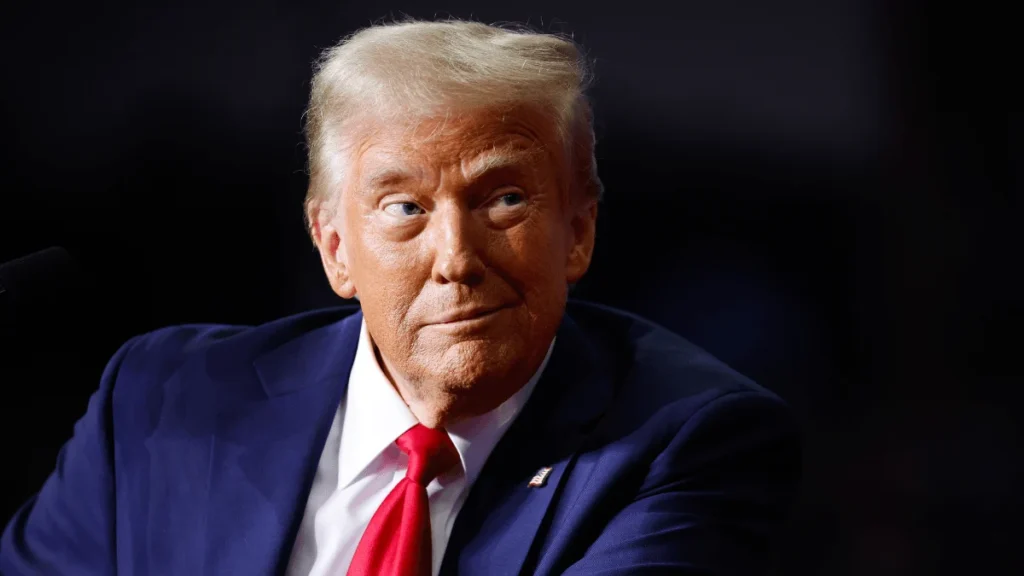

The intersection of artificial intelligence and political rhetoric reached a new point of contention this week following the release of a high-profile digital video by former President Donald Trump. On July 2, the presumptive Republican nominee shared a 90-second, AI-generated video on his social media platform, Truth Social, featuring a digital likeness of himself portrayed as a medical professional. In the clip, the AI-generated "Doctor Trump" addresses the camera while wearing a white lab coat, offering a satirical diagnosis and treatment plan for what he characterizes as "Trump Derangement Syndrome" (TDS). The video specifically targets several of his most vocal critics in the entertainment industry, prompting a swift and severe rebuke from comedian and long-time adversary Rosie O’Donnell.
The video utilizes sophisticated generative AI to mimic Trump’s voice and likeness, presenting him in a clinical setting. During the footage, the digital avatar asks viewers, "Have you or someone you know been diagnosed with TDS?" before transitioning into a montage of various celebrities who have publicly criticized Trump’s policies and character. The list of featured individuals includes high-profile figures such as Whoopi Goldberg, Robert De Niro, John Leguizamo, Edward Norton, Julia Roberts, and Rosie O’Donnell. The AI persona suggests a "treatment plan" for these individuals, which includes instructions to "turn off fake news," "say your prayers," and consume "a Diet Coke," a beverage famously associated with the former president’s daily habits.
The Rebuttal from Rosie O’Donnell and the Invocation of the 25th Amendment
Rosie O’Donnell, whose public feud with Donald Trump dates back nearly two decades, provided a sharp response to the video during an interview with The Guardian. Speaking on July 3, just twenty-four hours after the video’s dissemination, O’Donnell characterized the former president’s behavior as indicative of a serious mental decline. She stated that Trump appears "quite ill" and suggested that his condition is "getting worse daily."
O’Donnell’s criticism went beyond mere personal insult, as she explicitly called for constitutional intervention. "The 25th Amendment exists for exactly this reason," she told the publication, referring to the constitutional provision that outlines the procedures for replacing a president who is "unable to discharge the powers and duties of his office." Her statement concluded with a call for legal and legislative action, urging authorities to "Remove. Impeach. Convict."
This exchange marks the latest chapter in a long-standing conflict. The friction between Trump and O’Donnell began in 2006 when O’Donnell, then a co-host on "The View," criticized Trump’s decision not to fire a Miss USA contestant for various personal infractions. Trump responded by calling O’Donnell "a loser" and "fat," and the two have exchanged public barbs frequently in the years since, including during a 2015 Republican primary debate when Trump famously referenced her in response to a question about his past comments regarding women.
The Evolution of AI in Political Communication
The use of AI-generated content in the 2024 election cycle has become a focal point for media analysts and technology experts. This "Doctor Trump" video is not an isolated incident but rather part of a growing trend in which the Trump campaign and its supporters utilize generative technology to bypass traditional media filters and speak directly to a digital audience. Earlier this year, Trump shared another AI-generated image that depicted him as a messianic figure, appearing to perform a healing ritual on a patient in a hospital bed. That image drew significant backlash from religious groups and social media users who labeled the depiction as "blasphemous."
The emergence of these tools presents a new challenge for the American electorate. Unlike traditional campaign advertisements, which are subject to specific disclosure requirements, AI-generated social media posts often exist in a regulatory gray area. While the "Doctor Trump" video is clearly satirical in nature, the realism provided by modern AI voice-cloning and video-generation tools has raised concerns about the potential for misinformation and the erosion of objective truth in the political sphere.
A Chronology of the Controversy
The timeline of this specific event reflects the rapid pace of digital political discourse:
- July 2, 2024: Donald Trump uploads the 90-second AI-generated video to Truth Social. The post quickly garners thousands of shares and "retruths," circulating among his core base of supporters.
- July 3, 2024: National media outlets begin reporting on the video’s content, highlighting the use of celebrity likenesses and the "Doctor Trump" persona.
- July 3, 2024 (Evening): Rosie O’Donnell issues her formal response via The Guardian, sparking a secondary wave of news coverage regarding the 25th Amendment and the ethics of the video.
- July 4, 2024: Political commentators and legal experts debate the implications of using AI to target private citizens (celebrities) in political messaging.
Defining "Trump Derangement Syndrome"
The term "Trump Derangement Syndrome" (TDS) has become a staple of modern conservative rhetoric. While not a recognized medical condition, the term is used pejoratively by Trump and his supporters to suggest that his critics are incapable of viewing his actions rationally. The term is a linguistic evolution of "Bush Derangement Syndrome," which was coined by political columnist Charles Krauthammer during the presidency of George W. Bush to describe what he perceived as irrational hatred of the 43rd president.
By co-opting the term into a video where he plays a doctor, Trump utilizes a form of "meta-satire." He is acknowledging the label his critics have applied to his followers (who are often accused of blind loyalty) and flipping the script to suggest that the "illness" actually resides within the opposition. The inclusion of figures like Robert De Niro, who recently made headlines for a heated exchange with Trump supporters outside a Manhattan courthouse, reinforces the narrative that his critics are emotionally volatile.
Technical and Ethical Implications of Generative AI in Campaigns
The technical sophistication of the "Doctor Trump" video highlights the accessibility of deepfake-adjacent technology. Only a few years ago, creating a high-quality video of a political figure speaking words they never actually said required a Hollywood-sized budget. Today, these videos can be generated using consumer-grade AI software.
From a journalistic and ethical standpoint, the use of AI in this manner raises several critical questions:
- Consent of the Depicted: The video uses the likenesses of celebrities who did not consent to appear in the campaign material. While "fair use" and "satire" protections are broad in the United States, the use of a person’s image for political fundraising or campaigning remains a legal battleground.
- The Misinformation Threshold: While the "Doctor Trump" video is presented as a joke, other AI-generated content can be more insidious. The Federal Election Commission (FEC) has been under pressure to regulate "deepfake" ads that could deceive voters into believing a candidate said something they did not.
- Psychological Impact: By framing political opposition as a mental illness, the rhetoric moves away from policy debate and toward the pathologization of dissent. This trend is cited by sociologists as a primary driver of the deep political polarization currently seen in the United States.
Broader Political Impact and Implications
The reaction to the video highlights the bifurcated nature of the American media landscape. On platforms like Truth Social and X (formerly Twitter), supporters of the former president praised the video as a "masterclass in trolling" and a clever way to highlight the perceived hysteria of the "Hollywood elite." Conversely, on platforms frequented by liberal-leaning users, the video was viewed as further evidence of Trump’s unfitness for office and a dangerous use of technology to bully private citizens.
The invocation of the 25th Amendment by O’Donnell also touches upon a recurring theme in the anti-Trump movement. During Trump’s first term, particularly following the events of January 6, 2021, there were numerous calls from Democratic lawmakers and some members of his own cabinet to explore the 25th Amendment. By reviving this language, O’Donnell is signaling that the opposition remains focused on Trump’s perceived psychological state as a primary argument against his reelection.
Data from recent surveys suggests that the public is increasingly wary of AI in politics. A report by the Pew Research Center indicated that a majority of Americans are concerned about the use of AI to create fake or misleading videos during the 2024 election. As the campaign progresses, the "Doctor Trump" video will likely be cited as an early example of how candidates are willing to push the boundaries of digital content to maintain engagement and provoke their political rivals.
In the final analysis, the controversy surrounding the AI doctor video serves as a microcosm of the 2024 election: a blend of high-tech media manipulation, long-standing personal grievances, and a fundamental disagreement over the mental and moral fitness of the candidates. As the line between digital fabrication and reality continues to blur, the responsibility for discerning truth from satire falls increasingly on the individual voter. For Rosie O’Donnell and other critics, the video is not a joke but a warning sign; for Donald Trump and his base, it is a potent weapon in an ongoing cultural and political war.