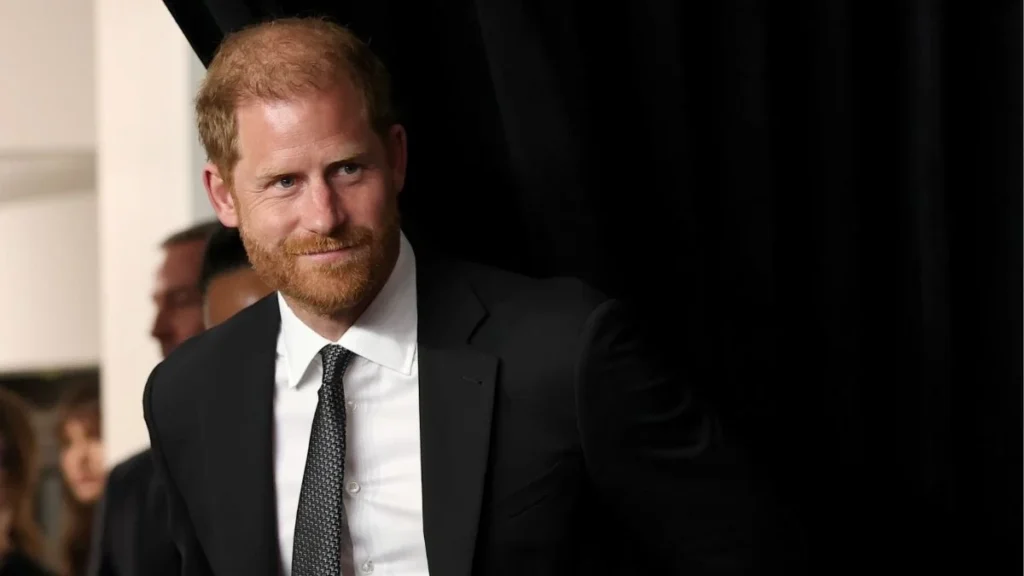

The ongoing legal and personal battle regarding Prince Harry’s security arrangements in the United Kingdom has reached a new point of contention as the Duke of Sussex prepares for a scheduled return to his home country in July. This upcoming visit, intended to facilitate both public engagements and private family time, remains clouded by a high-stakes disagreement between the Prince’s legal team and the UK Home Office. While the Duke has consistently maintained that the withdrawal of his automatic police protection makes the UK "too dangerous" for his wife, Meghan Markle, and their children, Prince Archie and Princess Lilibet, new reports suggest that veteran security figures within the royal orbit view these claims with significant skepticism.
According to a recent report by the Express, the discourse surrounding the Duke’s safety has been further complicated by insights from a former royal security insider. During a broadcast on TalkTV, host Mark Dolan cited a source described as someone "intimately involved in royal security for decades." This insider dismissed the Duke’s public concerns regarding safety as "nonsense," suggesting instead that the ongoing row is rooted more in "palace politics" and personal optics than in actual physical threat levels. The source further characterized the legal challenge as an attempt by Prince Harry to "flex his muscles" within the institutional framework of the Royal Family, rather than a response to a verified intelligence gap.
The disagreement centers on the decision made by the Executive Committee for the Protection of Royalty and Public Figures (RAVEC) in early 2020. Following the Duke and Duchess of Sussex’s decision to step back as senior working royals—a move colloquially known as "Megxit"—RAVEC determined that Prince Harry would no longer receive the same level of taxpayer-funded police protection as the Sovereign and other high-ranking working members of the family. Instead, his security would be "bespoke," assessed on a case-by-case basis depending on the nature of his visits.
The Evolution of the Security Conflict and Legal Challenges
The conflict over security is not a new development but rather the culmination of a four-year legal odyssey. In February 2024, the High Court in London ruled against Prince Harry’s challenge to the government’s decision to downgrade his security. Sir Peter Lane, the presiding judge, found that the Home Office’s decision was not "irrational" or "procedurally unfair." Despite this setback, the Duke’s legal representatives have continued to seek leave to appeal, arguing that the reduction in security places his family at an unacceptable risk.
The Duke’s team has argued that his private security detail, which protects the family at their estate in Montecito, California, lacks the jurisdiction, intelligence access, and specialized training required to operate effectively on British soil. Specifically, private security firms do not have access to UK state intelligence regarding terror threats or the authority to carry firearms in public spaces—powers reserved exclusively for the Metropolitan Police’s Specialist Protection Command.
However, the "insider" perspective offered in recent reports challenges this narrative. The source argued that Prince Harry remains one of the most protected individuals in the world by virtue of his birth and that the existing "liaison" between his private team and the UK police ensures a safe environment. The insider suggested that the Duke’s insistence on official police protection is a matter of status and a desire to retain the "trappings" of his former royal life.
Chronology of Key Events in the Security Dispute
To understand the gravity of the July trip, it is essential to examine the timeline of Prince Harry’s security status since his departure from the United Kingdom:
- January 2020: Prince Harry and Meghan Markle announce their intention to step back as "senior" members of the Royal Family. At the "Sandringham Summit," the transition terms are discussed.
- February 2020: RAVEC informs the Duke that he will no longer receive the automatic "full-time" police protection afforded to working royals.
- April 2020: The Sussexes officially move to the United States. They briefly reside in Canada before settling in California.
- September 2021: Prince Harry files a claim for a judicial review of the RAVEC decision, offering to personally pay for police protection—an offer that was ultimately rejected by the courts as it would set a precedent where police "services" could be bought by the wealthy.
- July 2022: The High Court grants permission for part of the Duke’s legal challenge to proceed.
- May 2023: A separate legal bid by the Duke to allow him to pay for his own police protection is rejected by the High Court.
- February 2024: The High Court rules that the Home Office’s decision to provide "bespoke" security was lawful.
- July 2024: The Duke is scheduled to visit the UK for various engagements, with the attendance of his family still pending based on security assurances.
The Principle of Risk: Person vs. Place
At the heart of the Sussexes’ argument is a specific philosophy regarding protection. A spokesperson for Prince Harry recently clarified that the issue has never been solely about "safe accommodation" or where the Duke stays during his visit. "Safe accommodation is only one element of an effective security plan," the statement noted. The spokesperson emphasized that "risk follows the person, not the place," suggesting that the Duke’s high profile makes him a target regardless of whether he is staying at a royal residence or a private hotel.
This argument is intended to counter suggestions that the Duke would be safe if he simply stayed within the "iron ring" of a royal estate like Windsor or Sandringham. The Duke’s team maintains that his UK program includes "public and private engagements" that require movement across the country, necessitating a mobile and integrated security response that only the state can provide.
Conversely, the UK Government has remained firm. A spokesperson for the Home Office stated that the UK’s security system is "rigorous and proportionate." They argued that RAVEC’s "bespoke" approach allows for flexibility, ensuring that if a specific threat is identified, appropriate measures are taken, without committing taxpayer funds to a permanent detail for a non-working royal living abroad.
Broader Implications for the Royal Family and Public Perception
The security row is more than a legal technicality; it is a symptom of the wider rift between the Duke of Sussex and the "Firm." The perception of the Duke "flexing his muscles" highlights the tension between his desire for independence and his continued reliance on the structures of the British state. For many in the UK, the Duke’s demands are viewed through the lens of the "cost of living" crisis, where the idea of taxpayer-funded security for a multi-millionaire living in California is met with public resistance.
Furthermore, the dispute has significant implications for the future of the royal grandchildren. Prince Archie and Princess Lilibet have spent very little time in their father’s homeland. If the security impasse continues, it is unlikely that the children will develop a meaningful relationship with their grandfather, King Charles III, or their cousins. This geographical and emotional distance is exacerbated by the security concerns, which serve as a physical barrier to reconciliation.
From a palace perspective, the situation is delicate. The King is currently undergoing treatment for cancer, and the Princess of Wales is also recovering from her own health challenges. The institution is operating with a reduced number of working royals, and the ongoing legal noise from the California-based branch of the family is often seen as a distraction from the monarchy’s core duties.
Analysis of the Security Landscape
Expert analysis of the situation suggests that both sides are dug into their respective positions with little room for compromise. Security analysts point out that the UK is currently at a "substantial" terror threat level. For a high-profile figure like Prince Harry—who detailed his military service and engagements in his memoir Spare—the threat profile is undeniably higher than that of an average citizen.
However, the "bespoke" arrangement offered by the Home Office is the same model used for other high-profile visitors and former officials. The government’s refusal to grant Harry a "blanket" security status is rooted in the principle that public funds must be allocated based on official duty, not celebrity or lineage.
As July approaches, the focus will remain on whether a middle ground can be reached. If Meghan Markle and the children do not accompany the Duke, it will be seen as a definitive statement on their lack of trust in the UK’s ability to protect them. If they do attend, it may suggest that a private agreement or a higher level of "bespoke" protection was quietly arranged behind the scenes.
Ultimately, the row underscores the complex reality of Prince Harry’s new life. He remains a Prince of the Blood and a Counsellor of State, yet he exists outside the protective umbrella of the working monarchy. Until a permanent resolution is reached regarding his status in the UK, every return home will likely be characterized by legal maneuvers, security debates, and the ongoing scrutiny of whether his concerns are a matter of genuine safety or, as the insider suggested, a matter of palace politics.