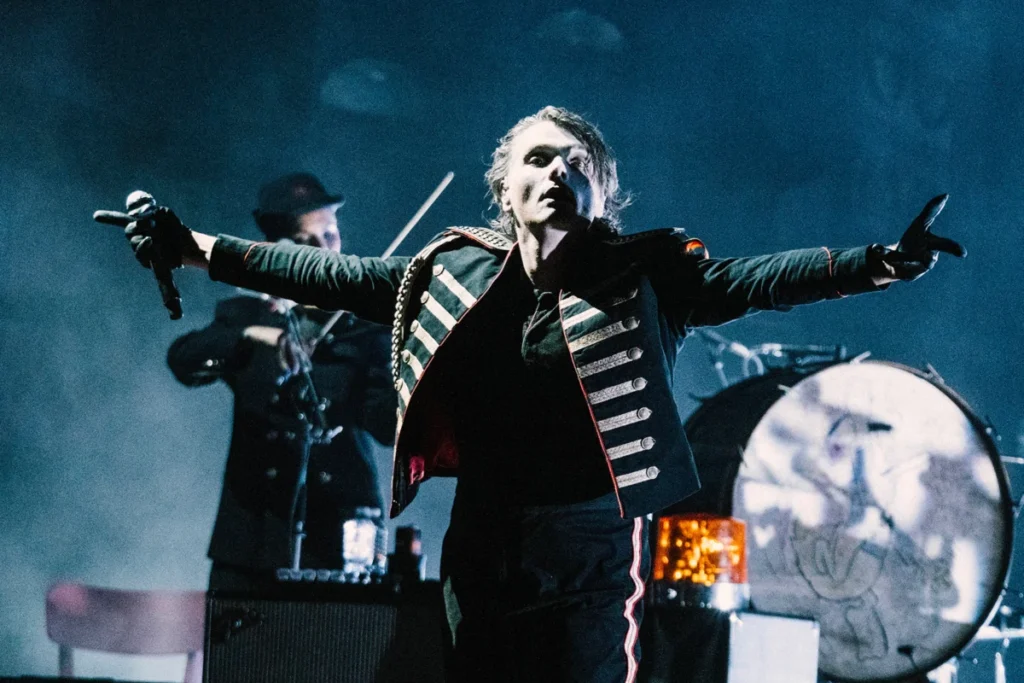

My Chemical Romance frontman Gerard Way has offered the most explicit indication to date that the influential alternative rock band is actively hoping to record and release a new studio album. Speaking directly to the audience during the closing night of their current North American tour at the Alamodome in San Antonio, Texas, Way reflected on the enduring connection between the group and its fanbase, framing a potential fifth studio album as a long-held aspiration rather than a finalized commercial project.
Should the band successfully enter the studio and complete a full-length release, it would mark their first major collection of new material since the November 2010 release of Danger Days: The True Lives of the Fabulous Killjoys. The announcement—or rather, the poignant revelation—came at the culmination of a massive celebratory run of concerts centered around the 20th anniversary of their seminal 2006 rock opera, The Black Parade. As My Chemical Romance continues to balance massive stadium tours with archival releases, Way’s comments have sent ripples through the international music community, sparking intense speculation over what a modernized iteration of the band’s theatrical sound might entail.
The Chronology of a Reunion and the Long Road to New Material
The trajectory of My Chemical Romance over the past decade and a half has been defined by dramatic structural shifts, sudden closures, and a triumphant, highly lucrative return to the global stage. Formed in Newark, New Jersey, in 2001 by Gerard Way, Ray Toro, and Matt Pelissier—later joined by Frank Iero and Mikey Way—the group evolved from the post-hardcore underground into one of the definitive rock acts of the 2000s. After issuing four studio albums—I Brought You My Bullets, You Brought Me Your Love (2002), Three Cheers for Sweet Revenge (2004), The Black Parade (2006), and Danger Days: The True Lives of the Fabulous Killjoys (2010)—the band announced an amicable dissolution in March 2013, leaving millions of devoted followers stunned.
For nearly seven years, the members pursued disparate creative endeavors. Gerard Way launched a celebrated solo career with his 2014 album Hesitant Alien and found immense mainstream success as the author of the Eisner Award-winning comic book series The Umbrella Academy, which was subsequently adapted into a flagship Netflix television series. Guitarist Ray Toro released solo material, while Frank Iero fronted several aggressive punk projects, including Frank Iero and the Patience.
The silence was broken on October 31, 2019, when My Chemical Romance blindsided the music world by announcing a surprise reunion show in Los Angeles, titled Return. The December 20, 2019, concert at the Shrine Expo Hall sold out within minutes, grossing over $1.5 million and instantly confirming that the band’s cultural footprint had not diminished during their absence. A sprawling global reunion tour was hastily mapped out, though the advent of the COVID-19 pandemic forced multiple consecutive postponements, pushing the bulk of their international itinerary into 2022 and 2023.
Despite returning to the road to perform for hundreds of thousands of ecstatic ticket-holders, the group remained tight-lipped regarding new recorded output. They issued only one standalone single during this initial phase, the brooding and critically acclaimed 2022 track “The Foundations of Decay.” Clocking in at over six minutes, the song was widely interpreted by music critics as a bridge between their early hardcore roots and the expansive, cinematic textures of their later work. Yet, no album announcement followed, and the band pivoted seamlessly into mounting massive retrospective tours, most notably the stadium-filling celebration of The Black Parade.
Inside the San Antonio Tour Finale: Gerard Way’s Statement
The setting for Way’s revealing remarks was the Alamodome in San Antonio on Saturday, September 12, serving as the dramatic capstone to the latest leg of their touring cycle. Addressing the thousands of fans packed into the arena—many clad in the signature black marching band uniforms reminiscent of their 2006 aesthetic—Way paused between songs to offer a rare, unfiltered look into the internal mindset of the group.

“Just know that, like, we’ve kind of really always wanted to make another record, so we hope that life allows us to do that,” Way told the receptive audience from the stage. He quickly pivoted to express profound gratitude for the collective loyalty that has sustained the group’s legacy across decades of shifting musical landscapes. “Cause you guys, honestly, you guys kept us alive so long. You guys deserve another record. I don’t know when it’ll be. But it’ll be awesome.”
The nuance of the statement is critical for industry observers and fans alike. Way stopped short of offering an official press release, failing to provide a timeline, a tentative title, or confirmation that recording sessions have officially commenced. Instead, his phrasing—“we hope that life allows us to do that”—highlights the practical, logistical, and personal hurdles that face a veteran rock band whose members are balancing family commitments, external creative projects, and the grueling physical demands of global stadium routing. Nevertheless, it represents the clearest public acknowledgment that a fifth studio album is an active aspiration rather than a closed chapter.
The Legacy and Reissue of The Black Parade
Way’s remarks arrived against the backdrop of an elaborate, multi-layered promotional campaign celebrating the enduring commercial and artistic dominance of The Black Parade. Just days prior to the San Antonio concert, Warner Records subsidiary Reprise Records announced an expansive, definitive 20th-anniversary reissue of the landmark album, scheduled for a commercial release on October 23.
Originally released on October 23, 2006, The Black Parade stands as the undisputed commercial and cultural zenith of My Chemical Romance’s career. Produced by Rob Cavallo alongside the band, the concept album follows the story of a dying protagonist known only as "The Patient," exploring themes of mortality, regret, and redemption through a lens heavily influenced by classic rock, Queen, and theatrical punk. The record debuted at No. 2 on the Billboard 200 chart, ultimately earning a four-times platinum certification from the Recording Industry Association of America (RIAA). Its lead single, "Welcome to the Black Parade," became a ubiquitous cultural touchstone, peaking at No. 9 on the Billboard Hot 100 and securing a five-times platinum certification, while its iconic opening notes—a single, stark piano G note—remain instantly recognizable to an entire generation of alternative music enthusiasts.
The forthcoming anniversary box set is designed to appeal to both casual listeners and dedicated collectors. It pairs the original remastered album with six curated bonus tracks. Among these are three rare live recordings captured during an intimate, highly sought-after 2007 performance at a 200-capacity club in Hoboken, New Jersey, offering a stark contrast to the massive stadiums the band routinely sells out today. Crucially, the package includes the long-rumored, previously unreleased B-side "Someone Out There Loves You," a track that has floated through fan forums and soundcheck bootlegs for nearly two decades. The physical and digital packages are further enriched by three newly commissioned pieces of artwork from original cover artist James Jean, reinforcing the meticulous attention to visual and sonic branding that has always characterized the band.
Broader Implications and Market Impact
The prospect of new music from My Chemical Romance carries significant implications for the contemporary rock landscape. In an era where hip-hop, pop, and electronic music dominate the upper echelons of the mainstream charts, rock music has increasingly relied on heritage acts and legacy tours to sustain its commercial viability. However, My Chemical Romance occupies a unique space: unlike many of their 2000s emo-pop-punk contemporaries who have faded into nostalgia acts, MCR has maintained a fiercely devoted, cross-generational demographic that routinely sells out massive venues worldwide within minutes of tickets going on sale.
The commercial performance of their current touring model—including the recently announced global stadium run billed as The Black Parade 2026, featuring extensive dates across North America, the United Kingdom, and Europe—demonstrates that the band’s market value is arguably higher now than it was at their commercial peak in the late 2000s. Introducing a new studio album into this ecosystem would not merely be an artistic exercise; it would represent a major commercial event for Warner Music Group and a pivotal test of whether a legacy alternative rock act can successfully translate modern production values and mature lyrical themes into contemporary chart success.
Music industry analysts note that the modern consumption model heavily favors catalog retention and anniversary milestones, strategies that My Chemical Romance is currently executing to perfection. Yet, the enduring demand for new creative output from foundational rock groups remains robust. If Gerard Way and his bandmates are ultimately granted the space and circumstances to follow through on their stated hopes of entering the studio, the resulting record would break a fifteen-year silence, closing one of the most extended hiatuses in modern rock history and setting the stage for what would undoubtedly be one of the most scrutinized and anticipated album releases of the decade.