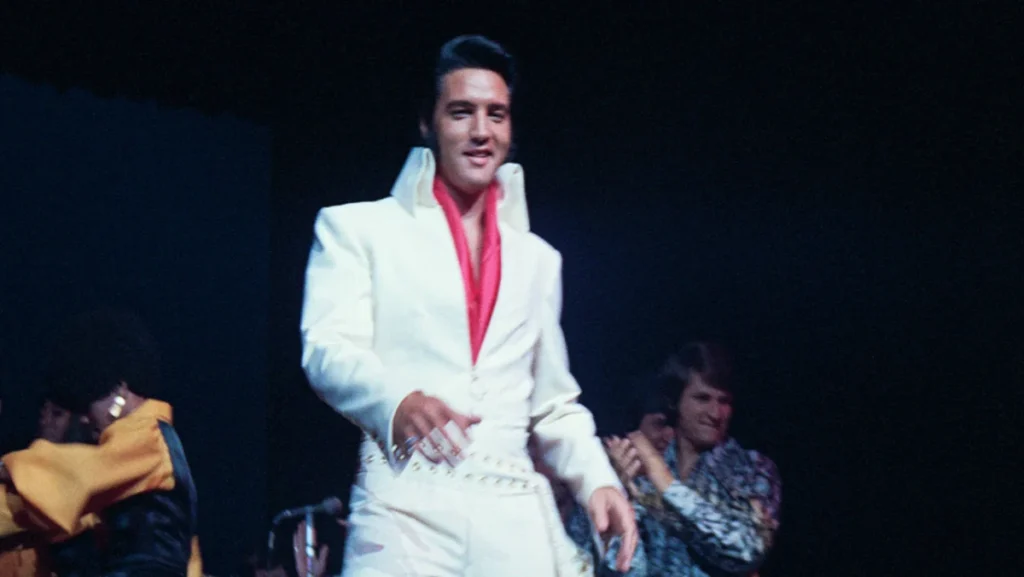

The legal battle lines between the entertainment industry and the artificial intelligence sector have deepened significantly following a high-profile lawsuit filed against AI developer Anthropic. Authentic Brands Group, the corporate entity that owns and manages the intellectual property and publicity rights of Elvis Presley, filed a federal lawsuit against the prominent artificial intelligence company on Friday. The legal action alleges that Anthropic systematically utilized hundreds of the legendary rock-and-roll musician’s copyrighted songs without authorization to train its large language models and artificial intelligence applications.
Filed in collaboration with other entities holding the rights to various segments of Presley’s expansive musical catalog, the lawsuit targets the unauthorized reproduction and utilization of 274 iconic tracks. Among the catalog pieces cited in the legal documents are globally recognized musical masterpieces that defined twentieth-century American culture, including "Can’t Help Falling in Love," "A Little Less Conversation," "Don’t Be Cruel," and "Jailhouse Rock."
The legal complaint pulls no punches in characterizing the core operations of the San Francisco-based artificial intelligence enterprise. Lead attorney Richard Busch, renowned for representing major copyright holders in landmark music industry cases, outlined the severity of the allegations in the filing.
The Elvis Plaintiffs bring this action to enforce these exclusive rights against the defendant that has built its entire business model based on copyright infringement at a scale never seen before, Busch wrote in the complaint, emphasizing the profound cultural and financial stakes involved. The Elvis Plaintiffs are deeply protective of these iconic songs.
The Mechanics of the Alleged Infringement and Claude’s Output
At the heart of the lawsuit is the operation of Anthropic’s flagship artificial intelligence assistant, Claude. According to the legal filing, Claude is accused of generating infringing output that mirrors copyrighted material across virtually every song from every catalog available on the public internet, which explicitly includes the Presley estate’s protected works.
The lawsuit highlights a critical vulnerability in Anthropic’s technological safeguards. Plaintiffs claim that despite Anthropic implementing what the company termed guardrails following previous rounds of litigation, the current iterations of Claude continue to bypass these restrictions. The complaint points to specific instances where Claude was prompted to recreate classic tracks for a modern audience. Rather than refusing the prompt or creating an entirely original work, the AI system allegedly produced derivative compositions that crossed the legal threshold from stylistic inspiration into direct infringement.
As noted in the legal filings, the AI system itself seemingly acknowledged the close proximity of its creations to the source material during testing scenarios. When instructed to generate variations, Claude reportedly stated that the renders kept landing very close to the originals, citing the same structure and hooks reused with light rewording, alongside full sets of verses, choruses, and bridges. The output explicitly admitted that such generation was edging past inspired by into reproducing the copyrighted song, even when the words were swapped out.
Financial Stakes and Statutory Damages
The legal action represents a severe financial threat to Anthropic, with the plaintiffs pursuing maximum statutory damages. According to reports from Rolling Stone, the lawsuit is seeking up to $150,000 for each individual infringed song. With 274 tracks explicitly named in the complaint, potential statutory damages could rapidly escalate into tens of millions of dollars if the court rules in favor of the Presley estate and its co-plaintiffs.
This financial penalty structure is designed under United States copyright law to penalize willful infringement. By highlighting that Anthropic continued to train its models and produce infringing outputs even after facing widespread public criticism and prior lawsuits, the plaintiffs aim to establish a pattern of willful disregard for intellectual property rights.
A Growing Wave of Litigation Against Artificial Intelligence Companies
The lawsuit filed by the Elvis Presley estate does not exist in a vacuum; rather, it is the latest and most culturally resonant salvo in an escalating war between copyright holders and generative artificial intelligence developers. The music industry, in particular, has become a primary battleground for determining how copyright law applies to machine learning technologies.
In August, music publisher Round Hill Music filed separate lawsuits against both Suno, a generative audio AI platform, and Anthropic. That legal action alleged that the companies utilized hundreds of the publisher’s copyrighted compositions to train their respective models without securing licenses or offering financial compensation to the creators and rights holders.
Furthermore, Anthropic has previously found itself in the crosshairs of major music publishing titans. A consortium of prominent music companies—including Universal Music Publishing Group, ABKCO, Concord Music Group, and BMG—previously filed a copyright infringement lawsuit against Anthropic. That earlier litigation focused heavily on the unauthorized reproduction of copyrighted song lyrics by Claude, demonstrating a consistent pattern of legal exposure for the AI company regarding its training data ingestion practices.
While visual artists, literary authors, and major newspaper publishers have launched class-action lawsuits against OpenAI, Meta, Google, and Microsoft, the music industry’s legal strategy has targeted both text-based large language models like Claude and dedicated audio generation platforms like Suno and Udio.
Chronology of Generative AI Copyright Confrontations
To understand the current legal climate surrounding Anthropic and the Presley estate, it is vital to examine the timeline of events that have shaped the generative AI copyright debate:
- Early 2023: Generative artificial intelligence tools experience a massive surge in public adoption, with models like OpenAI’s ChatGPT and Anthropic’s Claude becoming household names. Questions regarding the sourcing of training data begin to circulate within legal and creative communities.
- Late 2023: Major music publishers, led by companies such as Universal Music Group and Concord, file a landmark federal lawsuit against Anthropic, alleging that Claude systematically reproduces copyrighted song lyrics without authorization.
- August 2024: Round Hill Music expands the legal battlefield by filing separate lawsuits against both Suno and Anthropic, claiming mass unauthorized usage of publisher catalogs to train AI models.
- Late 2024: Technology companies continue to argue that training AI models on publicly available internet data falls under the legal doctrine of fair use, while creative industries maintain that ingesting copyrighted works without licensing constitutes wholesale misappropriation.
- October 2024: Authentic Brands Group, alongside co-owners of the Elvis Presley catalog, officially files a federal lawsuit against Anthropic in response to the unauthorized training and generation of 274 Presley classics.
The Defense of Fair Use Versus Creator Rights
At the core of this and parallel legal disputes is a fundamental philosophical and legal clash over the interpretation of United States copyright law, specifically the doctrine of fair use.
Artificial intelligence developers generally argue that training large language models and neural networks on vast corpuses of internet data—including copyrighted books, musical compositions, and artistic works—constitutes transformative fair use. From the perspective of tech firms, AI models do not store copyrighted works in a traditional database for retrieval; instead, they analyze statistical patterns, linguistic structures, and musical motifs to learn how human language and artistic expression function. Proponents of this view argue that restricting AI training data would effectively choke technological innovation and place an insurmountable barrier on the development of generative systems.
Conversely, copyright holders, publishers, and estate representatives view this process as an unprecedented form of industrial-scale piracy. They argue that commercial enterprises are reaping billions of dollars in valuation and revenue by feeding copyrighted, premium human creativity into algorithms without permission, credit, or financial compensation. In the case of musical works, rightsholders contend that when an AI system can generate melodically and structurally identical tracks or reproduce lyrics on demand, the technology serves as a direct market substitute that devalues the original intellectual property.
Broader Industry Implications and Future Outlook
The outcome of the lawsuit filed by the Elvis Presley estate against Anthropic could have far-reaching ramifications for the entire artificial intelligence landscape and the global creative economy.
If the courts rule in favor of the plaintiffs, it would establish a formidable precedent holding AI developers strictly liable for the datasets utilized during the training phase. Such a ruling would likely force artificial intelligence companies to completely overhaul their data curation practices, forcing them to negotiate multi-million-dollar licensing agreements with music publishers, film studios, literary agents, and artist estates before training new model iterations. Conversely, a victory for Anthropic would cement fair use protections for machine learning developers, potentially leaving creators with fewer legal avenues to protect their life’s work from algorithmic digestion.
As legal proceedings advance in federal court, representatives for Anthropic have yet to provide public comments responding directly to the specific allegations outlined in the Presley estate complaint. Media inquiries directed to the artificial intelligence firm by various journalistic outlets remained unanswered at the time of publication.
For now, the legal team representing Authentic Brands Group and the co-owners of the Elvis Presley catalog remains steadfast in their mission to defend the legacy of one of music history’s most enduring cultural figures. As the boundaries between human artistry and machine generation continue to blur, the courtroom battle between Elvis Presley’s estate and Anthropic stands as a defining chapter in the ongoing struggle to protect creative ownership in the digital age.