
New York Fashion Week (NYFW) has long been synonymous with theatrical statements, avant-garde silhouettes, and an undeniable push for maximum visibility among attendees and designers alike. However, the Spring/Summer collections continued a growing counter-trend toward refined subtlety, a movement personified by actress and activist Pamela Anderson during her recent appearance at the Calvin Klein Collection SS27 presentation. Eschewing the neon hues and complex structural garments frequently favored by front-row attendees seeking viral moments, Anderson opted for a masterclass in minimalism, stepping out in a clean, low-cut ivory dress that immediately drew acclaim from style critics and industry veterans.
The choice not only cemented Anderson’s ongoing style renaissance—characterized by pared-back aesthetics, natural beauty choices, and sophisticated silhouettes—but also highlighted a strategic alignment between the enduring Hollywood icon and Calvin Klein, a brand historically rooted in sleek, unpretentious American modernism. As fashion weeks globally grapple with a fatigue surrounding hyper-stylized influencer culture, Anderson’s presence at the showcase underscored a broader industry shift toward quiet luxury and timeless design integrity.
Anatomy of an Editorial Masterpiece: The Calvin Klein Ensemble
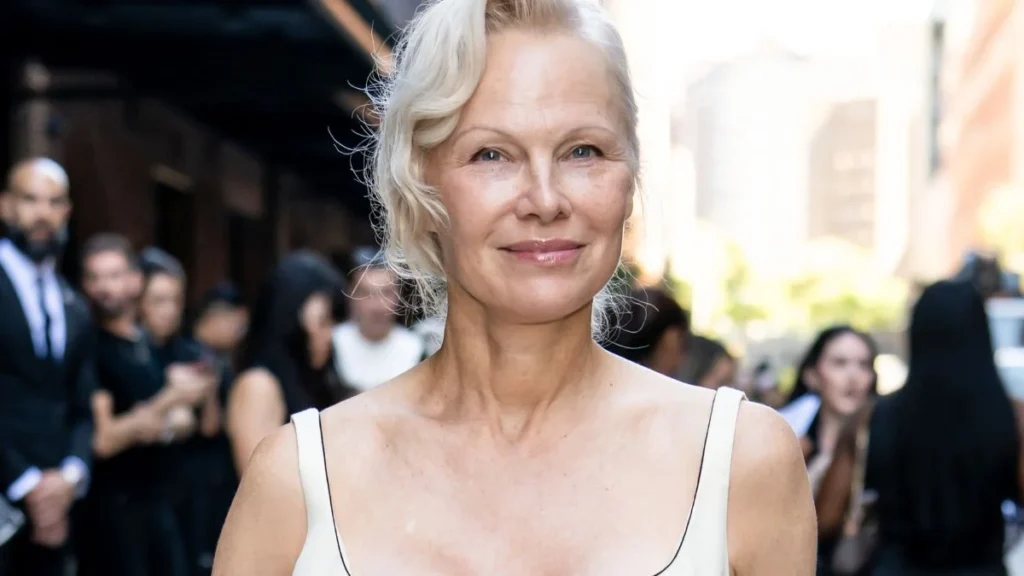
The centerpiece of Anderson’s NYFW appearance was a sleeveless, floor-length gown rendered in a soft, monochromatic ivory tone. The garment’s architectural integrity relied on a sharp, square neckline that dipped gracefully into a low-cut profile across the chest, maintaining a delicate balance between classic modesty and contemporary sensuality. The dress skimmed her frame in a straight, uncompromising column-like silhouette, utilizing thin straps and a completely unembellished finish that leaned fully into Calvin Klein’s foundational design ethos.
Rather than relying on heavy embroidery, beadwork, or complex draping, the dress derived its visual impact from precision tailoring and fabric quality. Anderson paired the floor-length piece with stark black accessories, choosing pointed-toe pumps and a matching structured black clutch. This intentional color-blocking created a crisp, graphic contrast against the otherwise all-ivory ensemble. The stark dichotomy of black and ivory lent the outfit a polished, editorial feel that commanded attention without resorting to aggressive styling or redundant accessories.
Complementing the minimalist attire, Anderson adhered strictly to her established beauty philosophy of recent years. Wearing her signature silver hair in soft, natural waves, she opted for minimal cosmetics, allowing her natural features to take center stage. The overall effect was one of understated glamour, prioritizing personal confidence and comfort over traditional, high-maintenance red-carpet expectations. Industry observers noted that the look successfully bridged the gap between modern editorial styling and effortless daytime elegance.
The Evolution of Anderson’s Partnership with Calvin Klein
This high-profile appearance at the Calvin Klein SS27 show marks the second major moment between Anderson and the historic fashion house in recent weeks, signaling the formalization of a mutually beneficial stylistic partnership. The collaboration first gained significant traction during the Venice Film Festival circuit, where Anderson stepped out in a custom glossy orange satin gown designed by the label for the prestigious amfAR Gala.
That appearance served as a stylistic turning point, demonstrating that Anderson’s current fashion trajectory extends beyond casual daywear and into high-fashion evening wear anchored by clean lines and vibrant, yet singular, color palettes. By returning to Calvin Klein so soon after her Venice triumph, Anderson has positioned herself as a modern muse for the brand, embodying the effortless sophistication that Creative Directors and marketing executives strive to associate with contemporary American luxury labels.
The relationship also reflects a broader repositioning of heritage brands utilizing authentic cultural figures rather than traditional, transient social media influencers to drive brand narrative. Anderson’s historical cultural footprint, combined with her current cultural renaissance centered on authenticity and aging gracefully in the public eye, offers fashion houses a nuanced narrative depth that resonates across multiple consumer demographics.
Chronology of a Fashion Resurgence: Anderson’s 2026 Style Calendar
Anderson’s appearance at Calvin Klein is part of a meticulously curated and widely discussed fashion calendar that has dominated industry headlines throughout the year. Her stylistic pivot began in earnest in previous seasons, marked by a deliberate departure from the heavily made-up, bombshell persona of her earlier career in favor of bare-faced appearances at major European and American fashion weeks.
During the ongoing New York Fashion Week schedule, Anderson has consistently captured the attention of street-style photographers and fashion editors alike. Prior to her Calvin Klein engagement, she turned heads at the Tory Burch Fall/Winter 2026 show, where her front-row presence was met with widespread critical praise for its understated sophistication.
Looking slightly backward into the festival circuit calendar, Anderson’s late summer and early autumn appearances set the stage for her current dominance. Most notably, she closed out a triumphant run at the Venice Film Festival by arriving at her "Place to Be" photocall in a striking, plunging sheer Monse dress. Each of these calculated public appearances has contributed to a cohesive narrative of reinvention, wherein Anderson utilizes fashion as a medium for self-expression rather than conformity. Her deliberate choices across various houses—ranging from the bohemian-meets-polished aesthetic of Tory Burch to the sleek deconstruction of Monse and the pure minimalism of Calvin Klein—demonstrate a rare versatility that few contemporary style icons achieve.
Industry Context: The Shift Toward Quiet Luxury at NYFW
To fully understand the significance of Anderson’s Calvin Klein look, one must examine the broader economic and cultural climate surrounding New York Fashion Week. Over the past several seasons, the fashion industry has experienced a distinct macroeconomic cool-down regarding overt displays of wealth and logomania. Consumers and designers alike have pivoted toward "quiet luxury"—a design philosophy prioritizing longevity, superior materials, precise tailoring, and a notable absence of branding.
Calvin Klein, as a brand that pioneered American minimalism under its namesake founder, occupies a unique position to capitalize on this consumer sentiment. However, maintaining relevance in a market saturated by fast fashion and transient digital trends requires strategic cultural positioning. By seating a figure like Pamela Anderson—who has become a global symbol of authenticity, uncompromised self-possession, and the rejection of age-related industry norms—in the front row wearing their premier designs, the brand successfully bridges its historical identity with contemporary cultural conversations.
Fashion economists and trend forecasters note that celebrity partnerships in the modern era must feel authentic to gain traction among discerning consumers. Anderson’s transition away from heavy styling mirrors the exact consumer shift toward less contrived, more wearable garments. Consequently, her endorsement of the Calvin Klein SS27 collection carries significant commercial implications, validating the brand’s return to its core DNA while signaling to retail buyers that minimalist, clean-lined eveningwear and separates will remain dominant commercial drivers for the upcoming retail seasons.
Official Responses and Critical Reception
While direct corporate statements from Calvin Klein executives regarding exclusive muse contracts are often kept proprietary until official campaign rollouts, industry insiders and fashion critics have been vocal in their assessment of the pairing. Major style publications unanimously lauded the look, highlighting Anderson’s ability to command a room without relying on the sensory overload typical of modern fashion shows.
Leading fashion critics emphasized that Anderson’s choice to wear an unembellished ivory column dress demonstrated a profound understanding of modern red-carpet and front-row dynamics. In an environment where attendees frequently attempt to outdo one another through eccentric proportions or shocking materials, Anderson’s restraint functioned as the ultimate luxury statement. Social media sentiment analysis following the event similarly reflected overwhelming positivity, with user engagement spiking around the terms "timeless," "effortless," and "iconic."
Furthermore, beauty industry analysts quickly seized upon Anderson’s continued commitment to minimal makeup. Dermatologists, beauty editors, and cultural commentators praised her for dismantling lingering industry standards regarding aging and cosmetic enhancement. By embracing her natural skin texture and silver hair at high-profile international events, Anderson has transformed her personal aesthetic choices into a broader cultural dialogue about female autonomy in the public eye.
Broader Impact and Implications for the Future of Celebrity Style
The reverberations of Pamela Anderson’s Calvin Klein appearance extend well beyond the immediate scope of New York Fashion Week. As the industry looks ahead to the remainder of the Spring/Summer production and retail cycles, several key takeaways emerge regarding the intersection of celebrity influence and high-end fashion branding.
First, the resurgence proves that legacy icons can successfully reposition themselves within contemporary fashion markets by aligning with brands whose core values match their personal evolution. Anderson’s partnership with Calvin Klein is not merely transactional; it is a symbiotic validation of shared aesthetic principles. The minimalist design language of the brand provides a visual vocabulary that allows Anderson’s mature, sophisticated persona to shine without distraction.
Second, the public’s enthusiastic reception of Anderson’s pared-back style signals a permanent evolution in consumer expectations. The era of the hyper-curated, heavily filtered celebrity appearance is steadily giving way to an appreciation for tactile authenticity. Consumers are increasingly drawn to public figures who project comfort in their own skin, a psychological shift that directly influences purchasing habits toward durable, versatile, and understated wardrobe staples.
Finally, Anderson’s busy fashion calendar—spanning New York, Venice, and European presentations—establishes her as a formidable force in contemporary style governance. Far from being a nostalgic legacy act, she has successfully reinvented herself as a living mood board for modern elegance. As brands continue to search for authentic ways to engage sophisticated consumer bases, the blueprint laid by Anderson and Calvin Klein during this fashion week season will likely serve as a gold standard for strategic, understated brand-celebrity partnerships in the years to come.