
The intersection of K-pop fandom culture, parasocial relationships, and the tightly managed public image of South Korean celebrities has once again become a flashpoint for intense public discussion. Kim Taeyeon, the renowned leader and vocalist of the legendary second-generation girl group Girls’ Generation, recently found herself at the center of a widespread online debate following a seemingly casual interaction with her fanbase. What began as a lighthearted exchange on a private messaging platform rapidly escalated into a national and international discourse concerning celebrity privacy, heteronormative expectations within the entertainment industry, and the public’s persistent fascination with the private lives of public figures.

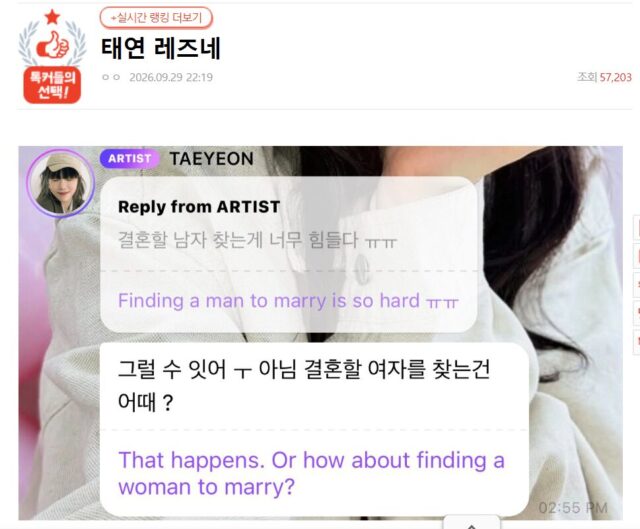
The controversy materialized after Taeyeon posted a series of remarks directed at her supporters, casually suggesting that a fan consider marrying a woman. In the heavily guarded ecosystem of Korean pop music, where idols traditionally maintain an ambiguous romantic availability to sustain fan engagement, remarks that step outside conventional relationship paradigms frequently attract outsized attention. Within hours of the message circulating across community boards and social media networks, a prominent forum post appeared on the popular South Korean web portal Nate Pann, bearing the direct and provocative title, “Taeyeon is a lesbian.” The thread quickly amassed tens of thousands of views, drawing hundreds of comments from netizens who weighed in on the implications of Taeyeon’s statement, her past public conduct, and the broader boundaries of privacy afforded to veteran female performers in South Korea.
Background and Context of the Digital Exchange
To understand the weight of Taeyeon’s recent remarks, one must examine the unique communication channels utilized by K-pop artists today. Platforms like Bubble and Weverse allow idols to send direct messages to fans who subscribe to their services. These interactions are often framed as intimate, text-message-style conversations, fostering a heightened sense of closeness between the star and the consumer. However, this illusion of privacy frequently backfires when messages are extracted, translated, and broadcast across public forums where cultural and linguistic context can be lost or heavily scrutinized.

Taeyeon, who debuted under SM Entertainment in 2007 as a member of Girls’ Generation and has since forged a highly successful solo career, is well known for her candid, unfiltered communication style. Unlike rookie idols who operate under strict communication guidelines, veteran artists with decades of industry tenure occasionally display greater autonomy in their interactions with fans. Her off-the-cuff suggestion regarding marriage broke conventional communication tropes, prompting fans and casual observers alike to analyze the underlying intent behind her words. While many interpreted the remark as a playful, supportive joke meant to challenge traditional marital norms in a rapidly modernizing society, others seized upon it as a veiled disclosure or a deliberate commentary on her personal worldview.
The Chronology of the Online Controversy
The timeline of the event unfolded rapidly over a 48-hour period, moving from an exclusive fan platform to mainstream discussion boards:

- Initial Transmission: Taeyeon shares a direct message with subscribers on her designated fan communication platform, casually advising a supporter to find a woman to marry.
- Viral Spread: Screenshots of the message are captured and shared across X (formerly Twitter), Instagram, and various K-pop fan communities, quickly going viral as supporters debate the phrasing and tone.
- Mainstream Forum Escalation: A user on Nate Pann publishes a thread titled “Taeyeon is a lesbian,” which attracts over 50,000 views within its first few hours online.
- Public Division: Netizens and K-pop commentators divide into distinct camps, debating whether fans are overinterpreting a casual comment or if the idol is subtly signaling support for LGBTQ+ visibility.
- Wider Industry Discussion: The discourse expands into a larger conversation regarding the boundaries of parasocial relationships, the policing of female idols’ personal lives, and societal shifts in South Korea concerning gender and sexuality.
Public Reaction and Netizen Polarization
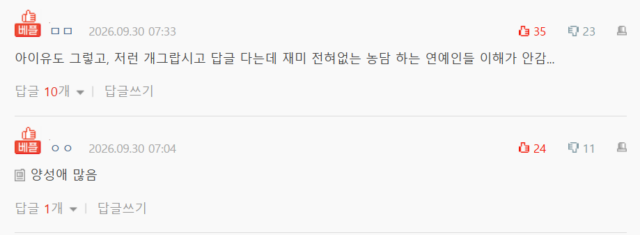
The comment sections of the viral Nate Pann thread and subsequent social media discussions reflected a deep ideological split within the consumer base. One faction of commenters expressed frustration over the tendency of modern fanbases to hyper-analyze every casual remark made by an idol, arguing that such intense speculation places an unfair burden on public figures. These users emphasized that celebrities should be permitted to speak freely—whether through humor, advice, or casual observation—without having their words cataloged as definitive statements on their private sexual orientation or personal relationships.
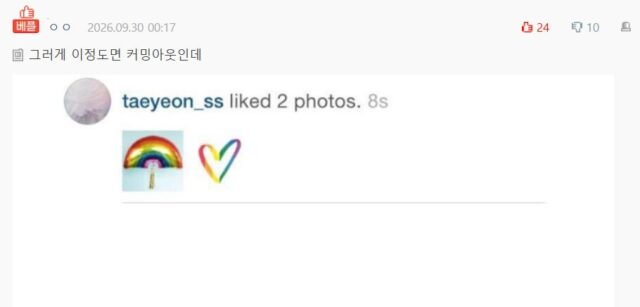
Conversely, another segment of the online community viewed Taeyeon’s comments through the lens of progressive social commentary. In South Korea, where LGBTQ+ rights remain a sensitive and largely unrepresented topic in mainstream entertainment, any perceived endorsement or normalization of same-sex relationships by a top-tier celebrity is treated as a significant cultural moment. Supporters within this camp argued that whether the comment was literal, rhetorical, or purely humorous, it served to challenge deeply entrenched heteronormative expectations. Additionally, some netizens began referencing past interviews, fashion choices, and behavioral patterns from throughout Taeyeon’s seventeen-year career, attempting to validate various assumptions about her identity—a practice that privacy advocates and media analysts frequently criticize as an invasion of personal boundaries.
Industry Implications and Societal Context
The debate surrounding Taeyeon’s message highlights a broader tension within the South Korean entertainment landscape. As K-pop transitions into an increasingly globalized market, international fans and domestic audiences often project differing cultural values onto local artists. International fandoms frequently advocate for progressive visibility and the public expression of inclusive values, while domestic public opinion can remain conservative regarding matters of romance and personal identity for public figures.
For a veteran artist of Taeyeon’s stature, navigating these conflicting expectations is a delicate balancing act. Having weathered multiple public scrutiny cycles over her long career—including past high-profile relationship disclosures managed under the intense microscope of the Korean tabloid press—she occupies a unique position of relative security within the industry. Unlike younger idols who face immediate backlash and agency intervention for minor social missteps, established performers possess the cultural capital to weather controversies of this nature. Nevertheless, the speed with which a casual remark can transform into a national debate on sexuality underscores the lingering pressures faced by female entertainers, whose personal autonomy is frequently subjected to public debate.
Fact-Based Analysis of the Discourse
From a journalistic and media-analysis perspective, the incident demonstrates the power of confirmation bias within digital fan communities. When a cultural icon with a massive following makes an ambiguous statement, the resulting discourse rarely focuses on objective reality; instead, it becomes a mirror reflecting the desires, projections, and cultural anxieties of the audience.
There has been no official statement from Taeyeon, SM Entertainment, or any affiliated representatives addressing the speculation surrounding her sexuality, nor is any such statement expected. In the K-pop industry, personal commentary regarding an artist’s private life or sexual orientation is rarely addressed through formal corporate channels unless it directly impacts legal or contractual obligations. Consequently, the debate remains entirely driven by consumer interpretation and online speculation.
Ultimately, the firestorm sparked by Taeyeon’s messages transcends gossip. It serves as a case study in how digital communication platforms amplify minor interactions into major cultural touchstones. As long as top-tier idols maintain direct lines of communication with millions of dedicated followers, the delicate boundary between a casual remark and a public controversy will remain razor-thin, leaving artists to navigate a landscape where every word is permanently recorded, translated, and contested.