

A resurfaced interview from 2014 featuring actress Anna Kendrick has drawn renewed attention to pop superstar Katy Perry, coming at a sensitive time as Perry faces an ongoing investigation by Australian police following sexual assault allegations made by model and DJ Ruby Rose. The clip, from Kendrick’s appearance on Conan O’Brien, details a surprising interaction with Perry at the Grammy Awards that year, casting a new light on past celebrity behaviors in the context of contemporary discussions around consent and power dynamics in Hollywood.
Background of the Ruby Rose Allegations
The recent re-examination of Katy Perry’s past conduct stems from serious allegations made by Ruby Rose. According to reports, Rose accused Perry of sexual assault at a nightclub in Melbourne, Australia, in 2010. Rose, known for her roles in Orange Is the New Black and Batwoman, reportedly filed a police report with Australian authorities this week, prompting an official investigation into the decade-old incident. While specific details of Rose’s allegations have not been extensively publicized beyond the initial reports, the claim centers on an alleged non-consensual physical encounter. Katy Perry has vehemently denied these accusations, though her specific statements regarding the denial have not been widely detailed beyond initial media reports. The investigation by Australian police is currently active, meaning authorities are gathering evidence and conducting interviews to ascertain the facts surrounding the allegations. Such investigations can be lengthy and complex, often involving witness statements, forensic analysis if applicable, and a thorough review of the circumstances surrounding the alleged event. The legal system in Australia, like many others, treats allegations of sexual assault with grave seriousness, and the process is designed to ensure due diligence for both accuser and accused.
The 2014 Conan O’Brien Interview: A Closer Look
The interview in question dates back to March 2014, when Anna Kendrick, then promoting her film projects, appeared on Conan. The segment initially focused on Kendrick’s star-struck encounter with Beyoncé at the 56th Annual Grammy Awards, which had taken place a month prior, in February 2014. The Grammys, a pinnacle event in the music industry, is renowned for its high-profile attendees, elaborate red carpet fashion, and vibrant after-parties. Kendrick, a celebrated actress known for her roles in Pitch Perfect and Up in the Air, was a rising star at the time, attending a significant industry event where such celebrity interactions are commonplace.
During the conversation with Conan O’Brien, Kendrick spontaneously shifted topics, leading to an "unplanned admission" about Katy Perry. With a laugh, Kendrick recounted: “Katy Perry finger-banged my cleavage. It was a weird night.” The comment visibly surprised O’Brien, who pressed for more details. Kendrick elaborated on Perry’s demeanor, stating, "She’s very mature." When O’Brien questioned if Perry "just does that," Kendrick responded with a remark that has particularly resonated in the current climate: “My dress, I was kinda asking for it. If nobody had done it, I would’ve been a little sad.” This particular statement, delivered as a joke in 2014, has been singled out for scrutiny today.
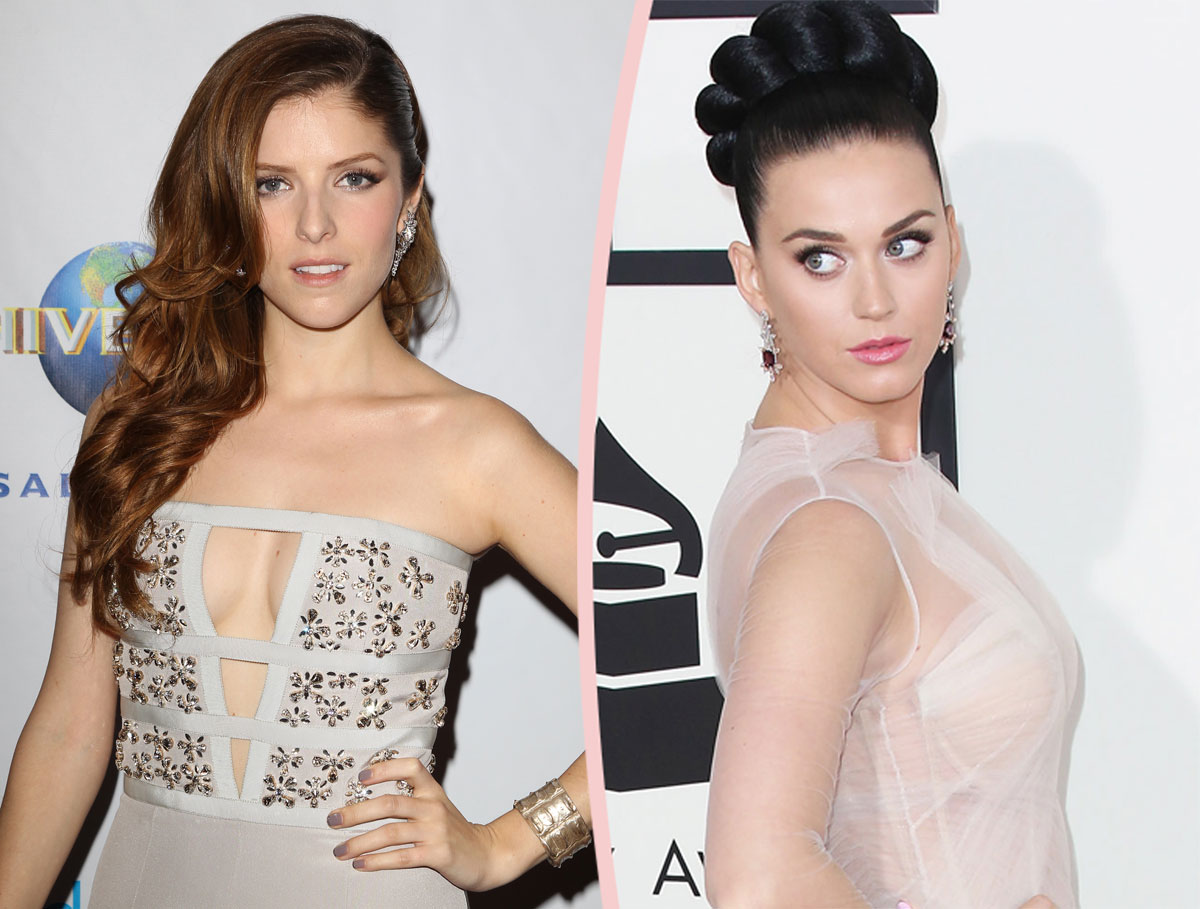
Kendrick described the dress she wore at the Grammys as "gorgeous," a low-cut design that certainly drew attention. However, as public discourse has evolved, the notion that a person’s attire constitutes an "invitation" for unwanted physical contact is now widely rejected. O’Brien further probed, asking Kendrick to "paint the scene" of the interaction, inquiring if Perry simply approached her and made the gesture. Kendrick confirmed, adding, "I have met her before, and she’s like… she’s aggressive. I like it." This description of Perry as "aggressive" in her physical approach, combined with the nature of the act itself, has contributed to the current discussions surrounding the resurfaced clip. At the time, the exchange was largely perceived as a lighthearted, perhaps slightly risqué, anecdote shared between celebrities. Kendrick’s laughter and apparent comfort with the recounting suggested a consensual or at least non-disturbing experience for her personally. However, the contemporary lens through which such interactions are viewed presents a stark contrast.
The #MeToo Movement and Evolving Standards of Conduct
The landscape of public discourse around consent, bodily autonomy, and celebrity behavior has undergone a profound transformation since 2014, largely propelled by the emergence and widespread impact of the #MeToo movement. Originating in 2006 but gaining global prominence in late 2017, #MeToo brought to light systemic issues of sexual harassment and assault across various industries, including Hollywood. It empowered countless individuals to share their stories, challenged deeply ingrained cultural norms, and forced a re-evaluation of what constitutes acceptable conduct, particularly in professional and public settings.
Prior to #MeToo, comments like Anna Kendrick’s "I was kinda asking for it" were unfortunately common in popular culture, often used to deflect responsibility from perpetrators or normalize inappropriate behavior. The movement vigorously dismantled such narratives, emphasizing that clothing choices never imply consent, and that individuals are solely responsible for their own actions. This fundamental shift in understanding means that jokes or anecdotes that might have been dismissed as harmless or even humorous in 2014 are now critically examined for their underlying implications regarding consent, power dynamics, and potential normalization of non-consensual touching.
The resurfacing of Kendrick’s interview highlights this cultural chasm. While Kendrick herself expressed being "fine with it" after the fact and even "liking" Perry’s "aggressive" nature, the core act—unsolicited physical contact in a public space—is now viewed with significantly greater caution and scrutiny. The context of the #MeToo era prioritizes clear, enthusiastic consent and challenges any form of unsolicited physical interaction, regardless of the perceived intent or the relationship between the individuals involved. This re-contextualization means that even if Kendrick did not feel violated, the incident itself, and particularly her subsequent joke, touches upon sensitive themes that are no longer taken lightly by a significant portion of the public.
Katy Perry’s Public Persona and Potential Implications
Katy Perry has cultivated a public persona characterized by vibrant pop artistry, playful provocativeness, and a generally upbeat disposition. Her career, launched into superstardom with hits like "I Kissed a Girl" and "Firework," has often featured elements of irreverence and boundary-pushing, both in her music and public appearances. She has become a global icon, a judge on American Idol, and a successful businesswoman. This carefully constructed image now faces challenges from multiple angles.
Perry’s denial of Ruby Rose’s sexual assault allegations is a critical component of her response to the ongoing investigation. However, the resurfacing of the Anna Kendrick interview, while unrelated to the specific allegations by Rose, adds another layer to the public’s perception of Perry’s past behavior. While the interview doesn’t present a legal accusation, it contributes to a broader narrative that some might interpret as consistent with a pattern of aggressive or boundary-pushing behavior. Public opinion, while not directly influencing legal proceedings, can significantly impact a celebrity’s career, endorsement deals, and overall public standing. In an era where accountability and ethical conduct are paramount, past incidents, even those framed as jokes, are increasingly scrutinized.
Katy Perry has not issued a statement regarding the resurfaced Anna Kendrick clip at this time, as confirmed by initial reports. Her focus remains on addressing the more serious allegations from Ruby Rose. However, the confluence of these events creates a complex public relations challenge for the singer. The media landscape, fueled by social media, ensures that past actions and statements are never truly forgotten, and can be re-contextualized rapidly in response to new developments.
Broader Impact and Concluding Thoughts
The incident involving Anna Kendrick and Katy Perry, initially presented as a humorous anecdote, serves as a powerful illustration of the evolving cultural standards surrounding consent and appropriate conduct. The re-examination of this 2014 interview, particularly in light of the serious sexual assault allegations made by Ruby Rose against Katy Perry, underscores how rapidly public perception and societal norms can shift. What was once a seemingly innocuous celebrity interaction can, years later, become a focal point for discussions about personal boundaries and accountability.
The ongoing Australian police investigation into Ruby Rose’s allegations against Katy Perry is a serious matter, and its outcome will have significant implications. Simultaneously, the public’s response to the resurfaced Anna Kendrick clip demonstrates the broader societal demand for greater awareness and respect for individual autonomy. Celebrities, like all public figures, are increasingly held to account for their past actions and statements, even those made in jest or under different cultural paradigms. This dynamic highlights the enduring power of the #MeToo movement in reshaping how we interpret and discuss issues of consent, ultimately pushing for a more respectful and equitable environment for everyone. The dual scrutiny faced by Katy Perry—a formal police investigation and a re-evaluation of past public interactions—reflects a contemporary moment where vigilance regarding personal boundaries and ethical conduct is paramount.