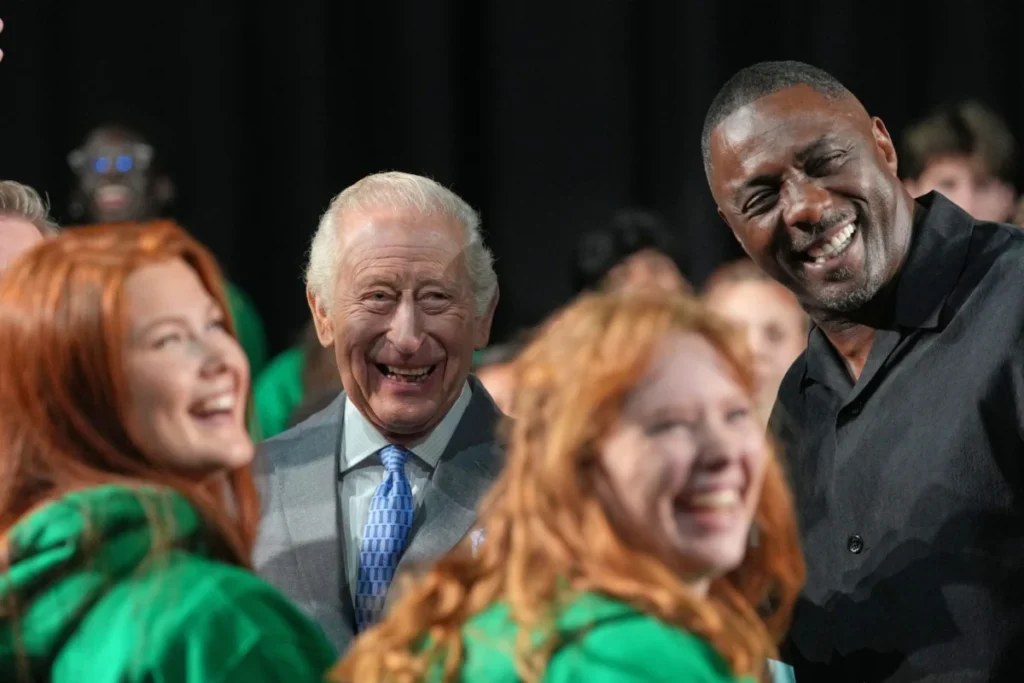

In a significant display of royal patronage and a powerful endorsement of youth arts, King Charles III recently joined renowned actor Sir Idris Elba at a vibrant celebration hosted by the National Youth Music Theatre (NYMT). The event, held to honour the remarkable achievements of young people in musical theatre, underscored the enduring importance of providing opportunities for burgeoning talent, a cause deeply personal to both His Majesty and Sir Idris, whose own journey was profoundly shaped by the very mechanisms of support now championed by the Crown.
The King’s presence at the NYMT gathering served as a potent symbol of his unwavering commitment to the arts and youth development, areas he has championed for decades. He was accompanied by Sir Idris Elba, a testament to the transformative power of the philanthropic initiatives spearheaded by the monarch. Sir Idris’s personal narrative is intrinsically linked to this legacy; at the age of 18, he received a crucial grant from what was then The Prince’s Trust – an organisation founded by King Charles himself in 1976 – enabling him to attend the NYMT and embark on the path that would eventually lead him to global stardom. This full-circle moment, with Sir Idris now a celebrated alumnus and a beacon of success, powerfully illustrated the long-term impact of such early investments in young potential.
A Deep Dive into the National Youth Music Theatre
The National Youth Music Theatre (NYMT) stands as a beacon for aspiring young performers across the United Kingdom. Established as a registered charity, its core mission revolves around offering unparalleled musical theatre opportunities and experiences to young people aged between 10 and 23. Far beyond merely staging productions, NYMT provides a comprehensive training ground, fostering talent in singing, acting, dancing, and stagecraft, while also instilling invaluable life skills such as discipline, teamwork, confidence, and resilience.
Since its inception, NYMT has carved out a unique niche in the British theatrical landscape, serving as a crucial stepping stone for countless individuals who have gone on to achieve significant success in the performing arts and beyond. The organisation prides itself on its rigorous audition process, ensuring that only the most dedicated and promising young artists are selected to participate in its prestigious programmes. These programmes range from intensive residential workshops and masterclasses led by industry professionals to full-scale theatrical productions staged in renowned venues across the UK.
During his visit, King Charles took the opportunity to engage directly with NYMT staff and dedicated supporters, keen to hear first-hand about the intricate work involved in nurturing young talent. These discussions provided insight into the challenges faced by arts organisations, particularly in securing sustained funding and reaching diverse communities, as well as the innovative approaches NYMT employs to overcome these hurdles. The King also enjoyed a captivating performance by the NYMT Adult Company, witnessing the culmination of their dedication and artistic development. Such performances are not merely showcases; they are immersive educational experiences that push the boundaries of youth theatre, often involving complex scores, intricate choreography, and demanding dramatic narratives.
Illustrious Alumni: The NYMT Legacy
The roster of NYMT alumni reads like a who’s who of British stage and screen, underscoring the organisation’s profound influence on the entertainment industry. Beyond Sir Idris Elba, who has become an international icon known for his roles in "The Wire," "Luther," and various blockbuster films, the list includes Oscar-nominated actor Jude Law, celebrated for his versatility in films such as "The Talented Mr. Ripley" and "Sherlock Holmes." Stephen Graham, known for his powerful performances in "This is England" and "Line of Duty," is another distinguished graduate, demonstrating NYMT’s ability to cultivate raw, compelling talent. Toby Jones, an acclaimed character actor with roles in "Tinker Tailor Soldier Spy" and the "Harry Potter" series, also honed his craft within NYMT’s supportive environment. More recently, rising stars like Amara Okereke, celebrated for her West End performances, and Callum Scott Howells, who garnered acclaim for his role in "It’s a Sin," continue to exemplify the calibre of artists emerging from NYMT’s programmes. These success stories not only inspire current participants but also serve as powerful evidence of the organisation’s effectiveness in preparing young people for demanding careers in the performing arts.

The King’s Trust: A Pillar of Youth Support
The transformation of The Prince’s Trust into The King’s Trust reflects a natural evolution of a legacy that began almost five decades ago. Founded by then-Prince Charles in 1976, The Prince’s Trust was established with a singular, groundbreaking vision: to help vulnerable young people get their lives on track. At a time when youth unemployment was a pressing national issue, the Trust sought to provide practical and financial support to those facing significant barriers to employment and education. Its early work focused on offering grants to individuals for training, education, or to start their own businesses – a vital lifeline for many, including a young Idris Elba.
Over the years, The Trust has grown exponentially, becoming one of the UK’s most prominent youth charities. It has supported over one million young people, providing them with the confidence and skills to live, learn, and earn. Its programmes encompass a wide range of interventions, from enterprise support for aspiring entrepreneurs to employability schemes, personal development courses, and mental health and wellbeing initiatives. The renaming to The King’s Trust following His Majesty’s accession to the throne symbolises a continuation of this profound commitment, ensuring that the next generation of young Britons will continue to benefit from its life-changing work. The Trust’s model is particularly effective because it addresses the multifaceted challenges young people face, often providing not just financial aid but also mentorship, guidance, and a supportive community. It champions the belief that every young person, regardless of their background, deserves the chance to fulfil their potential.
Royal Patronage: A Catalyst for the Arts
The British Royal Family has a long and storied history of supporting the arts, with patronage extending to numerous cultural institutions, charities, and artistic endeavours. This tradition, now carried forward vigorously by King Charles III, plays a critical role in the cultural landscape of the United Kingdom. Royal patronage confers significant prestige and visibility upon organisations, helping them to attract funding, volunteers, and public attention. It also sends a powerful message about the value placed on creativity and cultural expression within society.
For organisations like NYMT, royal backing can be transformative. It elevates their profile, lending credibility and gravitas that can be instrumental in fundraising campaigns and outreach efforts. More broadly, the King’s active engagement with arts charities reinforces the message that cultural education and participation are not merely luxuries but essential components of a well-rounded society and vital for personal and national development. This is particularly crucial in an era where arts funding in schools and public institutions often faces significant pressures. By shining a spotlight on NYMT, King Charles underscores the importance of investing in the next generation of performers, writers, directors, and technicians who will shape the future of the UK’s globally renowned creative industries.
Inferred Statements and Reactions
While no direct quotes were provided in the original content, the context allows for logical inference of sentiments from various stakeholders.
NYMT Leadership: "We are incredibly honoured to welcome His Majesty King Charles III and Sir Idris Elba to celebrate the incredible talent and dedication of our young people," an NYMT spokesperson might have stated. "Their presence shines an invaluable spotlight on the transformative power of musical theatre and the vital role organisations like ours play in nurturing the artists of tomorrow. Sir Idris’s journey is a powerful testament to what can be achieved with the right support, and we are immensely grateful for The King’s enduring commitment to youth development and the arts."

Sir Idris Elba: Reflecting on his own experience, Sir Idris Elba would likely have conveyed his deep gratitude. "Attending NYMT thanks to a grant from The Prince’s Trust was a pivotal moment in my life," he might have remarked. "It gave me the confidence, the skills, and the belief that a career in the arts was possible. To be here today, alongside His Majesty, celebrating the next generation of talent, is truly humbling. It underscores the incredible work The King’s Trust and NYMT do, providing crucial pathways for young people to discover and unleash their potential."
Young Participants: A young performer from NYMT might have shared their excitement: "It’s so inspiring to see the King and Sir Idris here. It makes us feel that what we do really matters, and that our dreams are valid. Sir Idris is a huge role model for many of us, and knowing he came through NYMT makes us believe anything is possible."
The King’s Trust Representative: A representative from The King’s Trust would likely have highlighted the synergy between their mission and NYMT’s work. "This event perfectly illustrates the long-term impact of The King’s Trust," they could have said. "By providing early support, we enable young people like Sir Idris to access life-changing opportunities. Our collaboration with partners like NYMT ensures that talent is never wasted due to lack of opportunity, and we remain dedicated to helping young people build brighter futures."
Broader Impact and Implications
The visit by King Charles III and Sir Idris Elba to the National Youth Music Theatre carries significant implications, extending beyond the immediate celebration. Firstly, it provides an invaluable boost to NYMT’s profile and, by extension, to the broader youth arts sector. Increased visibility can translate into greater public awareness, enhanced fundraising opportunities, and potentially more corporate sponsorships, all critical for the sustainability of such organisations. In an environment where arts funding is often precarious, such high-profile endorsements are vital for ensuring continued provision of services.
Secondly, the event serves as a powerful advocacy tool for the importance of arts education and accessible pathways into the creative industries. The success stories of NYMT alumni, particularly Sir Idris Elba’s journey from a Prince’s Trust grant recipient to a global icon, offer tangible proof of the return on investment in youth arts. This narrative can be leveraged to lobby policymakers for greater support for arts programmes in schools and community settings, emphasizing their role not just in cultural enrichment but also in developing transferable skills like critical thinking, communication, collaboration, and emotional intelligence, which are highly valued in all sectors of the economy.
Thirdly, the visit reinforces the King’s personal brand as a champion of youth and opportunity. His long-standing dedication to The Prince’s Trust, now The King’s Trust, demonstrates a consistent commitment to social mobility and empowering disadvantaged young people. This reinforces the relevance of the monarchy in modern society, showcasing its capacity to act as a unifying force and a catalyst for positive social change. The image of the King engaging with young performers and celebrating a success story like Sir Idris Elba projects an image of a compassionate and engaged monarch, deeply invested in the future of the nation’s youth.
Finally, the event highlights the crucial role of mentorship and early intervention. Sir Idris Elba’s anecdote underscores that a small grant at a critical juncture can unlock immense potential. This message resonates across various charitable sectors, emphasizing that targeted support, when provided at the right time, can have a ripple effect that benefits not just the individual but society as a whole. The NYMT, through its programmes, acts as a practical embodiment of this philosophy, providing not just training but also a supportive community that nurtures ambition and talent.
In conclusion, the joint appearance of King Charles III and Sir Idris Elba at the National Youth Music Theatre was far more than a ceremonial occasion. It was a potent affirmation of the enduring value of investing in young people, particularly through the transformative power of the arts. It celebrated a legacy of support that has enabled countless individuals to achieve their dreams, and it cast a hopeful gaze towards a future where talent, regardless of background, is given every opportunity to flourish under the benevolent gaze of royal patronage and dedicated charitable endeavour.