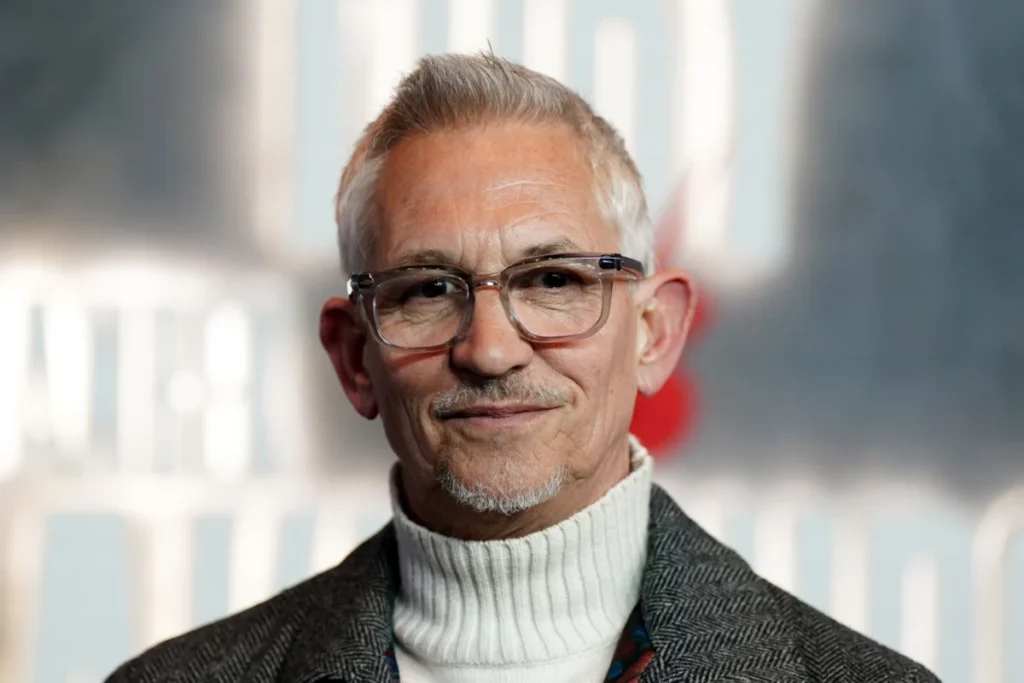

Former England football legend and acclaimed television presenter Gary Lineker has articulated a sense of liberation, stating he is "not treading on so many eggshells these days" following his departure from the British Broadcasting Corporation (BBC). This newfound freedom coincides with a significant new chapter in his broadcasting career, as his production company, Goalhanger Podcasts, secures a deal with Netflix to bring a daily TV show, "The Rest Is Football," to audiences during the 2026 FIFA World Cup.
Lineker, 65, concluded his 26-year tenure as the much-loved host of the BBC’s flagship football highlights programme, Match Of The Day, in May of last year. His exit came amidst a high-profile controversy surrounding his political commentary on social media, sparking a national debate about impartiality guidelines for public service broadcasters and the freedom of expression for their high-profile talent.
The Catalyst for Change: Impartiality and Social Media Controversy
The precipitating event for Lineker’s departure from the BBC was an Instagram post he made which drew widespread criticism. The post, which featured a depiction of a rat in connection with discussions about Zionism, was perceived by many as employing an antisemitic trope, given the historical use of such imagery to dehumanize Jewish people. This incident ignited a firestorm, leading to Lineker’s temporary suspension by the BBC and a subsequent walkout by fellow presenters and pundits in solidarity, which ultimately forced the BBC to re-evaluate its position and led to Lineker stepping down from his Match Of The Day role.
The BBC’s impartiality guidelines, a cornerstone of its public service remit, mandate that staff and on-air talent must remain objective and apolitical in their public communications, particularly on social media. For a figure as prominent and opinionated as Lineker, navigating these rules had often proven challenging, with several instances prior to his departure generating headlines. The "rat" incident, however, escalated to an unprecedented level, raising fundamental questions about the balance between a presenter’s personal views and their obligations to an impartial public broadcaster. The intense scrutiny highlighted the difficulty for the BBC in enforcing strict impartiality rules on individuals who are also public figures with active social media presences. Critics argued that the guidelines were either too vague or too restrictive, stifling legitimate commentary, while proponents emphasized the vital importance of the BBC maintaining its trusted, unbiased reputation.
A New Horizon: Goalhanger Podcasts and the Netflix Deal
Freed from the constraints of BBC impartiality, Lineker has enthusiastically embraced his entrepreneurial ventures. His production company, Goalhanger Podcasts, has rapidly become a significant player in the digital audio landscape. "The Rest Is Football," a podcast co-hosted by Lineker alongside fellow former footballers Alan Shearer and Micah Richards, has garnered immense popularity since its launch. The podcast offers insightful, often humorous, commentary on the latest football news, analysis, and anecdotes, drawing on the vast experience and camaraderie of its presenters.

The success of "The Rest Is Football" has now paved the way for an ambitious expansion into television. Netflix, the global streaming giant, has secured the rights to air a daily TV show version of "The Rest Is Football" for the 2026 World Cup. This move represents a significant shift in sports broadcasting, as major tournament coverage increasingly diversifies beyond traditional terrestrial channels. The show will provide daily insights, analysis, and interviews, offering a complementary viewing experience to the live match broadcasts.
Speaking to the Press Association about his life post-BBC, Lineker reflected on his changed circumstances: "I’ve got a bit more time, I’m not treading on quite so many eggshells these days, I’m allowed an opinion on things." He acknowledged his positive memories of his time at the BBC, stating, "But no, I had a wonderful period at the Beeb, and I’ve covered so many major tournaments with, and obviously I was going to do this (the 2026 World Cup) originally, but now I’m doing something different, which is really exciting."
The partnership with Netflix for the 2026 World Cup, which will be co-hosted by the United States, Canada, and Mexico, marks a strategic move for Goalhanger Podcasts. It leverages the established chemistry and appeal of Lineker, Shearer, and Richards, who have built a strong rapport through their podcast. The format promises to be dynamic, featuring a variety of guests and segments designed to engage a global audience looking for in-depth analysis and behind-the-scenes content that goes beyond conventional match commentary.
Lineker also touched upon the BBC’s likely coverage plans for the upcoming tournament: "I’m a bit surprised the Beeb are not going until possibly the very latter stages of the competition, so I won’t miss being in the green box itself, but I miss some of the company." He clarified that his new venture with Netflix is not intended as direct competition with traditional broadcasters, stating, "We’re not in competition with the BBC in this, because obviously they’re focused on live football, we haven’t got the rights, but we’ve got a show that people can watch alongside." He reiterated his respect for the established players, adding, "I think the BBC and ITV both, obviously, cover football brilliantly." This indicates a recognition of the distinct roles and offerings within the evolving sports media landscape.
Anticipating the 2026 World Cup: Geopolitical Undercurrents
Beyond his personal and professional transitions, Lineker expressed notable apprehension regarding the geopolitical backdrop of the 2026 World Cup, particularly with the United States as a co-host and the potential return of former US President Donald Trump to office. His concerns highlight the increasingly intertwined nature of major sporting events and global politics, a theme that has shadowed recent tournaments.
Lineker, known for his distinguished playing career during which he remarkably never received a yellow card, has witnessed numerous World Cups both as a player and a broadcaster. He noted a recurring pattern of pre-tournament anxieties, often related to human rights or political controversies in host nations. He cited the significant concerns over LGBTQ+ rights and migrant worker conditions that overshadowed the 2022 World Cup in Qatar, as well as the controversy surrounding Russia hosting the 2018 tournament, just four years after its annexation of Crimea.
However, Lineker indicated a heightened level of nervousness for the 2026 edition. He stated: "This time we’ve got a first, probably I think, we’ve got the host nation at war with one of the competing countries, you’ve got an unpredictable leader." While the assertion of a host nation being "at war" with a competing country for the 2026 tournament might be seen as a strong, perhaps hyperbolic, statement, it reflects Lineker’s deep-seated worries about potential instability. It is plausible he was alluding to historical and ongoing geopolitical tensions between the United States and Iran, especially given the tumultuous rhetoric and actions during Donald Trump’s previous presidency. The prospect of Trump’s return to power introduces an element of unpredictability that Lineker evidently finds concerning, suggesting a fear that the political climate could overshadow the sporting spectacle.
He articulated a hope that the football itself would ultimately transcend these external pressures, as it often has in the past: "But from my experience, which is a lot, once we get there, once it starts, it’s always alright, it’s always great, the football takes over, and I’m very much hoping that that’s the case, that we don’t have to cover the negatives and what’s gone on, and hopefully nothing goes wrong." Despite this optimism, he concluded with a telling admission: "But I am a little bit more nervous about this one, I think, than others, for obvious reasons." This sentiment underscores a growing awareness among public figures in sports of their role in commenting on broader societal and political issues, especially when those issues intersect with the integrity and spirit of major international competitions.
Implications and Broader Analysis
Lineker’s career trajectory post-BBC offers several key insights into the evolving media landscape and the role of public figures.
Firstly, his move to Netflix with Goalhanger Podcasts exemplifies a broader trend in sports broadcasting: the shift from traditional linear television to streaming platforms and independent content creation. As viewers increasingly gravitate towards on-demand and bespoke content, companies like Goalhanger are well-positioned to capitalize on niche interests and develop direct relationships with their audiences. The Netflix deal is a testament to the power of established talent and strong brand identity in the digital age, enabling creators to bypass conventional gatekeepers. This model offers greater creative control and potentially more direct engagement with fans, marking a significant departure from the more structured and regulated environment of public service broadcasting.
Secondly, Lineaker’s comments on "treading on eggshells" highlight the ongoing tension between media impartiality and freedom of expression. For high-profile individuals, particularly those with a strong public platform, the demand for strict impartiality can feel restrictive. His post-BBC career allows him the liberty to voice opinions on political and social matters without fear of breaching employment contracts or undermining a public institution’s neutrality. This shift reflects a growing societal expectation that public figures, regardless of their professional affiliation, should be able to engage in public discourse on important issues. It also raises questions about how traditional media outlets, particularly public broadcasters, will adapt their policies to retain top talent who may seek greater expressive freedom.
Finally, Lineker’s anxieties about the 2026 World Cup underscore the enduring intersection of sports and politics. Major global events, far from being insulated arenas, inevitably become stages for geopolitical tensions, human rights debates, and moral dilemmas. His willingness to voice these concerns, now unconstrained by BBC guidelines, signals a growing trend where sports figures are increasingly expected, or feel compelled, to comment on the ethical dimensions of their profession. This trend challenges the long-held notion that sports and politics should remain entirely separate, acknowledging that the decision to host an event in a particular country or under specific leadership carries inherent political implications.
In conclusion, Gary Lineker’s journey post-BBC represents more than just a personal career change; it symbolizes a dynamic shift in media consumption, the evolving boundaries of journalistic impartiality, and the persistent, often uncomfortable, relationship between global sports and global politics. His new venture with Netflix for the 2026 World Cup will undoubtedly be watched closely, not just for its football insights but also as a barometer of how independent voices can thrive and influence public discourse in an increasingly complex world.