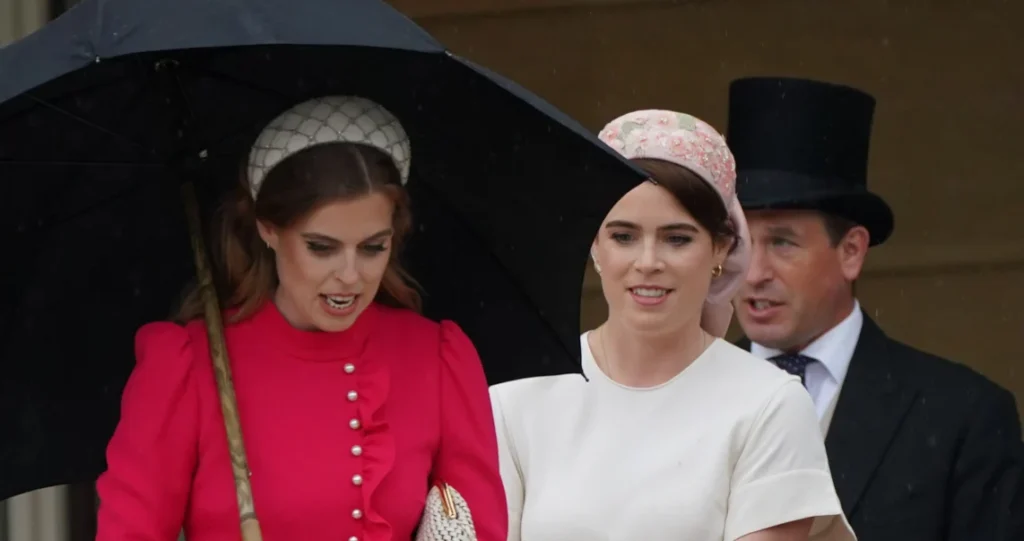

Princess Beatrice and Princess Eugenie, daughters of Prince Andrew, Duke of York, have been revealed to be beneficiaries of a unique arrangement concerning their royal residences, with their uncle, King Charles III, covering the rental payments for their apartments within royal palaces. This revelation comes to light following a comprehensive investigation by the National Audit Office (NAO) into the management and use of properties owned by the Crown Estate. While the princesses occupy these prestigious homes, which are understood to be offered at a preferential rate of approximately 60% of the local market value, the financial burden of the rent is borne by the reigning monarch, rather than by Beatrice and Eugenie themselves.
Detailed Breakdown of Royal Residence Arrangements
The NAO report, a meticulous examination of Crown Estate holdings and their allocation, has shed light on several facets of royal property usage. Princess Beatrice, aged 37, has resided in an apartment within St. James’s Palace for close to two decades. While an agreement was reached in 2012 for her to contribute to the rent of this property, believed to be a four-bedroom dwelling, the report explicitly states that King Charles has been covering these payments. This arrangement exists alongside a private family home the Princess shares with her husband, Edoardo Mapelli Mozzi, in the picturesque Cotswolds region.
Similarly, Princess Eugenie, 36, occupies Ivy Cottage within the grounds of Kensington Palace. Her rental obligations for this residence are also met by King Charles. The Princess, who is reportedly expecting her third child, maintains a dual presence, dividing her time between London and Portugal, where she and her husband, Jack Brooksbank, also own a property. The report underscores that neither Beatrice nor Eugenie, who are not considered working members of the Royal Family, are directly paying the rent for their palace accommodations.
Prince Andrew’s Subletting Activities and Departure from Royal Lodge
The NAO investigation also delved into the financial activities of their father, Prince Andrew, the Duke of York. The report uncovered that Prince Andrew had been generating income through the subletting of three cottages located within the Royal Lodge development, where he had resided for over twenty years. The specifics of the income derived from these subletting arrangements remain undisclosed by the report, which was unable to ascertain the total amount earned by the former prince.
Prince Andrew formally surrendered his lease on the Royal Lodge property in the autumn of the previous year. However, his physical departure from the residence did not occur until January of the current year. Following his exit, he relocated to a home situated on the Sandringham estate, a property privately owned by King Charles III. This move signifies a shift in his living arrangements, transitioning from a Crown Estate-associated property to a privately held royal estate.
Further details from the NAO report indicate that Prince Andrew may be eligible for compensation amounting to £301,000 for vacating his lease ahead of its natural conclusion. However, this potential compensation is expected to be offset against the costs associated with necessary repairs to the Royal Lodge following his occupancy. It is widely anticipated that these repair expenses will ultimately negate the compensation sum, effectively cancelling out any financial gain for the Duke of York from this early lease termination.
Working Royals and Crown Estate Leases
The NAO report also provided an overview of properties leased from the Crown Estate by working members of the Royal Family. It identified five such individuals currently residing in these properties. The Prince and Princess of Wales, for instance, have recently secured a 20-year lease on Forest Lodge, located on the Windsor Estate. This signifies a significant commitment to a long-term residence within a key royal demesne.
The Duke and Duchess of Edinburgh are currently renting Bagshot Park, another significant royal residence. Additionally, Princess Alexandra, who is approaching her 90th birthday later this year, rents Thatched Lodge in Richmond. These examples illustrate the ongoing utilization of Crown Estate properties by active senior royals, underscoring the Crown Estate’s role in providing official residences.

Context and Background of Crown Estate Property Allocation
The Crown Estate is a collection of land and property in the United Kingdom owned by the reigning monarch in their public capacity as monarch. It is not the monarch’s private property. The Crown Estate’s holdings are managed by a statutory corporation, The Crown Estate, which operates independently and returns its profits to HM Treasury. However, certain properties, particularly historic royal residences and associated lands, have specific arrangements for their use by members of the Royal Family.
Historically, royal palaces and residences have served as official or semi-official homes for members of the monarchy. The allocation of these properties, and the associated financial arrangements, are subject to various agreements and precedents established over time. The concept of preferential rental rates for royal family members occupying such properties is not entirely new, reflecting a long-standing tradition of providing accommodation and support.
The NAO’s involvement in scrutinizing these arrangements highlights a growing emphasis on transparency and accountability in the management of public and royal assets. As a public spending watchdog, the NAO’s reports aim to ensure that public funds and assets are utilized efficiently and effectively. This particular report focuses on the financial implications and leasehold agreements pertaining to royal properties, providing an impartial assessment of the financial flows and obligations involved.
Timeline of Key Developments
- Early 2000s: Princess Beatrice takes up residence in an apartment within St. James’s Palace.
- 2012: An agreement is understood to be reached for Princess Beatrice to pay rent on her St. James’s Palace apartment.
- Prior to Autumn 2023: Prince Andrew sublets three cottages within the Royal Lodge development.
- Autumn 2023: Prince Andrew surrenders the lease on the Royal Lodge.
- January 2024: Prince Andrew vacates the Royal Lodge and moves to a property on the Sandringham estate.
- Recent Period: The Prince and Princess of Wales secure a 20-year lease on Forest Lodge on the Windsor Estate.
- Current Period: The National Audit Office (NAO) publishes its report detailing findings on royal property usage and rental arrangements.
Implications and Analysis
The findings of the NAO report carry several significant implications. Firstly, it brings into sharp focus the financial support provided by King Charles III to his nieces. While the preferential rental rates aim to make these accommodations accessible, the fact that the King is directly covering these costs for non-working royals raises questions about the extent of public or royal funding for private residences. The report implicitly acknowledges that while the princesses occupy these palaces, their personal finances are not directly burdened by these specific housing costs.
Secondly, the revelations regarding Prince Andrew’s subletting activities and potential compensation highlight a distinct financial management strategy within the royal sphere. The practice of subletting, especially in properties associated with royal residences, suggests an avenue for personal financial gain, the extent of which remains opaque due to the report’s limitations. The compensation entitlement for early lease termination, though likely to be offset by repair costs, further illustrates the complex financial calculations involved in managing these properties.
The distinction made in the report between working royals and non-working royals is also noteworthy. The fact that working royals like the Prince and Princess of Wales are entering into long-term, formal leases, while Beatrice and Eugenie’s arrangements are covered by the King, suggests different models of residency and financial responsibility. This distinction could fuel public discourse on the varying levels of support and financial arrangements for different members of the Royal Family.
Furthermore, the NAO’s examination underscores the ongoing stewardship of the Crown Estate and its role in accommodating the monarchy. The report serves as a factual account of current practices, providing a basis for public understanding and scrutiny. It allows for a more informed discussion about the financial arrangements that underpin royal living, particularly in relation to properties that are part of a broader national heritage managed under the Crown Estate.
The report does not delve into the motivations behind these financial arrangements, nor does it offer commentary on their appropriateness. Its purpose is to present factual data and observations from an independent audit. However, the implications of these findings are likely to be debated in the public sphere, touching upon themes of royal privilege, financial transparency, and the evolving role of the monarchy in contemporary society. The report’s detailed account of leasehold agreements and rental payments offers a granular look into the financial mechanics of royal residences, contributing to a broader understanding of how the Royal Family is housed and supported.