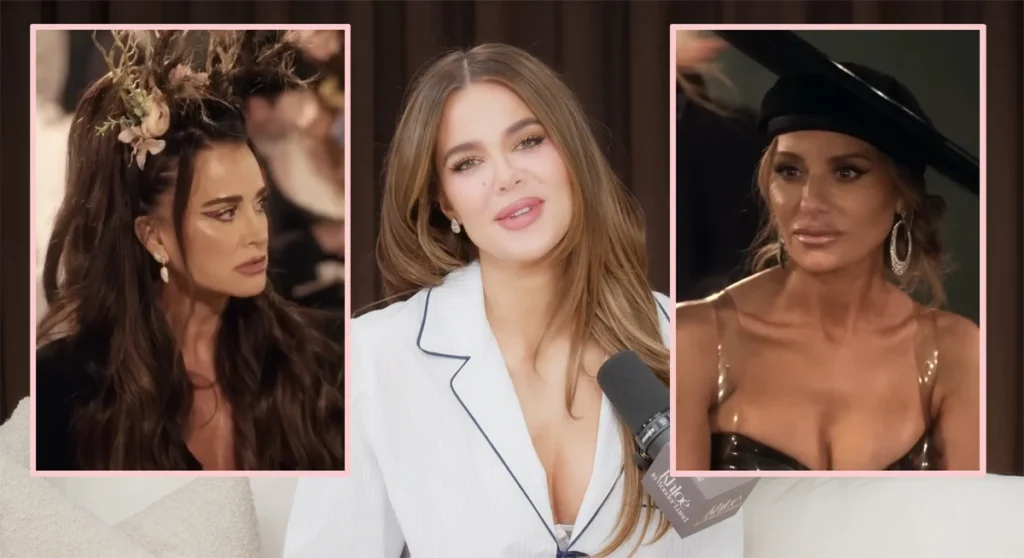

The prospect of reality television royalty transitioning from the long-running E! and Hulu franchise, The Kardashians, to the Bravo juggernaut The Real Housewives of Beverly Hills (RHOBH) has long been a subject of fervent speculation among pop culture enthusiasts. However, Khloe Kardashian has provided a definitive assessment of these rumors, effectively closing the door on a potential casting move that many fans and industry analysts had theorized could alter the landscape of unscripted television.
During a recent appearance on her podcast, Khloe in Wonder Land, the Good American founder addressed the hypothetical scenario while in conversation with Summer House star Paige DeSorbo. Kardashian’s remarks offer a rare glimpse into her professional philosophy regarding the nature of ensemble reality television and the distinct structural differences between the production environments of the Kardashian-Jenner empire and the Bravo "Housewives" universe.
The Structural Divide in Reality Television
Kardashian’s resistance to joining the Bravo franchise is rooted in the fundamental differences in how these two reality juggernauts operate. Since the debut of Keeping Up with the Kardashians in 2007, Khloe has operated within a family-centric production model. In this ecosystem, the narrative focus is domestic and familial, with the primary stakeholders being the subjects themselves.
"I have worked only with my family," Kardashian explained during the podcast. "I feel like shows like that, you feel competitive to get screen time. And I’ve never lived like that because we’re family. I am assuming that’s how it is and that it’s cutthroat and you have to talk about people or what’s your purpose there?"
This analysis touches upon the core mechanic of the Real Housewives franchise: the "Housewife" model. Unlike the Kardashian-Jenner shows, which are produced through the family’s own production company, Bunim/Murray or later Fulwell 73, the Real Housewives series relies on a shifting ensemble of women who are often not related by blood. The narrative engine of these shows frequently requires conflict, debate, and the constant navigation of shifting social hierarchies. For a performer accustomed to the relative insulation of a family-run production, the prospect of entering a environment where screen time is earned through social friction represents a significant departure from her established career trajectory.
A History of Crossover Speculation
The rumor mill regarding Khloe Kardashian and the Real Housewives began in earnest years ago, fueled by the Kardashian family’s well-documented friendship with several prominent figures in the Beverly Hills social circle. Specifically, Kardashian has shared numerous public interactions with Kyle Richards, a long-standing fixture of RHOBH.
Throughout the late 2010s and early 2020s, Bravo fans frequently hypothesized that the family’s ties to the Beverly Hills elite would facilitate a crossover. In 2021, Andy Cohen, the executive producer of the Real Housewives franchise, addressed the possibility during various media junkets, noting that while the Kardashian presence would be a major ratings driver, the logistics of their exclusive contracts with major streaming platforms like Hulu made such a move nearly impossible.
From a contractual standpoint, the Kardashian-Jenner family signed a massive, multi-year deal with Disney/Hulu in 2020, which grants the streamer exclusive rights to their primary content. Joining a Bravo series, which is owned by NBCUniversal, would represent a significant conflict of interest, barring any specialized, high-level corporate negotiation that has yet to occur.
The Economics of Reality TV Franchises
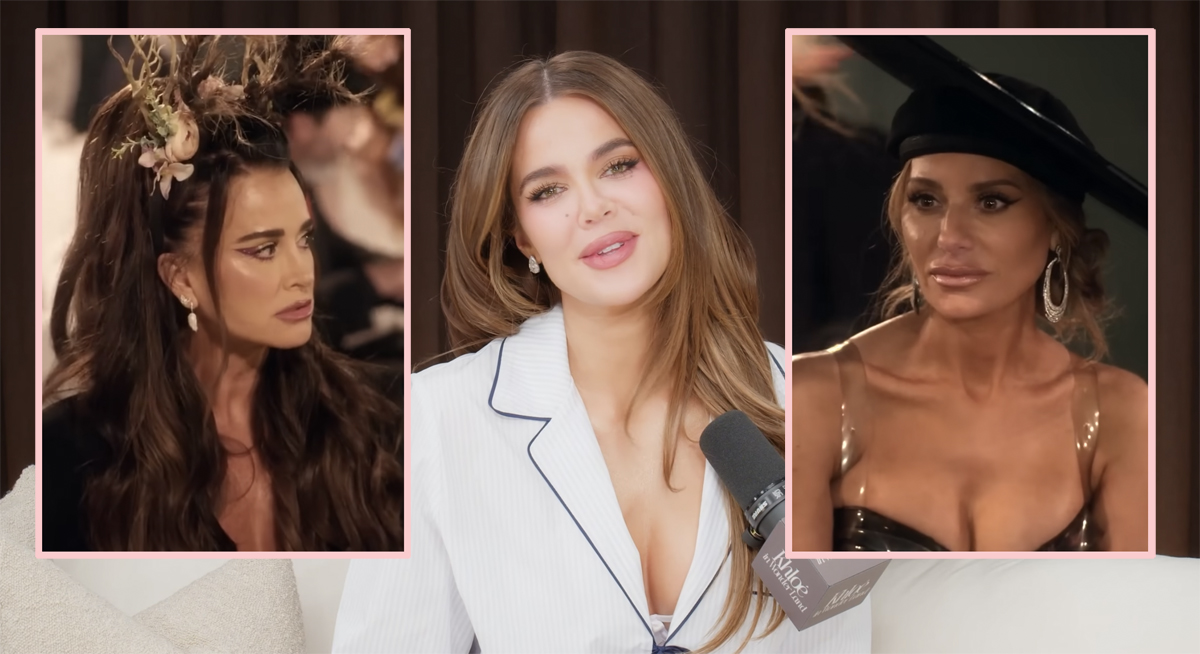
To understand why fans are so invested in the idea of a Kardashian "Housewife" stint, one must look at the economic impact of such a casting choice. The Real Housewives of Beverly Hills remains one of the highest-rated programs on the Bravo network. Integrating a personality with the global reach of Khloe Kardashian would theoretically provide a massive influx of viewers—specifically the younger, social-media-savvy demographic that currently dominates the Kardashians’ audience.
However, industry analysts note that the "Housewives" brand is built on a specific type of intimacy and volatility. The show’s success relies on the audience’s belief that the conflict is organic to the cast’s personal lives. If a star as established as Khloe Kardashian were to join, the power dynamics of the cast would be irrevocably altered. She would essentially become the focal point of the show, potentially dwarfing the existing ensemble and shifting the brand identity away from the specific "Beverly Hills" lifestyle it currently cultivates.
Cultural Implications and Brand Management
Beyond the contractual and logistical hurdles, there is the matter of brand management. Khloe Kardashian has spent nearly two decades cultivating a public image that balances vulnerability with intense privacy regarding certain aspects of her life. The Real Housewives franchise, by contrast, operates on the principle of total transparency. Cast members are often expected to discuss their legal troubles, marital strife, and financial situations in extreme detail.
Kardashian’s statement regarding the "cutthroat" nature of the show reflects a professional awareness of this difference. In her current environment, she has significant control over how her life is edited and presented. In a competitive ensemble reality show, the editing process is controlled by the network, leaving the subject with significantly less agency over their own narrative. For a global brand like the Kardashians, the risk of losing that control often outweighs the potential benefits of participating in a legacy franchise.
The Future of the Kardashian Reality Model
As the media landscape continues to shift toward streaming, the traditional cable-based "Housewives" model is also evolving. Bravo has begun to experiment with limited series and spinoffs, but the core franchise remains tethered to the cable television model. Conversely, the Kardashian-Jenner family has successfully transitioned to an on-demand, digital-first model, which allows for more frequent content updates and a tighter feedback loop with their fan base.
Kardashian’s explicit rejection of the RHOBH path serves as a validation of her current strategy. By prioritizing the family unit as the core of her reality television work, she maintains a level of stability that few other reality stars can claim. While the prospect of her joining the Beverly Hills cast would undoubtedly create a "must-watch" television event, it remains a fantasy that ignores the economic and creative realities of the modern media industry.
Conclusion: Why the Door Remains Closed
Ultimately, the crossover that many fans crave is unlikely to materialize. The barriers are not merely personal—though Kardashian’s distaste for the competitive nature of the Housewives format is a significant factor—but systemic. The intersection of exclusive streaming contracts, the high stakes of personal brand management, and the fundamental differences in how reality content is produced ensure that the two worlds will likely remain separate.
For the time being, viewers can expect the Kardashian-Jenner family to continue producing content on their own terms, while the Real Housewives of Beverly Hills will continue to cycle through its own cast of characters, maintaining the specific brand of drama that has kept the show on the air for over a decade. Khloe Kardashian’s comments serve as a reminder that in the high-stakes world of reality television, the most compelling drama is often what happens behind the scenes, away from the cameras of rival networks.