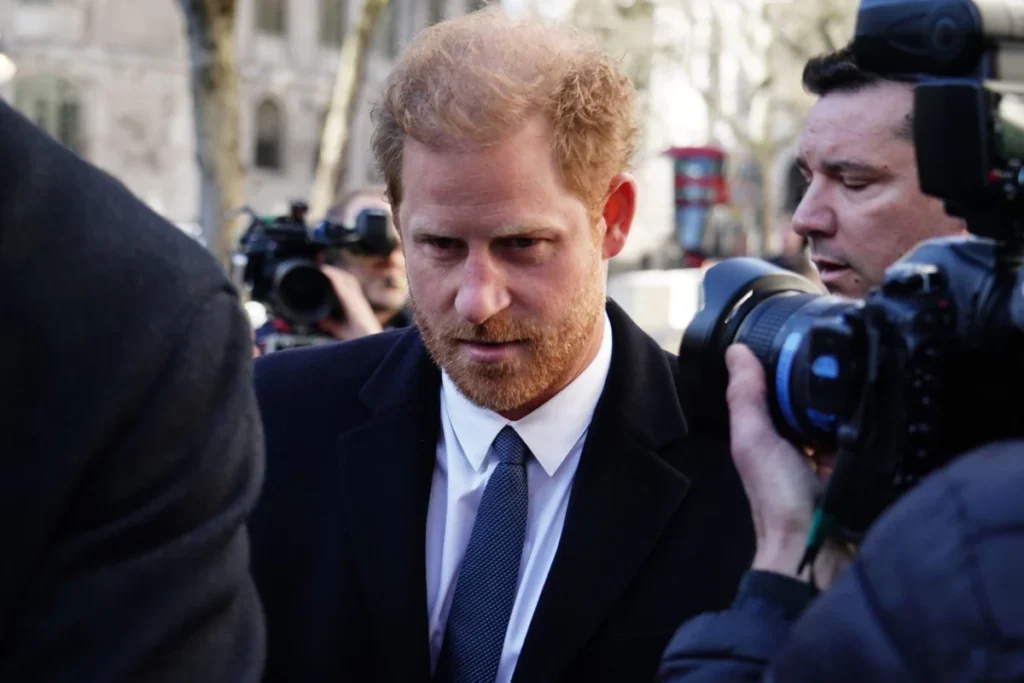

The High Court in London has delivered a significant ruling, dismissing the unlawful information gathering claims brought against Associated Newspapers Limited (ANL), publisher of the Daily Mail and Mail on Sunday, by a high-profile group including the Duke of Sussex and Baroness Doreen Lawrence. The claimants, who also included Sir Elton John, David Furnish, Liz Hurley, Sadie Frost, and Sir Simon Hughes, had alleged widespread misconduct, describing the court’s decision as a "complete and obvious whitewash." ANL, conversely, hailed the judgment as a "momentous victory" and an "overwhelming vindication" of its journalistic practices.
The Genesis of the Lawsuit: Allegations of Unlawful Information Gathering
The legal battle commenced with a series of accusations detailing an extensive campaign of unlawful information gathering allegedly carried out by Associated Newspapers Limited. The group of seven prominent individuals claimed that ANL, through its staff, freelance journalists, and private investigators, engaged in a range of illicit activities to obtain private information. These allegations included the interception of voicemails, tapping of landlines, and "blagging"—the practice of obtaining information by deception, often by impersonating individuals or making false pretenses to access confidential data.
The claimants’ assertions painted a picture of systemic intrusion into their private lives over several years, with the aim of generating sensational stories for the Daily Mail and Mail on Sunday. The specific instances cited in the lawsuit dated back to various periods, with the Duke of Sussex’s claims focusing on 14 articles published by the Mail titles. The legal action sought not only financial compensation for damages but also a judicial declaration of wrongdoing, aiming to hold the powerful media conglomerate accountable for its alleged actions.
Associated Newspapers Limited vehemently denied all allegations from the outset. Their defence centered on a categorical rejection of the claims, arguing that their journalistic practices were lawful and ethical. Furthermore, ANL contended that many of the claims were brought too late, exceeding the statutory six-year limitation period from when the claimants should have reasonably known they had a potential case. This argument about the timeliness of the claims became a critical procedural hurdle in the legal proceedings.
The High Court’s Verdict: A Burden of Proof Not Met
In a comprehensive 436-page ruling delivered on Tuesday, Mr Justice Nicklin unequivocally dismissed all claims. The judge concluded that none of the seven claimants had successfully proven their allegations of unlawful information gathering against ANL. Central to his decision was the legal principle that the burden of proof rests squarely with the claimants.
Mr Justice Nicklin elaborated on the standard of proof required in such cases, stating: "Whilst the standard of proof remains the balance of probabilities, the more serious, and inherently less probable, the allegation, the more cogent the evidence required to prove it." He acknowledged that, given the historical nature and inherent secrecy of the alleged activities, the claimants’ cases often relied on inferences rather than direct, explicit evidence. However, he cautioned against relying solely on suspicion, asserting that "suspicion is not enough."
The judge specifically rejected the argument that if information was private and ANL could not positively explain its source, it must have been unlawfully obtained. He stated: "In substance, the claimants’ case invites the court to conclude that, because the information was private and because Associated cannot positively explain how it was sourced, the article must have been unlawfully sourced. That is not a permissible approach." This ruling underscores the stringent evidentiary requirements in English courts, particularly when serious allegations are made against media organisations.

Furthermore, Mr Justice Nicklin addressed ANL’s argument regarding the timeliness of the claims. He ruled that even if the allegations of unlawful information gathering had been proven, the claims brought by Sir Simon Hughes and Sadie Frost would have been dismissed anyway, as they were initiated outside the statutory limitation period. This aspect highlights the procedural complexities and strict timelines governing legal actions in the UK.
Claimants React with Disappointment and Allegations of "Whitewash"
The ruling was met with profound disappointment and strong criticism from the claimants. In a joint statement issued shortly after the decision, the Duke of Sussex and Baroness Doreen Lawrence lambasted the judgment as a "complete and obvious whitewash." Their statement articulated a sense of injustice, arguing that they had come to court seeking justice and accountability but had received neither.
They pointed to a perceived inconsistency with previous judicial decisions concerning similar hacking claims against other newspaper publishers, specifically News Group Newspapers (publisher of The Sun and the now-defunct News of the World) and Mirror Group Newspapers (publisher of the Mirror). "We have received a complete reversal of the position which previous judges have taken in relation to the hacking claims," their statement read. They argued that "generic findings about various private investigators that were held by the courts in these parallel claims to have carried out unlawful activity at the very same time in relation to similar stories and well-known individuals have been wholly ignored."
The claimants expressed profound difficulty in understanding or reconciling the court’s decision with "common sense, or the evidence heard in the court room itself." They suggested a double standard, stating, "It feels here like one rule for the newspapers and another for the claimants." They further criticised the court for choosing "uncritically to believe" the denials of Mail journalists, even in the face of alleged "inconsistencies, contradictions and blatant untruths that were obvious to neutral observers in court when compared to the documents." Their statement concluded by reaffirming their belief that the evidence presented was "compelling at the time and remains so now."
The Duke of Sussex himself had given evidence during the trial in January, a rare appearance for a senior royal in a civil court. During his two hours of cross-examination, he testified that he had been unable to complain about some of the articles at the time "because of the institution I was in." Mr Justice Nicklin acknowledged Harry’s intention to convey the "personal impact of the matters in issue" but affirmed that this "did not affect the quality" of the Duke’s evidence, which the judge accepted.
Associated Newspapers Limited’s Resounding Vindication
In stark contrast to the claimants’ reaction, Associated Newspapers Limited celebrated the judgment as a resounding triumph. Paul Dacre, ANL’s editor-in-chief, issued a powerful statement describing the ruling as "a momentous victory for the Mail" and "an overwhelming vindication of our journalism."
Dacre’s statement took aim at the nature and cost of the lawsuit. He asserted, "The truth is that this trumped-up action — which has cost well over £50 million and wasted a huge amount of valuable court time — should never have been brought to trial. That it did, raises profoundly disturbing questions about the conduct of elements of the legal profession." This critique highlights the significant financial implications of such high-profile litigation, which often runs into tens of millions of pounds, borne by both parties and ultimately the taxpayer through court resources.
He also addressed Baroness Lawrence’s involvement, noting the Daily Mail’s historical campaign to bring her son Stephen’s killers to justice following his murder in 1993. Under Dacre’s editorship, the Daily Mail played a pivotal role in maintaining public pressure and campaigning for legal reform that eventually led to convictions. Dacre expressed his inability to comprehend why Baroness Lawrence, for whom the paper had "profound respect and sympathy," chose to align herself against "the paper, and the brilliant reporter who campaigned for justice for her son for over two decades." He referenced Stephen Lawrence’s father, Neville, who "says he owes the Mail everything," underscoring the complex and often contradictory relationships between public figures and the press.

Regarding the Duke of Sussex, Dacre expressed sympathy for "the way a confused and angry young man has been drawn into this case," adding provocatively that there was not "a laundry in the cosmos big enough to wash all the dirty linen he has aired about his own family." These comments underscore the deep-seated animosity and ongoing legal and public relations battles between Prince Harry and segments of the British press, which have been a recurring theme since his departure from royal duties.
Broader Context and Implications for Media and Privacy Law
This High Court ruling is a pivotal moment in the ongoing discourse surrounding media ethics, press freedom, and individual privacy in the United Kingdom. It comes against a backdrop of several high-profile phone hacking scandals and subsequent legal actions that have reshaped the landscape of British journalism over the past two decades. The Leveson Inquiry, established in 2011 after the News of the World phone hacking scandal, brought to light extensive unlawful information gathering practices across various media organisations, leading to convictions, significant financial settlements, and renewed calls for press regulation.
The claimants’ reference to "parallel claims" against News Group Newspapers and Mirror Group Newspapers is significant. These publishers have paid out hundreds of millions of pounds in damages and legal costs in similar unlawful information gathering cases, acknowledging widespread wrongdoing. The contrast drawn by the Duke of Sussex and Baroness Lawrence highlights what they perceive as an inconsistent application of justice, where ANL has managed to avoid similar findings. This ruling may fuel further debate about the accountability of different media groups and the historical extent of illicit practices within the British press.
For future privacy lawsuits against media organisations, the judgment reinforces the high bar for proving historical allegations of unlawful information gathering. The emphasis on "cogent evidence" and the rejection of relying solely on inference when direct proof is absent will likely influence how such cases are prepared and presented. It places a significant challenge on claimants to produce concrete evidence of specific acts of wrongdoing, which can be exceptionally difficult given the clandestine nature of such activities and the passage of time.
Conversely, the ruling provides a strong precedent for media outlets in defending against similar claims, particularly concerning the burden of proof and the statute of limitations. ANL’s victory could embolden other publishers to resist claims more vigorously, potentially leading to fewer settlements and more protracted legal battles. It also reaffirms the judiciary’s commitment to due process, ensuring that serious allegations are substantiated by robust evidence rather than mere suspicion or circumstantial inference.
The Duke of Sussex’s continued legal battles against the British press are a defining feature of his public life post-royal exit. This setback, coming shortly after his return to the UK for Invictus Games appearances and the reported withdrawal of a Buckingham Palace accommodation offer, adds another layer to his complex relationship with the monarchy and the media. His unwavering pursuit of accountability from the press, despite the personal and financial toll, underscores his deeply held conviction regarding media intrusion.
Chronology and Next Steps
The lawsuit, initiated by the group of claimants, progressed through various stages, culminating in the High Court trial where dozens of individuals gave evidence. This included not only the Duke of Sussex but also Liz Hurley, Sadie Frost, Sir Simon Hughes, and numerous current and former ANL journalists and executives.
- January: The trial hears arguments and evidence, including the Duke of Sussex’s testimony during cross-examination.
- Tuesday (Date of Ruling): Mr Justice Nicklin delivers his 436-page judgment, dismissing all claims.
- Monday (Prior to Ruling): The Duke of Sussex returns to the UK for a series of engagements, including marking the one-year countdown to the 2027 Invictus Games. It is reported that a prior offer from the King for him to stay at Buckingham Palace was withdrawn at the last moment, with the looming judgment cited as a reason.
- July 29: A further hearing in the claims is scheduled to take place, lasting two days. This hearing will likely address consequential matters arising from the judgment, such as legal costs.
This ruling marks a significant chapter in the ongoing legal confrontations between high-profile individuals and the British press. While ANL celebrates a comprehensive victory, the claimants have voiced profound dissatisfaction, raising questions about justice and consistency in media law. The ramifications of this judgment will undoubtedly resonate through future discussions on privacy, press freedom, and the accountability of media institutions in the United Kingdom.